
FORNARI, VITO. - Philosopher and man of letters, b. at Molfetta on March 10, 1821, d. at Naples on March 6, 1900. A solitary and meditative spirit, his life presents no events of great significance. After varied and passionate studies, which he continued throughout his life, he thought of entering the Benedictine Order; but he ended up becoming a secular priest and was given the honorary title of
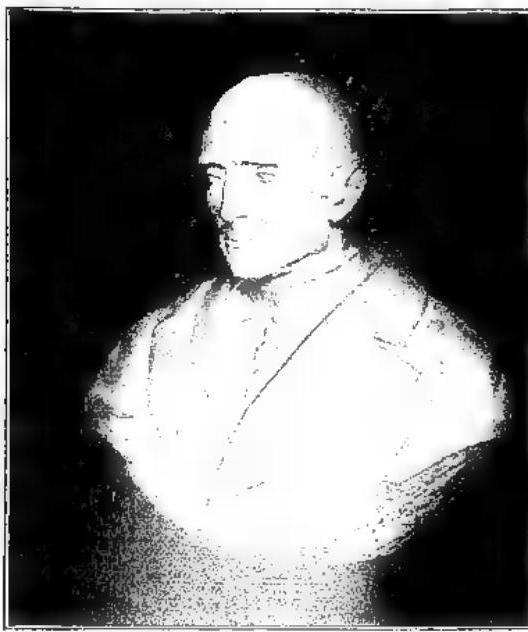
The cultural environment in which F.'s thought arose is Italia in the first half of the 19th century, even though he carried out his speculative and literary activity mainly in the second half of that century. That is, it is the philosophy of romantic spiritualism, which has its greatest representatives in Rosmini and Gioberti: and it looks back to the Platonic-Augustinian tradition, as the one that seemed best able to reconcile traditional and Christian thought with the demands of modern thought. Its characteristic and fundamental theses are those very ones of the Platonic-Augustinian tradition in general, more or less moderated: particularly the unity of philosophy and theology, ontologism, and voluntarism. And the principal sources of this thought in F. are first of all Platone and Agostino, then Bonaventura and Duns Scoto, and finally Rosmini and above all Gioberti, interpreted orthodoxly.
F.'s works are not many, at least the principal ones. In chronological order: Armonia universale (Napoli 1850), Arte del dire (ibid. 1857), Vita di Cristo (5 vols., Firenze 1869-93; new ed. Torino 1930). Just as Christ was the center of his thoughts, so the Vita di Cristo is the center of his writings. In fact, of his principal works, the first two, and especially the first, were written in preparation for this one and were transfused into II. Armonia universale, which is his philosophical system, represents the metaphysical (ontological-voluntaristic) substrate of the Vita di Cristo, and indeed is found especially in the first chapters of the latter. Arte del dire, which represents his aesthetics, provided him with the literary principles that he then applied in composing the Vita di Cristo itself. And the metaphysical conception informing it—namely, beauty as the manifestation of God and therefore one with His Word—is an element that will be maintained, framed, and developed within the work itself.
The Vita di Cristo engaged his efforts for about thirty years. Manzoni judged its first book: « Defensoribus istis tempus eget ». The title must not be misleading, as F. did not aim to write a historical, empirical life of Christ, but rather a philosophical, dialectical life that extends as broadly as creation itself. Because, according to F., Gesù Cristo is not merely a fact, however fundamental and prodigious, of universal history, but the condition, the explanation of it, indeed of all reality. The development of this concept is effectively sketched in the proem of the work. It comprises three books. The first describes the universal preparation and expectation of Christ, from the very beginning of creation. It is what might be called the first life of Christ, awaited and prefigured by all created reality, physical and spiritual, he being its intimate meaning and profound explication. The second book narrates the human life of Christ, that is, the incarnation of the Word, which was the ultimate purpose of the creative design and would have taken place even without original sin. In the third book is outlined in broad strokes the new life of Christ in his Church, and through it in all humanity, until the end of time: that is, the life of the mystical Body of Christ journeying as a pilgrim in the world toward glory.
Umberto A. Padovani