
CAVOUR, CAMILLO BENSO, Count. — Statesman, born in Turin on 10 August 1810, died there on 6 June 1861. His parents were the marquis Michele, police commissioner in Turin, a man of the ancien régime, devoted to throne and altar; and Adele de Sellon, a Genevan woman converted from Calvinism, highly cultivated and pious. As a boy he was admitted among the pages of Carlo Alberto, and since his status as a younger son did not allow him to establish a family of his own, he embraced, without any vocation, like so many others of his station, a military career; he left it on 12 November 1831 with the rank of second lieutenant in the engineers. After several years spent in an idle and worldly life, in 1835 he devoted himself with ardent passion to agricultural progress on the family properties at Grinzano, his habitual residence, extending his interests from private speculation to problems of general economic and social concern.
His religiosity, shaped by family traditions and marked by a rigid formalism, experienced waves of enthusiasm under the influence of the early La Mennais; it later faltered under the influence of Constant and Guizot, or, more precisely, of the juste milieu mentality, and assumed the form of a religious rationalism with evangelical tendencies. Certainly significant in these developments of C.’s religious consciousness were his stays in Switzerland with the de Sellon family, the fascination of the mystic tante Cécile, of the pastor Alessandro Vinet, and of his beloved cousin de La Rive. He asserted that, in these Protestant surroundings, he had felt a renewed religious sensibility awaken in him, almost through a sudden natural impulse, together with a higher conception of Christianity, which he now regarded as the religious form most suited to à l'état actuel de l'humanité: that is, as a sublime form of religiosity, capable of further perfection under the breath of that indefinite progress in which he, like his uncle de Sellon, placed an unshakable faith. He looked forward to a great Catholic reform, as le grande mystère du siècle. These ideas and sentiments would receive fresh reinforcement in Paris, through contact with the leading exponents of the French liberal Catholic movement, Ozanam, l’abbé Coeur, etc. According to Ruffini, however, C. never recovered from the crisis that led him, when little more than eighteen, to a stark rationalism, and, despite his various wavering positions, never regained full possession of the faith of his ancestors. Jemolo, and Cappa even more bluntly, acknowledge that his repeated professions of Catholicism, as well as the measures he took in 1855 to ensure that he would not be denied the last consolations of religion at the point of death, should not be understood as a sincere profession of orthodox sentiments, but rather as attitudes prompted by practical considerations. “Historians,” says Jemolo, “never tell us whether he went to Mass and received the Sacraments: we know only of the episode of the religious consolations at the point of death.” The Church interested him as a “historical institution, a living and active organization,” and this “led him to look to the history and law of the Church, to examine its institutions attentively, to distinguish those that seemed capable of yielding new beneficial fruits from those that appeared to him to be dead branches” (A. C. Jemolo, op. cit., pp. 134 ff., 504, 554).
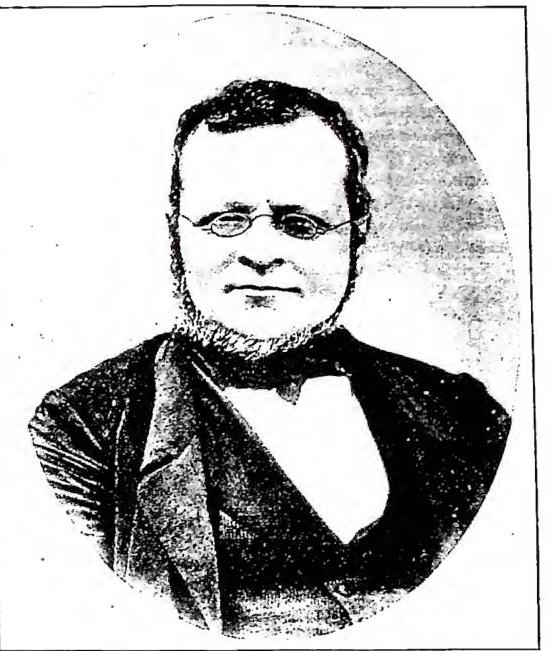
(Alinari photograph)
CAVOUR, CAMILLO BENSO, Count — Portrait.
from that time onward he began to advocate certain ideas that not only that section of the clergy, but even some of his closest friends, such as Sclopis, Thaon di Revel, and Balbo, felt unable to share. When the Statuto was proclaimed, he supported freedom of worship in the sense of “perfect equality” between the Catholic religion, declared the religion of the State, and the other faiths, which were merely tolerated. In any event, C. only rarely dealt with religious questions in the newspaper, reserving economic matters for himself. Those questions were left entirely in the hands of Pier Carlo Boggio, who early on began advocating there the thesis of the separation of the two powers—a position he could hardly have taken had he not been a faithful interpreter of C.’s mind. In his practical conduct he shows himself rather deferential toward the clergy, comes to the defense of their prerogatives and of sacred institutions, even breaks a lance, in the name of liberty and humanity, in defense of the persecuted Jesuits, and, if he attacks Archbishop Fransoni, does so with moderation and restraint. In 1851 he rose, in the name of freedom of education, against a bill which, in order to safeguard theological teaching at the university, sought to prohibit that provided in seminaries. In 1853 he even supported the exemption of clerics from military service, for social reasons—namely, so that the ecclesiastical career would remain more readily accessible to the less well-off classes.
But when questions of principle arise, one immediately encounters a distinctly secular mentality. He did not hesitate to say that, if unilateral decisions on the part of the State could contribute to resolving a dispute between the two powers, there was no obstacle to the State legislating; for, in his view, the authority that decides is always that of the State. In 1850 he supported the Siccardi laws against the opposition of the moderates, and it may be said that their triumph was chiefly due to him. Indeed, it was precisely his speech of 7 March 1850 in defense of the Siccardi laws that marked his first major parliamentary success, bringing him to the leadership of the liberal party and setting him on the path that culminated in February 1852 in the famous “connubio” with Rattazzi, and in his definitive break with the moderate Catholics.
Having joined the d’Azeglio ministry on 20 April 1851 with the portfolio of Agriculture, and subsequently also that of the Navy and Finance, he had only rare opportunities to intervene in ecclesiastical affairs; but his policy, even if pursued with greater caution, did not depart from the directives outlined above. On 4 November 1852 he was charged with forming the new cabinet, and from that moment until the end of his life, except for a few temporary crises, he would remain at the head of the government, almost absolute arbiter of the State’s destiny. The star of his rapidly ascending fortune commands the attention not only of Piedmont and Italy, but of all Europe. Everyone senses that this restless little man will not allow Europe to sleep peacefully until he has seen his ideals realized.
The ecclesiastical policy of C. continued along the path already traced by his predecessor, with that greater decisiveness and energy which was to be expected from a man of such mettle. Vittorio Emanuele II, who had watched with profound regret the unfortunate turn events had taken under d’Azeglio’s government, and who wished to preserve with Rome those friendly relations that were traditional in the House of Savoy, before entrusting C. with the mandate wished to express to him as well, as he had unsuccessfully done with d’Azeglio, his intentions: namely, to “enter into negotiations with the court of Rome in order to resolve, in agreement with it, the questions pending, and first of all that of civil marriage.” He also arranged a meeting between him and Msgr. Charvaz to discuss the practical means of achieving this aim. C. refused, and would not agree to accept the mandate except with complete freedom of action. Nevertheless, without promising to withdraw the law on civil marriage, he agreed not to make it a Cabinet matter; thus he allowed it to lapse by a single majority vote. As for an agreement with the Holy See, however, he immediately made his intentions clear, recalling the representative, Count de Sambuy, from Rome and tacitly allowing the negotiations he had initiated for an amicable settlement of affairs to lapse. Peaceful coexistence with Rome was not at all among the count’s far-sighted designs; and as long as he remained in power, none of the many questions that had awaited a solution since ’48 was brought back to the table. He would not hear of a new concordat (the old one, after so many violations, having become a dead letter), the only means of giving relations between the two courts a normal and lasting direction. And although the aggressive policy of the preceding ministry was softened, the war by pinpricks nevertheless continued without respite, nor was there any shortage of major battles, such as that over the law suppressing the religious Orders and confiscating their property, which Pius IX condemned in the allocution Cum saepe of 26 July 1855. Among the few institutes that survived the general shipwreck were the Visitandines, founded by s. Francesco di Sales: Philippine de Sales, C.’s paternal grandmother, was the daughter of a brother of the Saint, and he was greatly attached to such a noble descent. Jemolo is right to say that C.’s ecclesiastical policy, as it emerges from the aforementioned convent law of 29 May 1855, was far from being a rigorous implementation of separatism. It “rests on the concepts that the State determines which ecclesiastical entities are useless and suppresses them, which are sufficiently useful to be preserved, and which are deserving of protection”: that is, it consists in a genuine intrusion of the civil authorities into the proper sphere of spiritual authority, in other words, in a new form of Josephinism (op. cit., pp. 167-68). This is not the only case revealing the inconsistency of the criteria adopted in this matter. Despite his repeated declarations that he desired freedom for all, that he was pleased to see the clergy participate in the new forms of constitutional life, and that he abhorred every anticlerical persecution, nevertheless, when in 1857 the political elections, with the support of the clergy, produced highly favorable results for the conservative party, the party of which he was the leader invalidated most of those appointments; and he supported in the Chamber a proposal for an inquiry into the alleged abuses of the clergy and, in a speech delivered on 30 December, attacked those supposed abuses, as though it were not the duty of pastors to warn the faithful to oppose the parties and candidates who advocated doctrines contrary to divine law. This wavering in Cavour’s thought is attributable to the fact that, although a man of lofty and subtle intelligence and firm principles, he was more a practical man and an achiever than a theoretician. Of that fierce conflict between Church and State which constitutes the characteristic feature of his ministry, it was not the doctrinal aspect but the practical one that interested him, in order to bring national unity to life.
From his earliest years C. cherished the hope of one day seeing the peninsula reunited in political unity. In reality, until Plombières, C.’s patriotic ideal was much more modest and still distinctly Piedmontese in character: it was limited to the expansion and enlargement of the Sardinian kingdom at the expense of Austria and the duchies. Piedmont’s participation in the Crimean War (1855) opened a wider prospect for his hopes, but the outcome of the Congress of Paris in 1856 left him somewhat disappointed. The famous meeting with Napoleon at Plombières in July 1858 led him to conceive plans of boundless audacity. At that meeting it was agreed that Austrian dominion and influence had to be totally eliminated from Italy. A great Savoyard state was to be constituted, absorbing, together with Lombardy-Venetia, the Legations and the duchies as well. The remainder of the peninsula was to be reorganized into three principal states: central Italy, comprising Tuscany, Umbria, and the Marches; the Papal State, reduced to Rome and a small hinterland; and the kingdom of Naples, preserved intact (the emperor said) as a tribute to Russia, which was concerned to see it so. C. immediately saw that Napoleon’s incongruous plans opened the way to achievements of an altogether different kind. At the last moment Napoleon III, faced with the alarm of European diplomacy and the unpopularity of the war in France, would have liked to retreat, or at least to postpone its execution sine die, but C. threatened the most catastrophic consequences and forced him to keep his word.
The outcome of the Franco-Sardinian war against Austria (1859), which ended with the Peace of Villafranca, allowed only the partial implementation of those plans and left C.’s aspirations profoundly disappointed; having resigned, he withdrew to Leri, feigning fury. Perugia, which had rebelled against the Pope with aid sent from Florence, was immediately subdued; the Legations, which Austria’s stubborn obstinacy had left completely undefended, easily fell into the hands of the insurgents. The Treaty of Villafranca and the Congress of Zurich established the restoration of the Italian princes to their former possessions, but with the proviso that force was not to be used to achieve this; this rendered the condition entirely ineffective and meant that the Legations had to be regarded as definitively lost. Indeed, following a popular vote, Tuscany, Parma, and Modena were annexed to Piedmont in March 1860.
The clouds that disturbed C.’s good relations with Napoleon III (with Vittorio Emanuele there had never been any good feeling, especially in 1859, because of the obstacles he created to the marriage with the countess of Mirafiori) soon dissipated. In Jan. 1860 he again took up the reins of power at the emperor’s express desire, and great events soon began to mature anew. It is not out of place to mention here C.’s relations with the Italian Freemasonry that had revived in Turin in 1859, of which his most trusted collaborator, Costantino Nigra, was appointed “grand orient.” While the king was plotting, in agreement with Garibaldi, the expedition of the Thousand and the fall of the throne of Naples, C., through the work of the committees of the national society, was undermining the ground in the territory that remained to the Pope, amid the perpetual danger of uprisings and the threat of an invasion. Under the pretext of restoring order, on 11 Sept. General Fanti invaded the Marches and Umbria with 15 Piedmontese divisions, and on 18 Sept. compelled the small papal army commanded by Lamoriciere to capitulate. Napoleon III, who, while the drama was moving toward its epilogue, had made himself unfindable, reappeared on the scene once the deed was done, returning from a cruise in the Mediterranean; he hurled the thunderbolts of his indignation at the king and his minister, and promised aid that always arrived too late. Meanwhile, despite the broadest assurances given by Napoleon to Pius IX, among C.’s intimates it was said—even to those who did not wish to hear it—that he had been informed of everything, and that he had expressed his approval to the two envoys from Turin, Farini and Gialdini, with the famous phrase: “Good luck, but act quickly!” Now, finding himself exposed in flagrante crimine of falsehood, the emperor flew into a rage, declared that his words had been given a meaning they did not possess, and from that moment began a period of tension that would end only with C.’s death. What stung him most of all was to see the whole of that hare-brained plan for the reorganization of Italy that he had conceived fall to pieces. This did not prevent the occupied territories from being annexed to Piedmont, Vittorio Emanuele from being designated king of Italy (17 March 1861), and Rome from being proclaimed the capital (27 March).
Now the problem of the “Roman question” appears in all its gravity. The abnormal situation in which the head of the Church found himself—as he had been reduced to a tiny territory, with insufficient resources, deprived of military forces, hemmed in internally by a hostile power, and therefore insufficiently guaranteed in the free exercise of his ministry—called for urgent measures. Various projects for a modus vivendi were in fact proposed and discussed by Spain, Austria, and France as well. Napoleon and C. discussed the difficult problem at length without reaching an agreement: on the French side, a compromise plan soon began to take shape, one that essentially came to fruition with the convention of Sept. 1864, but which C. did not at all favor. For C., the “Roman question” was and had to remain an Italian question and, above all, a question of freedom; it had to be resolved without the Catholic powers interfering, and would certainly have found its best solution on the day when Rome was united with Italy.
At first he willingly lent an ear to the conciliatory ideas and suggestions of Dr. Diomede Pantaloni and the former Jesuit Carlo Passaglia, highly versed not only in theology but also in ecclesiastical public law. They formulated a plan of conciliation which, without clashing with Catholic doctrine and canonical jurisprudence, came as close as possible to the Cavourian formula: “a free Church in a free State,” a formula notoriously coined by Montalembert and taken up and interpreted by C. in a sense exactly opposite to that of its inventor. At the same time, they encouraged C. in the hope that, with their extensive connections in Rome and the authority enjoyed by Passaglia among the ecclesiastical class, it would not be very difficult to create around him a strong favorable movement. C. was pleased by this (Quest. rom., I, Bologna 1930, pp. 93, 105), invited Passaglia to Turin, and the matter was discussed between them from every angle. The ideas agreed upon there are summarized in a document that Passaglia sent to the count toward the end of Jan. 1861 (op. cit., p. 239). In compensation for the Pope’s “at least passive acquiescence” in the annexation of Rome, the State was to assume solemn commitments to guarantee the dignity, freedom, decorum, and independence of the head of the Church; it recognized his sovereign prerogatives and honors, including his inviolability and active and passive diplomatic representation; it provided for the dignity and support of the court and the Sacred College; it recognized the Pope’s and the bishops’ right of ownership and free disposal of ecclesiastical property; and it deemed abolished every restriction on ecclesiastical jurisdiction deriving from concordats or other titles, particularly with regard to the election of bishops.
C. gloried in wishing to inaugurate a new method in relations between the State and the Church, founded upon a regime of absolute freedom such as had never been seen in past centuries, one capable of closing forever the era of jurisdictional conflicts. And this was not without the intention of embarrassing Napoleon, who attached great importance to the organic articles still in force in France. Yet, while so much was being said about freedom, the government’s policy was taking on an increasingly harassing and anticlerical character. The concordats of Lombardy and Naples were abolished; old regal prerogatives existing in the Two Sicilies were kept in force; the subversive laws were extended to all of Italy; and priests, bishops, and even cardinals were imprisoned.
(Int. Enc. Catt.)