
ZURIGO, TRATTATI DI. — On 11 July 1859, meeting at Villafranca, Napoleon III and Franz Joseph agreed on the cessation of the war that had opposed the Franco-Sardinians and the Austrians on the plains of Lombardy.
That same evening Prince Gerolamo Napoleone brought to the Emperor of Austria in Verona the text of the preliminary peace terms as they had been agreed upon in the morning’s conversation, and Franz Joseph, having made several modifications to it—which were subsequently also approved by the French Sovereign—signed II. The document sanctioned the cession of Lombardy to Napoleon III, so that it might be transferred to Vittorio Emanuele II; the restoration of the Duke of Modena and the Grand Duke of Tuscany, thereby tacitly authorizing Franz Joseph to annex Parma to Sardinia; the creation of an Italian Confederation, to be placed under the honorary presidency of the Pontiff; and the promulgation of a full and complete amnesty in favor of all those who had become politically compromised in Venetia and central Italy. In order to translate the Villafranca preliminaries into a definitive instrument, the city of Z. was chosen as the venue for a peace conference, and negotiations there dragged on from Aug. to Nov. 1859. Austria was represented by Count Colloredo and Baron Mayenburg; France by Baron de Bourqueney and the Marquis de Banneville; and Sardinia by Cavaliere Luigi Desambrois and Baron Alessandro Jocteau. While the negotiations were under way, serious events were taking place in the Duchies, where Farini in Emilia and Ricasoli in Tuscany assumed the dictatorship, since it was evident from clear signs that the liberal agitators would not tolerate the return of the former sovereigns.
For his part, Vittorio Emanuele opposed the inclusion of Austrian Venetia in the projected Italian Confederation and threatened to abdicate (21 Oct.) unless the pure and simple annexation of Tuscany and the Legations to the Kingdom of Sardinia were agreed upon. The conference was being followed with equal concern in Rome, where Pius IX, in the allocution Maxima animi nostri of 26 Sept., reaffirmed the allocution Ad gravissimum of 20 June, which threatened the gravest ecclesiastical censures against all those who should dare to attack the temporal dominion of the Pontiffs. England, for its part, favored the enlargement of the Sardinian State in order to have in the Mediterranean a sufficiently strong friendly power capable of countering French predominance there.
In this situation, the congress at Z. concluded on 21 Nov. with the simultaneous signing of three separate treaties: one between Sardinia and Austria, one between Austria and France, and one among all three states together. These left the definitive arrangement of central Italy entirely undecided; it was to be determined by an international Congress.
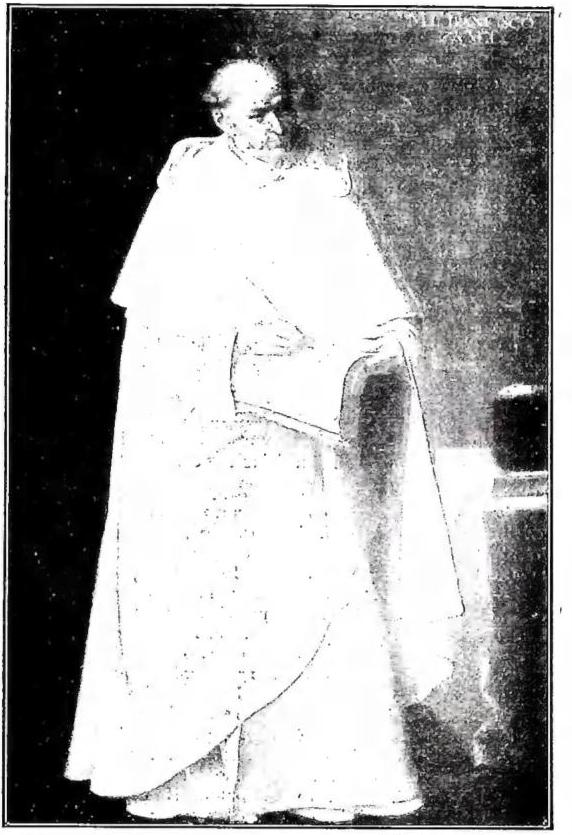
Pius IX then wrote to Vittorio Emanuele II (3 Dec.) to urge him to support the rights of the Holy See within the Congress, while at the same time solemnly protesting against the publication of a pamphlet entitled Le Pape et le Congrès, directly inspired by Napoleon III, in which the Pope was advised to renounce spontaneously his temporal dominions, with the exception of Rome and Latium. A few weeks later, Walevski having been replaced by Thouvenel in the direction of French foreign policy and Cavour, who had resigned after Villafranca, having returned to the government, the French Emperor consented to the annexations in exchange for the cession of Nice and Savoy; thus the plebiscites of Emilia and Tuscany could be held (11–12 March 1860), and the idea of the Congress fell completely, no less than did the agreements concluded at Z.