
FRANCESCO GIUSEPPE of Habsburg-Lorraine, Emperor of AUSTRIA and King of HUNGARY. — Son of Archduke Francis Charles, brother of Emperor Ferdinand and of Sophie of Bavaria, born at the castle of Laxenburg on 18 Aug. 1830, died at Schönbrunn on 21 Nov. 1916. He received a careful and strict education from distinguished tutors, among whom Count Bombelles and Abbot Rauscher, later Cardinal-Archbishop of Vienna, stood out; together with his mother they also contributed to instilling in him a deep respect and conscientious practice of the Catholic faith, which remained with him until his death. He was not destined for the throne, but circumstances brought him to it during the crisis of 1848. Ascending to it after the abdication of his uncle on 2 Dec. of the same year, he inherited a State that seemed destined for certain ruin.
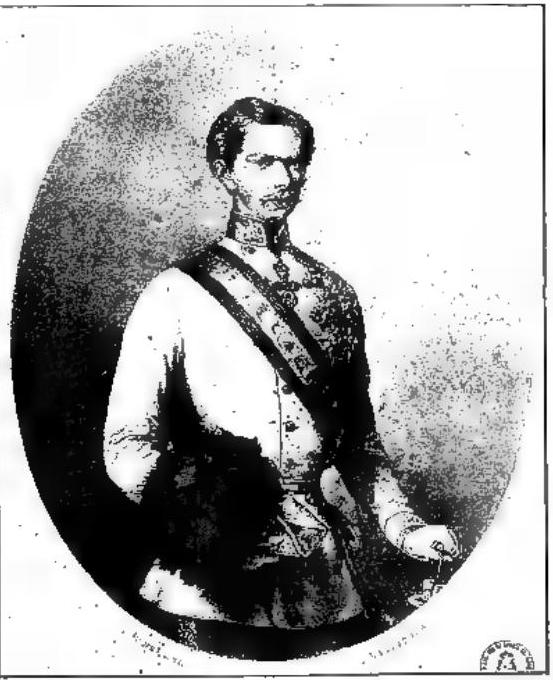
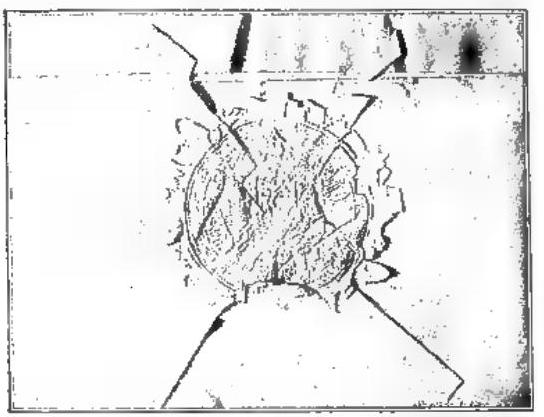
FRANCESCO GIUSEPPE OF HABSBURG-LORRAINE - Imperial seal affixed to the closing of the postulatio letter to Pius IX for the beatification of the Venerable Clement M. Hofbauer (7 Apr. 1865) - Vatican, Archive of the Sacred Congregation of Rites.
After 1866, the liberal movement strengthened. The era of absolutism had ended, and the Emperor was compelled to grant a constitution to Austria (1861) and to adapt to a compromise with the Hungarians (1867), who recognized him as their legitimate monarch in the lands of the Crown of Saint Stephen, obtaining in exchange full state autonomy, so that the only link with Vienna was through the person of the monarch and in common foreign and military policy. Centered on the Concordat, considered an expression still alive of the former form of government, a violent campaign was then initiated, both in the press and in Parliament, which became particularly intense after the lost war of 1866. The government, led by Beust, openly aimed at the unilateral denunciation of the Concordat, but the Emperor opposed it vigorously and instead advocated a modus vivendi with the papacy through the modification of certain articles. Faced with the opposition of the Holy See, Beust persisted in his campaign and, after having Parliament approve various laws that had already practically nullified its provisions, seized upon the definition of papal infallibility as a pretext to formally denounce it (30 July 1870). This was followed in 1874 by three laws that established the preeminence of the State over the Church.
The Emperor’s personal stance during the years from 1866 to 1874 (and indeed until his death) in the face of this anti-Catholic policy was rigidly constitutional. Inwardly, his conscience rebelled against such acts, and on more than one occasion he demonstrated his sincere attachment to the Holy See, but the preservation of the monarchy required from him the sacrifice of his true feelings and personal convictions. As the years passed, F. G. increasingly adapted to the status quo. Until 1870, he still harbored hopes of revenge against Prussia and Italy, but after the proclamation of the Second Reich (1871), he clearly saw before him the necessity of a lasting period of peace. A fixed point of his policy was loyalty to the Triple Alliance, thus sparing Europe the scourge of war for nearly half a century. Within the Empire, liberal institutions slowly but surely strengthened, ensuring prosperity and well-being for the populations. The progressive awakening of Slavic nationalism did not overly concern the Emperor, but the assassination in Sarajevo of Archduke Francis Ferdinand, designated as his successor after 1889, precipitated the end of the Empire, sealed by the death of the aged sovereign.