
FRANCESCO di SALES, saint. — Bishop of Geneva, Doctor of the Church, born at Thoreus (the former Duchy of Savoy) on 21 August 1567, died at Lyon on 28 December 1622.
I. LIFE
The firstborn of Francesco di Sales, lord of Boisy, and Francesca di Sionnax, both belonging to the ancient Savoyard nobility, he received his first education at home from a priest tutor, and then at the nearby colleges of La Roche (1573) and Annecy (1573). Although his father destined him for the magistracy, at his own request he received the clerical tonsure at the age of eleven. Sent to complete his studies in Paris (1582), he attended courses in rhetoric and philosophy at the College of Clermont, run by the Jesuits. In addition, by personal inclination, he devoted himself to theological studies. During the final years of his stay in Paris, between 1585 and 1588, he underwent a prolonged spiritual trial, arising from intense reflection on Predestination. Reduced to extreme anguish, even to despair of his eternal salvation, he was freed from it by adherence to Molinist doctrine.In the autumn of 1588 he left Paris and, after a brief stay with his family, at the beginning of 1589 went to Padua to study law at that University, particularly under the celebrated Guido Panciroli; from him, in the end, he received the doctoral cap with a public commendation (5 Sept. 1592). During this period he also continued his beloved sacred studies and advanced in the ascetic life under the guidance of the Jesuit Antonio Possevino. On returning to his homeland, he was appointed advocate of the Senate of Chambéry.
But F., determined to embrace the ecclesiastical state, when through the efforts of others he obtained the provostship of the Chapter of Annecy, resolutely entered upon that path, overcoming his father’s opposition. On 12 June 1593, at Annecy, he received the subdiaconate, and on 18 Dec. of the same year the diaconate and priesthood. A few months later, he offered himself to his bishop, Monsignor Claudio de Granier (of Geneva, but then resident at Annecy), for an apostolic mission requested by the duke of Savoy, Carlo Emanuele I: to restore to the Catholic faith the Chablais, a country of 30,000 inhabitants that some decades earlier had passed to Calvinism. In Sept. 1594, F. began to travel through it, preaching and instructing; but for a long time he found scarcely any hearers, so that he had to entrust his message to the circulation of leaflets. Left alone during the first three years of the mission, amid the apparent indifference of the duke, whom he visited in vain at Turin in Oct. 1596, he persevered firmly in the work, despite the extreme scarcity of results, the family’s persistent appeals, and repeated criminal attempts on his life.
He also had to conduct lengthy negotiations for the dispatch of several other missionaries to the country and to ensure their support from the revenues of ecclesiastical properties held by the Knights of SS. Maurizio and Lazzaro. Finally, after some isolated conversions of lords and important personages, the return of the Chablais to Catholicism, aided also by the changed political conditions following the peace between Savoy and France (1598), began to spread rapidly. At a solemn service celebrated at Thoreus in the presence of a papal legate and the duke of Savoy, several thousand public abjurations took place (the figure of 25,000 conversions was given by the Saint himself in a report to the Pope in 1603).
Meanwhile, in the summer of 1597, F. had been elected coadjutor bishop of Geneva; and at the end of 1598 he was sent to Rome on diocesan business, where he remained from Jan. to Apr. 1599, also successfully undergoing the canonical examination for the episcopate in the presence of Clement VIII and Bellarmine. On returning to Annecy, he devoted himself chiefly for another two years to consolidating the religious condition of the Chablais. In 1602 he was sent by his bishop to Paris to negotiate the reestablishment of Catholic parishes in the country of Gex, which had passed from the dominion of the Genevans to the sovereignty of France. During that eight-month stay, he met several great religious souls, in particular frequenting the circle of Madame Acarie, the future Maria dell’Incarnazione, of whom he became confessor. He preached before the court and King Enrico IV, as well as in numerous churches and monasteries. Among the aristocratic and cultivated society of Paris, he was then able to perceive the aspirations of many souls, for whom he would become an incomparable spiritual master, through his teaching on the possibility of practising the « devout life » even in the world.
Having departed for Annecy toward the end of Sept. 1602, he learned during the journey of his bishop’s death; he succeeded him in the see of Geneva, being consecrated on 8 Dec. and making his entrance into Annecy on the following 14th. The diocese, consisting of several provinces, partly under the sovereignty of the duke of Savoy and partly under that of France (Bugey and Gex), was extensive and devastated by recent religious innovations. The neighboring Calvinist Geneva, whose bishop had by then been reduced to bearing only the title, inflicted threats and reprisals upon Catholics. Added to these were the ruins accumulated by war and religious hatred, the indigence of the populations, and the poverty of the clergy. F., who had donated his patrimony and had only the scant revenues of the diocese at his disposal, lived in a cramped house with only a few members of his household.
He devoted particular care to the formation of the clergy and the instruction of the people, to whom he preached incessantly and for whom he personally conducted Sunday catechisms. He reorganized the diocese, reestablishing numerous parishes, convoking annual synods, and carrying out the pastoral visitation even of the most inaccessible places. Frequently called to preach elsewhere, on the occasion of the Lenten sermons given at Dijon in 1604 he met the baroness Giovanna Francesca Frémyot de Chantal, recently widowed, with whom in 1610 he would found the Order of the Visitation. Meanwhile, he prepared her through spiritual direction, exercised largely by correspondence.
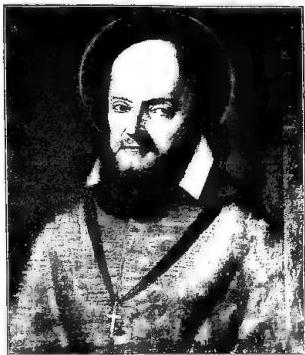
(photo: Civic Museum - Turin)
FRANCESCO DI SALES, saint - Portrait. Canvas by an unknown artist (1618). Turin, Monastery of the Visitation.
and then, in the retinue of the two courts united, to Lyon, where he spent his final month: on 11 Dec. he met for the last time with Mother de Chantal. On the afternoon of the 27th he was struck by apoplexy; and he died on the 28th, at about eight in the evening. The body was solemnly transported to Annecy in Jan. 1625 and buried in the church of the Visitation. F. di S. was beatified on 28 Dec. 1661 and canonized on 19 Apr. 1665; he was declared a Doctor of the Church on 7 July 1877. Pius XI appointed him patron of Catholic journalists and writers (encyclical Rerum omnium, 26 Jan. 1923). Feast day: 29 Jan. Nello Vian
II. DOCTRINE
In the history of French literature, F. di S. occupies a primary place because of his prose, so rich in images, comparisons, and allegories, so luminous with serene joy, so fresh and at the same time so composed in its sweetness and its very stylistic preciosity. F. di S. was not a “thinker” in the usual sense of the word: almost all his, albeit very extensive, activity as a writer arose occasionally as a written defence of his marvellous work as a refined and persuasive preacher. Thus the Controverses, composed during his mission in the Chablais, were nothing more than loose sheets posted in squares and along streets; yet they are of no slight importance for the conceptual definition of the Church’s “notes”: in opposition to Protestant theory he reasserts the Church’s unity, holiness, and catholicity, and, for the recognition of the truth of the Catholic creed, determines the rules of application: in addition to natural reason and miracles, Sacred Scripture, apostolic tradition, the Holy Fathers, the Councils, and the Pope, whom he does not hesitate to “call the ‘confirmateur infallible’” of the truth. The Sermons (of extreme clarity), the Lettre sur la prédication, his various pamphlets, his very rich correspondence, and also Les vray entretiens spirituels (conversations held by F. with the Daughters of the Visitation and written down by them) and La défense de l'estendart de la Ste-Croix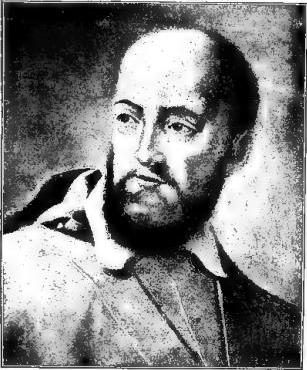
Affable, amiable, ready to forgive, to accommodate, and to understand the difficulties of life and the weaknesses of man, rich in great douceur toward everything that is not sin or an occasion of sin, F. di S. created a new “type” of devotion. Certain sources of Christian optimism undoubtedly directed his mentality and his very sentiment: the Combattimento spirituale attributed to Scupoli, the “benignism” of St Philip Neri, the Christian humanism of a Possevino, and devotio moderna itself. But F. di S. has an incomparable charm in the way he presents the bouquet of flowers belonging to the devotional tradition. Naturally, the Saint’s delicacy is not weakness: his devotional programme favours not femelles souls but vigorous and independent ones. The “femininity” of the soul disturbs and unsettles the heart and distracts it from loving prayer toward God, and ends by stifling complete resignation and the perfect death of self-love; for F. di S., sweetness and gentleness must never lapse into excessive imaginativeness and sadness and melancholy, but must instead always remain on a plane of serene and manly devotion.
Salesian optimism is decidedly Christocentric: immense, indeed infinite, are the salvific means that man has inherited from the death of Jesus. Hence salvation is open in every social condition (provided, naturally, that it is lawful). As has rightly been observed, the Saint’s revolutionary novelty consisted in opening the highest exercises of contemplative religious life also to those who live in the world: those who live in domestic life or hold public employment are given the possibility of sanctification, indeed of a perfect devout life, which is not content with a normally honest life but surpasses it, striving toward sanctity itself and toward the perfection of charity; everyone is permitted to sanctify himself while living in the world, without, however, receiving “aucune humeur mondaine”: the soul, as he wrote on the feast of St Mary Magdalene in 1600 in the preface to the Introduction à la vie dévote, can find the sources of a gentle piety amid the bitter waves of this century. Hence each state of life must practise some specific virtue: the virtues of a priest differ from those of a prince or a soldier, and those of a wife and a widow differ again; all must possess all the virtues, but each must possess in an eminent manner those specific to his own kind of life. All, however, must be familiar with frequent confession, hatred of grave fault, detachment from affection for venial fault and for useless or dangerous things, control of the will, simple and affectionate prayer, and above all frequent Communion (and, when there is a specific disposition, daily Communion as well); like the antidote of Mithridates, which so strengthened his body that it prevented him from being truly poisoned when, imprisoned by the Romans, he tried to kill himself, it is the sure antidote against the poisoning of sin and of every evil affection (the comparison is naturally the Saint’s and forms part of his demonstrative method, as in so many other comparisons). Prayer is not merely a means but an end to which all other practices of the interior life are subordinate; prayer (which is identical with love) is a voluntary adherence to the mystery of sanctifying Grace (Bremond).
S. F. di S., who began from a vision of life possessing a distinctly ascetic character (the deposit of the Ignatian Spiritual Exercises is particularly noteworthy), had initially harboured a certain suspicion of mystical illuminations; later, while working on the Traité de l'amour de Dieu around 1610, he felt the need to explore more deeply the problem of mystical prayer, and it was the Visitandines whom he directed who influenced him concerning this fundamental aspect of the life of the soul. Naturally, the answer came from his own interior journey and from the meditation of the Spanish and Italian mystics (from St Teresa back to St Catherine of Genoa and including various mystics of the Low Countries. He had begun to speak of L. di Granada in 1604; St Teresa had initially interested him little on a mystical level. The precursor of his development may be placed in 1604, when he met Chantal at Dijon; nevertheless, it does not appear that until 1610 he had departed from the ordinary path of devotion [A. Lluima]). S. F. di S. came to accept the entire mystical scale, including the prayer of quiet. In the latter, for the Saint, the will acts through a very simple acquiescence in the divine will and with no other desire than to remain beneath the divine gaze as God himself may please; this quiet is devoid of any self-interest; the faculties of the soul feel no contentment in it, nor does the will, except in the joy of having no joy for love of the divine will. The highest step of ecstasy is to have one’s will not in one’s own contentment but in that of God, and to have one’s contentment not in one’s own will but in that of God. It is well known that toward the end of the 17th century, during the anti-Quietist controversy, certain propositions of F. di S. were judged Quietistic (for example, by Bossuet); in reality, however, F. di S. had never been a Quietist precisely because he had not rejected the virtues of hope and charity during any stage of mystical experience. S. F. di S. was accused (also by Bossuet) of having written that natural love of God arrived of itself at supernatural love; but
in reality, for s. F. di S. the natural inclination toward the love of God is not an affection for loving God, precisely because the soul prepares itself to be justified only negatively, by rejecting the impediments that block its path and placing man in a position where he may be justified tout gratuitement by Grace (Pernin). It must not, however, be forgotten that, in the problem of predestination, F. is a Molinist and therefore believes that it proceeds from God post praevia merita (in this regard, on 28 August 1618, he rejoiced with Lessio, because he upheld the theory of election to glory following the foreknowledge of merits, a theory which, s. F. says, is confirmed by the antiquity, sweetness, and authority of Sacred Scripture, and which is more worthy—than any other doctrine—of divine mercy and goodness: cf. on this X.-M. Le Bachelet, Prédestination et grâce efficace, II, Louvain 1931, pp. 321 ff.).
The Saint’s doctrinal work is not only a milestone in the history of Christian spirituality, but also in that of specific dogmatic-mystical theology: his theology of love, his loving fear, which does not desire terror of God, his declared possibility of accepting pain without anger solely in the love of Christ, and his own conscious support for the Scotist tendency in the problem of the Incarnation (the Word would have become incarnate even if man had not sinned) brought back into the modern world, shaken by rigid and absurd Calvinist theology, the gentle and active vision of feeling oneself a child rather than a slave of God.