
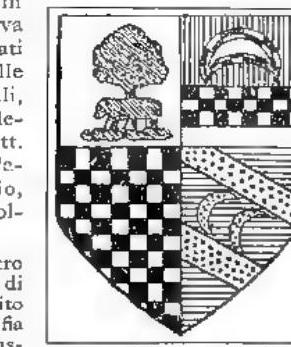
FRANCESCO SAVERIO (don FRANCISCO de JASU y XAVIER), saint. – Jesuit missionary and patron of the missions, b. at the castle of Xavier (Navarra) on 7 Apr. 1506 to don Juan de Jasu, doctor of the University of Bologna, alcalde of the royal court and president of the royal council, and to doña Maria de Azpilicueta, of the ancient local nobility; d. on the island of Sancian, off the coast of China, on 3 Dec. 1552.
SUMMARY:
I. Preparation
II. In India
III. In Japan
IV. The voyage to China
V. Conclusion
VI. Iconography.I. PREPARATION (1506–42)
After completing his preliminary studies in his homeland, F. S., who wished to emulate his ancestors not in a military career, as his brothers had done, but in the ecclesiastical, went to the University of Paris in September 1525, taking up residence as a boarder in the College of Saint Barbara.After acquiring the degree of Doctor in four years of study, he immediately began teaching philosophy at the Dormans-Beauvais College. He harboured ambitious designs and dreamed of rich benefices in Pamplona; but his companion at Saint Barbara, Ignatius of Loyola, drew him to himself and his cause by inducing him to reflect on the words of the Gospel: “What does it profit a man to gain the whole world, and forfeit his soul?” (Mk 8:36). The death of his mother (1529) and of his holy sister Maddalena (1533), the discovery of revolutionary plots among the heterodox who frequented the university, and the corrupt examples of some professors and many students had also made a deep impression on his soul. On 15 Aug. 1534, with Ignatius and five other students, he took a vow in the chapel of the Martyrs at Montmartre to make a pilgrimage to the Holy Land and to consecrate himself to an apostolic life in poverty and chastity. Under Ignatius’s guidance, before beginning his theological studies, he made the Spiritual Exercises of thirty days, which fixed in him forever a burning love of God and of souls.
II. IN INDIA (1542–47)
Having arrived at Goa on 5 May 1542, F. S. devoted himself especially to the Portuguese colony, which left much to be desired in the practice of Christianity, greatly scandalizing everyone, especially the pagans who were to be converted; then he extended his apostolate in favour of the sick and prisoners, with a special solicitude for children and slaves, teaching them Christian doctrine. In September of the same year the governor of the Indies sent him to the southern regions, which promised abundant fruits of conversion. In truth, Christianity had already been brought there by Portuguese soldiers, who had landed to build their fortresses and establish their trade; but all had amounted to little more than administering baptism to war captives and natives without sufficient instruction or preparation. Thus, once the priests who had baptized them had left, many had lapsed back into their former idolatry. This had happened among the pearl fishers of the Paravi coast, who, persecuted by the Moors, eight years earlier had sought the help of the Portuguese and had been baptized. With the aid of interpreters, F. S. immediately translated into their language the principal prayers and the most essential articles of the Faith; then he went from village to village, tirelessly acting as their teacher, physician, arbiter in disputes, defender against the injustices of pagan rulers and Portuguese officials, esteemed and treated as a saint and wonder-worker.Even here, in two years of labour, he founded schools and churches and reaped a prodigious harvest. The inhabitants of the island of Manaar called upon him and received baptism; the fishermen of the Macua caste in Travancore were all baptized, to the number of 10,000; already before this the Saint had written that often his arm would fall from fatigue and his tongue become inarticulate from thirst while continuing the ritual prayers. While baptizing the Macua he received the news that 600 of the Christians of Manaar, invited to return to paganism, had preferred to seal their faith with their blood.
In the following years, 1545–47, F. S. devoted himself to new fields of labour. He preached for four months at Malacca, the pre-eminent commercial city; he visited the Moluccas; he went to the island of Amboina, near New Guinea, and to the nearby islands of Waranula or Seran and of Uliasser; then he pushed on as far as Ternate, the extreme Portuguese fortress; and beyond to the islands of the Moro: Halmahera, Mocotai, and Rau, inhabited by head-hunters, who had indeed killed their last missionary. After three months of intense work in these islands, where many of the natives proved refractory to every word of the apostle, yet where he attests to having enjoyed the most intimate consolations, even to the point of his eyes growing dry from tears of joy, he returned to Ternate, where he converted Neachile, the mother of the deceased sultan; but he achieved nothing with the reigning sultan, who preferred his hundred wives and numerous concubines to the new religion.
III. IN JAPAN (1547–51)
Having finally reached Malacca in December 1547, while occupied with sending missionaries to confirm and increase the Christians in the places he had visited, he was introduced to a Japanese fugitive, Anjiro, who had fled his homeland because of a homicide, torn by remorse and desirous of finding peace. The information that he received from Anjiro about Japan, its inhabitants, their religion, and culture inflamed F. S., who judged it fitting to bring the faith also to that people, which he would later call “his delight.”He therefore set out in 1548 for the new territory of conquest and landed at Kagoshima on 15 August, accompanied by Anjiro, now baptised and ready to assist him in his apostolate. The daimyō Shimazu Takahisa welcomed him warmly, and while the Saint was studying the language, Anjiro won over to the Catholic Faith more than a hundred relatives and acquaintances; he even won one of the wives of the commander of the nearby Ichiku castle, Niirō Ise-no-Kami. The harvest was thus promising; but when the daimyō, stirred up and frightened by the bonzes, forbade any further Baptisms, Francis decided to present himself even to the king at Miyako (Kyoto) and to the universities of the capital, to win them for Christ. He therefore set out on his journey; along the way, at Hirado, warmly welcomed by the Portuguese merchants and by the governor Matsūra Takamobu, he succeeded in making more than a hundred Christians in a few days; at Yamaguchi, however, despite the courteous welcome of the daimyō Ōuchi Yoshihaka, who even granted him an audience, he achieved nothing, and no more success attended him when he set foot in Miyako (at the beginning of 1551), his heart swelling with the hope of soon hearing there the hymns of glory to the true God. A civil war had indeed broken out: the bonzes and the universities would not open their doors to him; the king would not receive a foreigner who presented himself so poorly and without gifts. He then descended again to Yamaguchi, presented himself to the daimyō in the pomp of his finest clothes and with precious gifts. He was received with great honour and enjoyed the fullest freedom. Thus there quickly arose a flourishing Christianity, which extended even into the neighbouring kingdom of Bungo, whither Francis had been invited by the young prince Ōtomo Yoshishige.
IV. THE JOURNEY TO CHINA (1551–52)
Departing from Japan in the winter of 1551, to return to India where urgent business called him, Francis left behind a Church now founded and rich in about 1,000 Christians. Another thought then took shape in the Saint’s mind. Since China was for Japan of that time the source of all truth and wisdom, it was fitting to win her for Christ so as to give Christianity in the East a secure base. But entry into that Empire was strictly forbidden to every foreigner. Francis, having set out on 17 April 1552, reached in August the island of Sancian. There he found old friends who offered him hospitality and, after much effort, also found a Chinese man who, for 200 ducats, would secretly land him at the gates of Canton. But he waited in vain; on the appointed day, 19 November, the Chinese did not appear. The winter was harsh, the cold intense, and the ships that had accompanied him had withdrawn. Francis fell ill with pneumonia; deprived, as he was, of every care, on the morning of 3 December he rendered his soul to God.His body was enclosed by the servant Antonio di Santa Fe (who had come with him and was later to serve as his interpreter) in a wooden chest filled with lime, and buried in the northern part of India. Thence, intact and uncorrupted, the corpse was transported first to Malacca and then to Goa, where it is preserved in a rich and precious silver sarcophagus in the church of the Bom Jesus (the right forearm is kept in the church of the Gesù in Rome).
The solemnity of the translation is recounted by Pietro della Valle, who was present at the ceremony. The statue of the Saint, in silver, which adorns his chapel was donated in 1670 by a Genoese devotee, Maria Francesca Sopranis. When the governor of India entered upon his office, he was wont to hand over his bamboo staff to the Saint and take the one which Francis had previously held, as a sign that he wished to leave all governance in the hands of the great protector of India. The sarcophagus is a gift of the Grand Duke of Tuscany, Ferdinando II de’ Medici (cf. G. Schurhammer, S. F. S., profilo, Venezia 1922, pp. 112–13).
V. CONCLUSION
St. FRANCIS XAVIER is to be regarded as the pioneer of modern missions, conducted according to a systematic plan of study, conquest, and adaptation. He is also an effective and compelling example of fervor and zeal. His letters continue to attract and enthuse souls; his figure is esteemed and venerated even by heterodox and pagans. If there were exaggerations, e.g., in the count of conversions he effected, historical criticism has now reduced these to about 50,000; if his continual moving from region to region might suggest a fickle and restless character, it must be remembered that he was not merely a missionary but a papal legate, superior, provincial, and pioneer who had to acquaint himself with his territory and prepare the ground for organized work.He was beatified by Paul V (25 Oct. 1619) and canonized by Gregory XV (12 March 1622), although the bull bore the date 1623. In 1904 Pius X declared him patron of the Propagation of the Faith (brief In Apostolicum of 25 March 1904); in 1927 Pius XI proclaimed him, together with St. Thérèse of the Child Jesus, patron of all missions, and his feast (3 Dec.) was raised in 1929 to the rank of a double of the second class. — See pl. CVI.
Celestino Testore
VI. ICONOGRAPHY
The oldest surviving image of St. Francis Xavier is preserved in the small chapels of St. Ignatius in the Church of the Gesù in Rome, and some scholars identify it with one of the two portraits of the Saint commissioned in 1583 by Visitor Valegnani in Goa.However, the foundation for his iconography may be considered a painting on canvas, now in the deposits of the Vatican Pinacoteca, which was likely the work placed on December 2, 1599, in the Church of the Gesù in Rome, to the right of the high altar, opposite the painting of St. Ignatius commissioned at the same time by Cardinals Baronio and Bellarmino. The fact that the halo and the lily held by the Saint appear to have been added to the original painting—thus probably when the Saint was canonized in 1622—confirms this hypothesis. In this painting, St. Francis of Xavier is depicted wearing the cassock and cloak, bareheaded, with his face framed by a brown beard. The work, perhaps temporarily placed on the altar dedicated to the Saint in the Church of the Gesù, was likely replaced around 1623, shortly after canonization, by another painting of great artistic merit, also now preserved in the Vatican Pinacoteca. This refers to the painting by A. van Dyck depicting the Saint in the act of walking with long strides against a landscape background. The Saint’s face, turned toward heaven, bears an expression of ecstasy, while his hands open his tunic over his chest, as if to relieve the great ardor that inflames his heart. This gesture subsequently became typical in the iconography of the Saint. The representation is completed by a group of angels descending from heaven to place a crown of roses on the Saint’s head, while in the background a dream is depicted: the vision he had of himself in a deserted countryside, carrying an old Indian on his shoulders, an allusion to the evangelizing mission to which St. Francis Xavier sacrificed his life.
Even van Dyck’s painting was later removed when, between 1674 and 1678, the Jesuit Pozzo, with the assistance of C. Maratta, redesigned the altar of the Gesù, and Maratta himself painted the work depicting The Death of the Saint.
Numerous and important for their artistic value are the paintings depicting scenes from the life and miracles of the Saint; among others, particularly noteworthy are Rubens’ Preaching, in the Hofmuseum in Vienna; a miracle painted by Nicolas Poussin in 1642 and now in the Louvre; and a painting by Luca Giordano in the church of the Jesuits in Naples, depicting the Saint instructing the Indians.
Other images of particular interest include a painting by Carlo Dolci in the Pitti Gallery in Florence; another by Sassoferrato, in which the Saint holds a pilgrim’s staff; another by Giovanni di Ruelas in the University of Seville; a statue in the chapter hall of the cathedral of León, where the Saint holds a cross; and also a statue by Günther and Sternberg, dating from the second half of the 18th century.
Special mention should also be made of the painting executed in 1698 by the Colombian artist Gregorio Vásquez (1638–1711), now in the sanctuary of Bogotá, depicting the preaching of the Saint, as well as the numerous series of his images painted by artists from the lands where the Saint carried out his apostolic work.