
LISBON, PATRIARCHATE OF. - In Portugal. It has an area of 15,000 sq. km. with 1,621,500 inhabitants, of whom 1,297,000 are Catholics. It has 324 parishes, 348 diocesan priests and 92 religious, 1 seminary, 29 male and 73 female religious communities (1950).
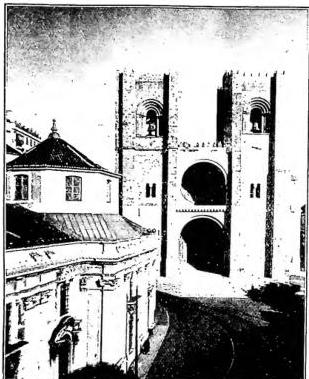
(courtesy of Prof. E. Jovi)
During the reign of João V, the cathedral of L. obtained many prerogatives from the Holy See. Thus Clement XI, with the bull Apostolatus ministerio of March 1, 1710, erected the royal chapel into a collegiate church, under the title of St. Thomas, with 6 dignities, 18 canons, 12 beneficiaries, and other missionaries of royal appointment. The same Pontiff, with the bull In supremo apostolatus solio of Nov. 7, 1716, elevated the collegiate church of St. Thomas to the dignity of a church and patriarchal basilica, with its seat in the royal chapel until a church and patriarchal basilica should be built. With the decree of Feb. 12, 1717, João V granted the patriarch of L. all the honours that the cardinals of the Holy Roman Church held in the Kingdom, and with the decree of Apr. 1, 1719, he donated to the patriarch of L. and his successors an annual pension of 220 gold marks.
In 1717 Clement XI granted the Chapter of the patriarchal church further privileges. Already earlier João V had granted them all the honours and prerogatives that the bishops held in the Kingdom. The same Pontiff also divided the diocese into two, the archbishopric church to the east and the patriarchate to the west, a division which also corresponded to the civil division of the city made by King João V, which gave rise to many disputes. Thus it was debated whether the solemnity of the Forty Hours should be held in the archiepiscopal church, etc. Clement XI ratified this division with the bull Gregis dominici cura (Jan. 3, 1718). This Pontiff granted the patriarch of L. the faculty to crown the kings (bull Sacrosancti apostolatus of Sept. 20, 1720), a faculty that had previously been granted to the archbishop of Braga by Eugene IV. Clement XII, with the bull Circunspecta Sedis Apostolicae (March 8, 1737), granted João V the right of patronage over the Eastern Church. He also provided that the patriarch of L. should be elected cardinal in the Consistory immediately following his election.
The Eastern archbishopric was suppressed by Benedict XIV with the bull Salvatoris Nostri Mater of Dec. 13, 1740, thereby putting an end to no small number of unpleasant disputes. Immediately after the execution of the bull, the King also suppressed the civil division of the city.
Clement XI, at the request of the patriarch seconded by the King, permitted the vicar general to be an archbishop, «pro hac vice tantum et dummodo huiusmodi concessio non transeat in exemplum». Despite this clause, from then on all vicars general held the title of archbishops of Lacedaemonia, a title which in the 19th century was changed to that of Mytilene.