
VINCENZO DE PAUL (or DEPAUL, as he signed his name; Ital. DE' PAOLI), saint. — B. at Pony near Dax in Gascony on 24 April 1585, d. in Paris on 27 September 1660.
Born into a very modest family of peasants, he was the third of the six children of Giovanni (d. 1598) and Bertranda de Moras (d. after 1610); he studied at Dax and then at Toulouse, where in 1604 he became a bachelor of theology. Ordained a priest on 23 September 1600, he went to Paris in 1609 in the hope of obtaining a benefice. In 1610 he became almoner to Margherita di Valois; on 17 May 1610 he obtained the abbey of St-Léonard-de-Chaumes, and on 6 May 1612 the parish of Clichy-la-Garenne. In the meantime he Bérulle (v.) and received the imprint of his spirituality. He did not meanwhile abandon his studies, and in 1623 obtained a licentiate in canon law.
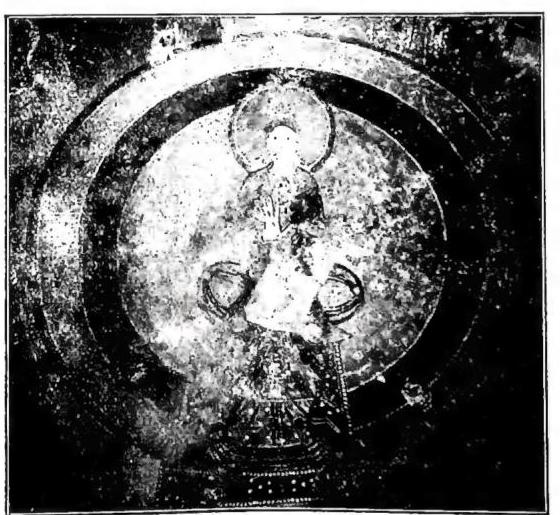
(phot. Bulloa)
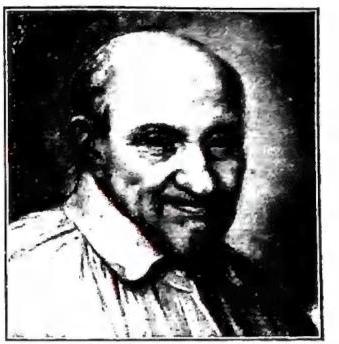
(phot. Gab. fot. naz.)
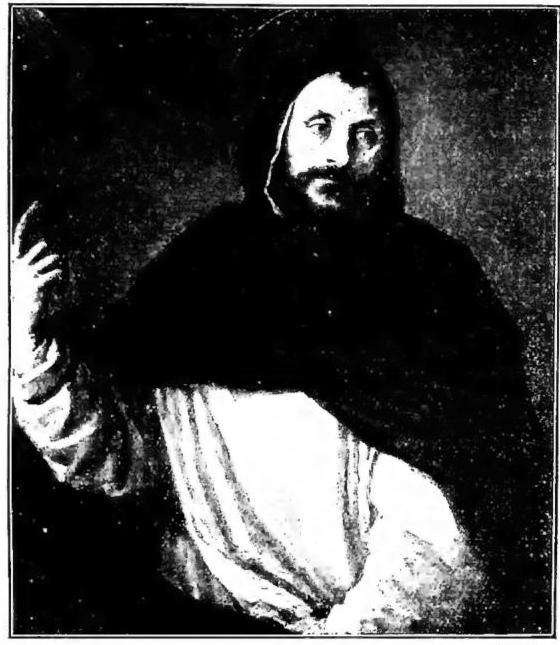
(phot. Alinari)
VINCENZO FERRERI, saint — Oil painting by Tiziano — Rome, Galleria Borghese.
1617, he had organized a Confraternity of Charity at Châtillon to provide for the poor who were ill and in need; he founded a similar one at Clichy in 1623, and others were established on their model in the parishes of France. But in Paris especially, the Ladies of Charity (v.) in those forms of assistance that the manifold needs of a great city required. There was no form of misery to which he did not seek to respond, beginning with that of those condemned to the galleys and extending to Christian slaves in Barbary; from beggars to prisoners, from abandoned infants to women in danger or lost. He involved the Ladies in caring for the sick at the Hôtel-Dieu, particularly in preparing them for death; and, to assist the Ladies, he Charity (v.), to whom he gradually gave an organization of their own. During the public calamities caused by wars and disturbances, he responded to the immense needs of the most devastated provinces of Lorraine (1638), Île-de-France (1648), and Picardy (1650).
The Saint’s second concern was the sanctification of the people through humble and simple preaching and frequent missions; for this purpose he hastened to associate with himself zealous priests, whom he gathered Congregation of the Mission (v.). For this purpose he obtained the Collège des Bons-Enfants (1625), with an adequate endowment provided by Madame de Gondi. In January 1632 the missionaries also received the priory of S. Lazzaro, which had belonged to the Canons Regular, and from it they acquired their name in France. In addition to missions among the French people, they subsequently undertook missions among infidels, particularly in Madagascar. Closely connected with the establishment of the Missionaries was the Saint’s third concern: the reform of the clergy, to which he devoted himself through ecclesiastical retreats (1633), the Association of the Tuesday Conferences, and seminaries (1642).
Undeniably, in the development of this activity the Saint received the help and cooperation of many, and the Company of the Blessed Sacrament (v.), begun in 1630 and of which he was a member even before 1637, must not be forgotten. But while the Company came to an end in 1666 because of the hostility of the court, the Saint’s work continued to expand, nor did the Revolution succeed in preventing its revival. When he died, his influence had crossed the frontiers of
his country. The cause of beatification began in 1697 and concluded on 21 August 1729; in 1737 Clement XII canonized him, and on 12 May 1885 Leo XIII proclaimed him patron of charitable works. His feast for the universal Church is celebrated on 19 July.
THE WRITINGS. — S. V. published only the Règles ou Constitutions communes de la Congrégation de la Mission (Paris 1658). Nevertheless, in 1748 the number of letters he had signed was estimated at 30,000. The Coste edition contains in its first 8 vols. those that have been preserved, that is, fewer than 300c, addressed to 400 different correspondents from every social class and of prime importance for the history of religious life in the 17th century. Of the Entretiens aux Filles de la Charité, the text of 120 conferences has been preserved (vols. IX and X of the Coste edition), living models of catechesis, which make equally effective use of Sacred Scripture and of the facts of everyday life. In vols. XI and XII, the Coste edition gives 224 texts or summaries of addresses delivered to the priests of the Mission, conveying a particularly direct and vigorous spiritual teaching. The doctrine taught by s. V. certainly goes back to that of de Bérulle and s. Francesco di Sales, whose works he read assiduously, but it was passed through and lived out in the light of his experience and his spiritual reflection. In the face of Quietist degenerations and Jansenist rigorism, it represents the continuation of the finest current of French asceticism.
Pio Paschini-Andrea Dodin