
CATECHESIS. - Oral instruction in the Christian religion given by a competent minister of the Church.
According to its etymological meaning, the word c. (κατήχησις) derives from the verb κατηχέω, to cause the voice to come from above, “to echo” or “to cause an echo”; in a figurative sense: to teach viva voce, so that the word of the teacher is like an echo to the question of the disciple, and the response of the disciple to the question of the teacher) evokes the idea of an interrogation and a response. This is the principal form of c. from the very beginning: a mutual dialogue. In this sense, the New Testament uses the verb κατηχεῖν: St. Luke, who composed his Gospel to remind Theophilus of what he had already learned from their dialogue: περὶ ὧν κατηχήθης (Lk 1:4); he describes Apollos as κατηχημένος τὴν ὁδὸν τοῦ Κυρίου (Acts 18:25); St. Paul speaks in the assembly (ἐκκλησία) to instruct (ἵνα κατηχήσω, 1 Cor 14:19) and wishes that the one who is instructed (ὁ κατηχούμενος) communicate with the one who catechizes (τῷ κατηχοῦντι, Gal 6:6); Rom 2:18 signifies religious instruction in general. Hence, among the Greek Fathers, the use of the word κατήχησις, and among the Latins, the word catechesis, to denote either the act of teaching, or the religious instruction itself, or even its object. With the organization of Christian catechumenate, this term takes on a more precise and restricted meaning: it is applied particularly to the oral instruction that serves as preparation for Baptism, and consequently, it is directed only to the uninitiated. Another form of c., used from the beginning, is preaching, by which the Christian message is spread. The framing and development of the theme vary according to the audience: different for Jews, different for Gentiles.
OUTLINE:
I. Apostolic catechesis
II. Post-apostolic catechesis
III. From the beginning of the 3rd century to the middle of the 5th century
IV. From the end of the 5th century to St. Gregory the Great. - V. From St. Gregory the Great to the Council of Trent. -VI. From the Council of Trent to the present day
VII. Catechesis in the present legislation of the Church
VIII. Catechesis in the missions
IX. Catechesis in Christian archaeology.I. APOSTOLIC CATECHESIS
Before the New Testament writings appeared (written catechesis), oral catechesis was already alive and operative, the authentic expression of the Church’s magisterium and the primary source of written catechesis, which began with Peter’s first discourse (Acts 2:14–36) and developed rapidly as Christianity spread in extent and depth. In this ministry the Apostles were assisted by a special class of catechists called in the New Testament “evangelists” or heralds of the “good news,” to whom were added the “doctors” or “teachers,” that is, persons endowed by the Spirit with the “gift” of teaching (cf. Acts 21:8; 8:5 ff., 40; Eph 4:11; 2 Tim 4:5; Rom 12:7; 1 Cor 12:8: the “evangelists” were perhaps entrusted with the first evangelization, while the “doctors” or “teachers” had the task of perfecting instruction, always under the Apostles’ authority). No text or formulary of apostolic catechesis has come down to us. But the discourses recorded in the Acts of the Apostles allow us in some way to reconstruct its main lines (discourses of Peter: Acts 2:14–40; 3:12–26; 5:29–32; 10:34–43; discourses of Paul: Acts 13:16–41; 17:22–31; discourse of Stephen: Acts 7:2–53). Above all, the Synoptic Gospels reflect and express apostolic catechesis. The so-called Apostles’ Creed (q.v.) cannot, in its present form, be traced back to the Apostles, but its content is apostolic. Likewise, the Didache or “Doctrine of the Twelve Apostles” (which is not to be identified with the “doctrine of the Apostles,” Acts 2:42; cf. Titus 1:9), a precious document from the sub-apostolic age, is a vestige of the Apostles’ moral catechesis, especially in its first part (chaps. 1–6), which, under the form of the “two ways” (cf. Matt 7:13 f.), contains the principal norms of Christian life, with long lists of sins that find echoes in the apostolic letters (cf. Rom 1:29; Gal 5:19 f.; 1 Tim 1:9 ff.; 2 Tim 3:2 ff.).The method of apostolic catechesis must have been that of oral instruction repeated several times, in simple and practical form. The general subject was faith in Christ and the conditions for salvation. Yet both the method and the object, though sharing fundamental lines, varied according to the hearers. These were divided first of all into two broad categories: Jews and Gentiles. In catechesis for Jews, essential was a reference to the Old Testament economy and prophecies to show their fulfillment and realization in Christ (cf. the two classic discourses: Peter’s at Jerusalem, Acts 2:14–36, and Paul’s at Pisidian Antioch, 13:16–41); for Gentiles, on the other hand, it was first necessary to remove the obstacle of paganism and inculcate faith in one God who is Creator and Redeemer (Paul’s discourse at Athens, Acts 17:22–31). Moreover, catechesis could be directed to a new audience, people to be won over to the faith, or to those already initiated (who might be catechumens or neophytes or mature Christians). Hence a distinction must be made between a first and rudimentary catechesis (as, for example, with the Ethiopian eunuch, Acts 8:27–38) and a more extensive and profound catechesis (cf. Acts 18:26; St. Paul distinguishes between the work of “planting” and that of “watering,” between laying foundations and building upon them, 1 Cor 3:6–10). Among the “elementary principles of the oracles of God” (Heb 5:12) are listed repentance and faith in God, Baptism and Confirmation, the resurrection and the final judgment (Heb 6:1–3). This faith in God necessarily implied faith in Jesus Christ, the divine bond and Son of God; indeed, care was taken to announce Christ from the very beginning of catechesis so as to impart at least a summary knowledge of His life and work (cf. Acts 8:35; 10:36–43; to the centurion Cornelius). Around these fundamental motifs, common to all, the other elements—dogmatic, moral, and historical—developed in an orderly and gradual manner.
Although there were many catechists (Apostles, evangelists, doctors), primitive catechesis had a fundamental unity, as is evidenced by the various discourses in the Acts; the common theme and motifs can easily be discerned despite the variety of form suggested by improvisation and circumstances. Moreover, it is easy to suppose that, under the Apostles’ influence, catechesis unfolded in a certain order, according to a common line and a well-defined doctrinal scheme (cf. Acts 2:42, “the Apostles’ teaching”; Rom 6:17, “the form of teaching”; above all, Luke 1:2 traces the program of catechesis back to eyewitnesses, the Apostles). Later, particular forms or types of catechesis could emerge according to the different needs of the environment (e.g., that of Jerusalem, directed especially to Jews or converts from Judaism; that of Antioch, which had to adapt to the needs of a mixed audience, Jews and Gentiles; and that of Rome, with a predominance of the Gentile element). Likewise, one may speak more specifically of the catechesis of Peter, of Paul, of John, of the other Apostles, in reflection of the particular doctrine contained in their writings. But these are developments, adaptations, ramifications of the primitive and common type of catechesis, whose fabric can rightly be traced back to the Apostles. Peter, both because of the preeminent place he held among the first heralds of the “good news” and because in his discourses he seems to have outlined the main lines of catechesis (cf. Acts 1:22; 2:22–40; 10:36–43). And this catechesis was not the product of a collective creativity, as many rationalists and, more recently, advocates of the “form-critical method” (Formgeschichte) claim, but the expression of a magisterium guaranteed by the most immediate and qualified witnesses (Luke 1:2; Acts 10:41).
The Apostles’ dogmatic and moral catechesis embraced, as can easily be deduced, the principal
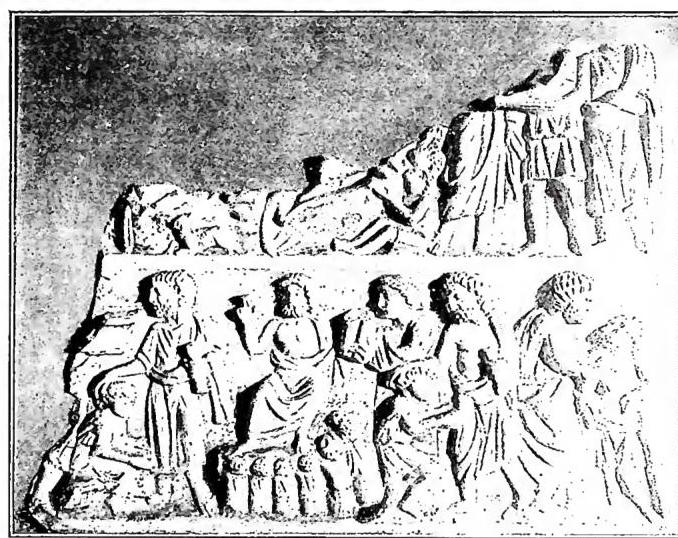
CATECHESIS – The Sermon on the Mount and miracles: the woman with the issue of blood, the paralytic, and the man born blind. Fragment of a Christian sarcophagus (5th century) – Rome, National Museum of the Baths.
Catechesis is the oral teaching of Christian religion by a minister. It is probable that from apostolic times there was a kind of formulary summarising the most elementary truths. A. Seeberg attempted to reconstruct, starting from 1 Cor 15:3, this rudimentary “creed,” which would essentially include the following points: God, creator of all things, sent his Son, born of the seed of David, Jesus Christ, who died for us, was buried and rose again on the third day according to the Scriptures, ascended to the right hand of the Father, and will come again in the clouds of heaven with majesty and power (Der Katechismus..., p. 85). But this reconstruction, which is a mosaic of fragmentary data scattered throughout the various New Testament writings, is subjective and insufficient. Above all, the apostolic catechesis could not fail to include an explicit mention of the Holy Spirit and thus of the Trinitarian dogma: in fact, Baptism was not conferred except on those who had some knowledge of the Holy Spirit (cf. Acts 19:3), and the Trinitarian formula prescribed in Matt 28:19 was essential in Baptism. Rather, it seems possible to affirm that the basis of dogmatic truths in apostolic catechesis did not substantially differ from the content of the current Apostles’ Creed, which by the second century was everywhere affirmed as the genuine expression of the Apostles’ teaching.
Greater emphasis, however, was given to historical catechesis. It was supremely important for the Apostles to make known, first in summary form and then in ever more adequate measure, the person and work of Jesus, his doctrine, the miracles he performed, and the rites he instituted. Within the framework of this catechesis, preference was given, as can be seen from the speeches in the Acts of the Apostles, to the events of the public life “from the baptism to the death and Ascension” (according to the outline traced by Peter: Acts 1:22), especially those relating to the ministry in Galilee, which offered the greatest number of miracles and a form of doctrine that was easier and more limited. Facts and discourses that, because of their delicacy and sublimity, could not be the object of ordinary catechesis (such as the most sublime discourses reported in the Fourth Gospel), necessarily belonged to a higher level of instruction.
The expression and reflection of apostolic catechesis are the Synoptic Gospels (the Fourth Gospel stands apart, and its singularity is due to the direct experience of the Apostle John, who is its author). It is known that around the year 60, at the time of the composition of the Third Gospel, several compilations already existed (Luke 1:1 ff.) concerning the facts of Jesus’ life. Among these writings were certainly the first two Gospels; the others have been lost because the Church took no interest in them. But all of them, like the Gospel of Luke, drew from the common source, the apostolic preaching or catechesis: they were based, that is, on the authentic testimony of those “who from the beginning were eyewitnesses and ministers of the word” (Luke 1:2). The imprint of apostolic catechesis in the Synoptics is evident. The content and common structure of the narrative (including the preaching of John the Baptist and the beginnings of Jesus’ public life, the ministry in Galilee, some salient events of the ministry in Judea, the detailed account of the Passion and Resurrection) reflects the broad lines of catechesis; likewise, the discourses of Christ reported there are those that, because of their moral and parabolic content, were most widely used in oral instruction. What Clement of Alexandria says of Mark (in Eusebius, Hist. eccl., II, 15, 1-2), that at the insistence of the Romans he committed to writing “the catechesis delivered viva voce by Peter,” must be affirmed of the other Synoptics as well, namely that they recorded in their Gospels the facts and discourses of Jesus along the lines of catechesis, apart from the preferences and touches that, without altering the substance, responded to the particular aim of each.
II. POST-APOSTOLIC CATECHESIS
A precious document from the period immediately following the apostolic age is the Didachē, which in its first six chapters offers a model of instruction addressed to catechumens before Baptism.It sets forth the two ways, one leading to life through the practice of the double evangelical precept: love of God and of neighbor, with the moral rule: do not do to others what you would not have done to yourself; the other, the way of death, which is avoided by abstaining from the sins that are listed. Although this instruction does not speak of what must be believed—it is limited exclusively to the precepts of moral life—nevertheless it presupposes that some have manifested their desire to renounce pagan life and to profess the Christian life, and therefore it presupposes at least a rudimentary knowledge of pagan errors and Christian truths. Moreover, it exhibits a primitive mode of instruction, such as was in use for some time both in the East (in Jerusalem, Antioch, Alexandria, Carthage, as evidenced by the adaptations of the Didachē found in the Letter of Pseudo-Barnabas, in the Constitutiones Apostolorum, etc.) and in the West (which reappears in the ancient Latin version), in the Doctrina domini Severini episcopi (5th century), in the Rule of St. Benedict, ch. 4 (6th century), in the Ammonitio sive praedicatio s. Bonifatii episcopi de abrenuntiatione in Baptismo, 8th century (ms. of Melk: DACL, II, cols. 2542-43), in the Dicta s. Pirmini (d. before 754, etc.); cf. J. Schlecht, Die Apostellehre in der Liturgie der Katholischen Kirche (Freiburg 1901, pp. 84 ff., 127, 129).
Another aspect of primitive catechesis is preserved in the concise doctrinal teaching of the Symbol, which, composed of phrases contained in the writings of the Apostles, had its primitive redaction in the baptismal Creed not later than the year 100. The formula “in the name of the Father and of the Son and of the Holy Spirit” (Mt 18:19) presents the nucleus of the Trinitarian part, to which the Christological part was soon added, according to Acts (2:38; 8:16; 10:48; 19:5). Once composed, the Creed had to be explained to those who presented themselves as catechumens, and therefore the teaching of this formula of faith and its explanation are intimately linked to Christian initiation. Indeed, at a solemn assembly the bishop would give the text with his commentary; at less solemn gatherings the Symbol was repeated until it was perfectly memorized and defended against any alteration or variant and against the activity of dissident sects. Thus the essentials of the rule of faith are found in the Apostolic Fathers, especially in St. Ignatius of Antioch, and in the apologists, in St. Justin, Aristides, St. Irenaeus (cf. A. Harnack, Materialien zur Geschichte und Erklärung des alten römischen Symbols aus der christlichen Literatur der zwei ersten Jahrhunderte, in A. Hahn, Bibliothek der Symbole, Breslau 1897, pp. 364-90).
The main ideas of the Symbol that had to be expounded both to catechumens and to the faithful were these: the Messiah has come; his earthly life, his Crucifixion, burial, Resurrection, and exaltation; he is a true earthly man, with an earthly mother, and is true God, the Son of God; the miracle of his revealed birth, the mystery of his person. As a king’s son retains his majesty even in poverty and servitude, so Jesus preserves the insignia of his divinity in his humiliation. The formula of the Eastern Symbol differed from the Western one until the Council of Nicaea (cf. J. Kunze, Das nicänisch-konstantinopolitanische Symbol, Leipzig 1898). At Rome, in the first three centuries, baptismal instruction was given in two languages, Greek and Latin, for obvious reasons. An echo of this is found in the ritual question of the celebrant on the day of Baptism: “In what language do they confess our Lord Jesus Christ?”
The Two Ways and the Creed represent all that remains of the catechetical themes during the first two centuries according to the documents. Fortunately, Christian literature has preserved for us a certain number of writings that reflect the method and content of the instruction given to Gentiles to lead them to knowledge of the fundamental Christian truths, such as, for example, the First Apology of St. Justin in Rome and the Exhortation to the Greeks of Clement of Alexandria, which insist even among Gentiles on the divinity of Jesus, proven by the existence and fulfillment of prophecies. On the other hand, the Protrepticus of Clement of Alexandria urgently invites pagans to abandon paganism on account of its absurdity and its shameful practices and to heed the salutary teaching of the incarnate Word, since he has always had compassion on us and came to free us, and sent us the Paraclete who urges us to know the truth. The practical conclusion—thus the method of Theophilus of Antioch in his three books To Autolycus—is to expiate sins through penance and Baptism, to draw near to Christ, to embrace his doctrine, to obey his precepts, in order to share in his inheritance; otherwise, everlasting punishments are to be feared.
The apologists instruct on two things: they explain and defend the idea of a spiritual, omnipotent, transcendent God, the concept of the mediating Logos, of good and bad angels, demonstrate the advantages of Christianity, show how it is innocent, beneficial, peaceful, worthy of respect; refuting calumnies, slanders, and fanaticism, they present the Bible as the source of all wisdom and truth, and the supernatural operation of faith as transforming the soul into divine virtues. Strictly Christian mysteries are, however, lacking: of the Most Holy Trinity, of the Incarnation, of Original Sin, of Redemption, of Grace, of the Sacraments. When, instead, the apologists address the faithful, they penetrate more deeply into the content of Christianity: proof of this is found in a series of writings that set forth supposed discussions between Christians and Jews, yet with the intention, more than of converting Jews, of confirming the faithful in the faith.
Thus the Altercatio Jasonis et Papisci (PG, 5, 1278 ff.) of Ariston of Pella, the Dialogue with Trypho the Jew (PG, 6, 471 ff.) of Justin, the Altercatio legis inter Simonem Iudaeum et Theophilum Christianum of Evagrius, the Adversus Iudaeos of Tertullian and others. Although the apologies were not catechesis in the strict sense, they nevertheless greatly aided the instruction of the people; they make known to us the delicate points on which the teachers and the catechetical instruction of the 2nd century had to insist, and they form a kind of pre-catechesis or preparatory and initiatory discourses to the entire Christian doctrine (cf. A. Puech, Recherches sur le discours aux Grecs de Tatien, Paris 1903, p. 99; P. Batiffol, Introduction to the work of J. Rivière, S. Justin et les apologistes du second siècle, Paris 1907, p. xv; H. Leclercq, Catéchèse, in DACL, II, cols. 2546-49).
Another element that in its own way entered into catechesis was the existence of penitents and the sins they had committed. Penance involved different degrees according to the gravity of the sins. A. Seeberg, Der Katechismus der Urchristenheit (Leipzig 1903), pp. 25-30, has compiled a whole list of the sins mentioned in the writings of early Christian authors, as well as of the virtues that are more or less clearly prescribed (cf. H. Leclercq, Catéchèse, in DACL, II, cols. 2550-52).
Some sins committed after Baptism were reckoned irremissible and incurred excommunication and exclusion from the community; these are already alluded to in Heb 4:4–8, the Shepherd of Hermas (Mandate 4:3), St Justin, Athenagoras, the Didascalia, etc. It is natural that catechumens should also be instructed in this matter (cf. E. von Dobschütz, Die altchristlichen Gemeinden. Sittengeschichtliche Bilder, Leipzig 1902). There were, however, other sins more easily remissible— Tertullian, De pudicitia, chaps. 1, 7 and 19: PL 2, 980, 991, 1017, distinguishes them into maxima, media and medica— which the penal code could not treat in the catechesis except incidentally (cf. E. Vacandard, Le traitement des peccata leviora dans la primitive Église, in Revue du clergé français, 15 [1901]). In accordance with the teaching of St Paul, the Didache requires confession before common prayer (IX, 4): “On the Lord’s day gather yourselves together to break bread and celebrate the Eucharist, after having confessed your failings, so that your sacrifice may be pure.” Instruction was also given regarding the sins that were to be confessed.
From these data one may judge what moral instruction was like at that time: namely, an examination of paganism in order to weaken and condemn it, an appeal to history to demonstrate God’s merciful intervention on behalf of man, an evocation of Gospel memories to highlight the role of Christ the Redeemer, doctrinal teaching and moral considerations to induce acceptance of the Christian faith and its practices; the only means of salvation, of obtaining the reward and avoiding the punishments of the future life. These, then, were the principal points that formed the thread of primitive catechesis.
III. FROM THE BEGINNING OF THE 3RD CENTURY TO THE MID-5TH CENTURY
The doctrinal and moral instruction of the catechesis was not, in ancient times, confined to a specific period. However, from the end of the 2nd century, when the catechumenate (v.) began to include various categories of candidates who were not at the same level of preparation — some were simple applicants, others catechumens in the proper sense, and others “competent” or even neophytes — the catechist was obliged to adapt his teaching to the situation and immediate needs of his listeners. Naturally, a “competent” who had been a catechumen for years and was preparing to receive Baptism had to receive different instruction from an applicant who, for the first time, sought admission to the catechumenate.1. Catechesis for admission to the catechumenate
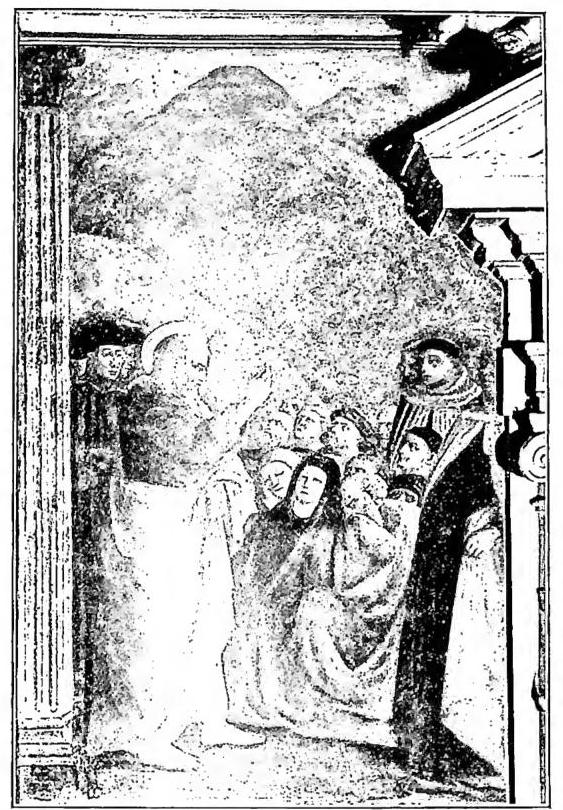
It was natural that, from the very beginning, when someone first presented himself to embrace Christianity, he should receive an initial instruction: the main points of the faith and Christian morality were briefly explained to him; he was asked to renounce pagan vices and promise to adhere to the obligations of the Christian life; the motives for his conversion, his profession or trade were inquired into, so that it could be judged whether they were compatible with the new life he was about to begin. Such an initial catechesis is preserved in the Traditio apostolica of St Hippolytus and in the documents connected with it (cf. Ph. Oppenheim, Sacramentum regenerationis christianae, Rome 1946, CATECHESIS – Preaching of St Peter, by Masolino da Panicalepp. 13-15). St Ambrose (In Lc. 6, 104-105: PL 15, 1696-97) offers another precious lesson: “With regard to pagans,” he writes, “one must follow the example of St Paul in the Areopagus: first they must be instructed that there is one God, who is the master of all, and that man must love Him; then idolatry must be condemned and reproved; finally, it must be shown that Jesus Christ has brought us salvation and that we must believe in Him, because the mere history of what He did on earth up to His Resurrection is an unshakable proof of His divinity.”
On the method of conducting catechesis and, in particular, of proving, by arguments of reason, the mysteries of the faith before those who do not accept the authority of the Church, an exemplary lesson is preserved in the Great Catechesis of St Gregory of Nyssa (PG 45, 9 ff.; cf. J. H. Strawley, The catechetical oration of Gregory of Nissa, Cambridge 1903): he warns the teacher to adapt himself to the various needs of the candidates and, by putting himself in the adversary’s position, to follow him step by step in what he admits. The principal dogmas must be indicated—the dogma of the Most Holy Trinity, of the Incarnation, of the Redemption—then the sacraments of Baptism and the Eucharist, as well as the double sanction in eternal life for the good and the wicked. The purpose of catechesis is to lead unbelievers to faith, and for this reason one must act differently if dealing with a pagan who denies the unity of God, or a Jew who does not believe in Jesus Christ, or a heretic who errs regarding the Most Holy Trinity by attacking the divinity of Our Lord.
The conclusion is: to believe firmly in these things without being disconcerted; to guard against demons and their ministers, whether pagans or Jews or even Christians; to cling with preference to the good, without placing hope in them, since hope is placed only in God; and by doing so, to persevere in the faith even in tribulations; to preserve humility, because God does not permit one to be tempted beyond his strength.
Noteworthy in this model of catechesis is also the skill with which St Augustine teaches the articles of the Creed without saying that they form part of the formula of faith, and he alleges all Christian morality; and above all, the very precise aim that hope and charity inspire faith. Thus he does not hesitate to return several times to the rewards promised to the faithful and to the punishments reserved for the impious and wicked Christians: an excellent means of inspiring, through fear, a beginning of the love of God. Thus, in the patristic period, the catechesis of St Augustine represents the model of a catechesis for beginners.
2. Catechesis of the catechumens. — Once admitted to the rank of catechumens, the future believer had to become better acquainted with Christian doctrine and practice. The ordinary homily, which explained the Scripture passage read during the divine office, was insufficient because of the reserve and discretion required by the discipline of the arcane (v.); in such public teaching only general questions of faith and morals were treated, or there were made simple allusions or brief hints that remained an enigma to the uninitiated. Thus supplementary instruction was needed for the catechumens. Moreover, if they read the books of the Old Testament, even the deuterocanonical ones (Origen, In Num. homil., 27, 1: PG 12, 780) or other writings such as the Didachē and the Shepherd of Hermas (St. Athanasius, Epist. fest., 39: PG 26, 1437), they certainly did not understand their doctrine and scope; hence from this side too there was need of supplementary and special teaching, which was entrusted to the διδάσκαλοι, doctors or catechists, clerics or laymen, priests or deacons, who had to adapt themselves to the present needs of the catechumens and to the progress of their preparation.
This instruction was limited to a more complete and detailed explanation of what they had heard in the first catechesis, especially regarding Sacred Scripture. The dogmas of creation, the fall and redemption up to the Resurrection and the General Judgment had their place, and the goodness and justice of God, the Incarnation of the Word of God, Redemption, and above all morality could be emphasized with an explanation of the various precepts of the Decalogue and of the double commandment of love toward God and neighbor. The instruction was of such a nature as to provoke a firmer adherence to the spirit of faith and hope in God; it was also therapeutic for healing souls of the madness of paganism and of attachment to sin; hence it was essentially a moral formation of the will, a prompting of the heart to the practice of good, that is, an education. For this reason preference was given to the Book of Wisdom, which offered striking examples, while the books of Tobit and Esther served to illustrate faith in God, trust in him, and moral virtues. Thus the Bible and the Gospel truly offered precious aid for education. Moreover, according to the Apostolic Constitutions (VIII, 32: PG 1, 1132) and St. Augustine, the teaching was given with greater diligence and insistence (cf. A. Gruber, Des hl. Augustin Theorie der Katechetik, Salzburg 1820, Regensburg 1870).
3. Catechesis of the competentes. — When the catechumen passed to the time of immediate and proximate preparation for Baptism, he had to receive the complement of his religious instruction. The catechesis destined for him was of particular importance and was surrounded by certain solemnities. According to the Apostolic Constitutions (VII, 39: PG 1, 1040), the subject matter was creation, providence, the Trinity, the laws of the Church, the Judgment, the last things; at Jerusalem at the end of the 4th century, according to the Peregrinatio Aetheriae (46, ed. B. Geyer, Vienna 1898, p. 97), the Law, faith, and the resurrection of the flesh.
According to St. Augustine (De fide et oper., 6, 9: PL 40, 202) the Bible and its history, the principal truths of faith, and moral precepts continued to be taught. A special place was reserved for the Symbol, the sacred formula of what must be believed: its individual articles were briefly and successively explained; it was not written down but kept in memory and in the heart. Before Baptism it was solemnly recited, and then, like the Pater noster, which was also given and explained, it became for the rest of life the supreme formula of prayer. All the catecheses “in traditione Symboli” preserved to us, because of the importance of this catechetical teaching, were delivered by bishops or priests specially delegated for this purpose. Thus, for example, St. Cyril at Jerusalem, St. John Chrysostom at Antioch, St. Augustine at Hippo were entrusted, before becoming bishops, with the instruction of the competentes. As to the method, nature, subject matter, and importance of such instructions, nothing better informs us than the catecheses that St. Cyril delivered in 348, in the name of Bishop Maximus, at Jerusalem; this collection consists of a pro-catechesis, or preface, of 18 catecheses addressed to the competentes during Lent, and of 5 mystagogical catecheses addressed to the neophytes in the week after Easter. The method used by Cyril is that of a popular, simple and clear, lively and pressing exposition, as far as possible adapted to the intellectual or moral needs of his hearers, and consequently very practical and objective. He makes them repent of the sins committed, leads them to penance, and prepares them, through asceticism, for Baptism; he arms them against the errors of the pagan, Jewish, or heretical environment; he prepares them to formulate precisely the dogmatic truths, supporting them with arguments drawn from reason or from Sacred Scripture; finally he explains the moving symbolism of the various preparatory practices of initiation (cf. A. Knappitsch, S. Cyrilli Hierosolymitani catechesibus quae principia moralia continuantur, Graz 1899). Not dissimilar and of great interest are the recently discovered catecheses of Theodore of Mopsuestia (v.), which date from the end of the 4th century (cf. R. Tonneau-R. Devresse, Les hom. catéchétiques de Th. de Mops. [Studi e Testi, 145], Vatican City 1949).
4. Catechesis of the neophytes. — Initiated into the Christian life through Baptism, Confirmation, and the Eucharist, the neophytes remained for eight days under the direction of their teachers before being admitted to the ordinary life of Christians, and they continued to receive some special instruction: at Jerusalem the five mystagogical catecheses of St. Cyril represent this type of instruction. St. Cyril here discourses on the ceremonies of Baptism (Catech. 19, PG 33, col. 1065 sqq.), on the unction with exorcised oil and on Baptism (Catech. 20, col. 1077 sqq.), on the unction with holy chrism (Catech. 21, col. 1088 sqq.), on the Eucharist (Catech. 22, col. 1097 sqq.), on the Eucharistic liturgy and on participation in the body and blood of Jesus Christ (Catech. 23, col. 1109 sgg.). These mystagogical catecheses, shorter because of the Easter festivities, do not contain everything we know from other sources.
Certainly these things were not of absolute importance for the neophytes. The Peregrinatio Aetheriae (ed. B. Geyer, Vienna 1898, p. 99) notes, speaking of these instructions, that the bishop on this occasion set forth all that
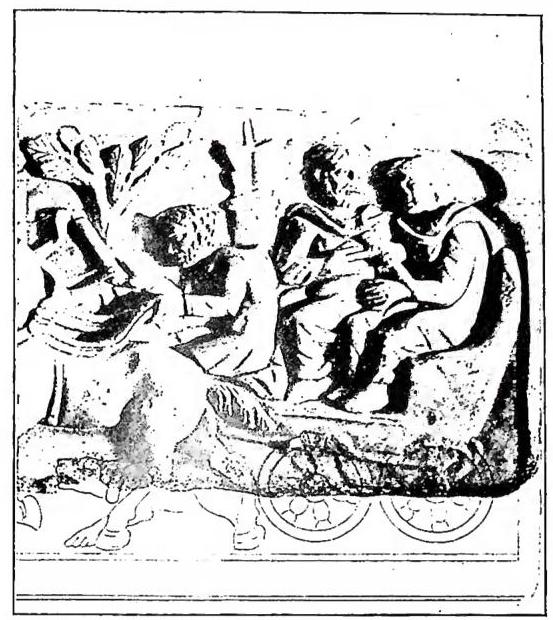
In Africa, on the contrary, and especially at Hippo, most of these explanations preceded the administration of Baptism; nevertheless, the week of Easter was reserved for instructions “to the infants,” i.e. to the neophytes, both to make up for the inadequacy of the teaching given about the Mass and Communion, and, more especially, to encourage the neophytes to persevere (cf. St Augustine, Serm., 260 and 353: PL 38, 1202 sqq. and 39, 1560 sqq.).
IV. FROM THE END OF THE 5TH CENTURY TO ST GREGORY THE GREAT
In Italy, North Africa, Spain, Gaul, part of Germany and the British Isles the majority of the population had embraced the faith; consequently the ancient organization of the catechumenate lost its raison d’être, and infant baptism became the norm. Nevertheless, for their baptism, special ceremonies of the tradition of the Creed and the Our Father were still practised during Lent, to which, in some countries, were added those of the Gospels and the Decalogue; the triple renunciation of Satan, his pomps and his works, and the triple profession of faith always retained their place. Godparents replaced spiritual fathers and mothers. The ancient catechesis preparatory to baptism gave way to post-baptismal instruction. Primary instruction, as a natural and just duty of natural or spiritual parenthood, fell to parents and godparents; itremained, however, rudimentary for various reasons. Therefore parish priests supplemented it; yet they, like the others (parents, godparents), had to adapt their teaching to the capacities of children and young people and therefore reduce instruction to its simplest expression. Gradually it took catechism (v.). In pagan lands, in the missions of Eastern and Northern Europe, catechesis retained its traditional form.
In Africa, Spain and Gaul catechumens and competentes continued to be treated as before. Ferrandus, deacon of Carthage, concerned about the fate of a competens who had died, recounts among other practices of the catechumenate that he had received the instruction proper to his degree and the disclosure of the Mysteries and of the Christian life (Epist., 1, reproduced in the reply of St Fulgentius, Epist., 12, 1 and 2: PL 65, 380).
In Spain, where Arians were numerous, the Second Council of Braga in 572 indicates the procedure to be followed during Lent with regard to competentes, and the instruction relating to exorcisms and the Creed; bishops, in their pastoral visitation, are exhorted to urge the faithful to abandon pagan errors and grave faults (can. 1: J. Hardouin, Acta Concil., III, pp. 351 and 386). According to St Isidore (De officiis, II, 21-27: PL 83, 812-24) the catechumen rejects the cult of idols and learns that there is only one God; the competens is instructed in matters concerning the Sacraments, the Creed and the rule of faith, baptism, confirmation and the laying on of hands. St Ildefonsus (De cognitione Baptismi) first follows the method of the “narratio” of St Augustine, then distinguishes between catechumen and competens (op. cit., 30: PL 96, 124) and cites as part of his special instruction the Creed, the Our Father, the sacraments of baptism, confirmation and the Eucharist (ibid., cols. 132-42, 166-71).
In Gaul it is known from Gennadius (De eccles. dogmat., 74: PL 58, 997) what was taught to baptismal candidates at the end of the 5th century. In the 6th century St Avitus (d. 526) has left us a short poem of five cantos (De Mosaicae historiae gestis libri V: PL 59, 323-28), which recalls part of Augustine’s “narratio,” treating of creation, original sin, God’s judgment that drives Adam from Paradise, the flood and the crossing of the Red Sea (two types of baptism); St Caesarius (d. 542), a faithful echo of the bishop of Hippo, makes known the obligations of parents with regard to children (Serm., 6, 6: PL 39, 1751), of godparents for their spiritual children (Serm., 168, 3: ibid., col. 2071); he enumerates the vices and superstitions of the time that must be abandoned in becoming ‘Christian’ (Serm., 265, 5: ibid., col. 2239), explains the duties of competentes (Serm., 267: ibid., col. 2242), dwells on the various articles of the Creed that were the object of the preparatory catechesis for baptism (Serm., 237-43: ibid., cols. 2183-84; cf. Serm., 244-51, on faith in the Creed, on the Trinity, on Redemption and on the Last Judgement). St Gregory of Tours (d. 543-44) cites in his Historia Francorum, III sg. (PL 71, 241 sg.) some passages relating to the administration of baptism during the 6th century.
To gain a complete idea of catechesis in the 5th and 6th centuries, one should examine the method of St Patrick (d. 460) among the Irish, of St Columba (d. 573) among the Picts and Scots, of St Augustine of Canterbury (d. 604) among the Anglo-Saxons, of St Gall (d. c. 627) among the Alemanni of Switzerland, and of others besides; unfortunately, however, no catechesis from that period has survived, perhaps because it was delivered by those preachers and missionaries in the vernacular. There was always the need to overcome paganism with its superstitions, and although the preparatory catechesis was not always sufficient, it nevertheless had to contain the truths strictly necessary to believe and the duties to be practised by every Christian, and therefore it included most of the elements of apostolic and patristic catechesis. St Eligius, for example, enumerates a large number of superstitions to be abandoned (Vita s. Eligii, II, 15: PL 87, 524-50); the Council of Leptines (743) counts about thirty in its Indiculus superstitionum et paganiarum (PL 89, 810 sg.; J. Hardouin, Acta Concil., III, 922). There is also the proclamation of one God, creator of heaven and earth, who sends his Son to save mankind, with a summary of the religious history of the world and the economy of Redemption. It includes baptism with its exorcisms, renunciations, promises, a list of faults to avoid and duties to fulfil. Finally, there is the question of the last things, the general Judgement, and the sanction of eternal rewards or punishments.
The letter with which St Gregory the Great congratulates St Augustine on the conversion of King Æthelberht of the Anglo-Saxons, which took place at Canterbury at Christmas 597 (Epist., XI, 27: PL 77, 1139), gives a glimpse of the method of catechesis of the celebrated Anglo-Saxon missionary. In 624 the letter of Boniface V to King Edwin of Northumbria, still pagan, is the programme of a catechesis: the futility of idols, the importance of faith in the creator God who sent his only Son to save mankind, the necessity of embracing the Gospel and of rebirth through baptism—these are the main points of the treatise (Epist., 3: PL 80, 438). St Eligius, who administered baptism each Easter to a crowd of catechumens, successively exposed to the people the fables and beliefs of paganism, superstitious practices, and spoke to them of the one true creator God, inspired them with the fear of the future judgement and spoke of eternal reward: he made use of the writings of St Caesarius and St Augustine (Vita s. Eligii, II, 8 and 15: PL 87, 523 and 524-50). St Gall (d. c. 627), in a discourse delivered at Lake Constance, summarizes the religious history of the world from the first sin to redemption on the cross of Jesus, then treats of the mission of the Apostles and the vocation of the Gentiles, of the divine constitution of the Church as the ark of salvation (Serano: PL 87, 13-26), openly echoing the “narratio” of St Augustine.
Thus the catechesis for baptism, faithful to the tradition of the early centuries, continued to teach the same principal and essential truths of the Christian religion, even though, little by little, on account of infant baptism, it was taught after baptism, at a suitable and appropriate age, until what we call the catechism developed.
Filippo Oppenheim
V. S. GREGORIO MAGNO al CONCILIO DI TRENTO. — 1. Adattamento della Chiesa. — L'antica organizzazione della c., la quale va man mano scomparendo nei paesi cristiani per l'uso sempre più generale di battezzare i bambini, rimane ancora, per qualche tempo, in alcune missioni di Europa (v. SORA). Dove merita particolare rilievo la precedente condotta della Chiesa, che pur mantenendo intatta la dottrina cerca di adattarsi alla capacità dei barbari, conservando quello che non è contrario alla fede, elevandolo, però, o volgendolo (templi, feste, usanze popolari) a significato e ad uso cristiano.
Così nella prima missione benedettina, condotta da s. Agostino tra gli Anglosassoni, s. Gregorio Magno dà le più sagge e prudenti direttive per l'evangelizzazione, che influiscono sul modo stesso della c.: non distruggere i templi degli dèi, ma benedirli e consacrarli al culto del vero Dio; introdurre feste cristiane in luogo delle pagane; volgere i sacrifici degli animali cui seguivano lauti banchetti, non più al demonio, ma a Dio datore di ogni bene, godendone e saziandosi: «et donatori omnium de satietate sua gratias referant ut dum eis aliqua exterius gaudia reservantur, ad interiore gaudia consentire facilius valeant, nam duris mentibus simul omnia absidere impos-
impossibile esse non dubium est, quia et is, qui summum locum ascendere nititur, gradibus vel passibus, non autem saltibus elevatur» (Ven. Beda, Hist. excl., I, 30: PL 95, 70 sg.; ed. a cura di C. Plummer, I, Oxford 1896, pp. 64-66, e il commento; II, ivi 1896, pp. 57-61). Lo stesso metodo seguivano i missionari anglosassoni nella evangelizzazione della Germania, principalmente il loro grande apostolo, s. Bonifacio (672-754), il quale mantenne il latino nel rito del Battesimo, ma rivolgeva in tedesco le interrogazioni al neofita; lasciò continuare l'uso dei fuochi di gioia del solstizio d'estate, associandoli alla festa della natività di s. Giovanni Battista (24 giugno); e al culto del dio guerriero Wotan sostituì il culto di s. Michele Arcangelo, capo delle milizie celesti. La lingua liturgica e delle formole dogmatiche rimase la latina — provvidenziale guarentigia dell'esattezza dottrinale e della unità della Chiesa — riserbandosi il volgare alle spiegazioni catechistica e pastorale. Un solo esempio si ha in contrario nel primo medioevo: nel sec. ix i due fratelli missionari, i ss. Cirillo e Metodio, introdussero in Moravia la lingua ecclesiastica slava, tollerata dai papi, ivi sostituita ben presto dalla latina, ma rimasta fino ad oggi tra gli Slavi meridionali (cf. G. Marckovic, Gli Slavi e i papi, I, Zagabria 1897, pp. 94-159). Ben diversamente accadde nelle conquiste dei Franchi, i cui eserciti spianavano essi la via ai missionari, distruggendo i luoghi e le case del culto idolatrico; alla conquista seguiva l'organizzazione ecclesiastica e il Battesimo in massa; più tardi veniva la c. e l'istruzione a promuovere la vera conversione interiore per opera dei monaci. Così sotto Carlomagno, la Sassonia fu incorporata alla Chiesa.
2. Materia e tempo della c. — L'istruzione catechetica, nel medioevo, passa ben presto dai genitori e padrini verso i loro figli e figliocci, ai sacerdoti, a mano a mano che si formano villaggi e gruppi fissi e si può avere un clero stabile. La c. comprende da per tutto gli stessi elementi: nella prima metà del medioevo: le verità fondamentali della fede (Simbolo) e della vita morale (Comandamenti, Sacramenti, Pater noster); nella seconda metà si aggiungono anche altri punti: peccati, virtù, opere di misericordia corporali e spirituali, precetti della Chiesa, l'Ave Maria. L'ampiezza e il contenuto di questa c. medievale si ricava dai vari manuali o formolari catechetici che ancora si conservano, composti in maniera e metodi diversi e che dovevano servire di traccia ai sacerdoti catechisti (v. CATECHISMO). Particolare importanza rivestono i «formolari per la confessione», perché non miravano soltanto a suscitare le buone disposizioni al Sacramento, ma anche a istruire sempre più profondamente sulle diverse qualità e gravità delle colpe e ad inculcare le norme di una vita cristiana degna.
La c. medievale si svolgeva specialmente le domeniche e le feste, sia nella cattedrale, sia nelle altre chiese e nelle scuole dei conventi e delle parrocchie e secondo le varie indicazioni e prescrizioni dei sinodi provinciali; ed era coadiuvata da tavole murali, su cui erano scritte le formole principali (il segno della Croce, il Credo, il Pater, il Decalogo) che il sacerdote doveva recitare forte ogni domenica prima e dopo la predica e spiegare parecchie volte all'anno; da quadri illustrativi, che richiamavano il significato della verità e dei precetti principali o riportavano scene bibliche ed erano appesi accanto alle tavole e anche portate in giro dai predicatori (ad es., la Biblia pauperum) (v.); e più tardi dai «misteri», dalle «laudi» e dalle «sacer rappresentazioni». Senza dire che gli affreschi e le pitture delle chiese, i bassorilievi delle porte e dei capitelli, i mosaici, le miniature dei devozionari e delle bibbie, formavano altrettanti punti di richiamo a determinati fatti e verità.
3. Legislazione della Chiesa. — La coscienza e la saggezza degli antichi Padri eran dunque passate al medioevo, che le aveva espresse in attuazioni, le
quali, mentre da una parte attestano la cura materna e l'aderenza intelligente della Chiesa alle diverse e mutevoli necessità dei fedeli, preludono, per l'altra, e preparano le forme della c. moderna. Il Concilio di Cloveshow in Inghilterra (747), per limitarsi ad alcuni, già aveva sapientemente organizzata l'istruzione catechistica parrocchiale (cann. 3, 10 [Mansi, XII, coll. 396, 398]) ottocento anni prima del Concilio di Trento; simili disposizioni vennero impartite per l'impero carolingio dal Sinodo di Francoforte (794 [can. 33; Mansi, XIII, col. 908]) e, per l'Italia, dal Concilio di Cividale del Friuli (796), radunato da s. Paolino, patriarca di Aquileia (cann. 12-15: PL 99, 293-95). Lo stesso si trova inculcato e ordinato da Carlomagno in parecchi dei suoi Capitolari; e anzi egli proibì a chi non sapesse il Credo e il Pater di fare da padrino o madrina al Battesimo (cf. Fliche-Martin-Frutaz, VI, pp. 88-89). In tempi più vicini al Concilio di Trento, quando, aumentate, massime nel periodo del Rinascimento, le scuole,
anche di maestri laici, si toccò dolorosamente con mano come l'istruzione religiosa fosse assai diminuita e ridotta, il V Concilio Lateranense, nella sua Bulla de reformatione Curiae (sess. IX, 5 giugno 1514 [Mansi, XXXII, col. 881]), stabilì che tutti i maestri dovessero istruire i loro alunni nelle discipline umane, ma anche negli argomenti religiosi, quali i Comandamenti, il Credo, gli inni sacri, i salmi, le vite dei santi; che nei giorni festivi altro non insegnassero che la fede e i costumi, adoperando tutta la loro attività possibile per far partecipare gli alunni, non soltanto alla Messa, ma anche ai Vespri, agli uffici divini, alle prediche.
As can be seen, catechesis had expanded not only in its subject matter but, so to speak, also in scope, since the Council’s decree applied to all schools, even those now called of the middle order, and aimed, through theoretical instruction, also at the practical exercise of religion. “The school did not ignore the Church, did not sever instruction from education, nor speculative science from its application to life; it did not neglect the Sunday precept, the Sacraments, religious and moral conduct; like the Church and with the Church, the school followed the pupils through life and made of the teacher a father, who unceasingly took to heart the souls entrusted to him by parents, as souls to be formed” (Tamborini, op. cit., p. 15).
Almost as an application of this desired close union between Church and school, the publisher Aldo Pio Manuzio in his schoolbook De litteris graecis et diphthongis (Venice 1495) printed in Latin and Greek the Our Father, the Hail Mary, the Salve Regina, the Creed, and the Gospel of St John, “which,” he says in the preface, “we thought it worthwhile for the young to know”; and in the Grammaticarum institutionum libri quattuor (ibid. 1508), he placed before the grammatical rules the Commandments, the psalm Introibo ad altare Dei, the morning and evening prayers “quoniam omnibus in rebus a Divinis incipiendum est,” observing in the letter prefixed to teachers: “It is your duty to the best of your ability to teach the young simultaneously holy morals and good letters.” In the dedications, moreover, to the two volumes of Christian poets (Venice 1501), he says he published them so that children might read them instead of pagan fables; “ita adolescentuli non in pravos et infideles, quales sunt hodie plurimi, sed in probos et orthodoxos viros evadent, quia adeo a teneris assuescere multum est” (G. B. Castiglioni, op. cit., p. 204).
VI. FROM THE COUNCIL OF TRENT TO OUR OWN DAYS
2. New Religious Orders
The outbreak and spread of the Reformation in the 16th century, as they highlighted existing shortcomings despite the calls of authorities, also acted as a stimulus for a more lively and profound reform, intensifying the development and adaptation of catechesis, multiplying norms and practical suggestions, and the drafting of catechisms for various classes of people. This occurred even before the Council of Trent; indeed, even before the Protestant Reformation, since the religious ignorance exploited by other heretics had already been evident. Moreover, the Council itself did not have merely an anti-Protestant function, but rather concentrated and organized the many fragmentary energies already deployed here and there under the impetus of a widespread desire for Catholic reform (v. CATECHISM).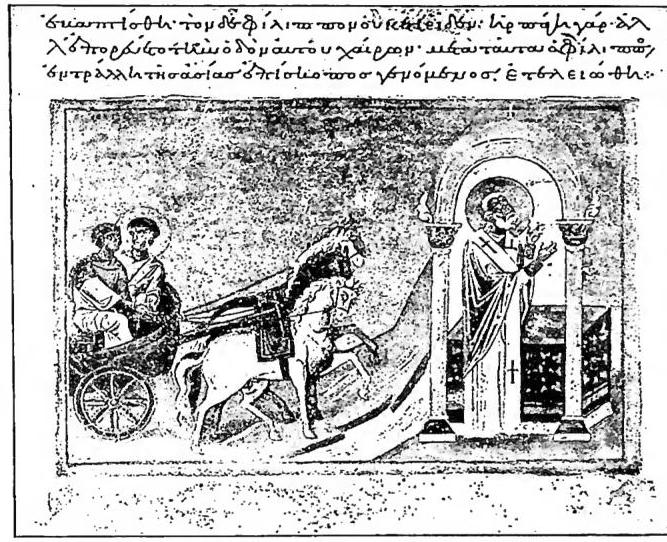
CATECHÉSI — C. of the deacon Philip (Acts 8:27-38).
Miniature from the Menologion of Basil II (990-1025) — Vatican Library, cod. Vat. gr. 1613, f. 107.
3. The Companies of Christian Doctrine
Castellino da Castello, a priest of the diocese of Como, established in 1536 the first company of Christian doctrine under the title “Company of the Servants of the Little Ones in Charity” (begun with gatherings of children in the church of S. Andrea, where the carder of Iana, Francesco Villanova, taught them catechism). Similar companies soon spread to other cities of northern Italy (Genoa, Vigevano, Verona, Piacenza, Parma, Lodi, Cremona, Varese). In Rome, in 1560, the first school of Christian doctrine was begun in the church of S. Apollinare through the efforts of the pious layman Marco de Sadis Cusani, under the spiritual direction of the Piacentine priest Enrico Pietra, a contemporary and companion of St. Philip Neri, and of Fr. Cacciaguerra. The schools spread through the city, supported and promoted by Neri’s followers and penitents, and elsewhere, taking the name “Companies of the Servants of the Little Ones in Charity.” Alongside the schools, associations dedicated to this work multiplied. A portion of the company founded by Cusani was constituted in 1586 as a Congregation of “Secular Priests of Christian Doctrine,” known as the “Dottrinari” or also “Agatisti” from their church of S. Agata in Trastevere; these were later united in 1747 by Benedict XIV with the French Dottrinari of de Bus. The other part, remaining a confraternity, was elevated to the status of an archconfraternity by Paul V in 1607 and still exists in Rome, though harmonized and nearly merged with the Diocesan Catechetical Commission of the Vicariate (Fr. Pascucci, L’insegnamento religioso in Roma dal Concilio di Trento ad oggi, Rome 1938).The great good accomplished by these schools and companies was attested to in Rome by St. Charles Borromeo; thus, upon entering his diocese of Milan in 1566, he perfected and organized them: every castle or village in the diocese was to have its Company of Christian Doctrine; each school, five classes; each Company its “officers,” charged with implementing the practical norms. His Costituzioni et Regole della Compagnia et Scuole della Dottrina cristiana (Milan 1585, reprinted in A. Ratti, Acta Eccl. Mediat., III, ibid. 1892, pp. 149-261) are a splendid model of catechetical legislation. The fruit was so abundant that, while at his arrival in the diocese he found only 15 schools, by his death there were 740. The constitutions, augmented with new practical norms by Cardinal Federico Borromeo, were republished in 1610.
Contemporaneous with Borromeo’s work was that of Cardinal Gabriele Paleotti, archbishop of Bologna. From 1566, he likewise set out to spread these schools, providing them with learned Ordini, one for “the boys” and another for “the girls,” containing the program of each class and the manner of organizing and governing them with discipline; then an Istruzione per li putti che desiderano vivere in Dio et particolarmente per quelli della Dottrina cristiana, a kind of complete etiquette manual; and finally, to ensure the execution of his orders, a Regola da servirsi da tutti li curati. For the 16th and part of the 17th century, cf. the well-documented work of A. Tamborini.
Meanwhile in Germany, in contrast to the Lutheran catechesis of a “theological” character, after early attempts by G. Witzel and G. Dietenberger and a proposal made by the Council of Trent (Session IV, 5 Apr. 1546), thought turned to the compilation of a “summary theology” for educated persons, as well as to the drafting of a brief catechism containing its principal conclusions for children and the common people. Hence the various catechisms of St. Peter Canisius, of great benefit to Catholic catechesis, and in Italy the two similar works of Cardinal Robert Bellarmine.
From the foregoing, it may be said that the 16th century, through the religious orders, the pious associations formed to promote religious instruction, and the celebrated catechisms of Canisius and Bellarmine, was the golden age of Catholic catechesis; to which the Roman Catechism, composed by decree of the Council of Trent and published in 1566, gave authoritative doctrine and direction. The same may be said of the 17th century.
4. Catechesis in the 18th century
Yet from the end of the 17th century and throughout the 18th, catechesis suffered in reaction to the currents of unbelief that were growing stronger and taking systematic form. Enlightenment, which proclaimed the autonomy of reason, rejected the supernatural, every dogma, and every religious authority, and admitted no truths that could not be proven by reason, influenced not only pedagogy but also catechesis, minimizing the supernatural element and expanding moral and rational instruction. Without departing in the least from right faith, catechesis—especially in schools and in the instruction of youth and the educated classes—assumed the aspect of apologetics, in which the philosophical theses of “natural religion” precede, as praeambula fidei, the exposition of revealed truths: the traditional division (Creed, Commandments, Our Father, Sacraments, works of mercy, virtues) gave way to a systematic exposition, explaining doctrine and sometimes proceeding by Socratic questioning, according to a logical development of theses and propositions. The figure who most distinguished himself in this was Ignaz Felbiger (1724–88), reformer of schools in Silesia and Austria (cf. F. Weber, Gesch. des Katechismus in der Diöz. Rottenburg von der Aufklärungszeit bis zur Gegenwart, Freiburg im Br. 1939).In the States of the Church, traditional catechesis was maintained, thanks to the vigilance of the Popes, the Bellarmine catechisms prescribed there, and the work of the Archconfraternity of Christian Doctrine in Rome. During this period there arose in Viterbo the religious congregation of the Maestre Pie, founded by the Venerable Rosa Venerini (1656–1728), with the principal aim of teaching catechism to girls, for which she composed suitable question-and-answer manuals, along with elementary instruction and feminine crafts. At Montefiascone, this same congregation took the name “Maestre Pie Filippini,” from St. Lucy Filippini, a disciple of Venerini who continued her work at the behest of Cardinal M. A. Barbarigo (q.v.).
5. Catechesis in the 19th and 20th centuries
In the 19th and 20th centuries, the revival of Catholic catechesis coincided with the restoration of the Society of Jesus (1814) and the rise of new religious congregations dedicated to the education of youth. In Italy, particular mention should be made of the Salesians of St. John Bosco (1815–88), with their immensely popular Oratories and schools of every kind; the Josephines of the Servant of God Leonardo Murialdo (1828–1900); the Stimmatines of the Venerable Gaspare Bertoni (1777–1855); and the many female congregations that cared for girls and children.Religious instruction, excluded from Italy’s public schools with the rise of laicism (cf. N. Rezzara, Il problema scolastico nell’ora presente, Bergamo 1913), took refuge in parishes and Catholic educational works. Three illustrious bishops especially promoted it: Cardinal Alfonso Capecelatro (1824–1912), archbishop of Capua; Geremia Bonomelli (1831–1914), bishop of Cremona, a clear and effective author of the excellent catechetical manual Il giovane studente istruito nella religione (Brescia 1869), which went through many editions; and Giovanni B. Scalabrini (1839–1905), bishop of Piacenza, a great organizer of diocesan and parochial catechesis and of catechist formation. He founded the first Italian periodical on catechesis, Il catechista cattolico, which appeared on 5 July 1876, and likewise organized the first Catechetical Congress in 1899 in Piacenza, attended by 400 delegates from various parts of Italy.
After Pius X’s encyclical on catechesis, Acerbo nimis, of 25 April 1905, several catechetical congresses were held: Milan 1907, Rome 1908, Lucca and Bologna 1909, and again in Milan in 1910. The most important was that of Brescia in 1912, which presented a complete, organic plan for diocesan, parochial, and school catechesis to compensate for the lack of religious instruction in public schools. The plan, approved by Pius X, proposed a “catechism in the form of a true school with a cyclic, intuitive method,” and served as a guide for subsequent congresses and for the “catechetical weeks” and “days” held in various regions, especially for the clergy. The aim of the Congress was to study means of making religious instruction more effective for adults, young people, apprentice workers, girls, and children, and on that occasion a memorandum was sent to the Ministry of Public Instruction requesting the restoration of religious instruction in public schools.
A first step occurred in 1923 (decree of 1 Oct., no. 2185), when religious instruction, considered “the foundation and crown of elementary studies,” was made compulsory for primary schools; a second when it was permitted in secondary schools; and a third and final when Article 36 of the Concordat between the Holy See and Italy (11 Feb. 1929) sanctioned II. Courses for the preparation and qualification of elementary teachers and religion teachers in secondary schools were then established; many textbooks for the various schools appeared, and even lay pedagogues began to take an interest in applying the so-called “active methods” to catechesis, especially in schools.
Religious instruction, at least in its official form, remains excluded from our universities ever since (law of 26 Jan. 1873, no. 1251, art. 1) the chairs of theology were suppressed; nor are the times yet ripe for their reconstitution (cf. R. Lombardi, Filosofia e teologia nelle università regie, in Civ. Catt., 1942, I, pp. 188–200 and I Convegno nazionale di studi filosofici. Relazioni, Rome 1941). Yet after the experience of two wars, which laid bare in all its starkness the true sickness of society—its loss of anchorage in God—efforts have been made to remedy this through the establishment of “theological studies for the laity,” with programs and subject divisions suited to true university instruction. Begun in Florence in 1945, they soon spread to Padua, Naples, Perugia, Messina, Assisi, Viterbo, Albano, Potenza, and are accompanied by the journal Città di vita, founded in 1946, which serves as the official organ for the various centers (cf. R. Sciamannini, Gli studi teologici per i laici, in Ecclesia, 8 [1949], pp. 488–90).
This movement for an educated laity had been preceded since 1918 by the work of the Jesuit Fr Agostino Garagnani, linked to the Gregorian University. Initially it had as its program a single chair of apologetics, but already by the following year, 1919, it developed into a true institute of higher religious culture, with systematic courses for young university students, study circles, and a circulating apologetic library. In 1927–28 the courses were made available to the organization of Catholic Action (cf. R. Lombardi, Una opera e un uomo: il p. Garagnani, in Civ. Catt., 1944, III, pp. 202–13). Since 1940, Pro civitate christiana has held an annual course of Christian studies in Assisi, following the articles of the Nicene-Constantinopolitan Symbol as its outline; these courses are growing ever more important and engaging, both because of the authority of the lecturers and the attendance of participants (cf. the volumes published under the title Il Simbolo, Assisi 1940 ff.; and La Rocca, quindicinale di informazione cristologica, there from 1942). From the same Pro civitate christiana has recently come the call to found Domus christianae, periodic gatherings in private homes where, under the guidance of a priest, religious questions are discussed and debated. Alongside other similar advanced courses in religion, usually attached to cultural institutes, mention should also be made of religious lectures in secular settings (universities, theaters, public halls, etc.), whose attendance and success attest to how alive is the modern interest in religious topics.
VII. CATECHESIS IN THE PRESENT-DAY LEGISLATION OF THE CHURCH
The Code of Canon Law devotes an entire chapter to catechetical instruction (cc. 1329–36) and lays down in forceful terms that «it is a proper and most grave obligation, especially of pastors of souls, to care for the religious instruction of the Christian people» (can. 1329). The following canons specify the obligations of parish priests in detail, both toward children as preparation for confession and communion, and toward young people in subsequent years for whom a more extensive instruction must be organized, and toward adults to whom the catechism must be explained every Sunday and holy day of obligation. The parish priest may avail himself of the help of other ecclesiastics and religious who are bound to assist him, and especially of lay members enrolled in the sodality of Christian doctrine. Moreover, parents or guardians, godfathers and godmothers, and masters must ensure that those entrusted to them receive sound religious instruction. To the canons already cited, others must be added, e.g., can. 711 § 2 (confraternity of Christian doctrine in every parish), cc. 509 § 2, 565 § 2, 1366, 1373 (concerning religious instruction in religious institutes, seminaries, and schools); can. 1020 (regarding a possible examination in catechism before marriage); can. 2182 (concerning penal measures relating to it).All the catechetical legislation of the Code of Canon Law summarizes various decisions previously issued (e.g., Council of Trent, sess. XXIV, De Reform., chs. 4 and 7; Benedict XIV, enc. Etsi minime, 7 Feb. 1742; Pius IX, enc. Nostis et Nobiscum, 8 Dec. 1849; Leo XIII, letter In mezzo, 26 June 1878; and especially Pius X, enc. Acerbo nimis, 15 Apr. 1905, the «magna carta» of the catechetical movement in modern times; enc. Editiae saepe, 26 May 1910). Pius XI, for his part, wished to provide more specific norms in response to the pressing needs of the times: with the motu proprio «Orbem catholicum» (29 June 1923), he established at the Sacred Congregation of the Council the Catechetical Office to regulate catechetical works throughout the Church; with the decree Provido sane consilio of the Sacred Congregation of the Council, 12 Jan. 1935, he determined in particular the organization of diocesan and parochial catechetical works in the form of a true school and the obligation of bishops to report thereon to the same Sacred Congregation every five years, according to a questionnaire of 24 points. And already before, with a brief of 26 Apr. 1932, he had proclaimed SS. Charles Borromeo and Robert Bellarmine heavenly patrons of all works of religious instruction throughout the world (cf. for these and other numerous documents: G. Luzi, La legislazione catechistica di Pio XI, Rome 1941).