EVANGELISTA

EVANGELIST. – A title in the New Testament writings for the preacher or propagator of the Gospel (v.). While the words “Evangel” (εὐαγγέλιον) and “to evangelize” (εὐαγγελίζειν) occur very frequently, the word e. (εὐαγγελιστής) appears only three times in the New Testament, precisely indicating one who devotes himself to spreading the message of Jesus. The first time the title is applied to the deacon Philip (Acts 21:8), perhaps to distinguish him from the Apostle of the same name. The other two instances are found in the writings of St Paul.

In his last letter the Apostle exhorts Timothy to be a good e. (2 Tim 4:5). In Ephesians (4:11) Paul enumerates certain gifts or charisms, each with its specific purpose (apostolate, prophecy, the office of the e., governance of communities, teaching); yet nothing prevents the same person from being endowed simultaneously with several charisms. These are not incompatible offices, but rather a greater emphasis on a particular characteristic. In relation to the Apostles in the strict sense, the evangelists stood in the position already noted by Pelagius in his commentary (ed. A. Souter, Texts and Studies, IX, Cambridge 1926, p. 364): “Every Apostle was an evangelist, but not every evangelist was an Apostle.” According to Eusebius of Caesarea (Hist. eccl., V, 10, 2: CB, I, p. 450), the evangelists would have been successors of the Apostles, in the sense that those to whom the title was still attributed—though it soon changed its meaning—survived as younger men after the Twelve.

In Hippolytus (De Antichristo, 56; CB, I, p. 37) and in Tertullian (Adversus Praxean, 21) the title e. is already reserved for the authors of the four Gospels, and this will be its subsequent meaning.

BIBL.: F. Vigouroux, Evangéliste, in DB, II, cols. 2057-58; F. Hauck, εὐαγγελιστής, in R. Kittel, Theol. Wörterbuch zum Neuen Test., II, pp. 734-35.

1. Archaeology

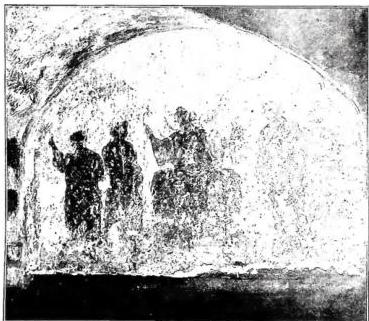
In funerary painting everyone has recognized in a fresco of the cemetery called of Marcus and Marcellianus, painted on the back wall of a cubicle, Jesus Christ between the four evangelists. The Lord, of youthful appearance, nimbed, in tunic and pallium, seated on a throne, is depicted in the act of speaking while holding open with his left hand the volume of his Law; at his right and left above are two evangelists; below is the scrinium. The four figures surrounding him are also in tunic and pallium; the first on the left points to a star, so that Wilpert recognizes in him St Matthew speaking of the star’s appearance (Mt 2:2, 5 ff.), followed by St Mark and, on the other side, Luke and John (Wilpert, Pitture, p. 230, pl. 162, 2).

On the sarcophagus of Apt (France) the four evangelists are in tunic and pallium; on two of them the names “Iohannes” and “Mar (cuss)” can still be read; Matthew has a beard and long hair, the other three have a youthful appearance and are beardless (Wilpert, Sarcofagi, I, 54, pl. 37, 2-3).

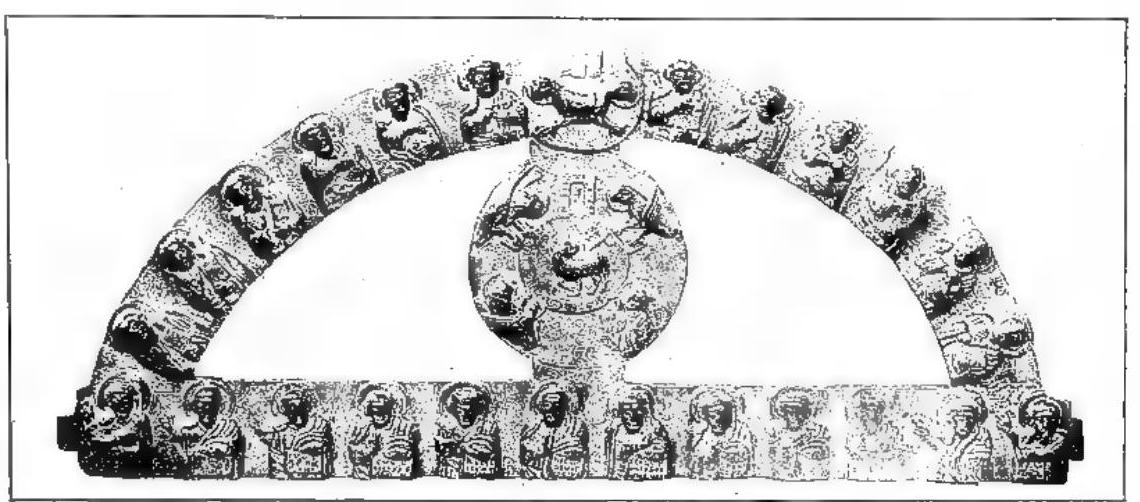
On the sarcophagus of Concordius, bishop of Arles, containing the scene of the delivery of the Law to St Peter, the four evangelists are distinguished by their names inscribed on the volume or book; the second from the left is “Marcus,” the fifth “Matteus,” the ninth “Lucanus,” the eleventh “Ioannes”; Luke and Mark are bearded, Matthew and John beardless (Wilpert, ibid., I, 54 and pl. 34, 3).

Christian art expressed the four evangelists symbolically in various ways; the most common was that taken from the prophecy of Ezekiel (1:5-13) and the Apocalypse (4:6-8): the lion is the symbol of Mark, the calf of Luke, the man of Matthew, the eagle of John. Thus they appear at Rome, for example, in the apse of S. Pudenziana, on the triumphal arch of S. Paolo, in the apse of SS. Cosma e Damiano, in Ravenna in the mausoleum of Galla Placidia, in the chapel of S. Pier Crisologo, in the baptistery of the Arians, on the façade of the apse of S. Apollinare in Classe. In S. Vitale above each of the four evangelists is represented the corresponding symbolic figure; at Milan in S. Vittore, in S. Matrona and S. Prisco near S. Maria Capua Vetere, etc. The same symbols are found also in some ivories; for example, at Milan on a book-cover of an evangelistary; in the surviving leaf of the Trivulzio diptych are the symbols of Luke and Matthew.

The four rivers that flow from the mountain on which is Jesus Christ himself or under the aspect of the divine Lamb are: “Evangelistae viva Christi humana” to whom the faithful (St Paulinus of Nola, ep. 32, 10; PL 61, 336) are joined; a fine example is offered on one side of the African silver chapel, now in the Museo Sacro of the Vatican Library (G. B. De Rossi, La cappella argentea africana, Rome 1889, p. 30).

The four evangelists were symbolized as sheep on a fragment of a slab preserved in the Museo delle Terme. The divine Lamb is in the center, on the mountain, from which flow the four rivers. From the right two sheep approach; on the first is written: “Mar (cui),” on the second: “loan (n) es Evan (gelista).” On the missing left side there should have been the other two sheep with the names of Matthew and Luke (Wilpert, ibid., I, p. 34, pl. 36, 1).

A singular symbolic representation of the evangelists appears on a marble lid of a sarcophagus from Spoleto, now in the Museo Lateranense: from the right a boat with a helmsman and three beardless rowers; the helmsman seated in a ruined chair and pallium is Jesus, as shown by the iconographic type and the inscription IESVS; the three rowers are indicated by the names: MARCVS, LVCAS, and (IOH)ANNES; Matthew should have preceded in the missing part and Wilpert adds PETRUS because he sees in the scene a symbolic representation of Jesus.

Article illustration
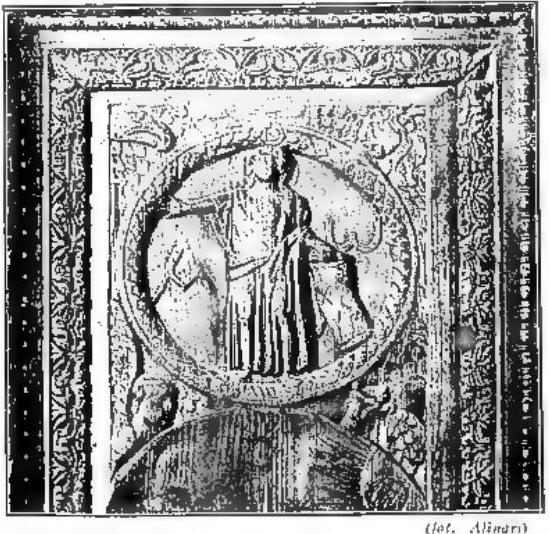
Evan Gelista – Jesus Christ between the symbols of the four evangelists (12th cent.) – Chartres, Cathedral, Eastern façade.

The man of Matthew, the eagle of John. Thus they appear in Rome, for example, in the apse museum of St Pudentiana, in the triumphal arch of St Paul’s, in the apse of SS Cosmas and Damian, in Ravenna in the mausoleum of Galla Placidia, in the chapel of St Peter Chrysologus, in the Arian baptistery, and on the façade of the apse of St Apollinaris in Classe. In St Vitalis, above each of the four Evangelists, their respective symbolic representation is depicted; in Milan in St Victor, in St Matrona and St Priscus near St Mary Capua Vetere, etc. The same symbols are also found in some ivories; for example, in Milan on a book-cover of an evangelistary; in the surviving leaf of the Trivulzio diptych the symbols of Luke and Matthew are present.

The four Evangelists were symbolised as sheep in a fragment of a slab preserved in the Museo delle Terme. The divine Lamb is in the centre, on the mountain from which flow the four rivers. From the right two sheep approach; on the first is written: “Mar (cus)”, on the second: “Ioan (n) es Evan (gelist)”. In the missing part on the left there should have been the other two sheep with the names of Matthew and Luke (Wilpert, ibid., I, p. 34, tav. 36, 1).

A singular symbolic representation of the Evangelists is found on a marble lid of a sarcophagus from Spoleto, now in the Lateran Museum: from the right a boat with a helmsman and three beardless rowers; the helmsman seated in a ruined chair and wearing a pallium is Jesus, as shown by the iconographic type and the inscription IESVS; the three rowers are indicated by the names: MARCVS, LVCAS, and (IOH)ANNES; MATHEVS should have preceded in the missing part and Wilpert adds PETRVS because he sees in the scene a symbolic representation of Jesus.

Evan Gelista – Jesus Christ among the symbols of the four Evangelists (12th cent.) – Chartres, Cathedral, Eastern façade.The man of Matthew, the eagle of John. Thus they appear in Rome, for example, in the apse museum of St Pudenziana, in the triumphal arch of St Paul’s, in the apse of SS Cosmas and Damian, in Ravenna in the mausoleum of Galla Placidia, in the chapel of St Peter Chrysologus, in the Arian baptistery, and on the façade of the apse of St Apollinaris in Classe. In St Vitalis, above each of the four Evangelists, their respective symbolic representations are depicted; in Milan in St Victor, in St Matrona and St Priscus near St Maria Capua Vetere, and so on. The same symbols are also found in some ivory works; for example, in Milan on a book-cover of an evangelistary; in the surviving leaf of the Trivulzio diptych the symbols of Luke and Matthew are present.

The four Evangelists were symbolised as sheep in a fragment of a slab now in the Museo delle Terme. The divine Lamb is in the centre, on the mountain from which flow the four rivers. From the right two sheep approach; on the first is written “Mar[cus]”, on the second “Ioan[n]es Evan[gelista]”. On the missing left side the other two sheep should have been with the names of Matthew and Luke (Wilpert, ibid., 1, p. 34, pl. 36, 1).

A singular symbolic representation of the Evangelists is found on a marble lid of a sarcophagus from Spoleto, now in the Museo Lateranense: on the right a boat with a helmsman and three beardless rowers; the helmsman seated in a ruined chair and wearing a pallium is Jesus, as shown by the iconographic type and the inscription IESVS; the three rowers are indicated by the names: MARCVS, LVCAS, and (IOH)ANNES; Matthew should have preceded in the missing part and Wilpert adds PETRUS because he sees in the scene a symbolic representation of Jesus.

The Evangelist – Jesus Christ among the symbols of the four Evangelists (12th cent.) – Chartres, Cathedral, eastern façade.

The four Evangelists were symbolized as sheep in a fragment of a slab preserved in the Museo delle Terre. The divine Lamb is in the center, upon a mountain, from which flow the four rivers. To the right are two sheep; on the first is written: "Mar (cus), on the second: "Ioa(n)n es Evan (gelist)". In the missing part to the left, the other two sheep should have been with the names of Matthew and Luke (Wilpert, ibid., 1, p. 34, tav. 36, 1).

A singular symbolic representation of the Evangelists appears on a marble lid of a sarcophagus from Spoleto, now in the Museo Lateranense: to the right, a boat with a pilot and three beardless rowers; the pilot seated in a ruined chair and wearing a pallium is Jesus, as shown by the iconographic type and the inscription IESVS; the three rowers are indicated by the names: MARCVS, LVCAS, and (IOH)ANNES; Matthew should have preceded in the missing part, and Wilpert adds PETRVS because he sees in the scene the symbolic representation of Jesus.

John the Evangelist — Jesus Christ among the symbols of the four Evangelists (12th c.) — Chartres, Cathedral, Eastern Façade.

The man of Matthew, the eagle of John. Thus they appear in Rome, for example, in the apse mosaic of S. Pudenziana, in the triumphal arch of S. Paolo, in the apse of SS. Cosma e Damiano, in Ravenna in the mausoleum of Galla Placidia, in the chapel of S. Pier Crisologo, in the baptistery of the Arians, and on the façade of the apse of S. Apollinare in Classe. In S. Vitale above each of the four Evangelists, their respective symbolic representations are depicted; in Milan in S. Vittore, in S. Matrona and S. Prisco near S. Maria Capua Vetere, etc. The same symbols are also found in some ivories; for example, in Milan on a book-cover of an evangelistary; in the surviving leaf of the Trivulzio diptych are the symbols of Luke and Matthew.The four Evangelists were symbolized as sheep in a fragment of a slab preserved in the Museo delle Terre. The divine Lamb is at the center, upon a mountain, from which flow the four rivers. From the right, two sheep approach; on the first is written: "Mar (cui), on the second: "Ioan (n) es Evan (gelista)". In the missing part to the left, the other two sheep should have been with the names of Matthew and Luke (Wilpert, ibid., 1, p. 34, tav. 36, 1).

A singular symbolic representation of the Evangelists appears on a reused sarcophagus lid from Spoleto, now in the Museo Lateranense: from the right, a boat with a helmsman and three beardless rowers; the helmsman seated in a ruined chair and wearing a pallium is Jesus, as shown by the iconographic type and the inscription IESVS; the three rowers are indicated by the names: MARCVS, LVCAS, and (IOH)ANNES; Matthew should have preceded in the missing part, and Wilpert adds PETRVS because he sees in the scene a symbolic representation of Jesus.

The Eagle of the Evangelist — Jesus Christ among the symbols of the four Evangelists (12th c.) — Chartres, Cathedral, Eastern Façade.

The man of Matthew, the eagle of John. Thus they appear at Rome, for example, in the apse mosaic of S. Pudenziana, in the triumphal arch of S. Paolo, in the apse of SS. Cosma e Damiano, in Ravenna in the mausoleum of Galla Placidia, in the chapel of S. Pier Crisologo, in the Arian baptistery, and on the façade of the apse of S. Apollinare in Classe. In S. Vitale, above each of the four Evangelists, their respective symbolic representations are depicted; at Milan in S. Vittore, in S. Matrona and S. Prisco near S. Maria Capua Vetere, etc. The same symbols are found also in some ivories; for example, at Milan on a book-cover of an evangelistary; in the surviving leaf of the Trivulzio diptych are the symbols of Luke and Matthew.

The four Evangelists were symbolized as sheep in a fragment of a slab preserved in the Museo delle Terre. The divine Lamb is at the center, upon a mountain, from which flow the four rivers. From the right, two sheep approach; on the first is written: "Mar (cui), on the second: "Ioan (n) es Evan (gelista)". In the missing part to the left, the other two sheep should have been with the names of Matthew and Luke (Wilpert, ibid., 1, p. 34, tav. 36, 1).

A singular symbolic representation of the Evangelists appears on a reused sarcophagus lid from Spoleto, now in the Museo Lateranense: from the right, a boat with a helmsman and three beardless rowers; the helmsman seated in a ruined chair and wearing a pallium is Jesus, as shown by the iconographic type and the inscription IESVS; the three rowers are indicated by the names: MARCVS, LVCAS, and (IOH)ANNES; Matthew should have preceded in the missing part, and Wilpert adds PETRVS because he sees in the scene a symbolic representation of Jesus.

The Eagle of the Evangelist — Jesus Christ among the symbols of the four Evangelists (12th c.) — Chartres, Cathedral, Eastern Façade.

The man of Matthew, the eagle of John. Thus they appear at Rome, for example, in the apse mosaic of S. Pudenziana, in the triumphal arch of S. Paolo, in the apse of SS. Cosma e Damiano, in Ravenna in the mausoleum of Galla Placidia, in the chapel of S. Pier Crisologo, in the Arian baptistery, and on the façade of the apse of S. Apollinare in Classe. In S. Vitale, above each of the four Evangelists, their respective symbolic representations are depicted; at Milan in S. Vittore, in S. Matrona and S. Prisco near S. Maria Capua Vetere, etc. The same symbols are found also in some ivories; for example, at Milan on a book-cover of an evangelistary; in the surviving leaf of the Trivulzio diptych are the symbols of Luke and Matthew.

The representation of the four Evangelists on a shared lid of a Spoleto sarcophagus, now in the Lateran Museum, is singular: on the right, a boat with a helmsman and three beardless rowers; the helmsman seated on a ruined chair and wearing a pallium is Jesus, as shown by the iconographic type and the inscription IESVS; the three rowers are identified by the names: MARCVS, LVCAS, and (IOH)ANNES; MATHEVS must have preceded in the missing part, and Wilpert adds PETRVS because he sees in the scene a symbolic representation of Jesus.

*Evan Gelista — Jesus Christ among the symbols of the four Evangelists (12th century) — Chartres, Cathedral, Eastern Façade.*

The man of Matthew, the eagle of John. Thus they appear in Rome, for example, in the apse mosaic of S. Pudenziana, in the triumphal arch of S. Paolo, in the apse of SS. Cosma e Damiano, in Ravenna in the mausoleum of Galla Placidia, in the chapel of S. Pier Crisologo, in the Arian baptistery, and on the façade of the apse of S. Apollinare in Classe. In S. Vitale above each of the four Evangelists, their respective symbolic figures are depicted; in Milan in S. Vittore, in S. Matrona and S. Prisco near S. Maria Capua Vetere, etc. The same symbols are also found in some ivories; for example, in Milan on a book-cover of an evangelistary; in the surviving leaf of the Trivulzio diptych the symbols of Luke and Matthew are present.

The four Evangelists were symbolized as sheep in a fragment of a slab preserved in the Museo delle Terre. The divine Lamb is in the center, on a mountain, from which flow the four rivers. To the right two sheep approach; on the first is written: "Mar (cui), on the second: "loan (n) es Evan (gelista)". In the missing part to the left the other two sheep must have been with the names of Matthew and Luke (Wilpert, ibid., 1, p. 34, tav. 36, 1).