
BONOMELLI, GEREMIA. — Bishop. Born on 12 Sept. 1831 at Nigoline di Franciacorta in the diocese of Brescia, into a very modest rural family, died there on 3 Aug. He completed his classical studies at the municipal college of Lovere, then his philosophical and theological studies at the seminary of Brescia (at the expense of Monsignor Paschini), from which he emerged as a priest on 2 June 1855. His bishop wished him to continue theological studies at the Gregorian University in Rome, where he resided at the Capranica College. He then taught sacred sciences in the Brescia seminary until 8 July 1866, when he took up the post of provost at Lovere. In the care of souls, and especially of the young, and in considering the spiritual needs of his age, there matured that which was to become the constant concern of his life: the good and glory of the Church in the moral-religious progress of the Italian people. Named bishop of Cremona, he was consecrated at Brescia on 26 Nov. 1871 and soon entered his see, governing it until his death with great zeal and charity.
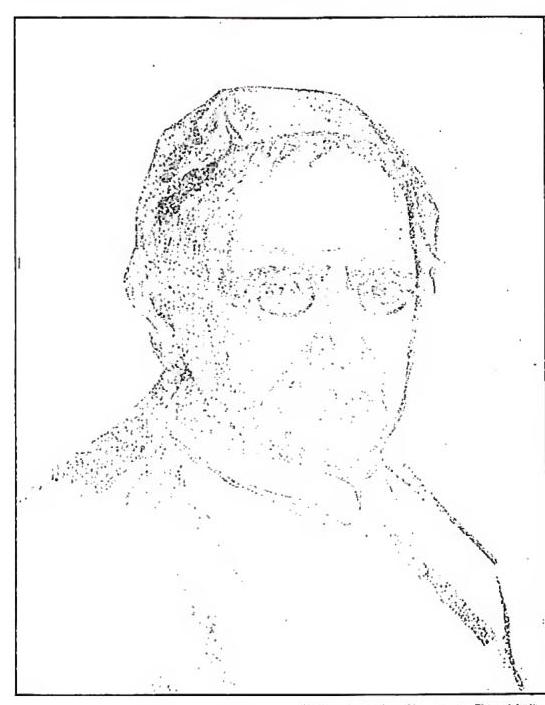
He entered it armed with a spirit of convinced intransigence; yet, as a witness to the sectarian intolerance raging in those years, he soon came to recognize the necessity of establishing good relations with all well-intentioned spirits and preparing an intelligent rapprochement between science and faith, and in particular between the national spirit that was being unified and the supreme interests of the Apostolic See, overcoming every exclusivism.
As he himself explained in the Memorandum he sent to Pius X in Oct. 1904, this necessity became fully clear to him during a meeting in Florence in 1879 with Cardinal Manning, archbishop of Westminster, who warned him, the archbishop Cecconi being his host: “You Italians now must unite yourselves to the House of Savoy, not for the good it has done you (for it has done much harm), but for the greater harm it alone can prevent. Speak no more of temporal power, for in Europe there is not a single power that will lift a finger in its defense: leave this to Providence, and take care not to place the nation at the crossroads of having to choose between religion and country; placed in this alternative, it will abandon religion and side with the country, as our England did.”
It is therefore understandable that in 1882, when Leo XIII asked him whether he considered it opportune for Catholics to participate in political elections, he answered in the affirmative, and three years later he presented to the Pope, through Father G. Cornoldi of *La Civiltà Cattolica*, a first memorandum, arguing the impossibility of restoring the ancient dominions of the Holy See, and instead the urgency of increasing the moral strength of the Holy See in the world, and the true, inalienable strength of the Papacy, so as to prepare in this way for the material restoration, which will come about in those forms that may be possible according to the times. In 1887 he expressed in a letter to his friend Scalabrini, bishop of Piacenza, his intention to publish a pamphlet on the terrible Roman Question, which “would aim to clarify matters and prepare a solution to the formidable problem.” And he concluded: “If this struggle is prolonged further, what painful consequences may result, which may last until God wills it to end, and soon, and I hope that the great Leo XIII, a connoisseur of the times, may be the Calixtus II of the 19th century.” Thus he expressed the hope that a new Concordat of Worms might put an end to the struggle then underway between ecclesiastical and civil power. In March 1889 there appeared in *Rassegna Nazionale* an anonymous article on Rome and Italy and the reality of things, widely circulated also as a separate pamphlet. In this writing, B. concluded that there was an internal impossibility of restoring the temporal sovereignty of the Pope, to which was added also “the external impossibility,” and proposed a miniature state, a solution to be considered as a modus vivendi that would mitigate the harshness of the present condition and halt the spiritual ruin that was accumulating before one’s eyes. These suggestions, however, did not meet with the approval of the Holy See: such a step indeed appeared rather untimely, since account had to be taken of the Italian authorities, whose dispositions in this regard were unknown, and the possibilities of putting it into practice were therefore uncertain. The writing was therefore placed on the Index by decree of 13 Apr. 1889, and the bishop made a public act of submission in the cathedral on Easter Day. Meanwhile, socialist ideology was spreading in Italy, and B. immediately showed great interest in the social question, which he addressed in various pastoral letters, from that of 1886 on *Property and Socialism*, to the others *Capital and Labor* (1891), *The Moral Question is a Social Question* (1892), *A Friendly Word to All Workers* (1895), and that on *Emigration* (1896). His concern to keep peasants and workers from socialist propaganda and his desire to convince property owners to draw closer to the workers of the land and the workshops, to elevate them morally and materially, and to achieve the establishment of a quiet, respectful, Christian democracy rather than a “turbulent, insolent anti-Christian” one, in order to contain within its banks this mighty river that turns its waters toward the sea, so that it may not deviate but fertilize the banks and plains it crosses—this concern is alive and keen in B.’s various pastoral letters and occupies a large part in his later episcopal activity. Even in the aforementioned Memorandum of 1904, noting that “the last years have seen the birth and growth of the vast complex of social problems,” he advised Pius X to revoke the *non expedit*, not so much to “consolidate and perpetuate a particular political arrangement” but to “heal and make a people live,” in the face of “the threatening growth of the anarchist socialist party,” since “this boldness and this real strength of the extreme parties threatens religion directly in itself and indirectly in the interests most vitally connected with it, such as the family and society.” B. also founded the Work of Assistance for Italian Emigrants, so that these might be assisted spiritually and materially in the places to which they went for work. In this he was aided by noble spirits who recognized in him a man superior to every personal or party interest, concerned solely with the good of his fellow men and of his country.
The purity of his intentions was above every suspicion; he sometimes appeared unscrupulous, yet he was a man of profound and convinced piety; his naturally impulsive and precipitate character sometimes led him to untimely and violent outbursts, but he knew how to make amends; and even in the face of bitter criticism, insinuations, and misunderstandings kept alive by a press that was anything but impartial, he knew how to comport himself with a dignity truly episcopal; firm in obedience to his superiors and confident in the support of the admirers and friends he had in abundance, with whom he maintained an active correspondence.
Literary production is abundant and varied; apart from a Latin manual of dogmatic theology intended for seminaries, it is directed in particular to meeting the religious needs that grew ever more urgent in the different social classes. His major works begin precisely in 1871 with the three volumes: *Il giovane studente istruito nella dottrina cristiana* (1871–74), which by 1879 had already reached a fourth revised edition and which in 1890 received their final revision from the author and continued to be reprinted thereafter. In 1884–91 he published the 18 volumes of his translation of *Esposizione del dogma cattolico* by the Monaco, enriched with notes by himself. Of 1894–96 are the four volumes on *I Misteri cristiani*; of 1894–1900, the three volumes: *Seguiamo la ragione*. Alongside these works, which enjoyed wide success and were also translated, there were other publications of the same kind and numerous pastoral letters addressing the principal questions of the day, including the social question. Collections were made of these, such as the two-volume work of 1897 under the title: *Questioni morali e sociali del giorno*. He also published speeches, articles in periodicals, lectures, and homilies collected in volumes (1891–93).
He also published travel volumes, not for mere narrative purposes but with a religious and moral intent; that is, to interest readers in problems that were either not addressed at all or, if they were, it was for entirely different reasons. These include *Un autunno in Oriente* (1895) and *Un autunno in Occidente* (1897). Later, when he began to concern himself with the assistance of Italian emigrants abroad, he published: *Tre mesi al di là delle Alpi* (1901), *Dal Piccolo S. Bernardo al Brennero* (1903), and *Viaggio in vari paesi e in vari tempi* (1908).