
BONO, GIOVANNI, blessed. — Born into a noble family at Mantova in 1168. After a dissipated youth, enlightened by divine grace following an illness, he returned to God.
Having withdrawn to the foothills of the Emilian Apennines, near Cesena, he led a life devoted to prayer and penance. He founded a congregation of hermits, called Giamboniti (v. EREMITANI DI SANT'AGOSTINO. AGOSTINO), which soon spread through Lombardia, Romagna, and Veneto. Bulls of Gregorio IX of 1230 and 1240 attest that it adopted the so-called rule of s. Agostino.
The Blessed died on 23 Oct. 1249, and two years later, by commission of Innocenzo IV, the bishop of Modena instituted proceedings there (1251–53) and at Cesena (1253–54) concerning his life and virtues. But no further action was taken, except for the translation of the body, which occurred in 1251. The Giamboniti, together with other Augustinian eremitical congregations, formed the « Unio magna », ordered by Alessandro IV through the bull Licet Ecclesiae Catholicae of 4 May of the same year; from this there subsequently arose the Order of the Hermits of S. Agostino, of which Lanfranco Settale was appointed prior general. Feast: 23 Oct.
BONOMELLI, GEREMIA. – Bishop, born on 12 September 1831 in Nigoline di Franciacorta in the diocese of Brescia to a very modest rural family, died there on 3 August 1914. He completed his secondary studies at the municipal college of Lovere, then his philosophical and theological studies at the seminary.
BONOMELLI, GEREMIA - Portrait.
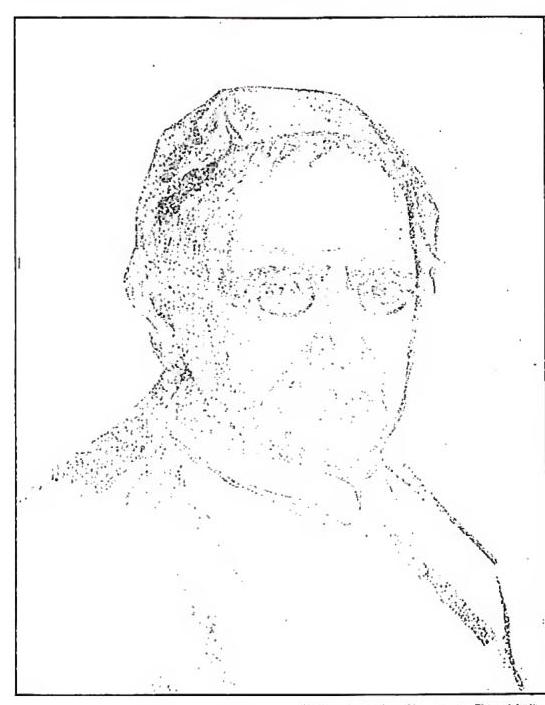
He entered his diocese armed with a spirit of convinced intransigence; however, as a witness to the sectarian intolerance that raged in those years, he soon became convinced of the necessity to forge good relations with all well-intentioned spirits and to prepare an intelligent rapprochement between science and faith, and in particular between the national spirit that was unifying and the supreme interests of the Apostolic See, overcoming all exclusivism.
As he himself explained in the Memoriale he sent to Pius X in October 1904, this necessity became fully clear to his mind during a meeting in Florence in 1879 with Cardinal Manning, archbishop of Westminster, who admonished him and his host, Archbishop Cecconi: « Voi, italiani, ora dovete unirvi a Casa Savoia, non pel bene che vi ha fatto (ché ha fatto molto male), ma pel molto male che essa sola può impedire. Non parlate più di potere temporale, per cui in Europa non v'è una sola potenza che alzi un dito: su ciò lasciate fare alla Provvidenza e badate di non mettere la nazione nel bivio di scegliere tra la religione e la patria: posta in questa alternativa, abbandonerà la religione e starà colla patria, come fece la nostra Inghilterra ».
It is therefore understandable that in 1882, when Leo XIII asked whether he considered the participation of Catholics in political elections opportune or not, he answered affirmatively, and three years later presented to the Pontiff, through Father G. Cornoldi of La Civiltà Cattolica, a first memorandum, arguing the impossibility of restoring the ancient dominions of the Holy See and the urgency instead of increasing the moral force of the Holy See in the world, « forza vera indistruttibile del Papato », to thus prepare « la ristorazione materiale, che potrà venire da sé in quelle forme che saranno possibili secondo i tempi ». In 1887, in a letter to his friend Scalabrini, bishop of Piacenza, he expressed his intention to publish a pamphlet « sulla terribile questione romana », which « tenderebbe a chiarire le cose e preparare una soluzione del formidabile problema ». And he concluded: « Se questa lotta si prolunga ancora, quali dolorose conseguenze, che potranno durare Dio su quanto! Urge finirla, e presto, e io spero che il grande Leone XIII, conoscitore dei tempi, potrà essere il Callisto II del sec. XIX ». He thus expressed the hope that a new Concordat of Worms would put an end to the struggle between ecclesiastical and civil power. In March 1889, an anonymous essay entitled Roma e l'Italia e la realtà delle cose appeared in Rassegna nazionale, widely circulated also as a separate pamphlet. In this work, Bonomelli, concluding that there was an « impossibilità interna del ristabilimento della sovranità temporale del Papa », to which was added « la impossibilità esterna », proposed « una minatura di Stato », a solution to be considered as a modus vivendi, which would temper the harshness of the current condition and halt the spiritual ruins accumulating before our eyes. *« Questi suggerimenti non incontrarono però il gradimento della S. Sede: un tal passo infatti apparirà piuttosto intempestivo perché bisognava fare i conti con le autorità italiane, delle quali non si conoscevano in proposito le disposizioni, ed erano perciò dubbie le possibilità di scendere al pratico. Lo scritto, con decreto del 13 apr. 1889, fu pertanto posto all'Indice, ed il vescovo fece pubblico atto di sottomissione in Duomo il giorno della Pasqua.
Meanwhile, socialist ideology was spreading in Italy, and Bonomelli immediately showed great interest in the social question, which he addressed in various pastoral letters, from that of 1886 on Proprietà e socialismo, to others such as Capitale e lavoro (1891), La questione morale è questione sociale (1892), Una parola unica a tutti gli operai (1895), and that on L'emigrazione (1896). His concern to shield peasants and workers from socialist propaganda and his desire to convince landowners to draw closer to the laborers of the land and factories to morally and materially uplift them, and to achieve the establishment of « una democrazia quieta, rispettosa, cristiana », rather than « una turbolenta, insolente anticristiana », with the intent « di contenere entro le sue dighe questo fiume maestoso, che volge le sue acque verso il mare, affinché non devasti, ma fecondi le rive e le pianure che attraversa », this concern is vivid and deeply felt in Bonomelli’s various pastoral letters and occupies a large part in his subsequent episcopal activity. Even in the aforementioned Memoriale of 1904, noting that « gli ultimi anni videro nascere e grandeggiare il vasto complesso dei problemi sociali », he advised Pius X to revoke the non expedit, not so much to « saldare e perpetuare un determinato assetto politico », but to « sanare e far vivere un popolo », in the face of « il crescere minaccioso del partito socialista anarchico », since « questa baldanza audace e questa forza reale dei partiti estremi minaccia la religione direttamente in sé e indirettamente negli interessi, che le sono più vitalmente congiunti, come la famiglia e la società ». Bonomelli also founded the Opera di assistenza for Italian emigrants, so that they might be spiritually and materially assisted in the places where they went to work. In this, he was aided by distinguished spirits who recognized in him a man superior to any personal or partisan interest, concerned solely with the good of his fellow men and his homeland.
The purity of his intentions was beyond suspicion; he sometimes appeared uninhibited, yet he was a man of deep and convinced piety; his naturally impulsive and hasty character sometimes led him to inappropriate and violent outbursts, but he knew how to reconsider. Even in the face of bitter criticism, insinuations, and misunderstandings kept alive by a far from impartial press, he conducted himself with truly episcopal dignity; firm in obedience to his superiors and confident in the support of the many admirers and friends with whom he maintained an active correspondence.
BIBL.:
A. Cistellini, Geremia Bonomelli, Brescia 1950; G. De Luca, Carteggio, I, Brescia 1964, pp. 3-150; G. Toniolo, Scritti sociali, Roma 1947, pp. 101-103; La Civiltà Cattolica, 1914, IV, pp. 385-392; A. Brucculeri, Il pensiero sociale di Geremia Bonomelli, in La Scuola Cattolica, 1924, pp. 3-24; G. B. Valente, Geremia Bonomelli, in Rivista di storia della Chiesa in Italia, 1950, pp. 241-260; V. CREMONA.
G. PENCO
The literary output is abundant and varied; aside from a Latin manual of dogmatic theology intended for seminaries, it is particularly aimed at addressing the religious needs that were becoming increasingly urgent across different social classes. His major works begin in 1871 with the three volumes of Il giovane studente istruito nella dottrina cristiana (1871-74), which by 1879 had already reached its fourth revised edition and in 1901 received its final revisions from the author, continuing to be reprinted thereafter. Between 1884 and 1891, he published the 18 volumes of the translation of Monsabré’s Exposition du dogme catholique, enriched with notes by himself. From 1894 to 1896, he produced the four volumes on the Misteri cristiani; from 1894 to 1900, the three volumes of Seguiamo la ragione. Alongside these works, which enjoyed wide success and even translations, he published other writings of the same genre and numerous pastoral letters addressing the principal issues of the time, including the social question. Collections of these were made, such as the two-volume set from 1897 titled Questioni morali e sociali del giorno. He also published speeches, articles in periodicals, conferences, and homilies collected in volumes (1891-93).
He also published travel books, not for purely narrative purposes but with religious and moral intent, aiming to engage readers with problems that either went unnoticed or, if noticed, were approached for entirely different reasons. From 1895 is Un autunno in Oriente and from 1897 Un autunno in Occidente. Later, when he began to concern himself with the assistance of Italian emigrants abroad, he published: Tre mesi al di là delle Alpi (1901), Dal Piccolo S. Bernardo al Brennero (1903), and Viaggiando in vari paesi e in vari tempi (1908).