
BRESLAVIA (Latin Vratislavia, Polish Wróclaw, German Breslau), ARCHDIOCESE of. – Now in Poland. Capital of Silesia and metropolitan see.
I. FORMATION (1000–1335)
The diocese of B. was founded around the year 1000, simultaneously with Krakow and Kolberg, as a suffragan of Gniezno (Gnesen), but disappeared again during the pagan reaction following the death of the Polish sovereign Boleslaw Chorrbry; thus there is a gap between the first bishop, John (mentioned only by Dietmar of Merseburg), and the second, Jerome (1046–62). Even for the following bishops, until the end of the twelfth century, the documents are exceedingly scarce. Gualtiero (1149–69), first provost of Malonne, in the diocese of Liège, obtained from Pope Adrian IV in 1155 the first document of patronage, from which the extent and the endowments or prebends of the diocese can be learned. The Cathedral Chapter was probably constituted by Premonstratensian canons. The number of parishes, despite the ecclesiastical foundations of the Polish magnate Peter Wlast, remained small: the diocese was a mission diocese.A change took place only when, at the end of the twelfth century, the Polish dukes of Silesia, beginning with Henry I, husband of St. Hedwig (d. in 1243), summoned German colonists to the country; new churches were built in their villages and towns, so that from 1200 to 1350 the number of churches authentically mentioned rose from 24 to 771. At the same time the organization of the diocese was completed: to the already existing archdeaconry of B. were added the archdeaconries of Oppeln and Glogau in 1227, and that of Liegnitz in 1261; the existence of archpriests can be documented from 1219.
The great bishops of the thirteenth century, Lawrence (1207–32), Thomas (1232–68), and his nephew Thomas II (1270–92), all Polish, also promoted German colonization in their own territories, Ottmachau-Neisse.
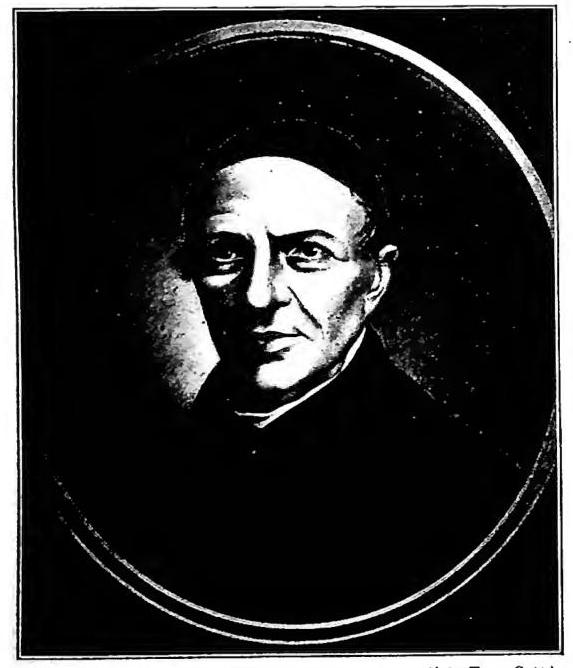
The wealthy Cistercian monasteries of Leubus, Camenz, and Trebnitz; the foundations of St. Hedwig, Heinrichau, Grüssau, Rauden, and Himmelwitz; those of the Augustinian Canons of St. Mary at B., Sagan; and the Premonstratensian abbey of St. Vincent at B. developed into centers of intense religious life. Under the first German bishop, Henry von Würben (1302–19), this development appears to have reached completion.
II. UNDER THE CROWN OF BOHEMIA (1335–1742)
The subsequent fate of the diocese was determined by the fact that Silesia, through the Treaty of Tenczin in 1335, became an immediate dependency of the crown of Bohemia; in 1536 it passed to the House of Habsburg and remained an hereditary possession of that house until it was ceded to Prussia in 1742. Bishop Nanker (1326–42) strove, but in vain, to stem Bohemian influence. Under Preczlaw von Pogarell (1341–1376), Bohemian culture, which emanated from the Prague court of Emperor Charles IV, spread into Silesia as well. The diocese attained its first flowering and was distinguished by the honorary title of episcopatus aureus; the territory of the bishopric was also enlarged through the acquisition of the duchy of Grottkau.The Hussite invasions under Bishop Conrad von Ols (1417–47), and the disputes concerning the Council of Basel, followed later by the struggle between the commercially powerful city of B. and George Podiebrad of Bohemia, naturally also harmed ecclesiastical life. But under Rudolph of Rüdesheim (1468–82), who had previously resided in B. as a papal legate, and subsequently under John Roth (1482–1506), the diocese experienced a new flourishing: the number of benefices in the ten collegiate churches (St. Giles, Holy Cross, a. B.–Glogau, Oppeln, Ratibor, Liegnitz, Brieg, Ottmachau-Neisse, Oberglogau, and Falkenberg) and in the large parish churches of the city of B., Schweidnitz, and Hirschberg, as well as the number of charitable institutions and ecclesiastical schools, increased notably. It would be unjust to accuse the clergy of general corruption or of neglecting the duty of residence. Up to 1517, evidence can be produced for thirty-seven diocesan synods.
Protestantism was able to gain a foothold in B. (from 1520), in the duchy of Liegnitz, and generally in the towns, all the more easily because it showed itself tolerant toward the old liturgy and the other ecclesiastical institutions, so that the people scarcely noticed the essential principles and believed that it concerned a reform, while in fact a revolution was taking place; indeed, the bishops themselves did not clearly realize the seriousness of the danger.
James von Salza (1521–39) submitted a proposal to Pope Clement VII in 1525 for the struggle against Protestantism, but neither he nor his successors, Balthasar von Promnitz (1540–62) and Caspar von Logau (1562–74), took action to ensure that more energetic measures were adopted. The shortage of Catholic priests drove many parishes toward Protestant preachers. Around 1570 the greater part of the diocese was Protestant.
The reconstruction began under Bishop Martin Gerstmann (1574–85) with a visitation (1579) and a diocesan synod (1580), at which the decrees of the Council of Trent were accepted. It was then continued by the first alumnus of the Germanicum to occupy the episcopal see of B., Andrew von Jerin (1585–96), who summoned the Jesuits to B.
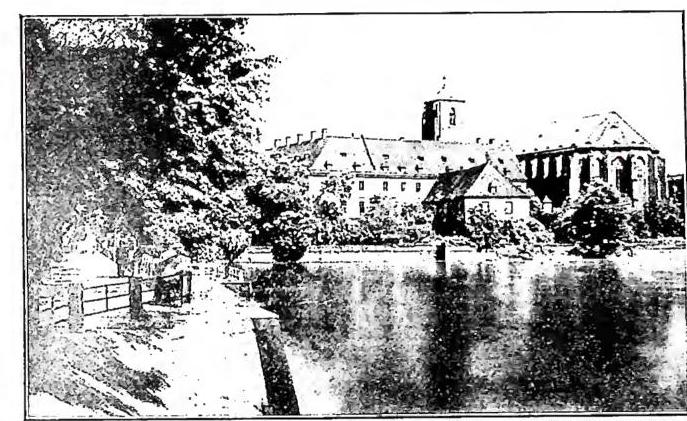
(from Enc. It., VII. tev. CLXXV)
BRESLAVIA – Church of St. Mary on the Sande River (14th–15th century).
In 1628, pursuant to the Edict of Restitution and with the aid of the public authorities, 656 churches were returned to the Catholic Church. The damage caused by the great war was repaired, and under the bishops Sebastiano da Rostock (1664–1671), Cardinal Federico of Hesse, a convert (1671–82), and the excellent administrator Count Palatine Francesco Lodovico (1683–1732), the diocese experienced a second renaissance.
Baroque devotion found its most splendid expression in the poetry of the convert Angelo Silesio (d. 1677), and art in the funerary chapel of Francesco Lodovico in the cathedral of B. The state of the House of Habsburg protected the Church, but at the same time subjected it to its authority: episcopal elections almost invariably produced the emperor’s candidates.
III. MODERN PERIOD FROM 1742
In the Peace of B. (1742), King Frederick II of Prussia had undertaken to maintain the status quo of religion in that part of the diocese of B. which was assigned to him. Although on the whole he observed this agreement, the rule of the Protestant state was nevertheless felt: in the territories forcibly returned to Catholicism there were numerous apostasies, while the chapters and convents were compelled to surrender up to 50% of their revenues to the state. The weak Cardinal Sitzendorff (1732–42) and Count Schaffgotsch (1747–1795), once the king’s favorite, were unable to alter this situation. The latter fell from favor (1747) and withdrew to the part of his diocese that remained under Austria, while the auxiliary bishops Strachwitz and Rothkirch administered the Prussian part as apostolic administrators.The diocese suffered its harshest blow as a result of Napoleon’s victory. By virtue of the Secularization Edict of 30 October 1810, the episcopal see lost the territory of Neisse-Grottkau and all its possessions; the Cathedral Chapter, 8 collegiate chapters, and 68 convents were suppressed, and their property was expropriated for the benefit of the state: their total value amounted to 15 million thalers. The protest of Prince-Bishop Hohenlohe (1795–1817) remained without effect.
The magnificent episcopal palace, which dated back to the Middle Ages, was thereby definitively destroyed;
yet an open space remained for a new construction. The bull De salute animarum of 16 July 1821 detached the diocese from the metropolitan see of Gnesen, with which it had in fact had no relations since 1641. The eastern part of Lusatia and the Upper Silesian deaneries of Beuthen and Pless were united to the diocese, which was itself placed immediately under the Holy See. The Prince-Bishop, as apostolic delegate, was granted jurisdiction over the Catholics of the province of Brandenburg and Pomerania, including Berlin. The episcopal see and the Cathedral Chapter were endowed with state subsidies. The consequences and effects of the so-called “Enlightenment” were overcome under the bishops Schimonski (1824–32), Knauer (1843–44), and Cardinal Diepenbrock (1845–53), a highly learned man formed in the school of Sailer; Sedlnicky (1836–1840) had been forced to resign because of the position he had taken in the dispute over mixed marriages. The pseudo-Catholicism of the German chaplain Ronge did not seriously damage the awakened and renewed ecclesial spirit. Taking advantage of the freedoms granted by the Prussian Constitution of 1850, the Catholics, under Prince-Bishop Förster (1853–81), also known as a gifted preacher, developed their associational tendencies and the Catholic press (through the Katholisches Kirchenblatt, 1835–85); new orders and women’s congregations were introduced into or founded in the diocese (for example, as early as 1842, the Grey Sisters of St. Elizabeth for the care of the sick). Development was so vigorous that the movement of so-called Old Catholicism, which arose after the First Vatican Council, as well as the Kulturkampf promoted by Bismarck, could indeed slow the new flowering of Catholic life, but could not destroy II. The bishop was forced into exile in 1881; 145,000 souls were left without regular parish care; from 1876 to 1886 only 102 priests were ordained, while 380 died.
One of the first concerns of the “bishop of reconciliation,” Cardinal Kopp, who after the death of the old Prince-Bishop Herzog (1882–86) was transferred from Fulda to B. (1887–1914), was to fill these gaps in the clergy by founding minor seminaries and constructing a new residence for theology students, who attended the courses of the Faculty of Theology at the University of B. In this way it became possible to provide priests for the new churches built in the rapidly developing industrial centers and in the mission territories of Brandenburg-Pomerania.
Under the “bishop of Catholic Action,” Cardinal Bertram (from 1914), the diocese of Katowice was founded (1924) from those parts of the diocese that were ceded to the Polish Republic. B. itself, by virtue of the concordat with Prussia (14 June 1929), was raised to an archdiocese and received as suffragans the dioceses of Warmia (new Ermland) and Berlin, and the nullius prelature of Schneidemühl.
In 1936 the archdiocese of B. comprised 795 parishes, with 1,600 priests and more than 2,300,000 souls.
Domkapitels im Mittelalter bis 1341, Weimar 1940. – Reformation and Counter-Reformation: J. Soffner, Geschichte der Reformation in Schlesien, Breslavia 1887; G. Zimmermann, Das B. Domkapitel im Zeitalter der Reformation und Gegenreformation, Weimar 1938; H. Jedin, Die Krone Böhmen und die B. Bischofswahlen, in Archiv für schles. Kirchengeschichte, 4 (1939), pp. 195–208; A. Sabisch, Bistum B. und Erzbistum Gnesen, ibid., 5 (1940), pp. 96–141. – Modern period: A. Theiner, Zustände der katholischen Kirche in Schlesien 1740–1758 sec. I–II, Ratisbona 1852 (correspondence of Benedict XIV with the bishops and with Frederick II); H. Hoffmann, Die B. Bischofswahlen in preussischer Zeit, in Zeitschrift für Geschichte Schlesien, 75 (1941), pp. 157–224.