
AZIONE CATTOLICA (A. C.). - Organized Catholic apostolate of the laity.
SUMMARY:
I. Concept
II. Nature and purpose
III. History
IV. Legal conditions
V. Constitutive characteristics.I. CONCEPT
In the literal sense, the expression A. C. means an act conforming to the principles of the Catholic religion. But common usage and the official documents of the ecclesiastical hierarchy have in recent times designated by this name either works of apostolate carried out by religious associations, or the associations themselves insofar as they are devoted to such works. In the first sense Pius XI defined A. C. as: « The collaboration of the laity in the hierarchical apostolate of the Church ».In the second sense, the General Statute of Italian A. C. of 1946 states that it is « the organization of the laity for a special and direct collaboration with the hierarchical apostolate of the Church ». It should also be noted that today, through various forms of dependence and coordination, there is a tendency to link to A. C. properly so called also those associations which, although having an organization less rigidly modeled on the hierarchical one, carry out apostolic activity in some particular sector, such as, for example, in Italy, the Scouts, the A.C.L.I., etc.
II. NATURE AND PURPOSES
A. C., both as individual apostolate and as organized apostolate, is included within the economy of Redemption established by Gesù Cristo, whereby its fruits reach men through the ministry of other men. “Go,” the divine Master said to his Apostles, “teach all nations, baptizing them...” (Mt. 28, 19).The ministry of the Apostles and of their successors, the Pope and the bishops, together with their clergy, is official and hierarchical; that of the laity is auxiliary and subordinate.
It follows that the purposes of A. C. are the very purposes of the Church. Pio XI wrote to the Argentine episcopate (4 Nov. 1931): “Most noble is the end of A. C., since it coincides with the very end of the Church.” And Pio XII stated: “Lofty is the mission of A. C., inasmuch as it lends its cooperation to the attainment of the very end of the Church.”
Naturally, other purposes are connected with this general and supreme end, which is the coming of the Kingdom of God, as proximate and partial ends in relation to the remote and general end. First and fundamental is the religious and moral formation of the members, directing and encouraging them toward an integral Christian life. Secondly, and with an emphasis all its own, A. C. seeks to give those organized within it an apostolic vision of life, so that each may feel himself a living part of a whole—the Church—from which he continually receives and to which he continually returns spiritual goods. Thirdly, the activity of apostolate properly so called, in every field and in all those directions in which, from time to time, the collaboration of the laity in the action of the hierarchy is most urgently required.
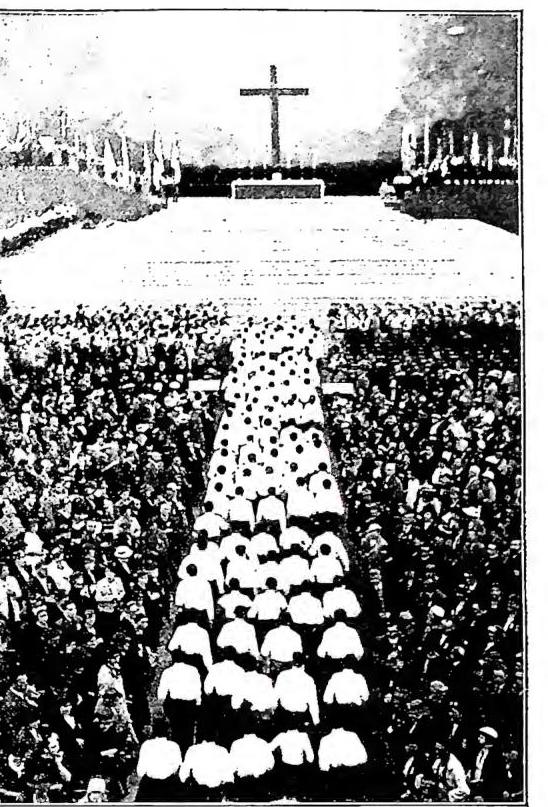
In times in which organization underlies every expression of life, the absolute autonomy of the individual activities for good would cause a dispersal of forces and scant effectiveness of action. And since it was necessary to organize these forces of the laity placed at the service of the Church, it was not possible, in principle, to disregard the very organization of the Church, which is Catholic, that is, universal, and which, besides the universal primacy of the Pope, has in the individual nations dioceses and parishes, with the respective mission of bishops and parish priests. Hence the parish basis existing in many places for the organization of A. C. Then the diocesan bodies alongside the bishop, and the national bodies with coordinating and promotional functions alongside a bishop delegated for this purpose by the Holy See, or elected by the episcopate of the nation, or alongside a collegial body (Episcopal Commission), as now in Italy.
Under the pontificate of Pio XI there was also an initial attempt at international organization at the centre of Catholicity, with the Actio catholica, an office established in Rome, but one which has exercised little function. Today forms of organization are taking shape for the individual branches: such as the already existing Internazionale delle leghe femminili cattoliche and Pax romana, and the Interna-
tionale of men and youth, newly established (Sept. 1948).
III. HISTORY
Taken in its broadest meaning, it may rightly be asserted that A. C. has always existed within Christianity and indeed forms part of its intimate structure. It has been constantly operative from the moment when Jesus’ miracles made known among the people, despite His occasional prohibitions, the wonders of which they themselves had been the objects or witnesses. The collaboration of laymen and laywomen in preparing the way for the Apostles, in defending them and rescuing them from persecutors, in themselves becoming champions of the Gospel, and in unmasking heretics and false brethren, although rather poor in authentic detail, emerges admirably from all the allusions of the ancient historians. Their mutual charity, their courage in professing the faith and bearing witness to it through martyrdom, were the constant and effective seal of the sanctity of the doctrine and the most effective factor in its propagation. With the decline, however, of Roman civilization and the transformation of public and private relations, the religious activity of the laity seems almost to have been eclipsed somewhat by the steadfast, though at times hidden, activity of the clergy and monasticism; it arose again, instead, with the advent of a new age, when the great mendicant Orders, especially the Franciscans and Dominicans, succeeded in arousing new energies in defense of the faith and for the comfort and protection of the humble, the poor, and the unfortunate. Third Orders, confraternities, and charitable institutions of various kinds almost overshadowed the more limited and circumscribed measures of the preceding age. Social provisions such as those of the «umiliati», and guilds of arts and trades always imbued with a Christian spirit, formed the new environment through the activity especially of the male laity; the female element contributed to it still rather indirectly, although a greater freedom of initiative on its part was increasingly making itself felt. The Renaissance, especially in Italy, perfected and expanded what it had inherited from the preceding age, less certainly in the social field of the guilds than in the fields of charity and culture. Alongside the Monti di Pietà there arose the broader movement for free schools of every level, the wider and more perfect organization of charity on behalf of the most wretched and abandoned, and the «Compagnie della dottrina cristiana», in which the laity participated by initiating, supporting, and contributing personally and materially.But it was with the disturbances provoked by the French Revolution that A. C. began in the strictly specific sense of its designation. Politics and economics, science, philosophy, and education sought their foundations and guiding principles in rationalism and unrestrained hedonism. The ancient paths of the apostolate were largely blocked: guilds dissolved, religious institutions suppressed, Catholic schools closed. And from the invading machine age and triumphant capitalism arose the social question, with the first revolutionary apostles, the first socialist theories, and the first insurrectionary attempts.
Here and there, however, the Catholic counteroffensive began to take shape. In Italy, the seeds were sown of what would later become modern A. C., through the Amicizie cattoliche of Pio Brunone Lanteri, which the Piedmontese King dissolved in 1828 as dangerous to the State. The Church then took energetic positions with Gregory XVI’s encyclical Mirari vos (1832), and later with Pius IX’s Sillabo (1864). Having received an authoritative and secure line of advance, Catholics returned to the conquest of a society that did everything possible to ignore Christianity. In all the European nations the religious revival was almost simultaneous and witnessed the finest names among clergy and laity in fraternal cooperation. In France, the Ligue catholique pour la défense de l'Église; in Belgium, the Union catholique; in Germany, the Katholischer Verein; in Switzerland, the Piusverein; in England, the Catholic Union; in Spain, the Asociación de católicos—to mention only some initiatives of the period. This return of Catholic initiative between 1848 and 1860 culminated in an international Congress at Malines in 1863, with such illustrious pioneers as Montalembert, Vaughan, Mermillod, and, for Italy, the lawyer G. B. Casoni of Bologna, who subsequently promoted in his homeland the first Catholic organization of a national character, called the Associazione cattolica per la libertà della Chiesa in Italia.
These various Catholic organizations remained, for more than a decade, predominantly engaged in defending Catholic truth and promoting the Christian life of their members. These were the years before and after the fall of the temporal dominion of the Popes, the struggle of the Kulturkampf in Germany, and the Comune of Paris—years which, in the minds of many anticlericals, were to be the Catholic Church’s final death throes. Yet the pioneers were already tracing the paths of modern social thought, inspired by the principles of the Gospel. In Germany, in 1848, the parish priest Ketteler, later a famous bishop, addressed the «Christian concept of property», and in 1864 openly confronted the subject of «the workers’ question». In Switzerland, another bishop, later a cardinal, Mermillod, sounded the alarm among the besti possidentes, setting forth new duties and new rights of the social classes; he also proposed to the Vatican Council the condemnation of socialism and the affirmation of the laws of Christian justice and charity.
In England, another bishop and cardinal, Manning, who saw more clearly and farther ahead than anyone else, posed the issue directly to Catholics: «to leave the Ark and act upon the world». In North America, another cardinal, Gibbons, became the defender of the new organization I Cavalieri del lavoro, which was also threatened and accused of being Catholic.
With these lights illuminating the way, A. C. formulated its plans for social work and related activities. Thus, when, on 15 May 1891, Leo XIII’s famous encyclical Rerum navarum was published, the ideological and practical ground was ready to receive II.
Meanwhile, however, movements of ideas were spreading within the Church that also disturbed the consciences of committed Catholics. In France, under Gregory XVI, there had already been the defection and desertion of Abbé de Lamennais, and this had served to purify the democratic ferment and movement for social renewal of its dross; consequently, the names of Lacordaire, Count Montalembert, La Tour du Pin, and Count De Mun represented a vast movement of ideas and works. In Germany, the struggle unleashed by Bismarck, pompously called the Kulturkampf, after 1870 had merely strengthened the union of Catholics and enabled Windhorst, leader of the Catholic Centre, to stand firm against the «iron chancellor», defeat him, and compel him to abolish the anti-Catholic laws. The attempt at internal disintegration by the so-called «Old Catholics», headed by Döllinger, was also rendered futile by these external circumstances of defensive struggle, which Catholics were obliged to confront.
Italy, where the political situation was entirely exceptional because of the relations between the Holy See and the government, was more favorable ground for sowing elements of discord. This led Leo XIII, in the encyclical Graves de communi, while reaffirming the social direction of the lay apostolate, to call the more impassioned members, led by d. Murri, to a greater sense of discipline. Pius X intervened later with the encyclical Il fermo proposito, and this marked a return to the spiritual and supernatural sources of all Catholic action (v. I)).
The First World War and the postwar period directed the whole A. C. toward works of assistance and patriotic resistance, and then toward organizational revival. This received its greatest impetus under the pontificate of Pius XI, the great pontiff who was also called the Pope of A. C. Beginning with his first encyclical, Ubi arcano Dei, and continuing until his death, he carried out a powerful work of doctrinal clarification and practical guidance for all the Catholic forces of the world. This led to more uniform regulation of the national organizations and to their closer adherence to the ecclesiastical hierarchy, while each nation retained the particular features imposed by local circumstances.
The period in which the struggle against Catholics was unleashed in the name of totalitarian political ideologies (Fascism and Nazism in Italy and Germany, Communism in Mexico and Spain) demonstrated the necessity for Catholics to withdraw temporarily from certain advanced positions in the social and political sphere, in order to defend the substance of the Christian ideal against the intrusive and overbearing State, while awaiting better times. When the Second World War broke out,
the European Catholic organizations experienced the conflict’s disastrous events in full. Engaged on the one hand in surviving and on the other in carrying out feverish activity to provide material and moral assistance to the afflicted populations, they rendered outstanding service to the Church and the Fatherland. With the end of the war, the organizational revival, as well as the effort within the individual nations to adapt to the new requirements of the apostolate, has been imposing. While social problems, exacerbated by the misery of the postwar period, predominate in Europe, in America (North, Central, and South) the religious and moral apostolate engages the various organizations with particular intensity; thus, at this decisive turning point in the social and political life of the world, the Catholic laity is not at the margins but at the center of humanity in motion, and truly appears as the collaborator of the hierarchy in preparing for the coming of the kingdom of Christ.
IV. LEGAL CONDITIONS
These may be considered under two aspects: that of the internal law of the Church and that of external public law.The CIC contains no canon concerning A. C., because even where it deals with De fidelium associationibus (cann. 684-725; V. ASSOCIAZIONE), it legislates only for those associations which, by virtue of their constitution, have a strictly ecclesiastical character, whereas A. C. has a lay character. The juridical position of A. C. must therefore be inferred from the living source of the Church’s magisterium, namely, the acts of the ecclesiastical hierarchy. From these acts, and especially from those of the S. See, A. C. derives its organizational form, and on the basis of them regulates its relations with the other associations existing in the Church. In Italy, it is called, by the statutes approved by the S. See, “‘the principal order’ of militant Catholics.”
As regards the position of A. C. in relation to the national community and the State, this highly delicate matter was regulated, under Pius XI, by numerous concordats. Since it is of the nature of A. C. to be a leaven within the social body through an organized apostolate whose broad directives emanate from the ecclesiastical hierarchy, the likelihood of clashes and misunderstandings on the part of the modern State with its secularist tendencies is evident. Since the generic appeal to the freedom of militant Catholics within the framework of the common law was often insufficient, owing to the frequent restrictions and violations of this freedom by the State itself, the S. See sought, between the two world wars, to obtain explicit recognition of Catholic organizations in the concordats concluded. Thus, A. C. was mentioned for the first time in the Concordat with Latvia (1922), and subsequently in that with Lithuania (1927), with Italy (1929), with Germany (1933), and with Austria (1934). But of all this solemn body of agreements, very little now remains, owing to the collapse of almost all the contracting states. The Concordat with Italy, however, was confirmed by the new republican Constitution in Article 7. It cannot be foreseen whether the path thus begun will be resumed and followed; in any case, it is certain that, under a regime of freedom and democracy, the best defense of A. C. is A. C. itself, effective and therefore capable of influencing and determining public opinion and the legislator.
V. CARATTERISTICHE COSTITUTIVE
Although Catholic, that is, universal, in its motives and general aims, the organization of militant Catholics under the direct dependence of the hierarchy takes concrete form in ways corresponding to the tendencies and traditions of the individual nations. Nevertheless, it is easy to identify certain common characteristics and certain specific differences.Common characteristics. — A. C. is an organization of laypeople with “their own responsible executive functions” (Pius XII to A. C. I., 1946). This means that, unlike what is proper to religious associations, in A. C. the laity have the honor and the burden of translating the directives of the hierarchy into concrete works of apostolate. In such organizations, the priest’s function is to represent ecclesiastical authority within them, to provide for the spiritual formation of the members by promoting initiatives intended for this purpose, and finally to safeguard the integrity of their orientation with regard to faith and morals. Everything else, whether in the sphere of study, organization, or action, belongs to the laity.
A. C. stands outside and above political parties (Benedict XV, 8 Jan. 1919; Pius XI to the ordinaries of Italy, 2 Oct. 1922; to the patriarch of Lisbon, 10 Nov. 1933; Pius XII to the president of G. I. A. C., 12 March 1943. Cf. Concordats with Austria, Germany, Italy, etc.), while providing its members with social and political education and engaging in political action itself when politics “touches the altar” (Pius XI, 20 Sept. 1925). In that case, the politics of A. C. are those of the Church itself, that is, religious action in the political sphere. At a given historical moment, there may be agreement between the practical stance of A. C. and that of a political party regarding certain social issues, but this detracts nothing from the value of the principle.
Specific differences. — Centralized organization is characteristic of the Latin nations, with the exception of France and Belgium; decentralized organization is characteristic of A. C. in the Anglo-Saxon countries.
The unitary and interclass character whereby, for example, the entire body of young people is organized in one national association and all women in another, is found in Italy, Spain, and the Ibero-American nations; the class-based character, organizational specialization, and hence the federative form, are found in the Anglo-Saxon world.
The same should be noted concerning the parochial character of the associations, understood in the sense that the first and fundamental nucleus of the organizational structure is found in the parish. This occurs wherever the parish is still a living reality of associated religious life, as in Italy and in certain Latin nations; whereas it does not occur where the parish either no longer is, or has never concretely been, a living and communal entity experienced as such by the faithful.
The formulas structuring the individual branches of A. C. in the various nations are even more varied, but here more than anywhere else this is a matter of that adaptability which is proper to every healthy and vital organism. It should be added that, within the same nation, different circumstances may suggest new organizational formulas, while leaving intact the fundamental characteristics of the general structure of A. C. This also occurred in Italy after the First World War, during the Fascist regime, and in the postwar period (cf. the Storia dell'A. C. I. in the manual by L. Civardi, II).
History: T. Veggian, Il movimento sociale cristiano nella seconda metà del sec. XIX, Vicenza 1902; F. Olgiati, La storia dell'A. C. (1865-1904), 2nd ed., Milan 1922; E. Soderini, Leone XIII, 3 vols., there 1932–33; A. De Gasperi, I tempi e gli uomini che prepararono la «Rerum Novarum», there 1945.
Law: cf. the most widely used commentaries on the CIC under the title De laicis; A. Perugini, Concordata virginia, Rome 1934; D. Menicucci, Natura giuridica dell'A. C., there 1936; J. N. Gienechea, Principia iuris politici, there 1939; V. Falzone, F. Palermo and F. Cosentino, La Costituzione della Repubblica Italiana, there 1948.
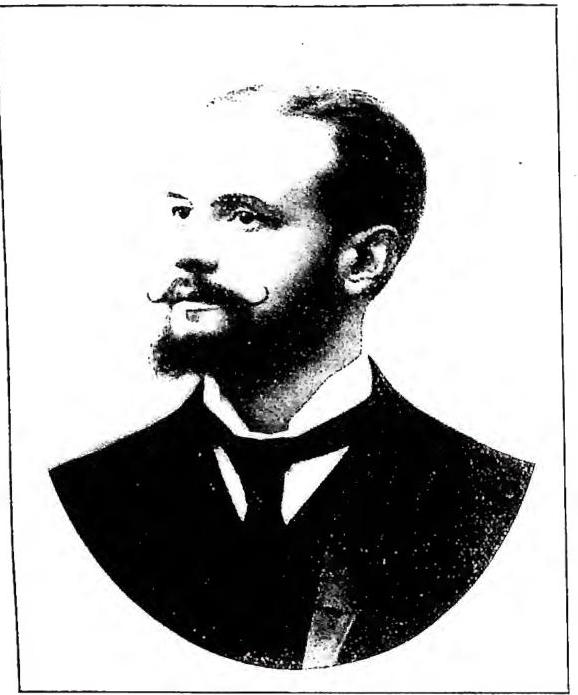
(properly A.C.I.) CATHOLIC ACTION — Count Giovanni Acquaderni.