
AZIONE CATTOLICA ITALIANA (A. C. I.) — It is the national organization of the Catholic laity for a special and direct collaboration with the hierarchical apostolate of the Church. It is therefore part of the great movement of laypeople who, throughout the Catholic world, collaborate with the ecclesiastical hierarchy for the advent of the reign of Christ, and whose modern organization is called A. C. (v. AZIONE CATTOLICA).
SUMMARY:
I. Origins and early developments
II. The new organization under Pius XI
III. Under the Pontificate of Pius XII.I. ORIGIN AND EARLY DEVELOPMENTS
The conditions of Catholicism in Italy toward the middle of the previous century were particularly delicate. In the political sphere, the idea of Italian unity was gaining ever greater ground, with the consequent elimination of the small states into which Italy was divided and therefore also of the Papal States. The promoters of this movement, faced with the resistance of the Holy See, began an anticlerical campaign whose first objective was to detach the subjects of the Papal States from their sovereign, the Pope, but which, in the intentions of some leaders and according to the expressed desire of the Masonic sects, aimed at the destruction of the papacy. The people remained attached to religion, but more as a traditional form of religiosity than through an enlightened Christian awareness, since the fruits of the invasion of the «Josephinism» of the preceding century had come to maturity, whereby an ignorant clergy and people were best suited to be dominated. To these observations of a national nature must be added the more general ones made concerning A. C., and one obtains the picture of the conditions amid which, at a certain moment, the spark was struck that gave rise to the conflagration.The spark was kindled after the Catholic Congress of Malines in 1863, attended by the lawyer G. B. Casoni and several others. Upon their return, they launched the idea of an Association for Catholic Freedom in Italy. Pius IX recognized it in 1866, by a brief of 4 April, but the association lasted barely a month, and its leaders were persecuted through police measures. Not even a year later, in Bologna itself, where the preceding initiative had been born and died, Count Mario Fani and Giovanni Acquaderni promoted the founding of the Society of Italian Catholic Youth (v.). Pius IX approved the new society on 2 May 1868; the first central headquarters was Bologna, and Acquaderni was its first president. This was like the signal for a manifold flowering of societies and works with different particular aims, but with a common aspiration: to shake Catholics out of their apathy and make them defenders of the rights of God and the Church, and of the papacy.
As a consequence of this revival, the Society of Catholic Youth was able to promote a Congress of Italian Catholics, which was in fact held in Venice in 1874. The following year a new Congress was held, at which the resolution was adopted that the initiative should become permanent and organic. Thus arose the Work of Congresses and Catholic Committees in Italy (v.), which had the following organization: a permanent General Committee in Rome, and Regional, diocesan, and parish committees.
A twofold crisis occurred in the movement of organized Catholics in Italy when the Work of Congresses, after twenty years of activity, had become powerful both in the number of its adherents and in the multiplicity of the religious and social initiatives it had promoted, also as an effective counterweight to the rising sun of socialism.
The first crisis was brief and came from outside, namely, the dissolution of the Catholic works carried out by Minister Hon. Di Rudini in the turbulent year 1898.
More than 6,000 such works were targeted by the measure, on the charge of being «subversive associations of the State». Leo XIII protested with his letter to the bishops of 5 August 1898 against the dissolution and its iniquitous justification; public opinion was unfavorable to the government, so that when the state of siege throughout Italy ended, Catholics were able to resume their suspended activities.
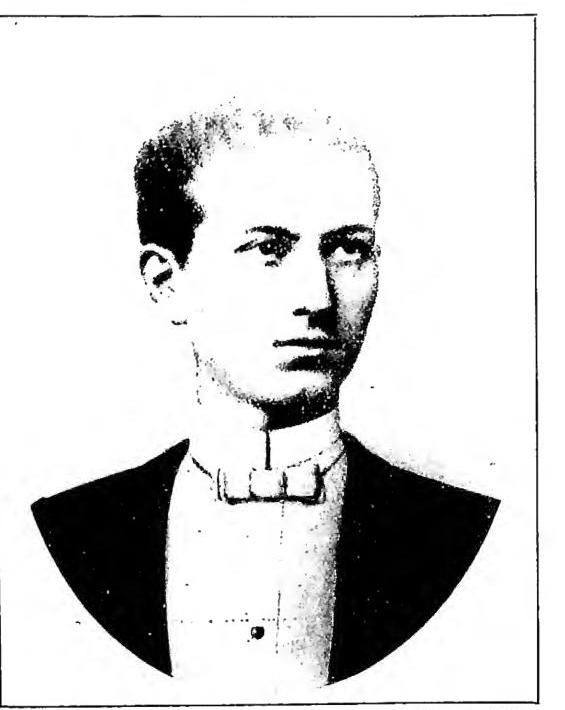
(properly A.C.I.)
AZIONE CATTOLICA – Count Mario Fani.
This organizational formula gave the individual Unions responsibility and opportunities for growth and apostolate,
but it lacked overall organic unity, and consequently produced results inadequate to the effort. It should be added that, in the meantime, new organizations had been formed and were continuing to form, such as the Federazione universitaria cattolica italiana (F.U.C.I.) in 1892, which joined the Opera dei congressi in 1896, and the Unione fra le donne cattoliche italiane in 1908, which soon achieved wide diffusion. At the beginning of 1915, Benedict XV wished to create a higher coordinating body, which became the Giunta direttiva dell'A. C. I., elected from within the governing council of the Unione popolare; the presidents of the other organizations were ex officio members. The establishment of the Giunte diocesane followed, modeled on the Giunta direttiva dell'A.C.I., while the Gruppi parrocchiali had a delegate or group leader.
The Holy See declared the Non expedit to have lapsed and left the political field open to Catholics. The Unione elettorale cattolica consequently became unnecessary and was in fact suppressed in February 1919. In the new political climate, the social and economic works dependent on the Unione economico-sociale began to operate autonomously and gave rise to the Confederazione italiana dei lavoratori, the Confederazione cooperativa, and the Confederazione della mutualità e previdenza. The Unione economico-sociale was therefore dissolved, and only a Segretariato economico-sociale remained within the Giunta direttiva. Since the Gioventù femminile cattolica italiana had arisen in 1918, first as an offshoot of the Unione donne and later as an autonomous association, coordination among the organized women’s forces became necessary; this took the form of the Unione femminile cattolica italiana (U.F.C.I.), which in 1922 acquired a third section, namely the women’s F.U.C.I., separated from the men’s section.
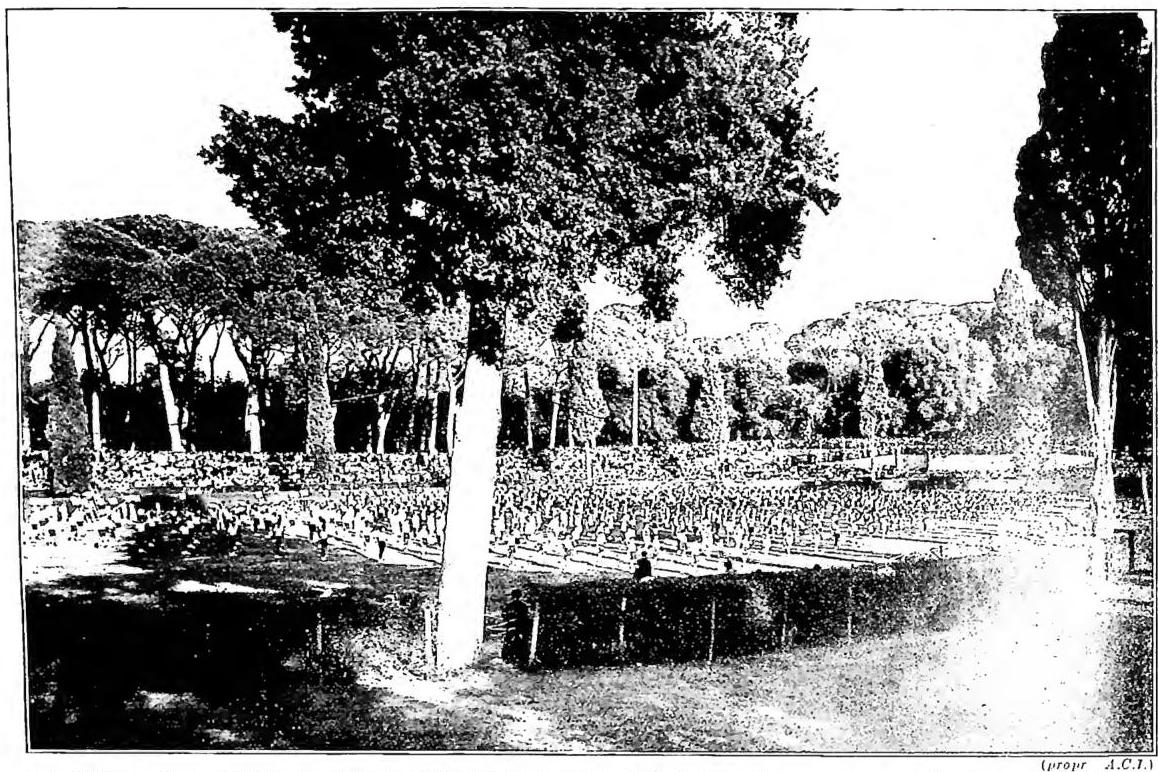
AZIONE CATTOLICA — Celebrations of the 80th anniversary of the Gioventù maschile of A. C. Gymnastics display at piazza di Siena (Sept. 1945) — Rome.
A period of decline, if not of crisis, followed for the A.C.I. The new political and economic activities had required a large number of leaders from the A. C., which had not yet recovered its strength after the losses of the war. Moreover, a certain sense of impatience with the patient formative and apostolic work proper to the A.C. had here and there taken hold in certain sectors.
II. THE NEW ORDER OF PIUS XI
The full recovery took place under this great Pontiff, who from the beginning of his pontificate wished to make A. C., in Italy and throughout the world, a cornerstone of his programme. In his first encyclical Ubi arcano Dei he clearly specified the nature, purpose, means, and obligatory character of A. C., and soon proceeded to its reorganization. There already existed three clearly defined large mass organizations, namely, the Society of Italian Catholic Youth, the Union of Catholic Women, the Italian Catholic Young Women’s Association, and, in addition, F.U.C.I. The Popular Union was dissolved, and the Italian Federation of Catholic Men was established.The coordinating bodies were perfected, namely, the Central Council of A. C., the Diocesan Council, and the Parish Council. Alongside the Central Council, the new statutes provided for the establishment of special offices for studying the problems of certain particular sectors of Catholic life, under the name of Secretariats. At first there were two, the Secretariat pro schola and the Secretariat for Morality; later, a third was added, the Secretariat for Culture. For economic and social activity, however, in place of the existing and rather inefficient secretariat of the same name, the Catholic Institute for Social Activities was established, with the scientific task of studying and assessing social problems, and the practical task of
providing assistance both to A. C. and to economic and social institutions.
Meanwhile Fascist totalitarianism advanced inexorably and destroyed all those organizations that did not allow themselves to be absorbed. Once the parties had been dissolved, the free trade unions too were suppressed, and consequently so was the Italian Confederation of Workers. A. C. I. then established what came to be called Professional Sections. These had no trade-union aims, which were jealously supervised by the State Union, but religious, moral, and study-related aims.
This organization of the Catholic forces, so clear and tightly structured, was the only bulwark capable of resisting Fascist pressure. Pius XI wanted its official recognition in the Concordat and remained its undaunted defender until his death. At certain moments this gave rise to dramatic situations. In 1927 the Italian Catholic Discount Association (A.S.C.I.) had in fact been suppressed in order to regiment all boys into the National Balilla Organization (O.N.B.). Shortly afterward the Federation of Italian Catholic Sports Associations (F.A.S.C.I.) dissolved itself. By then only the stronghold remained, A. C. properly speaking, and the assault was launched in May 1931. After a violent press campaign, on the 30th of that month an order issued by the Public Security authorities dissolved all youth associations of both sexes. Pius XI reacted energetically. He protested in every possible form and manner, entrusted the bishops with the care and protection of A. C. in the dioceses, and finally published a solemn letter, «Non abbiamo bisogno» (29 June 1931), in which he fully defended A. C. and pointed out the illegality and arrogance of the government’s action.
After laborious negotiations, the government had to yield. In the agreement that followed, certain changes were introduced into the statutes of A. C.; the ecclesiastical and lay leaders would be appointed by the ecclesiastical authority rather than elected by the members; the flag of A. C. I. would be the national flag; and the circles would take the name of Associations of A. C. After this painful interlude, the entire Catholic organization was placed, as it were, under the more direct supervision of the ecclesiastical authority; the assistant, together with the president, formed the Presidency; the diocesan character was emphasized by suppressing the Central Council and replacing it with a simple General Office, which could convene a Consultative Council composed of the assistants and presidents of the national organizations. Shortly afterward (1934), the Italian Catholic Women’s Union (U.F.C.I.) was also suppressed as a coordinating body among the Catholic women’s organizations, this function being assigned to the Presidency of the General Office. The annual “Social Weeks” were no longer held.
Yet, despite such external difficulties for the movement, the internal vitality of A. C. I. was imposing. New specialized sections arose, namely the Teachers’ Section and the Graduates’ Section; the Daily Newspaper Office was established; and the Peregrinatio ad Petri sedem was organized as a permanent body to promote and supervise the influx of pilgrims to Rome.
III. UNDER THE PONTIFICATE OF PIO XII
The A.C.I., as a living and highly responsive organization, carried out its activity and adapted its statutes and programs to the new possibilities and needs of the time. From the beginning of his pontificate, Pio XII entrusted the “high direction” of the A. C. I. to a Commission composed of three residential bishops who were cardinals: Cardinal Lavitrano, archbishop of Palermo, as president; Cardinal Boetto, archbishop of Genoa; and Cardinal Piazza, patriarch of Venice, with Monsignor Colli, bishop of Parma, as secretary, exercising the functions of general director of the A. C. I. and general ecclesiastical assistant. In the dioceses as well, in place of the Diocesan Boards, and in the parishes, in place of the Parish Councils, there were established the Diocesan and Parish Consultative Councils, presided over respectively by the bishop and the parish priest, or by their delegates.Meanwhile the Second World War broke out, and the activity of the A. C. I. was wholly absorbed in the effort to resist and survive the storm, as well as in a fervent charitable effort on behalf of all those in need. When the course of the war divided Italy in two along the Gothic Line, Pio XII appointed an ad interim director for central and southern Italy, while in the north the bishops arranged for the establishment of certain provisional bodies, such as the Consultative Council of Upper Italy in Milan.
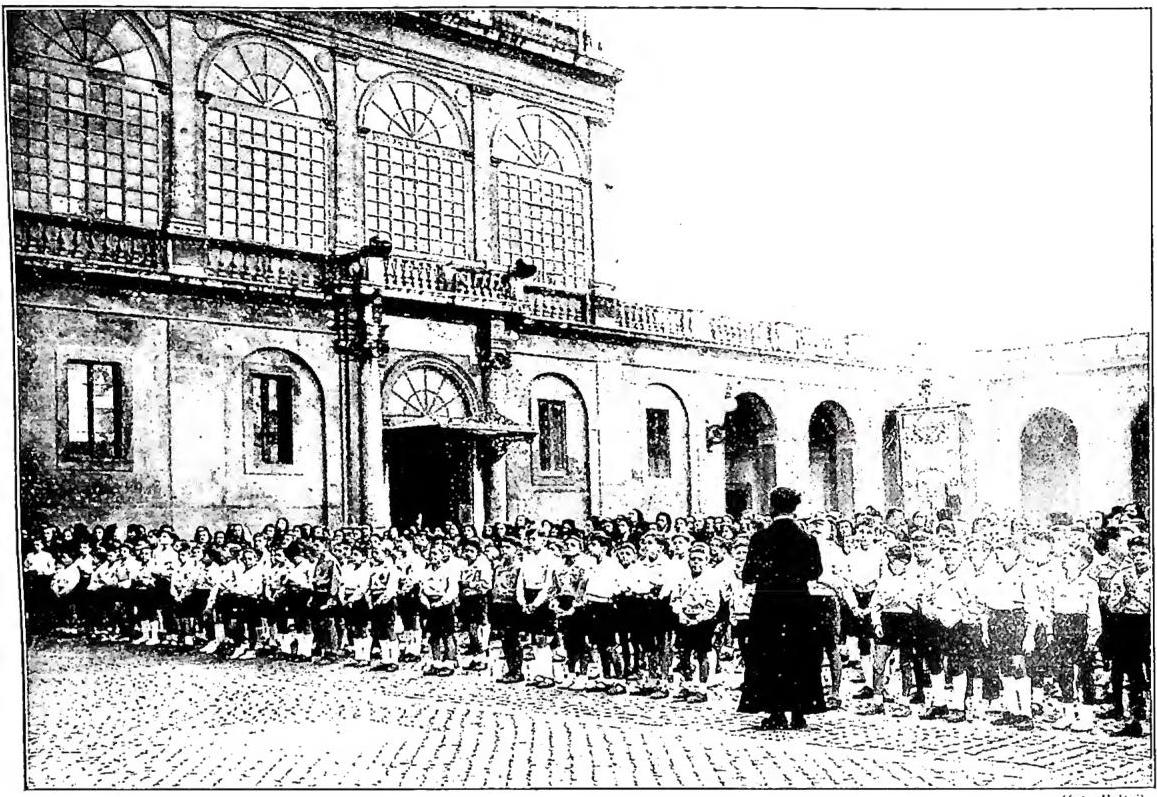
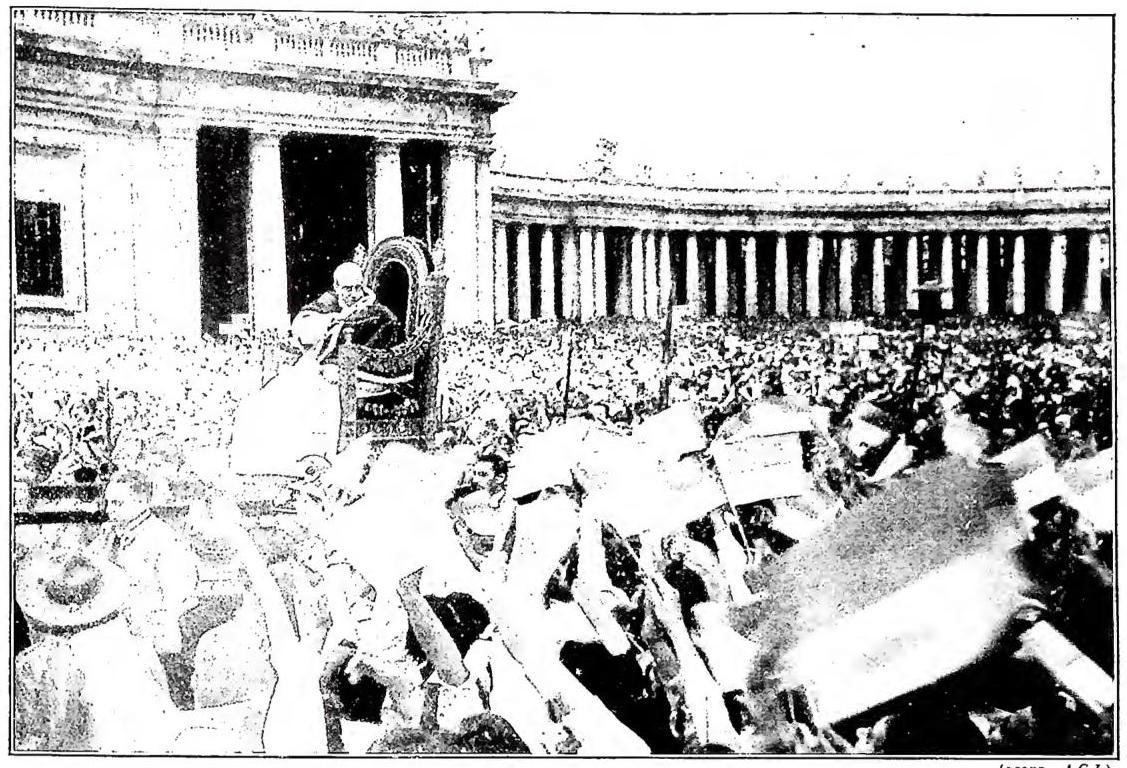
AZIONE CATTOLICA - The Fanciulli of A. C. awaiting the Pope in the courtyard of S. Damaso (July 1947).
(Int. Felici)
The Catholic Explorers arose and resumed their former name of Associazione Scoutistica cattolica italiana (A.S.C.I.). The sporting movement was reorganized through the creation of the Centro sportivo italiano (C.S.I.), while the young women were likewise organized in the Federazione associazioni ricreative (F.A.R.I.). The Centro cattolico cinematografico and radiofonico was joined by the Centro cattolico teatrale, thus forming all three centers into an Ente dello Spettacolo.
Immediately after the liberation of Rome, Italian trade unionism gave life to the Confederazione generale italiana del lavoro (C.G.I.L.), of a unitary type, that is, with Catholic workers engaged in the movement present in the same trade union. To remedy the disadvantages of this coexistence, the Associazioni cristiane dei lavoratori italiani (A.C.L.I.) (v.) arose, with pre-union and para-union aims, as well as religious and moral ones; their function continued and expanded even when, because of Communist factionalism, trade-union unity was broken (July 1948) and the Libera Confederazione generale italiana del lavoro (L.C.G.I.L.) was founded.
The Statuti of 1946 constituted a further organic updating of A. C. I. They had the following characteristics: reaffirmation of the fundamental unity of A. C. I., despite the articulation of its various branches (art. 3); greater responsibility for the laity in the field of practical direction and in the execution of works of apostolate; extension of the coordinating function of A. C. I., as the “principal organization of militant Catholics,” to other “Catholic institutions of education, propaganda, charity, credit, and, in general, social utility, as qualified instruments of its apostolate” (art. 2). Relations between A. C. I. properly so called and these Catholic institutions could be ones of dependence, coordination, or even simple affiliation. For the coordination of the social-apostolate activities of A. C. and of the Catholic works coordinated with it, and possibly of the institutions affiliated with it, the Consulta generale was established (art. 13) at the National Center, the Consulta diocesana in the diocese (art. 38), and the Consulta parrocchiale in the parish (art. 55).
Since the Sezioni maestri and laureati had obtained full juridical status as associations, the organizational structure of A. C. I. was composed as follows: the Unione uomini, the Unione donne, the Gioventù maschile, and the Gioventù femminile, which have national, diocesan, and parochial levels; the Federazione universitaria cattolica italiana, the Movimento laureati, and the Movimento maestri, which have national and diocesan levels (art. 3).
Dependence on the ecclesiastical hierarchy was expressed at the National Center by an Commissione episcopale and, on its behalf, by the “prelate secretary” of that Commission, who also exercised the functions of “general ecclesiastical assistant” (art. 5); in the dioceses, by the respective bishop, who had his own “delegate for A. C.” with the functions of “diocesan assistant of A. C.” (art. 34); and in the parishes, by the respective parish priest (art. 52). At the Presidenza centrale and at the diocesan presidencies, Segretariati were established with advisory and executive duties for particular sectors of activity, such as morality, education, etc. The new statutes aimed to place A. C. truly at the center of the entire movement for the Christian restoration of individual and social life.
For the press of A. C. I.