
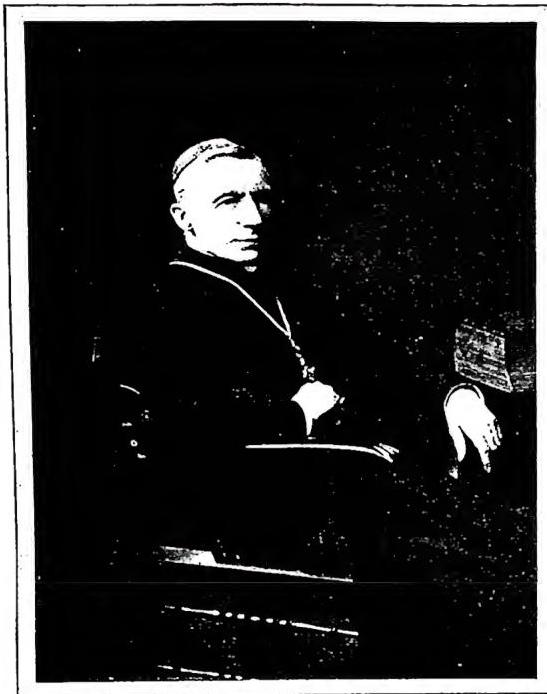
GIBBONS, JAMES. - American cardinal, b. in Baltimore to Irish parents on July 23, 1834, d. there on March 24, 1921. A priest on June 30, 1861, secretary and chancellor of Msgr. Spalding, archbishop of Baltimore; in 1868 he was consecrated bishop, as the first vicar apostolic of North Carolina. In 1869 he took part in the Vatican Council. In 1872 he was transferred to Richmond, and in 1877 he became coadjutor of B. J. Roosevelt, archbishop of Baltimore, whom he succeeded in the same year. In Nov. 1884 he presided over the III Plenary Council of America. On June 7, 1886, he was created cardinal of the title of St. Mary in Trastevere, and in 1887 he became grand chancellor of the Catholic University of Washington, to whose founding he had contributed. In 1903 he came to Rome for the election of Pius X: the first American cardinal to take part in a conclave. During the First World War (1915-18) he crossed the ocean twice to visit the combatants at the front, becoming acquainted with soldiers of every denomination, and thus dispelling many anti-Catholic prejudices among Anglo-American Protestants.
He knew how to understand the character and the needs of the American people, thereby gaining great popularity and influence, and succeeding through his tact in facilitating relations between Catholicism and the public authorities on the foundation of liberties. He worked hard for Catholic immigrants, the humble and the poor, and for the abolition of slavery. So many practical merits could point to him as the most illustrious representative of Americanism (v.), but the very fact that he accepted without hesitation the brief of Leo XIII addressed to him concerning the controversies that had arisen on the subject demonstrates that his thought did not intend to depart from Catholic tradition.
His works of popular apologetics had a wide echo: The Faith of our Fathers (Baltimore 1876), of which there were over 280 editions and translations into the principal languages of the world; Our Christian Heritage (ibid. 1889); The Ambassador of Christ (ibid. 1897); A Retrospect of Fifty Years (ibid. 1917).