
GIBBON, EDWARD. — English historian, born at Putney-on-Thames on 8 May 1737, died in London on 16 January 1794. He entered Oxford to pursue his studies in 1752 and converted to Catholicism, but, sent by his father to Lausanne (1753), soon returned to Protestantism. In 1758 he was in London, where he continued his studies.
In 1763 he set out on an educational journey, stopping in Paris, where he became acquainted with D’Alembert and Diderot, and then in Lausanne; he subsequently went to Rome, where he seems to have conceived the plan of his great work, the History of the decline and fall of the Roman Empire. Returning to England (1765), he devoted himself to it, as well as to literary studies of little significance. Elected a member of Parliament in 1774, in 1776 he published the first volume of the History, which was received with great acclaim but also with vigorous opposition because of its disparagement of Christianity. In 1779 he wrote, at the ministry’s request, an Mémoire justificatif engaged in anti-French polemic, receiving in compensation for a short time a position on the Board of Trade. In 1781 he published volumes II and III of his History. In 1783 he was once again in Lausanne, from which he returned to England in 1788 for the publication of the final three volumes of the work.
His History is divided into two parts: the first (A.D. 180–641), rich in documentation, is carried out with scientific rigor, whereas the second (641–1453) is a summary in which he completely disparages the history of the Byzantine Empire. As a whole, the work is animated by a rationalistic spirit and seeks to strip the facts of every extrahuman element (it was placed on the Index in 1783).
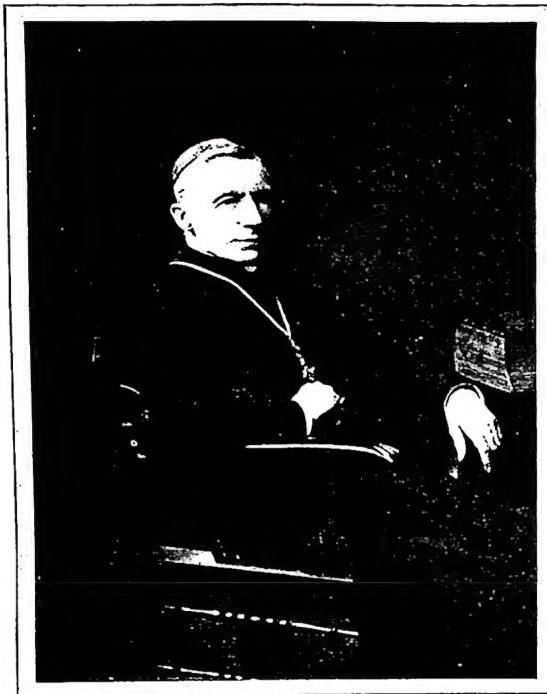
(from Alice S. Wille, Life of James Cardinal Gibbons, Baltimore 1911, frontispiece)
GIBBONS, JAMES - Ritratto.