Machine translation of the 1948–1954 Italian original. The original text is authoritative.
GERHOH di REICHERSBERG. – German theologian, born at Polling (Bavaria) in 1093, died at Reichersberg on 27 June 1169. He studied at Freising, Moosburg, and Hildesheim. In 1119 he was master of the cathedral school at Augsburg. In 1121, having abandoned the simoniacal bishop, he became a regular canon at Rottenbuch (diocese of Regensburg). After the bishop of Augsburg was reconciled with Pope Callistus II, G. returned to Augsburg in 1123, and that same year accompanied the bishop to the Lateran Council. Ordained a priest in 1126, he was parish priest for some time at Cham (Bavaria).
In 1132 Bishop Conrad I of Salzburg appointed him provost of the regular collegiate church of Reichersberg. In 1143, together with Arnaldo da Brescia, he accompanied the papal legate to Bohemia and Moravia; the following year he disputed in Rome concerning the Donatio Constantini. A supporter of Pope Alexander III, he was placed under the ban by Barbarossa. Of primary importance was his political-religious activity in defense of the rights of the Holy See against emperors and antipopes. He worked tirelessly alongside s. Bernardo for the reform of the simoniacal and Nicolaitan clergy. This was the purpose, to a great extent, of his numerous works. In his moral works he sought to restore the spirit of the Gospel to public and private life, appealing to the tradition, which he knew profoundly, with a strongly conservative concern. Also noteworthy is his tendency to allegorize, for moral purposes, the historical portion of the Bible. In his dogmatic works, adhering to the most rigorous orthodoxy, he condemns the bold theories of Abelardo, Gilberto Porretano, and Everardo di Bamberga; indeed, Pietro Lombardo does not seem orthodox to him either, since he regards him as the heir to Abelardo’s Christological nihilism, and adheres to the theory of the assumptus homo.
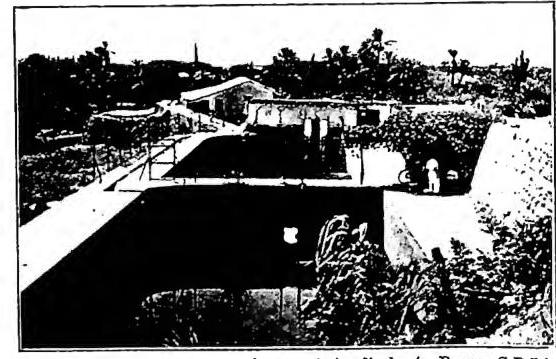
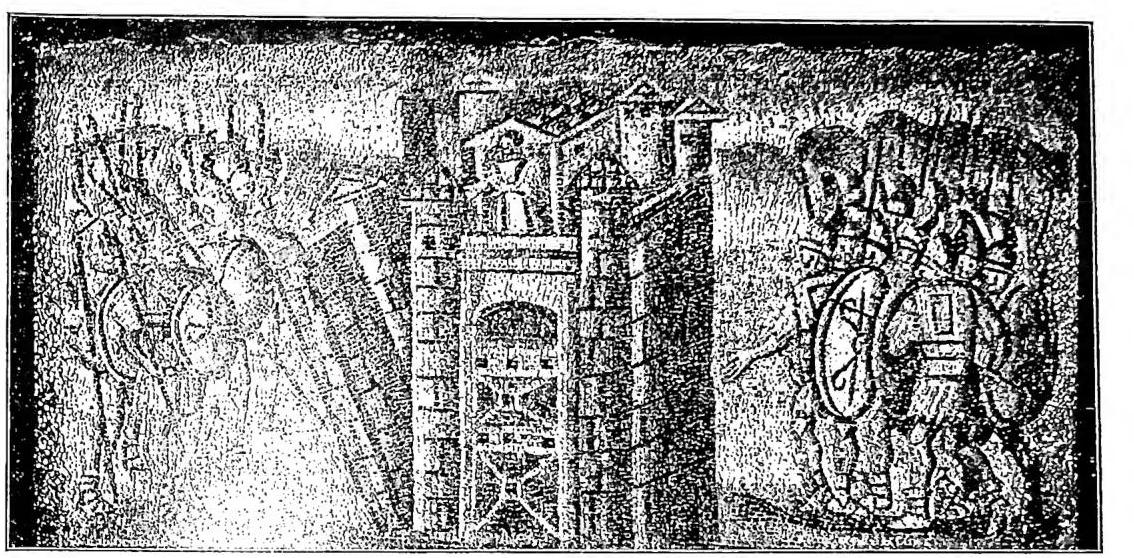
(courtesy of d. A. Penna C.R.L.) GERICO – Elisha’s Fountain (II. Reg. 2, 21–22).GERICO - Gedeone alla presa di G. Musaico parietale in S. Maria Maggiore in Roma (sec. v). (fot. Alinari)Opere: Liber de aedificio Dei (PL 194, 1187-1336); Adversus duas haerees (ibid. 1164-84); Liber de simoniae (ibid. 1335-72); Liber epistolaris ad Innocentium II Pont. Max. (ibid. 1375-1420); De novitatibus huius saeculi ad Hadrianum IV Papam (MGH, Lib. De Lite, III, pp. 288-304); De investigatione Antichristi II. 3 (in parte in PL 194, 1443-80; MGH, Lib. De Lite, III, pp. 309-95); De quarta vigilia noctis (ibid., pp. 503-25); Commentarius in Psalmos (PL 193, 619-1814, 194; 9-1066; il suo capolavoro, prezioso per la conoscenza dell'epoca). Il commento a parte del Ps. 64 ha formato il Liber de corrupto Ecclesiae statu, dedicato a Eugenio III (PL 194, 9-120); Epistola ad Eberhardum episc. Bambergensem, de aequalitate Patris et Filii (ibid. 1065-72); Opusculum de gloria et honore Filii Hominis (ibid. 1073-1160); Opusculum contra discipulos Petri Abaelardi ad Episc. Frisingensem Othonem (cf. C. Ottaviano, Novità abelardiana, in Sophia, 1 [1933], pp. 99-101). Opera Omnia: PL 193, 194; MGH, Lib. De Lite, III, pp. 131-525; F. Scheibelberger, G. Opera adhuc inedita, Linz 1875.
BIBL.: Magnus, Vita, in MGH, Scriptores, XVII, p. 490 sgg.; H. F. A. Nolbe, G. V. R., Lipsia 1881; G. Ribbeck, G. V. R. u. seine Ideen über das Verhältnis zwischen Staat u. Kirche in Forschungen zur deutsch. Geschichte, 24 (1884), pp. 1-80; 25 (1885), pp. 556-61; M. Lefflad, s. V. in Kirchenlex., V, coll. 378-91; R. Rocholl, s. V. in Realencycl. für protestant. Theol. u. Kirche, VI, pp. 565-68; H. Jacobs, Studien über G. V. R., in Zeitschr. f. Kirchengesch., 50 (1931), pp. 315-77; M. C., in Bulletin de théol. ancienne et médiévale, 2 (1934), pp. 321-22, n. 592; V. Ludwig, s. V. in LThK, IV, coll. 421-22; H. von Fichtenau, Studien zu G. V. R., in Mitteil. Österreich. Inst. Geschichtsforsch., 52 (1938), pp. 1-56; H. Weisweiler, Drei unveröffentlichte Briefe aus dem christologischen Streit G. V. R., in Scholastik, 13 (1938), pp. 22-48; id., Das wiedergefundene Gutachten des Magister Petrus über die Verherrlichung des Gottessohnes gegen G. V. R., ibid., pp. 225-46; id., Rudiger von Klosterneuburg an der Seite seiner Brüder G. u. Arno V. R., im christologischen Streit um die Verherrlichung des Gottessohnes, ibid., 14 (1939), pp. 22-49; J. Günster, Die Christologie des G. V. R., Colonia 1940; M. Cappuyns, in Bulletin de théol. ancienne et médiévale, 4 (1942), pp. 173-74, nn. 886-90; I. De Ghellinck, Le mouvement théologique du XIIᵉ siècle, 2ᵉ ed., Bruges 1948, pp. 251-58.
Cite this article
“GERHOH DI REICHERSBERG.” Enciclopedia Cattolica, vol. VI (1951), p. 90. Azione Romana digital edition, https://azioneromana.com/article/gerhoh-di-reichersberg.