
FEDERICO II, il Grande, re di PRUSSIA. — Born in Berlin on 24 January 1712, died at Potsdam on 16 August 1786. The firstborn son of King Frederick William I and Sofia Dorotea of Hannover, he was rigidly educated and subjected to military discipline, contrary to his nature, which inclined toward art, especially music, and in general toward the refinements of Enlightenment French culture. In sharp conflict with his father, even to the point of attempting to flee (1730), he submitted to training in civil and military administration, while secretly cultivating his literary and philosophical inclinations (among other writings, the Antimachines), and succeeded his father on 31 May 1740. After a few initial measures that were already indicative of his policies of government—the abolition of torture and tolerance toward Catholic schools—the problem of the Austrian succession confronted him upon the death of Charles VI (October 1740). Reviving old Prussian claims, he took advantage of the situation to occupy Silesia by surprise, ally himself with France, and then abandon that alliance when the Peace of Berlin in July 1742 assured him possession of Silesia. But, little convinced by Maria Theresa’s definitive renunciation of that province, in August 1744 he resumed the war in Bohemia. Poorly supported by his French allies, he initially achieved little, but, having recovered and obtained notable successes against the Austrians and their Saxon allies, he was able in the Peace of Dresden to confirm the terms of the earlier treaty (December 1745). Eleven years of peace followed, which F. devoted above all to the reorganization of Silesia—a region that, among other things, presented the problem of a largely Catholic population, toward which F. showed tolerance—and then to the administrative organization of the state, especially municipal organization. Other reforms concerned financial administration, the cultivation of the marshy areas of the Oder, and the application of mercantilist principles in commerce and industry. The most profound reform, however, was that of the administration of justice, carried out especially through the work of Minister Coccei.
These years of peace also saw F. devote attention to beautifying the capital and Potsdam, to cultural institutions, and to favoring distinguished scholars and men of letters, especially Frenchmen such as Maupertuis, as well as to his singular friendship, soon spoiled, with Voltaire. Having already incorporated East Frisia into his dominions in 1744, thanks to questionable hereditary rights by which he managed to forestall Hannover by a narrow margin, F. viewed with suspicion the rapprochement between Austria and Russia and between Austria and France, as well as the renewed deterioration in relations between France and England, which meant that, in the event of war, Hannover would easily fall into French hands. To forestall this possibility, F. concluded the Convention of Westminster with England (January 1756). France responded by concluding the Treaty of Versailles with Austria (May 1756), which reversed the positions of the great European powers. Convinced that he was threatened by an Austro-Russian plan of attack, he believed he could forestall it by opening hostilities first and attacking a lesser ally of his enemies, Saxony (August 1756), thereby beginning the so-called Seven Years’ War. Having forced the Saxon army to surrender, he found himself opposed by a preponderant coalition—Austria, Russia, the Empire, France, Poland, and Sweden—to which he could oppose only England, which at that stage provided subsidies but no troops, and a few lesser German princes. In the first clashes (Kolin, etc.), F.’s situation appeared desperate; but in November–December 1757 his military genius shone forth in the severe defeats he inflicted on the French at Rossbach and on the Austrians at Leuthen. The disparity of forces, however, was too great. F. held out for another four years, from time to time delivering a crushing blow to the Russians or Austrians (Zorndorf, August 1758; Torgau, November 1760), but also suffering defeats (at Kunersdorf, August 1759, the gravest defeat of his life, which for a moment drove him to despair; and at Liegnitz, August 1760). Despite the lack of concord among the confederates opposed to him, his fate seemed sealed after the new English ministry of Lord Bute cut off his subsidies. Then the death of Empress Elizabeth (January 1762) and the accession to the throne of Peter III, an admirer of F., gave him the prospect of an outright alliance with Russia—prospects that were not fully realized because Peter was rapidly replaced by Empress Catherine—but gave him enough breathing space to inflict further heavy blows on the French and Austrians and to secure the Peace of Hubertusburg (September 1763), which guaranteed him what he had already possessed and placed Prussia among the great European powers. The twenty-three years of peace that followed served above all to heal the deep wounds inflicted by the war and to continue the administrative, economic, and financial reform of the state according to the preceding principles, which were in any case those commonly associated with princely Enlightenment. Particularly noteworthy was F.’s favor toward the Jesuits after their expulsion and suppression, employing several of them to teach at the University of Breslau. But his passion remained foreign policy, more than ever during the complications of the Polish situation, from which, at Russia’s prompting, promptly taken up, he derived the profits of the First Partition of Poland (February 1772). Likewise, from the complications surrounding the Bavarian succession (1777–79), without even shrinking from the risks of a brief war in Bohemia, he obtained not only the inheritance of Ansbach and Bayreuth but also the advantage of preventing Bavaria from enlarging the Habsburg dominions. When, a few years later (1785–86), Joseph II again dreamed of enriching himself in that direction, F. opposed him by forming a league of German princes, which sufficed to make the Habsburg retreat from his plans.
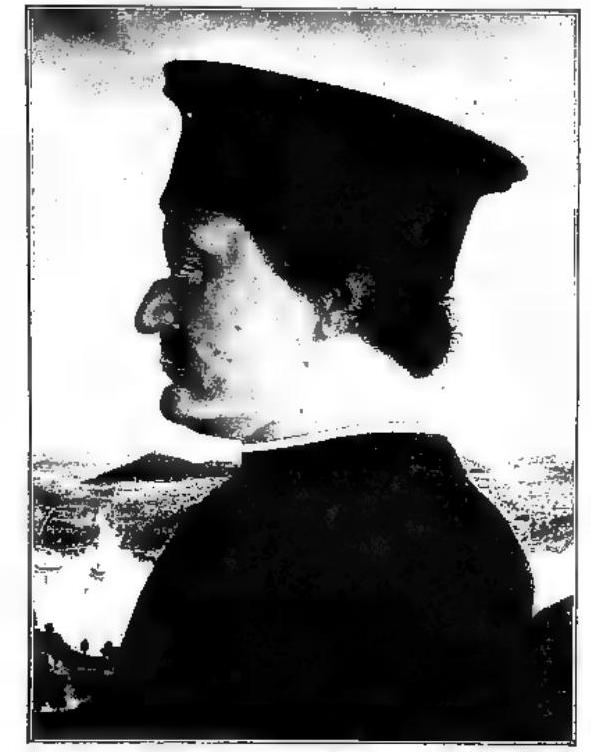
FEDERICO DA MONTEFELTRO, duca di URBINO — Portrait. Painted by Piero della Francesca (1465–66) — Florence, Galleria degli Uffizi.