
PARAGUAY. —
I. GEOGRAPHY
The smaller (407,000 sq. km.) of the two landlocked states of South America, enclosed by Brazil, Argentina, and Bolivia. The territory, almost entirely level, lies within the Paraná-Paraguay basin, whose rivers, together with their tributaries (Ipané, Jejuy, Tebicuary), form an excellent network of navigable waterways.The territory is well suited both to agriculture and to livestock raising; it has considerable forest resources (29% of its area) and substantial mineral potential (iron, manganese, copper), but its development is slowed by the constraints imposed by its international communications and, in general, by the inadequacy of its internal transport network. Among the crops, those prevailing for climatic reasons are subtropical ones (sugar cane, cotton, tobacco), as well as maize, manioc, and rice; among the fruits, citrus fruits (the essential oil of petit grain extracted from orange leaves is noteworthy); vine cultivation was introduced only recently. Livestock raising has also made progress (3.4 million head of cattle). Timber and yerba mate account for considerable quantities of exports. Industry is modest and of local importance.
Of the 1.4 million inhabitants (3 per sq. km.), two-thirds are Amerindians and slightly less than one-third mestizos; whites account for less than one-tenth. The capital, Asunción (250,000 inhabitants), is the only important population centre. Catholicism is by far the predominant religion; pagans, however, are also numerous. P. is a unitary republic (comprising 17 departments), governed by a president, an elected chamber, and a council of state chosen by the president.
II. HISTORY
The continent having been sighted by Sebastiano Caboto when the navigator briefly ascended the Paraná-Paraguay, effective penetration was begun in 1536 by Juan de Ayolas, who built the fort of Corpus Christi at the site where in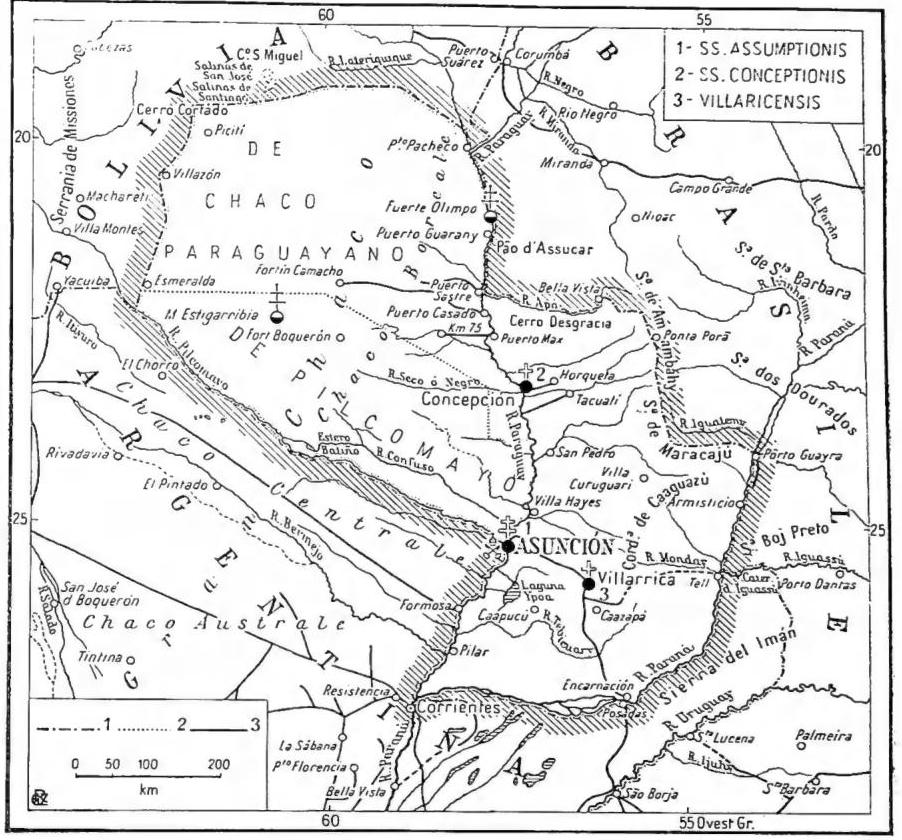
During the seventeenth century, the Consejo de las Indias separated Paraguay proper, with its capital at Asunción, from the provinces of the Río de la Plata. In accordance with precise directives from Madrid, local government was entrusted to democratically constituted councils, which included, besides the Spaniards, mestizos and natives. Animated by the desire and determination to improve and make their cities prosper, they did not allow themselves to be overcome by the difficulties they encountered along the way and thus became the architects of the complete development of their country (v. RIDUZIONI).
Diego de los Reyes Balmaceda (protector of the Missions) was replaced, amid popular fury, by José de Antequera y Castro, with the support of the councils of the principal centers. In 1725, the insurgents expelled from Asunción the Jesuits who were residing there in the colleges, beginning a veritable struggle against the Missions and going so far as to engage in fighting in the streets and countryside. The situation, which remained constantly tense, especially on the part of the Paraguayans, who did not passively endure a series of oppressive measures imposed by the viceroy of Lima, eventually ended, from the point of view
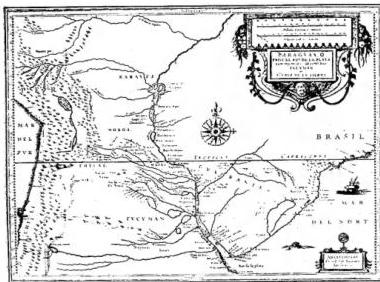
(from P. Guillermo Fariano Cardif, Cartografía Jesuitica del Río de la Plata, Buenos Ayres 1906, vol. 69-71, first plate in appendix)
PARAGUAY – The oldest map of P. (the so-called map of Tucumanni), compiled by P. Juan Romero, S. J., in 1596, published in Amsterdam in 1603.
militarily, in 1739, had its true end only in 1768 with the expulsion of the Jesuits from P.
When, in the early years of the nineteenth century, the insurrectionary movement of the provinces of the Río de la Plata against Spain began, and Buenos-Aires proclaimed its independence (25 May 1810), the Paraguayans too desired complete independence, while remaining on good terms with neighboring Buenos Aires. In the face of this determined attitude, the Argentine army, under the command of Manoel Belgrano, invaded P. in September 1810; but, at the beginning of 1811, it was forced to leave the country. Having attained the goal it had set itself, the general governing junta met for the first time on 18 May. After complete independence from Spain and a policy of good-neighborly relations with Argentina had been sanctioned—which Buenos Aires accepted by the Treaty of 12 October 1811—the Congress adjourned. Two years later, in 1813, it met again and resolved upon the notification and ratification of independence, the adoption of the name Republic of P., the drafting of a government regulation, and the transfer of executive power to two consuls, namely Gastone Rodriguez Francia and Fulgenzio Yegros. In 1814, however, Francia’s dictatorship began, lasting until his death (1840). Always fearing a possible war against Argentina, Francia reformed the army, removing from office those officials who did not follow his directives. Despite his anticlerical and isolationist policy, he brought some benefit to the country.
But what Francia and his successor Carlo Antonio Lopez had accomplished that was useful was seriously compromised by Francisco Solano Lopez. During the period in which F. S. Lopez held power (1862–70), war broke out between P. and Argentina-Brazil-Uruguay. The war ended with the victory of the South American Triple Alliance, despite some Paraguayan successes: Lopez, who had resorted to every kind of intimidation and to continuous acts of cruelty against those who, realizing the futility of the struggle, sought to reach peace in time, and who had acted with particular severity against the clergy and even had Bishop Palacios de Bergas shot on the accusation of participating in a conspiracy against him, fell at the head of his men at Cerro Corà on 1 March 1870.
The recovery of P. was slow and difficult; agreements with Argentina and Brazil proved extremely useful to it with regard to economic life. While the Republic was setting out on the path to recovery, despite internal conflicts between the Colorado party (conservative) and the liberal-radical party, the question of the Bolivian Chaco arose in relation to Bolivia (1880). On the grounds that the region of the Chaco had belonged to it during the colonial period, Bolivia laid claim to II. When every attempt at agreement had failed, armed conflict between the two States began in the Chaco itself in December 1928. The Pan-American Congress first, and the League of Nations afterward, sought a peaceful solution, but failed to prevent the resumption, in 1930, of hostilities, which continued with alternating fortunes until the end of 1934, when, through the mediation of Argentina, Brazil, Peru, and Uruguay, an armistice was reached in June 1935, followed by the definitive peace treaty signed at Buenos Ayres on 21 July 1938, which recognized most of the Chaco as belonging to P.
Following the war between Japan and the United States, P., in addition to declaring its solidarity with the U.S.A., broke relations with the nations of the Tripartite Pact (1942), thereby managing to enjoy a period of internal calm (1942–44) thanks to North American aid and war orders placed with the Republic. Once the war had ended, conditions gradually returned to their former state, and until April 1948 there was a succession of uprisings, plots, and coups d’état among the various parties (the guion rojo = “red pennant,” an offshoot of the Colorado party, should be recalled). The current president, for the period 1949–54, is Dr. Federico Chaves.
III. EVANGELIZATION
The first missionaries in the territory of the present-day P. were the Franciscans who, under Governor Domingo Martínez de Irala (1538–1542), began the evangelization of the Indians. Likewise, the first bishop of the diocese of Asunción, established in 1547, was the Franciscan Pedro de la Torre. Particularly fruitful was the activity of Fr. Luis Bolaños, a Franciscan, among the Guarani Indians; for more than 30 years reductions (v.) and wrote the first catechism in the Guaraní language.In 1585 the Jesuits arrived in the territory of La Plata, establishing in 1606 the province of P., which included, besides present-day P., Argentina, Uruguay, southern Brazil and, at first, part of Chile as well. Their principal activity developed from 1610 among the Guayas and Guarani Indians, reductions (v.). Fathers Roque Gonzalez, Alonso Rodriguez and Juan del Castillo suffered martyrdom in 1628 (they were beatified by Pius XI in 1934); nevertheless, the Jesuits continued to work with great success among the various Indian tribes, gathering them into villages governed by the missionaries. The incursions of the Paulistas (1628–1641) destroyed the reductions of the Guayas and the Tapi. Subsequently, the Indian villages were gathered along the Paraná and Uruguay Rivers (in present-day P., the Brazilian state of Río Grande do Sul, and the province of Misiones in Argentina), thus forming a separate geographical entity which, because of its isolation and special government, was often called the Jesuit State of P. In the eighteenth century the Jesuits extended their missionary and reductive activity to other tribes west of the Paraná, including the Chiquitos, Mocabios, Tobas and Abipones. In 1767 the Jesuits were expelled. Administration of the reductions passed into the hands of the Spaniards, while spiritual direction was entrusted to the Franciscans. But many Indians again took refuge in the forests; and by 1796 the former Jesuit State, which at its height, in 1731, had numbered 141,242 souls, had been reduced to 45,000.
The border wars between Spain and Portugal, the proclamation of Paraguayan independence in 1811, the dictatorship of José Gaspar Rodríguez de Francia (1811–1840), who in 1823 abolished the convents, deposed the bishop and arrogated to himself the appointment of all ecclesiastics, and the bloody war under Francisco Soiano Lopez (1862–1870) inflicted immense damage on the ecclesiastical life of P. and completely destroyed missionary activity among the Indians who had not yet been converted. The Statute of 1870 proclaimed the Catholic religion the religion of the State.
IV. ECCLESIASTICAL ORGANIZATION
At present, according to the Annuario Pontificio 1952, it comprises 1 metropolitan see with 2 suffragan sees, and 2 apostolic vicariates.1. Metropolitan see: S.MA ASSUNZIONE (1547), also bearing the name of Paraguay; S.MA CONCEZIONE IN PARAGUAY (1 May 1929 under the name of Concezione e Chaco, the name being changed on 16 July 1949); VILLARICA (1 May 1929).
2. Apostolic vicariates: CHACO PARAGUAYANO (11 March 1948), PILCOMAYO (14 July 1950).
Giovanni Rommerskirchen
V. I BEATI MARTIRI DEL P
They are the three Jesuits: Rocco Gonzalez di S. la Cruz, Alfonso Rodriguez, Giovanni del Castillo, killed for the faith in the “reduction” of All Saints of Caaró on 15 and 17 November 1628.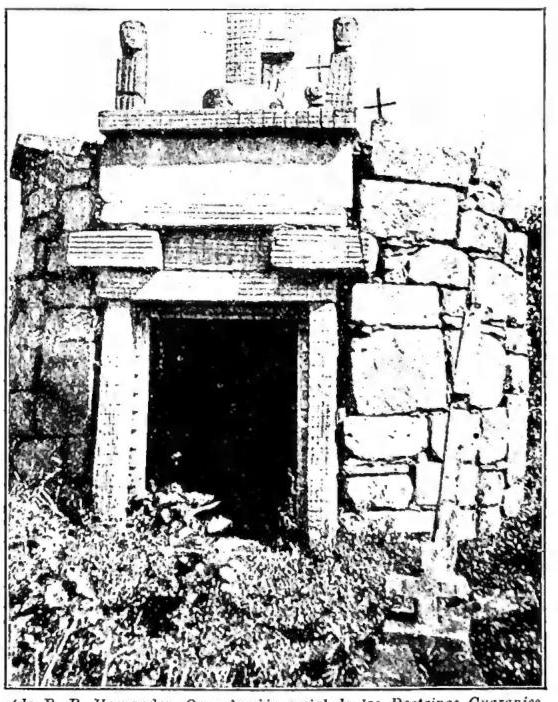
(from P. P. Hernandez, Organización social de las Doctrinas Guaranas de la Compañía de Jesús, Barcelona 1912, II)
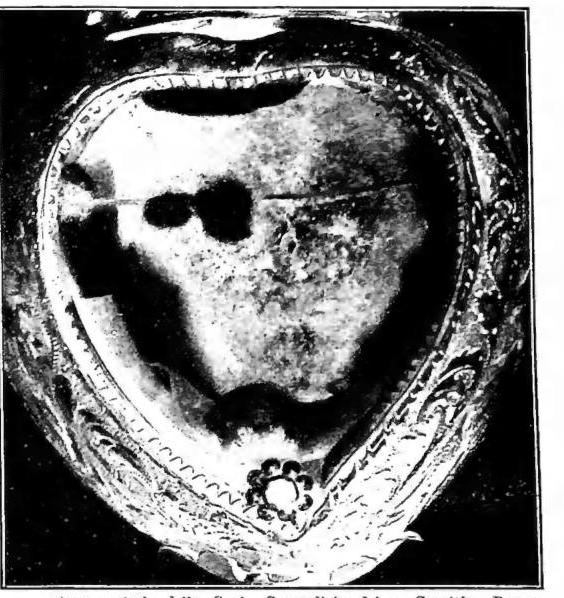
PARAGUAY - Heart pierced by an arrow of Blessed Rocco González. Detail of the reliquary preserved in the Colegio del Salvador in Buenos Aires.
of all the "Guaraní reductions," founded in 1609, of San Ignacio-Guazú. From there, González expanded his pioneering, exploratory, and founding work, establishing 10 new reductions in the regions of Paraguay, Paraná, and Uruguay: Santa Anna, Itapúa (1615), and Yaguapúa (1618) on the banks of the Paraná; Concepción (1620), San Nicolás, San Francisco Xavier, and Yapeyú or Santa María de los Tres Reyes (1626); Candelaria de Caazapamini, Asunción del Iyui, and Todos los Santos del Caaró (1628) along the banks of the Uruguay. All this heroic and arduous labor incited and sharpened the hatred of the sorcerers, who saw themselves dethroned and thus conspired for his death. González was indeed killed with two axe blows while, in the last reduction founded just 15 days earlier, he was preparing to raise a bell on some tree trunks (15 November 1628); almost immediately afterward, Fr. A. Rodríguez was struck down, and two days later, Fr. J. del Castillo. The heart of Fr. González, torn from his chest and pierced by an arrow, was thrown onto the flames (because, according to the Relación de la gloriosa muerte... by Fr. Provincial Vázquez Trujillo to Fr. Muzio Vitelleschi, in Blanco, op. cit. in bibl., pp. 494-495, the day after his death he would have reproached his executioners), but it was instead found intact and is still preserved today in the Colegio del Salvador in Buenos Aires. Several letters by González remain, published in the Annuae of the Society, as well as a catechism in Guaraní.
Fr. A. Rodríguez, born in Zamora (Spain) on 10 March 1598, was a novice in Villagarcía in 1614; he became a missionary in Paraguay in 1619. Fr. J. del Castillo, born in Belmonte (Spain) on 14 September 1566, was a novice in Madrid in 1614 and a missionary in Paraguay from 1619. The three martyrs were beatified on 28 January 1934. Their feast day is 17 November.
VI. RELATIONS BETWEEN CHURCH AND STATE
Relations between Church and State are currently governed by the constitution in force (10 July 1940), which in this regard still draws inspiration from regalist theories, thereby sanctioning their defects and abusive rights, such as the appointment of bishops. Article 51, in fact, clearly and broadly affirms the national Patronato of the Republic concerning the presentation of bishops by the President of the Republic and the granting of the exequatur to decrees of councils, bulls, briefs, and rescripts of the Supreme Pontiff. However, the positive aspects of the same constitution should not be overlooked, based as they are on the recognition of Catholicism as the religion of the vast majority of citizens.The preamble begins in the name of God Almighty, supreme legislator of the universe.
The Catholic religion is declared the "religion of the State" (Art. 3); other cults, not contrary to morality and public order, are "tolerated," and a decree of 13 April 1945, No. 8219, limited their exercise to within their respective temples or places designated for this purpose by national authorities.
The head of State must profess the Catholic religion (Art. 46) and, upon assuming office, must swear an oath before God and the fatherland. The metropolitan archbishop is a ex officio member of the Council of State, which replaces the Senate (Art. 62). The archbishop and bishops must be Paraguayan citizens (Art. 3). Regarding the family, the constitution contains no provisions contrary to Christian morality, nor does it directly deny the rights of the Catholic Church. Article 22 is indirectly opposed to divorce. Articles 10-11, concerning education, do not mention religious instruction but neither do they exclude it, as they speak of moral and spiritual education. In state schools, however, religious teaching is lacking. The government regularly pays the stipends established for the archbishop and bishops, vicars general, secretaries of the episcopal curias, and the Seminary. In addition to these fixed payments, government financial aid for the construction and restoration of churches is frequent. The clergy is exempt from military service.
The Republic of Paraguay maintains diplomatic relations with the Holy See. In modern times, these date back to 1920, when the Apostolic Nuncio in Argentina was also accredited as Internuncio to Paraguay; in August 1930, on the occasion of the erection of the ecclesiastical province of Paraguay, the pontifical representation was elevated to a nunciature. For a brief period (1939-41), the nunciature of Paraguay was united with that of Uruguay, both separated from that of Argentina. Finally, on 21 August 1941, a permanent nunciature was established in Asunción. Only in 1948 did the government decree the creation of a Legation of Paraguay to the Holy See.
VII. SCHOOL SYSTEM
The Paraguayan Constitution provides for freedom of education, parental rights over the education of their children, freedom of conscience, and the teaching of any religion. Private individuals are guaranteed the right to establish schools, and thus the Catholic Church as well. Attendance at primary school is free and compulsory from ages 7 to 14. Public schools are informed by the pedagogical doctrines of Pestalozzi, Sarmiento, Ferrière, Kerschensteiner, Dewey, Washburne, and James. The State, through the National Council of Education, the Ministry of Justice, Worship, and Public Instruction, the Ministry of Agriculture, and the Ministry of War, seeks to reduce illiteracy, spread general, rural, and practical education, and promote the establishment of practical rural schools and evening schools and courses. Primary education is provided in 1,742 primary schools, secondary education in 14 national colleges, and higher education at the Ateneo Paraguayo (normal school), the Higher School of Agriculture, and the National University of Asunción, founded in 1929.The education of the Catholic clergy is overseen at the Seminario de la S.ma Asunción in the capital.