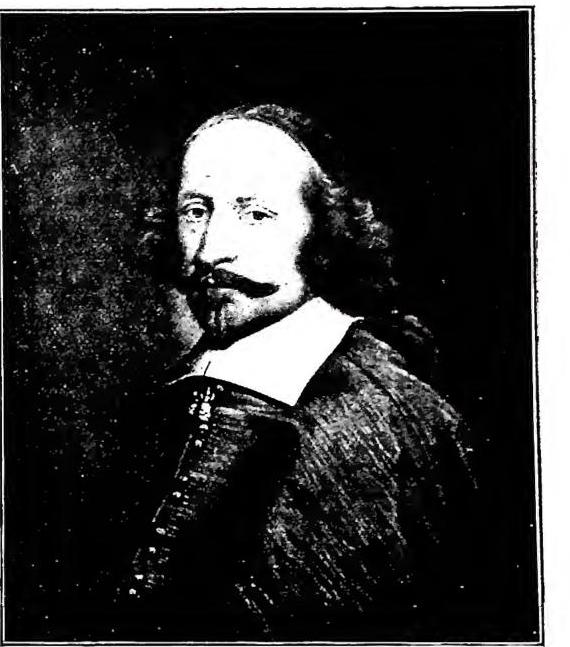
MAZZARINO, GIULIO. – Cardinal, first minister of France, born at Pescina (L’Aquila) on 14 July 1602, died at Paris on 9 March 1661. His father, Pietro, from a respectable family of Palermo, having come to Rome to stay with a Jesuit uncle, became administrator of the estates in Abruzzo belonging to Prince Filippo Colonna; M. lived in Rome on intimate terms with the prince’s sons, who in 1619 sent him to Spain as companion to his son Girolamo, later a cardinal. Recalled after two years, he enlisted as a captain in a papal regiment sent to guard the Valtellina until the peace of Monzone (1626), and occupied himself with missions that were more diplomatic than military. Returning to Rome, he took a degree in law in 1628; then, in Milan with Cardinal A. Barberini, when Pope Urban VIII was striving to maintain peace in Italy, he became the travelling intermediary in these long and fruitless negotiations among Milan, Turin, and Mantua. On 29 January 1630 and on several further occasions he met Richelieu at Lyons; on 26 October 1630, beneath Casale, he succeeded, throwing himself among the troops already in motion, in having an armistice he had just concluded accepted; the episode had a European resonance. He took part in the Treaty of Cherasco (6 April 1631) and in the secret treaty between France and Savoy, at the wish of Urban VIII, who, suspicious of Spain, preferred a French presence in Italy in order to balance the powers. Sent to Paris in 1632, he entered the ecclesiastical state so that he could remain in the papal diplomatic service, but without ever receiving any of the major Orders; he was canon of S. Giovanni in Laterano and vice-legate of Avignon, but on returning to Rome in 1636 he realized that Spain would not permit the hoped-for appointment to the cardinalate. Therefore, on 4 January 1640, he became Richelieu’s principal diplomatic agent, until, at the proposal of Louis XIII, he was created cardinal in 1641. By the dying Richelieu he was designated as his successor, and the day after Richelieu’s death the King appointed him first minister.
M.’s mild character was immediately revealed when he suggested to the King, already gravely ill, that he grant pardon to his brother Gaston d’Orléans and to other great nobles. When the King died on 14 May 1643, M., designated by him as first in the Council of Regency for the widowed queen Anne of Austria, induced her to ask Parliament to annul the limitations placed upon her authority, and she confirmed him in his high position (18 May 1643). Supported by the Queen’s unshakable confidence (who certainly felt a particular affection for him, although the attempt to specify its forms belongs to the realm of fiction), M. directed French policy until his death. In five years, by striking the Emperor ever more forcefully in Germany, he compelled him to accept the peace of Münster (24 October 1648), which gave France Austrian Alsace and reduced the Empire to an empty federal system. Spain, however, remained at war, and M. attacked it also in the State of the Presidi, occupying Portolongone (1646) as a base against Naples and, in 1647, urging Francesco I, Duke of Modena, to besiege Cremona. These Italian wars were, for M., purely diversionary, since he, like Henry IV and Richelieu, believed that France’s true interests lay toward the Rhine and Flanders. Spain, refusing peace, relied less on arms than on the profound discontent with the war felt by all classes in France, a discontent made more violent by the government of two foreigners (the Spanish Queen and the Italian M.). M. had deceived himself into thinking that he could overcome internal hostility through victory over the Empire: instead, as early as 26 August 1648, following an energetic act by the Crown against Parliament, Paris filled with barricades; thus began the first Fronde, or Fronde of the Parliament, which refused to register royal edicts imposing new taxes: three months after the success of the peace of Westphalia, the court had to flee from Paris to St-Germain. Against rebellious Paris, the German troops led by Condé could nevertheless be employed, only for the country to fall under his acts of tyranny, whereupon the Regent had him arrested (18 January 1650). Revolt promoted by the princes themselves immediately spread throughout France, while the Spaniards entered Champagne with the assistance of Prince de Turenne (December 1650); in February 1651 Parliament, joining the cause of the princes, issued a decree banishing M., who withdrew to Brühl near Cologne, from where he secretly directed the Queen. The exiled M. refused Spain’s offers and waited for the inevitable disagreements among his enemies to enable him to return to directing French policy toward that success in which, as a foreigner, he had absolute confidence, although many of his conquests were now being lost. In the autumn of 1652 Paris rebelled against Condé, who went over to the enemy; the King, now of age, returned there, and on 3 February 1653 M. returned as if in triumph. During the following six years he sought to recover the positions that had been lost and revived the Duke of Modena’s war in Lombardy. But the Fronde had left too many ruins behind, and in order to bend Spain he had to resort to an English alliance (even though Cromwell had had the King, Louis XIII’s brother-in-law, beheaded) and promise him Dunkirk, conquered in 1646. Thus, after the Spaniards commanded by Condé had been defeated at the Dunes, the peace of the Pyrenees was reached (11 November 1659), restoring to France Cerdanya and Roussillon, lost in 1493, as well as certain cities in Flanders and, through the marriage to Maria Teresa, eldest daughter of Philip IV, the hope of inheriting the Spanish monarchy. The Infanta renounced this inheritance in exchange for a dowry of 500,000 écus, which was never paid. To obtain this marriage, desired by the Queen, M. had resolutely opposed the King, who wished to marry his niece Maria Mancini. A few months after the King’s marriage, M. died, and Louis XIV, faithful to the advice of his mentor, never appointed a first minister, but assumed his functions and burdens.
Only during the past century has the judgment of French historians regarding M. changed; they had readily echoed the pamphlets of the Fronde (Mazarinades) and the accusations found in the Memoirs of contemporaries against the hated Italian. It has been recognized that he carried out and developed the program of Richelieu and Louis XIII and made possible the greatness of the first reign of Louis XIV, through his exceptional devotion to the French cause. The explosion of hatred against M. was caused less by the undeniable defects of his government (which were those of Richelieu) than by the hardship created by the enormous fiscal pressure resulting from the war (and multiplied by the bestial system of tax collection by contract), by the easy accusations directed against the weak government of two foreigners, and by the resentment of classes and men bent but not uprooted by Richelieu. The Fronde brought together all these forms of selfishness under Spanish pressure, and thus M. was able to liqui-