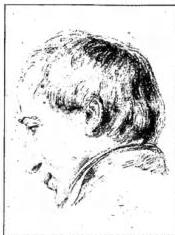
Machine translation of the 1948–1954 Italian original. The original text is authoritative.
PASSAGLIA, CARLO. — Theologian and writer on ecclesiastical politics, b. at Pieve S. Carlo (Lucca) on 9 May 1812, d. at Turin on 12 March 1887.
Having entered the Society of Jesus on 18 November 1827, he subsequently became prefect of studies at the German College and professor of canon law at the Roman College, where from 1844 to 1848 he held the chair of dogmatic theology, distinguishing himself through his extensive erudition, rich patristic knowledge, and classical, vibrant eloquence. The disturbances of 1848 forced him into exile in England, France, and Belgium; having returned from there to Rome, he resumed his lectures in 1850. He was extremely active in preparing the definition of the Immaculate Conception, for which, assisted by Fr. C. Schröder, he wrote the classic work: De immaculato Deiparae Virginis conceptu (3 vols., Rome 1854). Difficulties with the Order on account of his political ideas and many disappointments led him to ask Pius IX for secularization, which he obtained (20 January 1854). The Pope then gave him a chair of philosophy at the Sapienza. Meanwhile he was won over to the cause of Piedmont; he did in fact write: Il Pontefice e il Principe (n. p. 1860), in which he maintained the relative necessity of temporal power, to which, therefore, the pope could renounce for the sake of higher interests. Put in contact with Cavour by Dr. D. Pantalconi, his Roman correspondent, he defended Italian unity and agreed to negotiate with Cardinals Antonelli and Santucci, negotiators for the Holy See, the Pope’s renunciation of the Legations. When the attempt failed, he published anonymously Pro causa italica ad episcopos catholicos auctore presbytero catholico (Rome 1861), to persuade bishops and clergy not to show themselves enemies of the reconstituted fatherland. The work, immediately translated into Italian (Florence 1861) and placed on the Index (decree of 9 October 1861), forced him to flee in disguise from Rome to Turin, where he was given a chair of philosophy at the university and where he continued feverishly his conciliatory activity, with various publications, including the Perizione di novemila sacerdoti italiani a S. Santità Pio IX e ai vescovi cattolici con esso uniti (Turin 1862), by which the Pope was asked to grant Rome as the capital of Italy. For the same purpose he founded in Turin, in 1862, Il Mediatore, a political, religious, scientific, and literary biweekly, which he directed until 1866 (placed on the Index, decree of 26 January 1863), supplementing it in 1863–64 with the daily La pace and in 1867 with the weekly Il Gerdil. Suspended a divinis, he laid aside his ecclesiastical habit, but preserved his faith and morals intact; indeed, he wrote against Renan: La vita di Gesù scritto da E. Renan discussa e confutata (Turin 1863); against divorce: Sul divorzio (there 1881); and, as a commentary on the encyclical Aeterni Patris: Della dottrina di s. Tommaso secondo l'enciclica di Leone XIII (there 1880), in which he praises that document while at the same time defending Rosmini. He was also deputy for the Montecchio constituency in the Italian Parliament (1863–64), but ultimately resigned his mandate and found himself by then surrounded by oblivion. Shortly before his death he repented of his errors and of his activity against the authority of the Pontiff and made a public retraction of them into the hands of Cardinal Archbishop Alimonda, thus dying reconciled with the Church.
To the works mentioned must be added: the re-edition of the Eschiridion de fide, spe et caritate s. Augustini, previously edited by Fr. J. B. Faure (Naples 1847); De praerogativa b. Petri (Rome 1850); Commentariorum theologiorum partes tres (3 vols., out of the 5 projected, there 1850–51); Conferenze dette nella Chiesa di Gesù in Roma nella Quaresima del 1851 (first published in Civ. Catt., 1st series, vols. v–vii, then separately, Rome 1851); De Ecclesia Christi (5 vols., Regensburg 1853–56); De aeternitate poenorum (there 1854); he also collaborated with Fr. C. Schrader on the new edition of D. Petau, Opus de theologicis dogmatibus (Rome 1857), but the work came to a halt after vol. I.
BIBL.: Sommervogel, VI, cols. 332–36; L. Biginelli, Biografia del soc. C. P., con documenti, Turin 1854; A. Pellicani, Don C. P. e i suoi giornali, Bologna 1863; P. Galletti, Mem. stor. intorno al p. Ugo Molza, Rome 1912, pp. 131–54; Hutter, V, cols. 1499–1500; C. Boyer, s. V. in DThC, XI, cols. 2207–10; A. Della Torre, Il cristianesimo in Italia dai filosofisti ai modernisti, Palermo 1913, pp. 177–83; S. Jacini, Il tramonto del potere temporale nelle relazioni degli ambasciatori austriaci a Roma, 1860-70, Bari 1931, pp. 42–56; M. Valente, Bibliogr. di C. P., in Russ. stor. del Risorgimento, 30 (1943), pp. 253–55; P. Pirri, Pio IX e Vittorio Em. II e il loro carteggio privato, II, Rome 1951, pp. 338–66; II, Documenti, pp. 108–85. For his political correspondence: N. Bianchi, Storia documentata della diplomazia europea in Italia, VIII, Naples–Rome 1872, pp. 606–622; A. Gotti–M. Tabarrini, Lettere e documenti del barone B. Ricardi, V, Florence 1895, passim; La questione romana negli anni 1860-61. Carteggio del conte di Cavour con D. Pantalconi, C. P., O. Vimercati, 2 vols., Bologna 1929, passim. Celestino Testore
Cite this article
“PASSAGLIA, CARLO.” Enciclopedia Cattolica, vol. IX (1952), p. 572. Azione Romana digital edition, https://azioneromana.com/article/passaglia-carlo.