
RENAN, ERNEST. — Orientalist, born at Tréguier in Brittany on 17 February 1823, died in Paris on 2 October 1892. Orphaned by his father at the age of five, in 1838 R. entered the minor seminary of S. Nicola du Char-donnet in Paris; in 1841 he transferred to that of Issy, where the first philosophical crisis was to manifest itself. The doubts continued, becoming more acute, during his stay at S. Sulpizio, where R. began the study of Hebrew with Prof. Le Hir (v.) and became passionate about the biblical criticism of the German rationalists. In 1845 he abandoned the Seminary and the faith.
In 1849 he obtained permission to be sent on a scientific mission to the libraries of Italy, where he worked extensively on his thesis concerning Averroism. In 1851 he obtained a position at the National Library of Paris. R. returned several times to Italy and the East (1860, 1864 ff.) for scientific research and for reasons of health. In 1862 he was appointed to the chair of Hebrew at the Collège de France, from which he was suspended (1864) following the Catholic reaction to his Vie de Jésus. In June 1878 he was elected a member of the Académie française.
For ideological reasons, because of his great stylistic skill, and because of a certain theatricality of character, R. aroused an undeserved fame and opposition. His exegesis is at times superficial and subjective. R. himself confesses in the preface to the life of Christ that the texts, where necessary, must be «gently coaxed in order to obtain an interpretation pleasing to the taste». For his time, his philological works possessed indisputable scientific value. As a historian of the Jewish people and of the origins of Christianity, R. displays a keen intelligence, in addition to undeniable stylistic artistry; but his work is guided by scepticism, by a rationalistic and often fanciful exegesis, and by evident sympathy or antipathy toward the subject treated; it is enough to compare the romantic portrait of Jesus with the hostile one of s. Paolo.
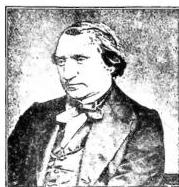
RENAN, ERNEST — Portrait.
Milan, with a preface notable for its anti-Catholic animosity, by Filippo de Boni) and in various other languages. The volumes Les Apôtres (1866); St Paul (2 vols., 1869); L'Antéchrist (1873); Les Evangiles et la seconde génération chrétienne (1877); L'Église chrétienne (1879); Marc-Aurèle et la fin du monde antique (1881) followed. The Histoire du peuple d'Israël (5 vols., there 1887–93) achieved less success. The works Souvenirs d'enfance et de jeunesse (there 1883) and quite a few others published posthumously are biographical in character. All the works cited, and others besides, are in the Index (cf. 1948 ed., pp. 400–401).