
ACADEMIES. - Schools and free associations of scholars with literary or scientific aims, considered as radiating centers of studies.
OUTLINE:
I. The Greek Academy
II. General overview of modern Academies in Italy
III. Pontifical Academies
IV. Ecclesiastical Academies in Russia
V. Literary, philosophical, and scientific Academies
VI. Artistic and musical Academies.#### I. THE GREEK ACADEMY.
The term Academy is the name by which Plato’s school has been fixed in history. Upon his return to Athens in 387 B.C., after the failure of his first political attempts in Syracuse, he founded his school on a property he had purchased six stadia northwest of Athens. It is probable that the name derived from Akadēmos, the eponymous hero of that region. The location was splendid: olive trees flourished there, which legend said were descended from the sacred olive tree created by Minerva where the Erechtheion later stood. Plato had altars built in honor of Zeus, the Muses, and Eros; the building was adorned with a large park accessible via magnificent avenues, and the palaestra was magnificent. It is likely that the description of the place, as found at the beginning of the Phaedrus as the setting for the dialogue, refers to the natural beauties of the Academy. Plato bequeathed the property to the school, which maintained itself there, with alternating fortunes, for approximately ten centuries, until its closure ordered in 529 A.D. by Justinian.
The school was governed by the scholarch; however, he was not the only teacher, as there were also lectures by assistants chosen as the most suitable for teaching within the school. It can be said that all knowledge was the object of study and research, from philosophy to the sciences, especially those of a mathematical character and tone. Plato himself, who had drawn so much from Pythagoreanism—perhaps even the idea of a school that echoed the Pythagorean contentus—exemplified this, particularly in the final phase of his thought, as can be inferred from his theory of the ideas-numbers.
Over so many centuries of existence, it is understandable how the direction set by Plato underwent oscillations, deviations, and negations. Typically, the multi-century life of the Academy is divided into five periods, though Cicero and Varro reduced them to two: the Old and the New Academy. The first period, after the direction of the founder, extends from Speusippus as scholarch (from 347 B.C., the year of Plato’s death) to Arcesilaus (d. 241 B.C.). During this period, Xenocrates (339-314), Polemon (314-270), Crates, and Crantor succeeded one another in leadership. The direction of the Academy in this first period, which for Cicero also constituted the so-called Old Academy, remained fairly consistent with the teachings of the founder, first emphasizing Pythagorean mathematicism, then the moral problem, especially with Crates and Crantor. However, Plato’s genius soon waned among these first successors, who focused more on the organization and systematization of knowledge, from which emerged the clear distinction between dialectic, physics, and ethics, which in Plato are in a certain sense commingled.
The second Academy began with the scholarchate of Arcesilaus and marked the start of the greatest deviation the school ever suffered, namely, the deviation toward skepticism. With this scholarch began the conflict against Stoic gnoseological dogmatism. Indeed, it was the problem of knowledge to which Arcesilaus directed his research, arriving at a position of doubt, remedied, for the purposes of action, by so-called common sense. The direct successors of Arcesilaus—Lacydes, Telecles, Evander, and Hegesinus—remained faithful to the new direction, which fully developed, that is, into explicit skepticism only slightly tempered by a theoretical-practical probabilism, with Carneades (214-129 B.C.), with whom the so-called Third Academy began, aimed at decisively combating Stoic dogmatism, as it had been affirmed especially in Chrysippus.
The skeptical direction, more or less disguised, persisted in the history of the Academy even under the scholarchates of Carneades the Younger, Crates of Tarsus, and Clitomachus of Carthage. The so-called Fourth Academy began with the direct successor of Clitomachus (d. 110 B.C.), Philo of Larissa (d. 80 B.C.). He abandoned the position of explicit skepticism without, however, arriving at a precise dogmatic conception: it was merely a kind of compromise between Carneades’ doubt and Stoic gnoseology, reducing everything to the assertion of a generic possibility of knowledge. The Fifth Academy was founded by Philo’s successor, Antiochus of Ascalon, a friend of Cicero (d. 68 B.C.). This phase signified nothing but skepticism (the philosophical position of Cicero). Antiochus’ purpose, in fact, was to demonstrate the substantial agreement among Academic, Peripatetic, and Stoic doctrines.
Very little is known of the subsequent life of the Academy as
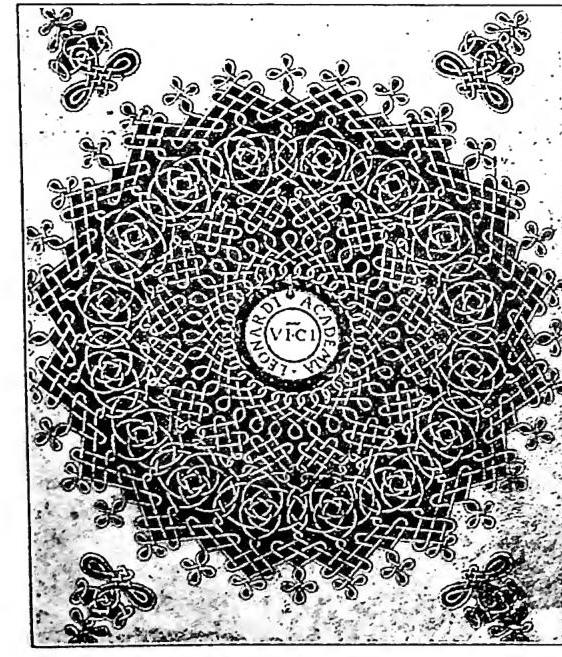
ACADEMY - Drawing by Leonardo da Vinci for an A. emblem. Milan, Ambrosiana.
II. OVERVIEW OF MODERN ACADEMIES IN ITALY.
SUMMARY:
1. The Various Institutions
2. Academies and the Church
3. The Roman and Pontifical Academies.3. THE VARIOUS INSTITUTIONS
Humanism, in the 15th century, made use of free associations of scholars as centers for the diffusion of classical studies, thus giving rise to modern academies. The revival of culture, the passion for ancient authors, and the need to meet and share the results of studies and research generated gatherings—what we might today call "cenacles"—which gradually took on the character of cultural associations with their own structure and hierarchy.Among the first manifestations of this kind may be counted that of Cardinal Bessarion (c. 1440), if it can be called an academy. Bessarion's home became the meeting place for the most illustrious humanists of Greece and Italy. A typical example and model for others is considered the academy founded (c. 1460) in Rome by the humanist Pomponio Leto, who, gathering around him some friends fervent in the cult of antiquity, gave life to the celebrated sodality known as the Roman Academy (v. n. V, 3) or Pomponian, in which poetry, art, philosophy, and philology were discussed.
In various Italian cities, other academies arose at that time with more or less brief existences, due to the fame and importance of the humanists residing there and the favor of princes. Worth mentioning are the Pontanian Academy (v. n. V, 2) of Gioviano Pontano, formerly the Ottina or of Panormita, in Naples, which followed the same direction as the Pomponian; the Platonic Academy (v. n. V, 1) of Ficino in Florence, which, with a new orientation, aimed to absorb the spirit of Plato into Christianity; and the Aldine Academy of Venice, which turned toward archaeology and philology.
Humanists, even in academies, disguised Christian customs and names with classical trappings; however, they were not generally animated by an anti-Christian spirit.
By the mid-16th century, academies underwent a radical transformation: with the decline of humanism, the Italian language gradually replaced Latin, and the cultural aims of these sodalities expanded, though with a predominantly literary focus. The Accademia della Crusca (1582) (v.) had the merit of zealously promoting the cult of the national language.
In the 17th and 18th centuries, the phenomenon of the diffusion of academies intensified, even in small centers of the peninsula. They followed the literary trends of the time, becoming verbose and declamatory in the 17th century and cloyingly pastoral in the 18Arcadia (v.) and its numerous "colonies." Nevertheless, the institution cannot be denied to have been, in its best manifestations, a vehicle of culture. Indeed, particularly in Rome, such sodalities were regarded as centers of study, not only literary but also historical, scientific, juridical, theological, and artistic. In fact, precisely in the 17th century, almost as compensation for the decline of letters, there emerged the glorious period of scientific research, which gave new direction and purpose to academic organizations with the Lincei (v. n. III, 3; n. V, 5) Cimento (v.) of Florence.
Meanwhile, the proliferation of academies continued unabated. Maylender, in his five volumes, lists no fewer than 2,750, providing more or less extensive information on them, the majority of which existed in the 17th and 18th centuries. Of many, only the name and emblem are known. The fortune and progress of most such associations were tied to the life and personal activity of their founders; thus, of many it can be said that we know how they were born, but not when or how they died.
Nor could it have been otherwise for those academies founded by cultured bon vivants, for whom the organization into a sodality was a reason for cordial gatherings, albeit seasoned with poetry recitals and literary discussions. The names themselves attest to this: Accesi (many cities), Acerbi (Rome c. 1619), Animosi (Rome 1576, and various cities), Eccentrici (Perugia c. 1650), Intrepidi (Rome c. 1560 and various cities), Fulminati (Turin c. 1650), Innominati (various cities), Illuminati (Rome c. 1598), Umoristi (Rome c. 1500), Cioccolataria (Rome c. 1770, whose members included V. MARONITI, N. Spedalieri, and Cardinal Pacca).
At the beginning of the 19th century, the Revolution swept away in Italy the luxuriant academic vegetation. Only the most solid sodalities survived, merging with kindred institutions to endure, orienting themselves especially toward history, philosophy, archaeology, and the experimental sciences. Interest in academies in modern times gradually waned, both due to the disdain into which they had fallen and the rise of new and more dynamic forms of intellectual collaboration. The process of Italian unification then suppressed many small "cenacles" in the individual states, while strengthening the most glorious academic trunks, giving them a more serious direction and a far more authoritative voice in national culture. We recall the Royal Society of Naples, the Lombard, Venetian, and Bolognese Institutes.
Academies, in terms of their functioning, have a hierarchical structure, the main features of which commonly include: a head (called Prince, Custodian, Archconsul, President, etc.), a governing council, and members: honorary or full academicians, who usually, upon entering the sodality, assumed a name coined mostly from the classics. There are periodic meetings and proper social festivities. In the past, celestial patrons were not lacking, and sometimes protectors such as princes or cardinals. Each academy is distinguished by an emblem and a motto.
An original example of academic codification is the Linceografo (constitutions of the Lincei), written by the founder F. Cesi. It resembles the statutes of religious orders: academicians must "recte pieque simul vivere" and "rerum cognitionem et sapientiam adquirere" (Maylender, III, pp. 456-59).
4. ACADEMIES AND THE CHURCH
The most important and serious academies made a real contribution to sacred, literary, scientific studies, and the arts. The Church, therefore, took particular care and interest in them. Many popes intervened with direct and solemn acts (constitutions, briefs) not only to regulate their life but also to establish new ones. Paul III, Pius IV, and Paul V wished to be "virtuosi d'onore" of the Academy of the Virtuosi del Pantheon (v. n. III, 5). The interest of Arcadia (v.) is well known; following the example of Alexander VIII, many popes belonged to it with the title of "Pastore Massimo." Some academies owe their foundation to the initiative of prelates, secular and regular priests; others, due to their specific purpose, were reserved for ecclesiastics, such as those of theology, law, and Church history: they brought a noteworthy increase to sacred sciences.5. ROMAN AND PONTIFICAL ACADEMIES
We mention the most celebrated.The Academy of the Vatican Nights was founded by St. Carlo Borromeo (c. 1560) in imitation of Aulus Gellius’s Noctes Atticae. Borromeo, absorbed during the day by the affairs of the Church, gathered ecclesiastics and laymen at night in the houses of Santa Marta in the Vatican with the moral aim of cultivating literary studies and fostering the practice of preaching, then neglected by the high dignitaries of the Curia. The Academy counted illustrious members, including the future Gregory XIII. Protected by its founder even from Milan, it ceased with his death.
In the edition of St. Carlo’s Concilia (Augsburg 1750) are included his sermons delivered at the Noctes Vaticanae, preceded by Cardinal A. Valerio’s Convivium Noctium Vaticanarum, Bishop of Verona. Cardinal Federigo Borromeo, following this model, founded (c. 1580) the Academy of the Accurati in Pavia (Maylender, IV, pp. 78-81).
Pius V founded (1566) the Academy of Musicians, which existed until Pius IX; it then passed under the Italian government (1870) under the name of Academy of St. Cecilia (v. n. VI, 2). The Academy of St. Luke (v. n. VI, 3) received particular care from the pontiffs. Gregory XIII recognized it by brief (13 Oct. 1577). The Academy of Councils had, so to speak, two editions. The first, established (1632) at the church of SS. Cosma e Damiano by P. A. Garini, addressed historical, dogmatic, and canonical themes. The second, more famous, founded by Monsignor G. G. Ciampini (1671), convened in the College of Propaganda Fide to discuss questions of ecclesiastical history in relation to conciliar decisions. It was frequented by cardinals and prelates. Innocent XI held it dear; Benedict XIV ordered its renewal (Maylender, II, pp. 40-43).
A prelude to the Royal Academy of Christina of Sweden and the Arcadia may be considered the Academy of the Infecondi, which arose (1650) as a Marian sodality and later held literary gatherings in honor of the Madonna. Prelates and other dignitaries were its “Princes.” Alexander VII and Clement IX protected II. After the founding of the Arcadia, it declined (Maylender, III, pp. 253-60).
The physico-mathematical Academy, founded (1677) by Monsignor G. G. Ciampini, followed the direction of the Lincei. Its members included the most renowned professors of science in Rome. It addressed the most important scientific questions. Monsignor Albani, later Pope Clement XI, was a member (Maylender, III, pp. 11-17).
Exclusively devoted to theological studies was the Academy of Dogmas (1694), composed solely of ecclesiastics (24 secular and 24 regular). It first met at the church of San Paolo alla Regola, then moved to the Sapienza. It treated dogmatic, moral, and biblical themes. Its heavenly patron was St. Paul, and its protector a cardinal (Maylender, II, pp. 220-21).
Similar to this but with greater development was the Theological Academy, founded and endowed with 10,000 scudi by Abbot R. Girolami (1695), later approved, with its seat in the Archiginnasio of Rome and grants of privileges, by Clement XI (constitution Inscrutabili, 23 Apr. 1718, in Bullarium Romanum, XXI, Turin 1871, pp. 785-88). According to the cited constitution, enrollment in the Academy required at least four years of theological studies. Two weekly disputes were held, alternately on theology and ecclesiastical history. A brief exposition of the question was given first, followed by an hour of discussion. The readers of theology at the Sapienza were ex officio censors of the Academy. Academicians were, coeteris paribus, preferred in the conferral of dignities and benefices in Rome and elsewhere. Benedict XIII, himself a former academician, confirmed and increased its privileges and founded 20 scholarships for 20 poor priests to be enrolled in the sodality (constitution Inscedia Sedis Apostolicae, 6 May 1726, in Bullarium Romanum, XXII, Turin 1871, pp. 349-52). Clement XIV, formerly its cardinal protector, added the privilege of conferring a doctoral degree each year through the Master of the Sacred Palace (constitution Ex commisso Nobis, 27 Apr. 1770, in Bullarium Romanum, Continuatio, V, Prato 1845, pp. 170-72). (Maylender, V, pp. 299-302).
A distinctive form, reserved for a particular category of persons, was the Academy of the Unexpected (inaugurated in 1696), which aimed to occupy the leisure time of cardinals’ secretaries, ambassadors, and high dignitaries while waiting for their superiors during consistories or meetings. It met in the sacristy of San Carlo al Corso (Maylender, III, pp. 185-86).
Under the auspices of Clement XI, the Clementine Academy for painters, sculptors, and architects arose in Bologna (1709). With the constitution Militantis (18 Oct. 1711, in Bullarium Romanum, XXI, pp. 440-50), it was assimilated to the secular universities of Bologna, and its statutes were approved. The gonfaloniere of the city, representing the senate, was its protector; its patroness was St. Catherine of Bologna; the academicians, “true and good Roman Catholics,” numbered 40 besides associates. Each new painter had to demonstrate his skill by painting a picture. The Academy could acquire and receive donations and legacies. It was entrusted with the “public school of the nude.”
Also in Bologna arose the Institute of Sciences, approved by Clement XI (1711) and enriched by Count F. L. Marsili “with rare instruments for mathematics and experimental philosophy, a museum of fossils, a library,” etc. Later, the Academy of the Inquieti was incorporated into it, taking the name of the Academy of Sciences of the Bolognese Institute (constitution Superni, 12 June 1715, in Bullarium Romanum, XXI, pp. 681-694). In this constitution (loc. cit., p. 684), it is recalled that Clement XI “fostered the Roman Academy of the Arcadians, elevated to its first ranks the Academy of Rome for the three liberal arts of painting, sculpture, and architecture.” He appointed the Arcadian Cristoforo Battelli as his librarian and secretary of briefs and gladly listened to the poetic productions of the Arcadians. He also issued a constitution for the Academy of St. Luke, ordering as early as 1702 the exhibition of works on the Capitoline with awards in the presence of the Pope, cardinals, and Arcadians, who delivered speeches and poems.
Benedict XIV also founded (1701) the Pontifical Academy of Ecclesiastical Nobles, now the Pontifical Ecclesiastical Academy (v. n. III, 6).
Benedict XIV took great interest in academies, renewing that of Councils founded by Ciampini and establishing three new ones with a scientific orientation: of Ecclesiastical History, of Roman History and Antiquities, and of Liturgy. The members (12; 14 for that of Roman History), chosen from among scholars, were appointed for the first time, along with the cardinal protectors and secretaries, by the Pope. Sessions were held monthly, and the list of topics to be addressed—printed annually in Italian (for the Academy of Councils, based at Propaganda, in Latin)—included the themes for the year (Archivio Storico Italiano, ser. 4a, 20 [1887], p. 369; reports on the first sessions of 1741). In 1745, the Pope, remaining invisible to the academicians except for the speaker, attended for the first time a session of the Academy of Ecclesiastical History at the Quirinal and later many meetings of the other academies. At the end, he conversed with the speaker and those present about the topic discussed. Praise and prizes encouraged the scientific rigor of the presentations.
L. A. Muratori applauded the new academies and the appointment of scholars such as Bianchini and Valesio as secretaries, for the honor it would bring to the Holy See.
Benedict XIV also encouraged the Spanish government’s project to found an academy for the study of the ecclesiastical history of the Iberian Peninsula and made archival sources available.
A separate mention is due to the three academies:
The Academy of Ecclesiastical History, based at the Oratorians’ house where Baronio wrote his celebrated Annales, contributed to the revival of historical studies on the Church and the popes, with many important publications by academicians, such as the history of Paul IV by the Theatine B. Carrara, the biography of Sixtus V by the Franciscan C. Tempesta, and the biography of Nicholas V by the Augustinian D. Giorgi.
BIBL.:
Maylender, Storia delle Accademie d'Italia, Bologna 1926-30, voll. 5; Pastor, Storia dei Papi, tr. it., Roma 1925 ss.; Moroni, Dizionario di erudizione storico-ecclesiastica, Venezia 1840-61; Bullarium Romanum; Archivio Storico Italiano; Concilia di s. Carlo Borromeo, Augusta 1750.
A. MERCATI.
Ludovico Antonio Muratori addressed (5 November 1740) to Monsignor Bianchini, first secretary of this Academy, precious advice on how to treat ecclesiastical history (Epp., ed. Campori, IX, 4074); the Academy should have the necessary freedom, the deeds of the popes should indeed be glorified, but without flattery; a sound critique of books, authors, and readings should be permitted. "It is better," Muratori continues, "that we speak the truth ourselves, rather than hear it spoken with scorn by our enemies... I see the immortal Baronio who often proceeds quite frankly. By the grace of God, the holy Church has no need of lies, nor does it fear the truth."
The Academy of Roman History and Antiquities (or Archaeology) had its seat in the Campidoglio and became extinct with the death of the founding Pope. It was restored by Napoleon I. Pius VII endowed it from the public treasury; Pius VIII and Gregory XVI were also generous with aid and encouragement. In addition to its own meetings, it held an annual solemn assembly with the Academy of Saint Luke on 21 April (cf. Maylender, V, pp. 36-38). Today it still exists under the name of Pontifical Roman Academy of Archaeology (v. n. III.4).
The Academy of Liturgy received a historical-scientific orientation from Benedict XIV.
Benedict XIV also established for poor youths another particular school, a "public gymnasium or academy" of painting and sculpture, called "del nudo," with its seat in the Campidoglio (constitution Iuter curat, 17 March 1754, in Bullat. Bened. XIV, III, II, Prato 1847, pp. 178-81). This school followed the Academy of Saint Luke in its wanderings, to which it was entrusted (G. Collini, Notizia delle e, mette in Roma per ordine della S. d. N. S. papa Benedetto XIV, Rome 1740).
The Academy of the Aborigines, founded by Canon F. Turris, was approved by Pius VI and inaugurated on 13 October 1777 under the patronage of the Most Holy Mary and Saint Thomas Aquinas. Due to its aim of cultivating literary, scientific, theological, and canonical studies, it may be called a mixed type. Its emblem: a reed shaken by the wind. Motto: Sto quia debilis, later changed to Agitata stresco. It enjoyed great diffusion and, like the Arcadia, also had "colonies." Many cardinals were enrolled, including Giacinto Gerdil with the name of Solon of Athens (Maylender, I, pp. 7-23).
The Academy of the Pious Union of Saint Paul was not a true academy but had an academic structure. Founded in 1799 and approved by Pius VI (1797), its purpose was the study of sacred sciences. Pius VII approved it under the name of "Branch of Ecclesiastical Students of the Union of Saint Paul" (constitution Ex quo aeternae, 30 August 1822, in Bull. Rom. Continuatio, VII, II, Prato 1852, pp. 2280-86). The priest Marquis F. Filonardi endowed it with an annual income of 2000 scudi (Maylender, V, pp. 292-394).
It follows, therefore, that academies often overlapped, frequently losing the clear distinction of their purposes; they often languished after a brief period of flourishing, due to the enthusiasm of their founders. An authoritative intervention thus became necessary to eliminate no-longer-vital sodalities and to prevent new foundations. Leo XII then regulated the proliferating Roman academies, dedicating to them Title XXVII of the constitution Quod divina Sapientia (28 August 1824, in Bull. Rom. Contin., VIII, Prato 1854, pp. 95-117), with which he established the Congregation of Studies, subjecting academies to its control with the following provisions: 1) no new academies of sciences, letters, and arts may be erected without the authorization of the aforementioned Sacred Congregation; 2) existing academies, to continue their existence, must be confirmed by the same Sacred Congregation; 3) academies of arts and Christian archaeology shall continue to be subject to the cardinal camerlengo; in academies, religion, good morals, and social order shall be respected.
Nevertheless, the following sodalities founded in the 19th century should be remembered.
The Academy of Catholic Religion was established (1800) with the aim of defending religion, particularly against the errors spread by the French Revolution. Pius VII recognized it with the brief Perlatum ad Nos (27 January 1801, in Bull. Rom. Contin., VII, I, Prato 1850, p. 93). Pius XI united it (10 January 1934) with the Roman Academy of Saint Thomas Aquinas (v. n. III, 2).
The Tiberine Academy was founded by Abbot Gaetano Celie and a group of friends (1813). Its purpose was to cultivate historical studies on Rome and to compile a civil history from Odoacer to Clement XIV. It was respected by the restrictive laws of Leo XII due to its vitality; it even received the approval of the Sacred Congregation of Studies to orient itself toward agriculture, arts, and commerce. In 1838, it more clearly defined its direction: to cultivate sciences, letters, and studies concerning Rome, and to promote agriculture with particular regard to the Roman countryside. It produced a large number of publications and pamphlets. As early as 1860, it boasted the title of "pontifical" (Maylender, V, pp. 310-317).
The Latin Academy was established (1814) in Rome by a group of literati, including several prelates, with the aim of cultivating and spreading the study of Latin. Gregory XVI and many cardinals were members.
The Academy of the Quirites was founded (1821) by V. Diotallevi with the aim of cultivating "every branch of sciences, letters, and liberal arts." In 1865, the Quirites (Sacred Sciences Section) were engaged in compiling the Acta RR. Pontificum. They also planned to prepare a Universal History and a Latin dictionary. It was suppressed for political reasons in 1867 (Maylender, IV, pp. 359-60).
The Academy of the Immaculate Conception of the Blessed Virgin Mary, from its beginnings (1835), welcomed men of science, letters, and arts, who offered to Mary the homage of their knowledge. Pius IX honored it with the title "pontifical" (17 January 1865), wished to be a member, and attended its annual solemn session. Benedict XV reorganized it, giving it new impetus. Academicians and scholars of Mariology have held annual courses of lectures there since 1943, making the Academy a center of Marian studies: Studium Mariae.
Among the eight pontifical academies listed in the Annuario pontificio as still active, the Collegium Cultorum Martyrum also finds a place.
For information and evaluations regarding the influence of academies on national culture, see the volumes of the Storia letteraria d'Italia, published by Fr. Vallardi; F. Flamini, Il Cinquecento, Milano 1902; G. Toffanin, Il Cinquecento, ivi 1929; A. Belloni, Il Seicento, ivi 1929; G. Natali, Il Settecento, ivi 1929; V. Rossi, Il Quattrocento, 3ª ed., ivi 1933. Francesco Tinello
III. PONTIFICAL ACADEMIES.
SUMMARY:
6. Pontifical Liturgical Academy
7. Pontifical Roman Academy of Saint Thomas Aquinas and of Catholic Religion
8. Pontifical Academy of Sciences
9. Pontifical Roman Academy of Archaeology
10. Pontifical Academy of the Virtuosi al Pantheon
6. Pontifical Ecclesiastical Academy.11. PONTIFICAL LITURGICAL ACADEMY
Founded by Benedict XIV in 1748, but lapsed after his death, it was revived in 1840 at the House of the Mission in Montecitorio, receiving an annual grant from Gregory XVI (rescript of 28 Sept. 1842). The original academic form of meetings, with the reading of purely historical and erudite dissertations, was then changed by introducing the discussion of practical liturgical questions, as had also been prescribed for the Roman clergy by the Council held by Benedict XIII. In 1854 the Academy received its regulations. Placed under the presidency of the pro tempore cardinal vicar and directed by a priest of the Mission, it is composed of academicians (secular and regular priests, in an unspecified number) and censors (up to forty), who express their opinion (censura) during meetings on the solutions proposed by the former. An epitome concludes the discussions. The Academy now meets twelve times a year at the Leonian College. The questions to be discussed are published at the beginning of the year, and the solutions are printed in the journal Ephemerides liturgicae.2. PONTIFICAL ROMAN ACADEMY OF ST. THOMAS AQUINAS AND OF CATHOLIC RELIGION. - The Academy was founded by Leo XIII on 15 Oct. 1879 with the aim of promoting the study of Thomistic philosophy, in accordance with the program outlined a few months earlier in the encyclical Aeterni Patris (4 Aug. 1879); its constitution and activities were subsequently regulated by acts of the same Pontiff (9 May 1895), Pius X (23 Jan. 1904), Benedict XV (31 Dec. 1914), and Pius XI (10 Jan. 1934), who merged it with the Academy of Catholic Religion, founded in 1801. In 1945, the academicians, residing in Rome and elsewhere, were increased in number and divided into three sections: theological, philosophical, and juridical-economic (the latter disciplines not previously represented). Since Dec. 1942, the Academy has been based in the Palazzo della Cancelleria Apostolica.
The history of the Academy is intertwined with that of the restoration of Thomistic philosophy in the second half of the 19th century, and among its members are found the most representative figures of that renewal (among many: Giuseppe Pecci, Tommaso Zigliara, Francesco Satolli, Benedetto Lorenzelli, Giuseppe Prisco, Desiderato Mercier, Ludovico Billot, later cardinals; and also Giovanni Maria Cornoldi, Matteo Liberatore, Tommaso Gaudenzi, Nunzio Signoriello, Salvatore Talamo, Guido Mattiussi, Alberto Lepidi, Edoardo Hugon, Tommaso Pègues, etc.). It once had the faculty to establish chairs of Thomistic philosophy in various universities and colleges in Rome and to confer academic degrees. It affiliates other Thomistic academies and holds prize competitions. Among the most important recent manifestations of its activity are the Weeks of Thomistic Studies (19-25 Nov. 1923) and Augustinian-Thomistic Studies (23-30 Apr. 1930), the first and second International Thomistic Congresses (held respectively from 15 to 20 Apr. 1925 and from 23 to 28 Nov. 1936), and a Week of Studies on Existentialism (8-13 Apr. 1947).
From 1880 to 1889, it published the biannual periodical L'A. romana di s. Tommaso d'Aquino, which briefly merged with La scienza italiana of the Bolognese Thomistic Academy, and then took the form of an annual volume of proceedings, ceasing in 1895.
In 1934, the Acta Pontificiae Academiae s. Thomae Aquinatis et Religionis catholicae began publication, appearing annually. A general index of this new series is found in vol. 9 (1944). Since 1948, a quarterly journal has been published under the title Doctor Communis, Acta et commentationes.
12. PONTIFICAL ACADEMY OF SCIENCES
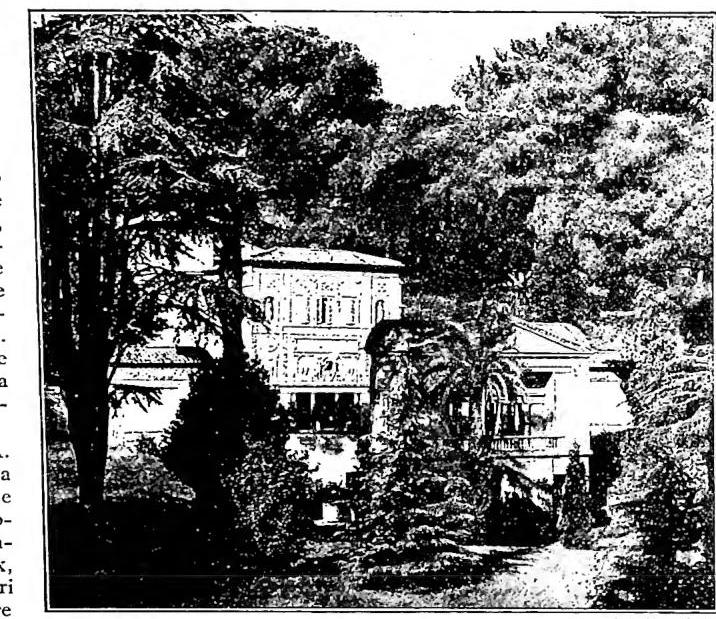
The present Pontifical Academy of Sciences, reconstituted by Pius XI with the motu proprio: In multis solaciis (28 Oct. 1936), traces its remote origins to the Academy of the Lynxes (Accademia dei Lincei), founded in 1603 in Rome by the young prince Federico Cesi and three of his companions, Giovanni Heck, Francesco Stelluti, and Anastasio De Filiis, with the aim of promoting the study of natural sciences and relations among scholars from various countries. A highly religious and moral conception informed the institution, which chose the lynx as its emblem and the motto: Sagacius ista. This first Academy, which developed especially after 1609, was endowed by Cesi, its elected prince, with a seat in his own palace, research instruments, and funds for printing works. In 1610, it had the honor of welcoming Galileo as a member, becoming a propagator of his discoveries. However, such activity did not extend much beyond the life of its founder, who died in 1630. A restoration of the Academy by Benedict XIV in 1740 is uncertain; later attempts to revive it were made privately until the Popes took it under their protection. Leo XII, in 1826, assigned it a seat in the Campidoglio, ordering the construction of an observatory. In 1838, Gregory XVI declared the Academy pontifical, and Pius IX, in a new restoration of 1847, confirmed its title of "New Lynxes" (Nuovi Lincei). The Italian State, in 1870, claimed the institution as its own, renaming it the "National Academy of the Lynxes" (v. n. V, 5), while the Pontifical Academy continued its activity in a reduced form. Leo XIII set the number of ordinary members at forty, including those not residing in Rome. Finally, Pius XI, with the aforementioned act, renewed the ancient Academy, giving it a new name and statutes. The academicians, numbering seventy, are appointed by the Pope; they belong to various nations and include non-Catholics. They bear the title of "Excellency." A few supernumerary members are added by virtue of their office (prefects of the Vatican Library and Archives, of the Astrophysical Laboratory of the Vatican Observatory, directors of the Pontifical Missionary Ethnological Museum of the Lateran and of the Vatican Observatory). The Academy promotes the study and progress of physical, mathematical, and natural sciences and their history. Since 1922, it has been based in the Casina of Pius IV in the Vatican Gardens.Its academic activity is carried out through the publication of two main series: Acta and Commentationes. After the war, a series of reports on scientific progress in various fields was undertaken, with the ti-
4. PONTIFICAL ROMAN ACADEMY OF ARCHAEOLOGY. – It is an ancient tradition that the Academy traces its distant origins to the fifteenth-century academy of Pomponio Leto (v. n. V, 3). In fact, it was established in 1740 by Benedict XIV (together with three others) and was named Academy of Roman Antiquities; but already in the inaugural speech delivered by the member Ridolfino Venuti in the Campidoglio on 1 February 1741, it was referred to as a renewed Academy, and in a Notizia delle Accademie erette in Roma per ordine della Santità di N. S. Papa Benedetto decimoquarto (Rome 1740), it was explicitly considered a restoration of the Pomponian one. Its first seat was in the Campidoglio and shortly thereafter in the Quirinale; the learned pontiff frequently attended its sessions, though unseen. Its activity is scarcely documented in the Argomenti de' discorsi da farsi, nelle diverse accademie, by Benedict XIV, following the aforementioned Notizia (and later in separate pamphlets for the years 1742 to 1756, except 1745, 1749, and 1753), and in the Dissertazioni sopra vari punti interessanti d'istoria romana, by Abbot Gaetano Cenni, collected and published for the first time by Gio. Bartolomeo Colti, nephew of the author (in two volumes, Pistoia 1778-1779: not all of an antiquarian character). After the death of Benedict XIV, it seems that this Academy, like the others, ceased its activity. Only on 4 October 1810 did it revive through the efforts of the philosopher and statesman from Lyon, Baron de Gerando (or Degerando),
under the Napoleonic domination of Rome: the Statuti dell'Accademia Romana di Archeologia (Rome 1813) were then printed; its coat of arms was designed, and its motto was chosen. Its first seat was the Palazzo Corsini, then the Campidoglio. When Pius VII returned to Rome, the Academy once again came under papal protection; in 1829, Pius VIII granted it the title of pontifical. Gregory XVI assigned it a seat in the hall of the Archiginnasio. In recent times, it has had various seats, including the Palazzo della Cancelleria Apostolica, where it has most recently been re-established.
The Academy’s primary field of study is classical antiquity, but its research often extends on one side to prehistory and on the other to the Renaissance. Members are distinguished into honorary, effective (a maximum of thirty, of any nationality but residing in Rome), and corresponding (Italian and foreign, a maximum of one hundred and twenty, of whom thirty reside in Rome). The protector is the Cardinal Secretary of State, and the honorary president is the Supreme Pontiff. The Academy meets every month, from November to June, in public scientific sessions, during which no fewer than two dissertations are presented. Competitions for prizes are announced (currently three). The Academy’s emblem is the so-called Temple of Vesta in the Forum Boarium, with the motto: In apricum proferet.
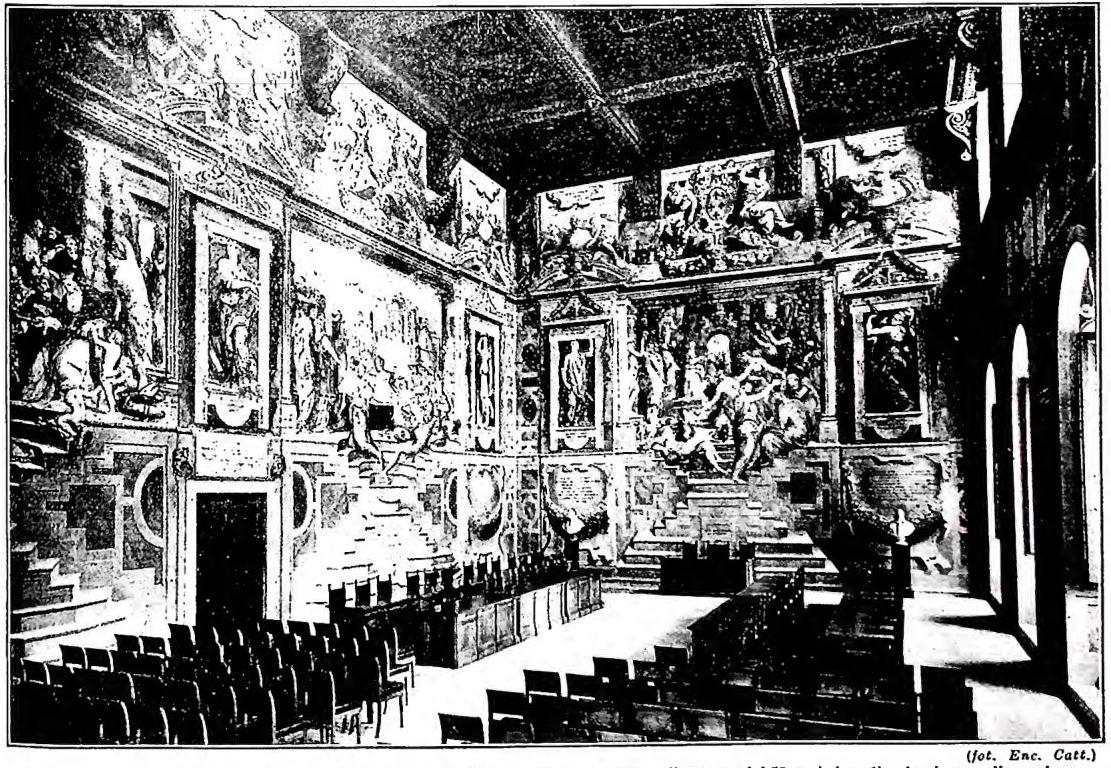
ACADEMIA - Hall of the Hundred Days in the Palazzo della Cancelleria Apostolica, frescoed by Vasari (1546), intended for the public sessions of the Pontifical Academies: Romana di Archeologia, di S. Tommaso, dei Virtuosi al Pantheon.
in the fourteenth volume of the Rendiconti of the third series. For the dissertations of the ancient A., vedi SORA.
5. P. A. DEI VIRTUOSI AL PANTHEON. — Founded in 1543 as a Congregation on the initiative of Desiderio d'Adiutorio, a Cistercian monk, with the adhesion of a group of artists, including Antonio da Sangallo and Pierin del Vaga, it had its seat, which it still retains, in the Pantheon, in a chapel to which other premises were later added. The statute was read and approved in 1546, and the members were designated with the title of "Virtuosi" as they "professed the fine arts for the decoration and glory of the Faith." The choice of the Pantheon was not unrelated to the fact that a few years earlier Raphael's remains had been buried there, who may well be considered the tutelary genius of the institution. A characteristic activity of the A. was an annual exhibition of paintings on the feast day of its patron, St. Joseph. The sodality, which over the centuries has honored itself with the names of the greatest artists, experienced alternating fortunes reflected in successive statutes, one of which (1928) elevated it to an Academy by the Holy See. The current statute, published in 1947, establishes the denomination of "Pontificia Insigne Accademia Artistica dei Virtuosi al Pantheon" and specifies its purpose: "to foster the study, practice, and perfection of the fine arts, with particular regard to sacred art, and to promote the spiritual elevation of artists," a purpose achieved through meetings, competitions, and lectures. The A. is placed under the protection of a cardinal and is composed of Virtuosi academicians of merit and honor; those of merit are divided into two groups: resident and corresponding, each of 60 members, distributed into four classes: 1) architects; 2) painters; 3) sculptors; 4) musicians, archaeologists, historians, liturgists, etc. Women may also be part of II. Since 1945, in addition to its seat in the Pantheon, it has premises in the Palazzo della Cancelleria.
6. P. A. ECCLESIASTICA. — Formerly titled Pontifical Academy of Noble Ecclesiastics, it is an institute of higher studies under the direct dependence of the Secretariat of State of His Holiness, with the purpose of preparing young ecclesiastics for the diplomatic service of the Holy See. Established in 1701 by Clement XI, it was granted faculties in theology, law, and history by Pius VI. Leo XIII reorganized its studies, giving them the peculiar diplomatic character they still retain. Pius XI assigned it, in 1937, as cardinal protector, the Secretary of State pro tempore, and it is directed by a president. The students, after obtaining a degree in canon law, follow a two-year course of studies, at the end of which they receive a diploma qualifying them for service in the Secretariat of State as "attachés."
The Ecclesiastical Academy has given the Church four pontiffs: Clement XIII, Leo XII, Leo XIII, and Benedict XV, as well as a long series of distinguished personalities, including Cardinals Consalvi, Pacca, Rampolla, Merry del Val, and Maglione. Pope Pius XII taught diplomacy there and was its cardinal protector.
IV. ECCLESIASTICAL ACADEMIES IN RUSSIA.
They were founded under Peter the Great with the character of true universities of theological studies. Their number, somewhat variable, was always very limited. When in 1917 the Bolshevik Revolution abolished the Tsarist institutions, the four academies then existing in Kiev, Moscow, Petersburg, and Kazan' were suppressed.
Academy of Kiev. — In 1627, Peter Mohyla, still an archimandrite, founded his "college" there, recognized by Poland in 1635. Humanistic studies were supplemented in 1685 with philosophy, and in 1690 with theology. With the annexation of Kiev to the Russian Empire, the Academy was given the title of "Ecclesiastical Academy," which it retained until the end of the Tsarist regime. The Academy of Kiev was the principal center of ecclesiastical studies for Russian dissenters, as its professors also trained those of the other academies.
Academy of Moscow. — Patriarch Filaret opened a "Greco-Latin School" in Moscow in 1619, which in 1685, through the work of the Likhudes brothers, became the "Greek Academy," then in 1700 the "Latin Academy" or "Slavo-Latin Academy." Finally, in 1815, it took the definitive title of "Ecclesiastical Academy," though in reality it had been so since 1700.
Academy of Petersburg. — It appeared in 1721 as a modest "Slavic School." Catherine I transformed it into the Slavo-Greco-Latin Seminary. In 1797, it obtained university privileges with the title of "Academy of Alexander Nevsky" or "Ecclesiastical Academy," as it began to be called from 1809.
Academy of Kazan'. — Tsar Paul I granted the title of Academy to the Seminary of Kazan', founded by Metropolitan Tikhon in 1723. Having lost the title shortly afterward, it regained it in 1842.
The number of students in the academies was always very small. However, its professors and students had great influence in Russian ecclesiastical life. The academies were subject to the Ecclesiastical Regulation of Peter the Great. Indeed, their history is a succession of reforms with an increasingly liberal and secularizing tendency.
The academies remained closed from the advent of Bolshevism until 1945, when the Soviet government authorized the reopening of those in Moscow and Leningrad with a small number of students.
V. LITERARY, PHILOSOPHICAL, AND SCIENTIFIC ACADEMIES.
SUMMARY:
13. Platonic Academy
14. Pontanian Academy
15. Roman Academy
16. Scientific Academies
17. National Academy of the Lincei
6. Royal Academy of Italy.### 1. PLATONIC ACADEMY.
The revival of humanistic studies in the 15th century also brought about the rebirth of academies in the Greek sense. Thus, in Florence, the Academy later called Platonic was promoted by Cosimo the Elder, with Marsilio Ficino (1433-99) as its head. Francesco de' Vieri, in the Compendio della dottrina di Platone (Florence 1577), recounts that "Gran Cosimo," having heard the Greek philosopher George Gemistus, called Plato, dispute "on the loftiest Platonic mysteries," was enraptured and conceived the idea of reviving the Platonic Academy in Florence. In 1463, he entrusted Marsilio Ficino with the task of translating all of Plato's works and also thought to provide him with a tranquil refuge, donating to him the villa of Montevecchio in Careggi. Ficino called his villa the Academy: and on November 7, 1474, he celebrated there, with nine Platonists—equal in number to the Muses—the commemoration of Plato, which was repeated annually. The frequenters were called "Academicians" or "Academic family." In Ficino's mind, the ancient Athenian Academy had thus been reborn around him, with Plato revived. But in the consciousness of his contemporaries and even of his associates, those gatherings were nothing more than one of the many erudite meetings then customary in Florence. Not only Plato's followers participated, but also philosophers of other schools, men of letters, jurists, poets, statesmen, and scientists. Ficino himself lists them in a letter to Martino Preninger, chancellor of the Bishop of Constance. They included Poliziano, Lorenzo the Magnificent, the geographer Francesco Berlinghieri, Pier Leoni of Spoleto (a physician), Naldo Naldi, Ugolino Verini, Giovanni Neri, Pier Soderini, Amerigo Corsini, and others. Few, then, were the philosophers, and of these, only one left a lasting mark on the history of thought: Giovanni Pico, Count of Mirandola and Concordia.
The Florentine Academy, which reached its greatest splendor during the youth of Lorenzo and Giuliano de' Medici, survived until 1522, later resurfacing under the name and different nature of the "Crusca." Through its work, in the name of Plato, the philosophical renaissance was accomplished in Tuscany. Platonism had arrived in Florence as early as 1396 with the arrival of Manuel Chrysoloras, and more fully in 1423, with the return from Constantinople of Aurispa and Traversari, bringing the first complete Plato and the principal Neoplatonists. Leonardo Bruni and other humanists, with partial translations, had provided at least a philological knowledge of Plato, while George Gemistus celebrated his divine speculative virtue. Nevertheless, Cardinal Bessarion could still say, even after 1460, that Plato was almost unknown in Italy. Marsilio Ficino, translator and interpreter of the Athenian philosopher, elaborated his doctrine philosophically and infused it into the original development of the Italian spirit. In the Theologia platonica, his greatest work, he strove to fuse Platonism and Christianity, achieving, however, "a Platonizing of Christianity," dangerous insofar as it ended "by drowning Christianity in the common natural religion."
2. ACCADEMIA PONTANIANA – Founded in Naples under the auspices of Alfonso of Aragon, its founder was Antonio Beccadelli, known as il Panormita from his native city (Panormus, Palermo). He hosted the academics in his house on Via dei Tribunali or in his villa Plinianus at Resina, or gathered them in the Porticus Antoniana, which retained the name of the Panormita himself. It was a center of essentially philological studies, less paganizing and closer to contemporary life than the Florentine and Roman Academies. The Panormita led the discussions, animating them with his wit, and upon his death in 1471, Giovanni (Giovanni) Pontano succeeded him as head of the Academy, becoming its legislator and organizer—the most original poet of the humanist period. The Academy, initially called Alfonsina, was thereafter known as Pontaniana. It gathered the finest minds of the Kingdom: Sannazzaro, named Actius Syncerus; Gabriele Altilio, an elegant Latin poet and author of a famous epistolary; Tristano Caracciolo and Acquaviva, both warrior and man of letters. Alongside these and many others, in the new seat on Via del Purgatorio ad Arco, convened Michele Marullo, Pietro Summonte (editor of Pontano’s works), Luigi Galluccio, and the physician of Ferdinand I, Antonio de Ferrariis. Pontano, revered and beloved as a master, "exercised an effective influence on the literary inclinations and intellectual orientations of all." His dialogues reflect those gatherings and discussions. When he died, the Academy declined; it later flourished again under Jacopo Sannazzaro and Scipione Capece, only to dissolve around the mid-sixteenth century. It was revived during the reign of Joachim Murat, though with a changed direction.
Silvio Pasquazzi
3. ACCADEMIA ROMANA – Established by Giulio Pomponio Leto, an illegitimate descendant of the Sanseverino princes of Salerno, in his house on the banks of the Tiber. Humanists of varied temperaments, adopting Latinized names, convened there to discuss art, philology, philosophy, and archaeology. All devoted to the cult of the classical world, they considered themselves ancient Romans reborn; they dated their writings ab urbe condita and annually celebrated April 21, the traditional date of Rome’s founding. Each member was a sacerdos Academiae Romanae, and their leader assumed the title of Pontifex maximus. After Pomponio Leto, who was the animating spirit, Bartolomeo Sacchi of Piadena—known as il Platina—distinguished himself in the Roman Academy. He devoted himself to the History of Mantua, the life of Aeneas Sylvius Piccolomini, and that Liber de vita Christi ac omnium Pontificum which more than any other work secures his renown. Alongside the Platina, Filippo Buonaccorsi of San Gimignano—who took the name Callimaco Esperiente—and Marcantonio Cocci of Vicovaro—known as il Sabellico—are also to be remembered. In their love for antiquity, they did not disdain even Christian antiquities. Giambattista De Rossi, from the catacombs of Callixtus and Priscilla, recovered inscriptions attesting that the academics had visited those sites. Perhaps they thus realized that contemporaneity of Christian and pagan which was in their spirit. Yet it seemed that the Roman humanists wished to renounce Christianity to revive pagan idolatry. In reality, though the Academy’s tone was openly paganizing, those humanists did not truly confront the religious problem; it was rather "an attitude that today we would call aestheticism." However, in 1468 they were accused of conspiring against the Pope and of wishing to remove Rome "from the subjection of the priests." By order of Paul II, who was himself little favorable to Humanism, Leto and the Platina were imprisoned. The Academy was thus dissolved. It was later reconstituted under the pontificate of Sixtus IV, in a house Pomponio Leto acquired on the Quirinal, where he collected ancient works of art, inscriptions, and manuscripts. The academics resumed their rites and annually celebrated the Paliliae, but took care to return with greater caution to their original direction, tempering that superstitious and exaggerated cult of antiquity.
Silvio Pasquazzi
4. ACCADEMIE SCIENTIFICHE – To the early examples of fifteenth-century philosophical and literary academies were added, in the sixteenth and even more in the seventeenth century, scientific academies. Among these, the Accademia dei Segreti, founded in Naples by G. B. della Porta (1545?–1615), may be considered the first significant example. The name derived from the fact that it admitted only those who had discovered some "secret" or special finding useful to medicine or science. However, the Accademia dei Segreti did not have a long life, nor did it truly distinguish itself in the scientific field, so it must be regarded as a mere sketch of what was later to develop on a far grander scale.
In the seventeenth century, the need to unite the efforts of multiple individuals to tackle problems of difficult solution with a spirit free from scholastic constraints, and to regulate research plans according to criteria dictated by a shared desire for speculation, gave a greater and more valid impulse to academic development.
The first truly worthy scientific academy was that known as dei Lincei (v. below). Chronologically, it was followed by the Accademia del Cimento (v.). Abroad, in 1645, a society was founded in London under the name degli Invisibili by Hook, Hartlieb, Boyle, Wren, Peltz, and others. It gained real scientific value when Charles II transformed it in 1662 into the Royal Society, merging the Philosophical Society of Oxford with that of the Invisibili. Its publication was the periodical Philosophical Transactions, begun in 1665.
In France, Cardinal A.-G. de Richelieu founded the Académie Française in Paris in 1635, though this institution had no scientific intent. In 1665, however, J. B. Colbert founded the Académie des Sciences.
In Germany, at Erfurt, G. Lorenzo Bausch founded in 1652 a Gesellschaft naturforschender Aerzte, which in 1677 was transformed into the celebrated Academia Leopoldino Carolina Cesarea naturae curiosorum.
Many other academies followed these first ones.
The rise of scientific academies coincides with that critical moment when the new current first came into contact with religious thought—a moment of exceptional importance, misinterpreted by those who would derive from it general observations, deducing an inhibitory action of the Church toward scientific progress. The Church, which had only recently witnessed the example of what an excessively free interpretation could produce (the Lutheran heresy), had good reason to be on guard against any movement that might induce undesirable reflections in the theological field. This explains that initial attitude of diffidence. But once intentions became clear, this attitude soon turned into acceptance and promotion, to the point that the Church’s own princes became promoters and even founders of scientific academies.
1666. NATIONAL ACADEMY OF THE LINCEI
For its antecedents, V. P. A. delle Scienze. The present historical phase dates back to 1871, when, Rome having become the capital of Italy, the name of the ancient society was restored, at the initiative of Quintino Sella, with the new designation of national.The statute (14 February 1875) added to the Class of Physical and Mathematical Sciences that of Moral, Historical, and Philological Sciences. In 1883, the Government granted the Academy the use of Palazzo Corsini, a building by the architect Fuga (18th century), which also houses the Corsini Library and the Print Cabinet, donated to the Academy by Prince Tommaso Corsini. To the Corsiniana should be added the academic collection, perhaps the richest in scientific periodicals in Europe, and the Orientalist collection of the Caetani Foundation, due to the munificence of D. Leone Caetani (1923). Reforms of the institution took place in 1883, 1920, 1925, and 1934-35, until, by decree of 8 June 1939, the Lincei were absorbed into the A. d'Italia (v. below). With the fall of Fascism, the latter was suppressed, and its assets and functions were devolved to the restored Academy of the Lincei (Legislative Decrees 28 September 1944, no. 359 and 28 September 1944, no. 363). By decree of 16 November 1945, a new category of "critics of the arts and letters" was introduced into the Class of Moral Sciences.
Presently, the Academy is governed by its old statute of 15 January 1920, modified by decree of 1 October 1925; it is composed of the two aforementioned Classes, each consisting of 72 national members, 72 corresponding members, and 72 foreign members, divided in the first into five categories and in the second into six. The presidency council is composed of a president, a vice-president, two assistant secretaries, an administrator, and an assistant administrator. The Academy, recognized as an autonomous moral body, enjoys financial allocations from the budget of the Ministry of Public Education. Thanks to donations and bequests from institutions and private individuals, the Academy administers foundations, awards prizes, announces competitions, and promotes conferences. Among the foundations, the most notable are the "Alessandro Volta," the "Feltrinelli," and the "Donegani."
Since 1870, the Academy has published seven series of Rendiconti and Memorie of the Class of Physical Sciences and the Class of Moral Sciences, as well as six series of Notizie degli scavi di antichità. Other notable publications, either self-published or entrusted to publishers, include the Monumenti antichi, a collection begun in 1890; the Atti delle Assemblee costituzionali italiane; the Classici greci e latini; the Forma Urbis Romae; and the Codice Atlantico di Leonardo, etc.
1667. ROYAL ACADEMY OF ITALY
Established in Rome on 7 January 1926 and inaugurated on 28 October 1929, it was suppressed on 28 September 1944. Its purpose was to "promote and coordinate the Italian intellectual movement," with a series of activities specified in the first article of its statute, including: advising the government on the most important cultural issues, promoting explorations, awarding prizes and scholarships, and assisting deserving scholars with subsidies and pensions. It was divided into four classes: Moral and Historical Sciences; Physical, Mathematical, and Natural Sciences; Letters; and Arts. Each class consisted of 15 academicians, increased to 20 in 1939. Academicians were considered high officers of the State. Among its members were Cardinal Gasparri and Monsignor Perosi. Attached to the Academy, thanks to the generosity of institutions and private individuals, were notable institutions: the Foundations "Volta," promoter of the "International Volta Conferences," "Feltrinelli," "Novaro," and other minor ones; study centers for Italian East Africa, Albania, and Italian Switzerland. Under the patronage of the Academy, important explorations were conducted in Africa and those of G. Tucci in Tibet. Its publishing activity resulted in twenty collections of scientific, literary, and artistic works. The State had granted the Academy ownership of the Villa "Farnesina," famous for Raphael's frescoes. In 1939, the Academy of Italy absorbed that of the Lincei; but in 1944, the reverse occurred: the Academy of Italy was suppressed, and its assets, activities, and functions were devolved to the reconstituted National Academy of the Lincei (v. above).#### VI. ARTISTIC AND MUSICAL ACADEMIES.
SUMMARY:
1668. Artistic Academies
2. Academy of S. Cecilia. - 3. Academy of S. Luca.1669. ARTISTIC ACADEMIES
At the end of the sixteenth century, this name was given to art schools that, replacing the old workshops, some artists opened in their studios (e.g., the Academy of the Incamminati, held in Bologna by the Carracci). More specifically, however, academies were those associations of artists that, taking over from the ancient universities, companies, and studios, aimed at the advancement and study of the fine arts. Recognized by popes and rulers, they were often entrusted with public functions.In Florence, from the ancient Company of S. Luca, the Academy of Design was born in 1563. In 1573, a similar one arose in Perugia. Above all stands the Roman Academy of S. Luca, which originated from a pre-existing university of painters that, with statutes of 1479, aimed primarily at religious purposes and mutual aid. Said Academy was recognized in 1577 by Gregory XIII, and Urban VIII sanctioned its functions as a supervisory magistracy over the various artistic corporations; its statutes date back to 1592, when Federico Zuccari was its president. Under Canova, it obtained official teaching of art and maintained it until 1874.
In the seventeenth and eighteenth centuries, almost all Italian cities wanted their own academy; we recall Turin (Albertina Academy), Bologna (Clementina Academy), Lucca, Venice, Genoa, Parma, Verona, Carrara, Milan (Brera), Modena, Bergamo (Carrara), Naples, etc.
Many other academies, often modeled after the Italian ones, were established at the initiative of other nations, such as the Royal Academy of Painting and Sculpture in Paris (1648), the Academy of France in Rome (1666), the Academy of S. Fernando in Madrid (1744), the Royal Academy in London (1766), and the Academy of Spain in Rome (1873).
Notable is the contribution that academies have made to the advancement of art through theoretical discussions, practical teaching, moral protection of artists, administration of bequests, publication of "memoirs," announcement of competitions, and custody of archives and collections. Certain deviations, which have been called accademico (v.), should not make us forget all these merits; and while it is true that today the tasks of historical academies are much reduced, it would not be fair to consider their function entirely exhausted. Several of them, with free evening schools, continue to instruct young people, although the official teaching of art has now been assumed by the Government, which provides for it with Artistic High Schools, secondary institutions, and nine higher institutes operating in Carrara, Bologna, Florence, Milan, Naples, Palermo, Rome, Turin, and Venice, which have been given the name of Academies of Fine Arts.
An attempt to restore importance to a great academic institution was made in 1926 with the later suppressed Academy of Italy (v. col. 180, n. 6), which also included a class of the arts.
Special mention should be made here of the Pontifical Academy of the Virtuosi al Pantheon, which, founded in 1543 as a congregation of artists working in Rome, is particularly concerned with sacred art (v. n. III, 5).
2. ACADEMY OF S. CECILIA, Rome. — The origins of the institution can be traced to the decrees of the Council of Trent concerning sacred music (XXII session, 17 September 1562). In 1566, the chapel masters of Rome gathered with singers and performers into a sodality, headed by Pier Luigi da Palestrina, the great architect of that restorative work. In 1584, Gregory XIII canonically erected it as a confraternity under the title of "Congregation of the Musicians of Rome under the invocation of St. Cecilia," which Urban VIII, with the bull Pietatis et christianae charitatis of 20 November 1624, approved in perpetuity. Other pontiffs, among whom chiefly Clement XI with the brief Ad pastoralis dignitatis officium (1716), Pius VI with the brief Supremi dispositione consilii (1794), and Pius VIII with the brief Quoniam vero vocum concentus (1830), progressively expanded and defined its prerogatives, which extended to the examination and appointment of masters and performers, music schools, and the licensing of printed musical works. Though such jurisdiction was not always equally enforced over time, the sodality’s action largely contributed to the formation of the glorious Roman musical school. In 1839, an Academy merged with the Congregation, and its title eventually prevailed, obtaining from Pius IX the designation of Pontifical.
A complete reconstitution of the Academy took place in 1875 under the Italian government, which officially assumed its administration, and particularly developed its teaching courses, with a Music Lyceum that later became a Conservatory, directed by the Academy’s president. The Academy now promotes, through various means, musical art, culture, and education; it founded the "National Union: Concerts" (1922) and the "International Federation of Concerts" (1929). Subsequent reforms of the statute were enacted in 1897, 1912, and 1934. The Academy currently consists of 100 effective academicians (Italians) and 50 honorary members (foreigners). It possesses a rich collection of printed and manuscript works, since 1911 named the "Governmental Musical Library of S. Cecilia." The feast of the patron saint (22 November), for which the ancient Congregation founded a chapel in the church of S. Carlo ai Catinari, is still officially celebrated with a solemn Mass.
Nello Vian
3. ACADEMY OF S. LUKE, Rome. — Its initial period is considered that of the University or Roman corporation of the arts, which existed at the end of the 15th century, governed by statutes preserved in a codex of 1478. The Academy dedicated to S. Luke was created by Gregory XIII with a brief dated 15 October 1577, and obtained from a bull of Sixtus V in 1588 the confirmation of its privileges and its seat in the church of S. Martina at the Roman Forum. From its origins, alongside the Academy, formed by the major artists, arose the Company or Confraternity, which welcomed minor artists, excluding only apprentices and laborers. A munificent protector of the Academy in its early days was Cardinal Federico Borromeo; its animator and legislator was the painter Federico Zuccari, appointed its "prince" in 1593. Subsequent statutes were issued in 1607, 1714, 1788, 1817, 1907, and 1934 to the sodality, to which all the most illustrious Italian artists and the greatest foreign ones belonged; other Academies established in various places according to its model were also affiliated. The Academy was both an expression and an instrument of the universal prestige enjoyed by Italian art during the centuries of its enduring splendor. Its most notable activities were in the education and protection of young artists, the preservation and defense of the ancient artistic heritage, and the organization of competitions, the most solemn of which was that founded by Clement XI. Until the end of the pontifical government, it also provided instruction in the arts.
The Academy is composed of three classes: painting, sculpture, and architecture, each with 12 effective academicians of merit and 24 corresponding members. It also includes honorary academicians, not exceeding 90 in number, chosen from among men of letters, art writers, scientists, and patrons of the fine arts. Numerous competitions remain under its 40 foundations. The Academy’s patrimony is enriched by the Sarti Art Library, the Painting Gallery, collections of drawings, and documents. The academic seat remained until 1932 in the building adjacent to the church of S. Martino at the Roman Forum; after its demolition, the Academy moved to the Palazzo Carpegna in Via della Stamperia. - Vedi Tav. XV.