Machine translation of the 1948–1954 Italian original. The original text is authoritative.
LIBERATORE, MATTEO. - Philosopher and theologian
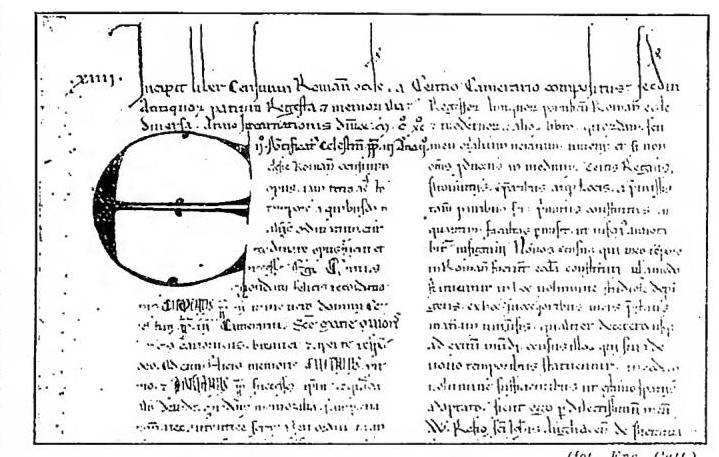
(Int. Enc. Cult.) LIBER CENSUUM ROMANAE ECCLESIAE - Incipit of the original manuscript of the L. c. by Cencio Savelli Chamberlain - Vatican Library, cod. Vat. lat. 8486, f. 117.His main merit lies in the strong contribution he made to the renewal of neo-scholastic philosophy, particularly Thomistic, which had been almost forgotten and devalued at the beginning of the 19th century even in ecclesiastical schools. L., under the guidance of Taparelli and Sordi, penetrated and assimilated with rare depth its perennial content of truth, expounding it from the chair and above all in numerous works, widely distributed in numerous editions, among which the principal are: Institutiones philosophicae (2 vols., Naples 1840-42); Della conoscenza intellettuale (2 vols., Rome 1857-58); Del composto umano (ibid. 1862); Istituzioni di etica e diritto naturale (ibid. 1863); Dell'anima umana (ibid. 1875); Degli universali (6 pamphlets, ibid. 1883); Del diritto pubblico ecclesiastico (Prato 1887); Principi di economia politica (Rome 1889). In the light of scholastic principles, L. was able to evaluate new philosophical systems (rationalism, ontologism, etc.) and refute their errors. Fineness of judgment and particular strength and dialectical balance characterize both the systematic treatments and many specific studies on the most vital and fundamental theological, philosophical, and natural law problems with which L. nobly defended the cause of the Church and of Christian thought.
BIBL.: [F. S. Rondina], Necrologio, in Civ. Catt., 15th series, 1892, IV, pp. 352-60; Sommervogel, IV, coll. 1774-1803; Hurter, V, II, 1488-91; A. Masnovo, Il neotomismo in Italia, Milan 1923, p. 115; P. Dezza, Alle origini del neotomismo, ibid. 1940, pp. 65-73.
Cite this article
“LIBERATORE, MATTEO.” Enciclopedia Cattolica, vol. VII (1951), p. 756. Azione Romana digital edition, https://azioneromana.com/article/liberatore-matteo.
 Enciclopedia Cattolica