
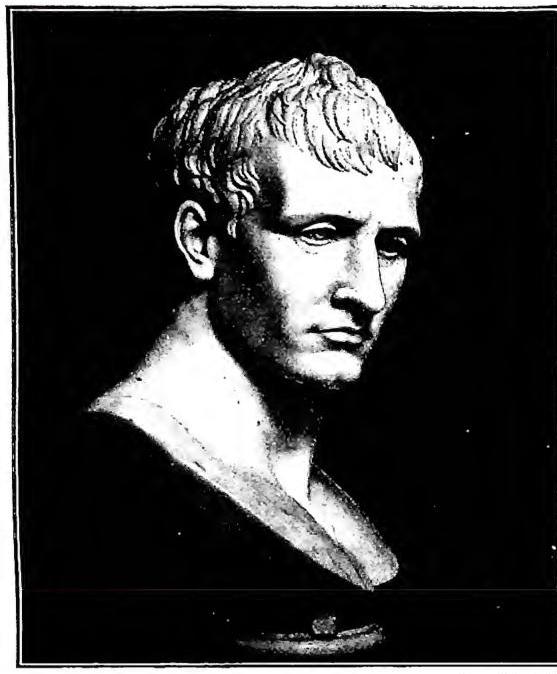
NAPOLEONE I, EMPEROR OF THE FRENCH. – Napoleone Buonaparte, born at Ajaccio on 15 August 1769; his mother was Letizia Ramolino (d. 1836), his father Carlo (d. 1785), from a family originally from Tuscany, by profession a lawyer. After taking part in the resistance led by Pasquale Paoli against the French invaders, the Buonapartes sided with the new masters after the battle of Pontenuovo (9 May 1769); as a reward, the sons were admitted to French military schools. N. entered the College of Autun in 1778, and then attended the military schools at Brienne and Paris. In 1785 he went as an artillery lieutenant to the La Fère regiment at Valence and then at Auxonne; he greeted the Revolution of 1789 with sympathy, hoping that it would benefit the autonomist aspirations of his island. His long stays at Ajaccio between 1789 and 1793, however, served only to bring him into violent conflict with the party of the independents. In June 1793 he returned to France and took part in the siege operations at Toulon: rapidly promoted to battalion commander and brigade general, after the siege he became commander of the artillery of the army of Italy (February 1794).
Dismissed because of his good relations with the Robespierrists after Thermidor (28 July 1794), he was also arrested,
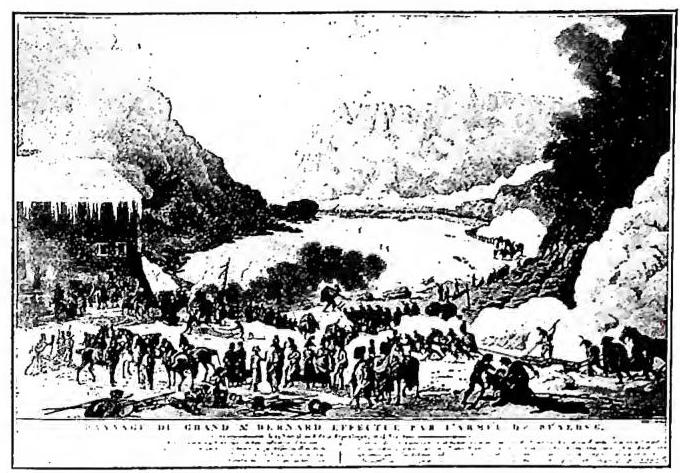
although he disdained revolutionary doctrinairism and demagogic disorder. Having returned to service, on 13 Vendémiaire (5 October 1795) he served the Thermidorians in dispersing the reactionary attempt in Rue St-Honoré. As a reward he was appointed commander of the garrison forces in Paris, and then commander of the army of Italy (2 March 1796). He then married Josephine Tascher de la Pagerie, widow of General Beauharnais, guillotined by the Jacobins (9 March 1796), and two days later departed for Nice to assume command of the army. The military operations in Italy were intended to flank Moreau’s advance in the Danube Valley; N., however, addressed a famous proclamation to his troops on 27 March and immediately began the advance. Having crossed the Col di Cadibona, he broke through the junction of the Austro-Piedmontese deployment, defeating the Austrians at Montenotte and Dego, and the Piedmontese at Millesimo, Ceva, and S. Michele (12–19 April 1796), and forced Piedmont to conclude the armistice of Cherasco (18 April); he then pursued the Austrians, defeated them at Lodi and Borghetto, and on 15 May occupied Milan. The resistance of the fortress of Mantua compelled him to abandon a rapid march on Vienna; he subsequently defeated at Castiglione and Rivoli the Austrian columns descending to relieve Mantua, imposed armistices and war indemnities on the dukes of Parma and Modena, the king of Naples, and the Pope, and organized a harsh system of requisitions. After the capitulation of Mantua (2 February 1797), he advanced through Friuli and the Tarvisio Pass toward Vienna, forcing the Emperor to agree to the preliminaries of Leoben (18 April 1797), converted into peace at Campoformio on the following 18 October. Austria ceded Belgium to France, recognized the independence of a new State of Lombardy, and in exchange occupied the territories of the Republic of Venice, cynically sacrificed by N. At the same time, N. organized in Emilia the Cisalpine Republic, with Reggio, Modena, Bologna, and Ferrara, and then united Lombardy with it (June 1797).
The Directory, barely tolerating the popularity of a general who was already daring to speak of reforming the French government, gave him command of the army charged with operating in the Channel against England, and then consented to his plan to carry the war to Egypt in order to make it a base of operations against India. N. left Toulon on 19 May-
In his work of internal reorganization N. immediately understood, although his religious feeling was very superficial, that a rapprochement with the Church was necessary. The negotiations were not easy; advised by Talleyrand, he did not accept the formula: «religion of the majority of the French and of the Consuls». The question of the refractory and constitutional bishops was overcome by requiring both groups either to submit or to resign. For the future it was agreed that the bishops would be elected by the government and that the Pope would grant canonical institution; public worship was declared permissible subject to police regulations; the bishops were to swear fidelity to the government and appoint the parish priests; to the bishops and parish priests the State would grant a financial allowance in place of the properties confiscated by the Revolution. This agreement, officially called the Convention between the French government and His Holiness Pius VII, was signed in Paris by Cardinal Consalvi and Giuseppe Bonaparte on 15 July 1801 (26 Messidor, Year IX) and promulgated on 18 April 1802, with the addition of the Organic Articles, or Police Regulations, governing public manifestations of worship; these entered into force despite the Pope’s protests.
For a more complete pacification he granted amnesty to the émigré nobles who recognized the consular Constitution by oath. The senatus consultum of 10 May 1802 submitted to popular plebiscite the conferral of the consulship for life: yet, of the seven and a half million voters, only half took part in the vote, almost all in favor of N. A subsequent organic senatus consultum of 4 August 1802, whose text was nevertheless drafted by Bonaparte himself, renewed the Constitution by extending the powers of the first consul. The gospel of the new society that N. wished to create was the Civil Code, promulgated on 27 March 1804. The principles of 1789—personal liberty, equality of citizens, the secular nature of the State, freedom of conscience—are theoretically acclaimed in it, but the spirit of the Code is distinctly bourgeois, and it proclaims the principle of property as a natural and personal right, limited only by the rights of the State. More than with primary education, N. was greatly concerned
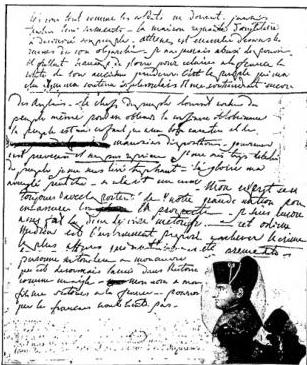
Around N. an able propaganda campaign was being conducted so that the First Consul might be given a demonstration of national gratitude. The schemes of the pure republicans on the one hand and the royalists on the other led first to ferocious repressions (the execution of the Duke of Enghien), and then to the demonstration that it was necessary to save the Revolution incarnated in a providential man, entrusting him with the task of governing the Republic under the title of emperor. The senatus consultum of 18 May 1804, approved by popular plebiscite (once again, only three and a half million voters out of seven and a half million electors), founded the Empire, supported by the Senate and a High Court of Justice, and public acts from then on bore the double wording: «French Republic - N. emperor». At his coronation (held in Paris by Pope Pius VII), N. swore fidelity to the principles of the Revolution (2 Dec. 1804). Thus there came into being a sumptuous court and an imperial nobility, formed by marshals of the Empire, prefects, and officials, who were granted hereditary noble titles reinforced by entail (princes, dukes, counts, barons); from officials N. demanded absolute obedience and zealous interpretation of his requirements of discipline and order. For education he organized the Imperial University, a body of professors entrusted with teaching and civic education throughout the Empire, with political obligations taking precedence over scientific ones, presided over by a grand master directly subordinate to the Emperor; for religious education, the younger generations were to study the principles of the faith in the Imperial Catechism, in which they learned that Christians owed the Emperor fidelity, since he was the minister of divine power and the image of God on earth. The press, theatre, and literature were supervised and controlled, and directed toward becoming instruments of domination.
Inevitably, the peace treaties of Amiens and Lunéville could not last. In 1805 N. began the war of defence of the conquests made against a new European coalition (III). France followed him, convinced that its very existence was at stake: N. won at Ulm (15 Oct. 1805) and Austerlitz (2 Dec. 1805), and forced Austria to conclude the Peace of Pressburg, which marked the collapse of the Holy Roman Empire (26 Dec. 1805).
N. organized Italy, transforming the Italian Republic, created in 1802 (Consulta of Lyon), of which he had been president, into an Italian kingdom, and assuming its crown at Milan (25 May 1806); he placed his brother Joseph on the throne at Naples, his sister Elisa Baciocchi at Lucca, and his other sister Paolina Borghese at Guastalla. In Germany he created the Confederation of the Rhine; in Holland he made his brother Louis king.
Peace, however, eluded N.: at Trafalgar (21 Oct. 1805), England had destroyed the French fleet and dominated the seas. A new coalition formed against French hegemony; N. crushed Prussia at Jena and Auerstädt (14 Oct. 1806), and Russia at Eylau (8 Feb. 1807) and Friedland (14 June 1807). On 25 June 1807 N. met with Alexander I of Russia at Tilsit: the partition of Europe into two spheres of influence began to take shape. England was now isolated; by destroying its economy, N. would be able to dominate II. From Berlin, on 21 Nov. 1806, he promulgated the first decree establishing the Continental Blockade; further decrees were issued at Fontainebleau (13 Oct. 1807), and at Milan on 23 Nov. and 17 Dec. 1807. Europe, however, sought to evade implementation of the blockade, and N. felt the need to occupy all the ports of the continent. Hence the occupation of Portugal (Nov. 1807), the occupation of Rome (Feb. 1808), and the invasion of Spain, where N.'s brother Joseph became king, while his brother-in-law
Gioacchino Murat replaced him at Naples (June 1808). But Spain rose in revolt; in Portugal, English columns seriously threatened the French occupation; uprisings took place in the Tyrol and in Westphalia. In Rome, the half-imprisoned Pope protested and excommunicated the Emperor, who in 1809 had him taken to Savona.
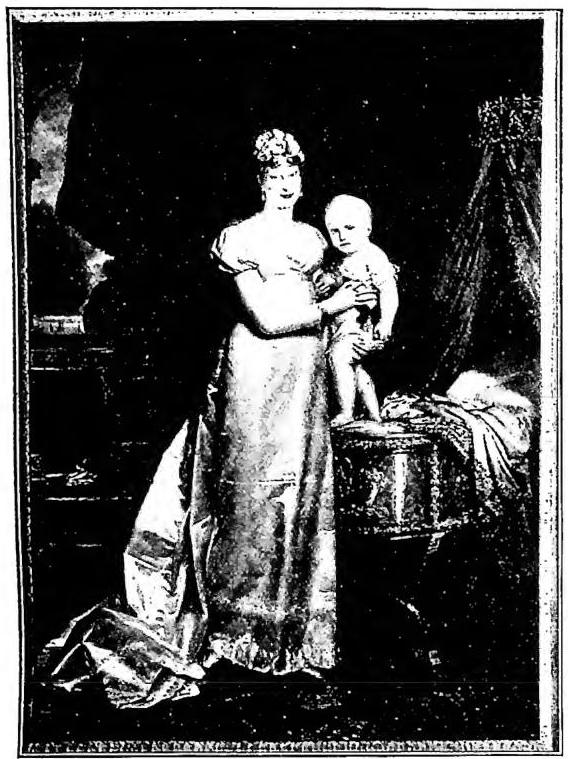
A general discontent in France in 1809 led Austria to take up arms again in agreement with England (V Coalition). N. drove back the Austrians who had entered Bavaria and occupied Vienna, but the battles of Aspern and Essling represented a bloody setback for N., and victory at Wagram (6 July) was achieved only at an enormous price. N. forced Austria to accept the Peace of Schoenbrünn (14 Oct. 1809) and deprived it of the Illyrian provinces. At this moment N. began to consider the problem of succession; he divorced Giuseppina, by whom he had had no children, and decided to marry Maria Luisa of Austria, whom Metternich offered him. After the first religious marriage had been dissolved by the Curia of Paris, on the grounds of nullity deriving from the fact that both parties had been compelled to give their consent by external (political) circumstances, and the civil marriage had been annulled by a senatus consultum (16 Dec. 1809), on 2 Apr. 1810 N. married Maria Luisa, and on 20 March 1811 N.'s son was born; he was called the King of Rome.
During 1810–11 N. displayed prodigious activity in confronting the terrible difficulties that arose from every quarter. Apparently he was still master of the West, but the crisis in industry, deficient agricultural production, and economic hardship increased the moral malaise. N.'s relations with the Pope, confined at Savona, were bitter, and the implementation of the Concordat was paralysed. N. appointed bishops and compelled them to enter their sees without canonical investiture. In 1811 he convened a national council and had it decree that investiture could be granted by the metropolitan or by the senior bishop. In response to the Pope's protests, he persecuted those who defended the Roman conception and had the Pope transferred to Fontainebleau, where he hoped to subdue him. To resolve the latent conflict with Russia, he organized an expedition; Russian strategy forced him to commit himself fully. He crossed the Niemen on 24 June 1812 and entered Moscow on 14 Sept., but failed both in the attempt to destroy the Russian forces and in that of reaching an agreement. On 13 Oct. he began the retreat: the great French army disappeared. At Smorgoni he dictated the famous 29th bulletin, which revealed the catastrophe, and hurried to Paris to confront secret internal enemies and organize the defence. At Fontainebleau he sought an agreement with Pius VII and wrested from him a new concordat system (25 Jan. 1813) approving the decisions of the national council, but in response to the cardinals' protests the Pope retracted his approval on 24 March.
BIBLI.: among the immense quantity of studies devoted to N. and his work, an intelligent bibliographical guide is offered by L. Villat, La Révolution et l'Empire, II, Napoléon (Clio, 8), 3rd ed., Paris 1947. The bibliographical manuals of A. Lumbroso (1804–96), F. M. Kircheisen (1908–20), and G. Davois (1909–11) are now outdated. Recent biographies offering a synthesis of the latest documentary publications and critical research are provided by G. La Cour Gayet, Napoléon I, sa vie, son oeuvre, son temps, Paris 1921; E. Driault, L'immortelle épopée du drapeau
tricolore: Napoléon, 3 vols., there 1930; J. Bainville, N., there 1931; L. Madelin, Le Consulat et l'Empire, there 1932–33; id., N., there 1935; id., Histoire du Consulat et de l'Empire, 10 vols., there 1937–1946 (in progress). The older biographies of A. Fournier, Napoleon I, eine Biographie, Leipzig 1886–89; Lord Rosebenj, Napoleon, London 1900; J. Holland Rowse, The life of N., there 1901; and Max Lenz, N., Biefeld 1905, remain good. Cf. also F. Lemmi, L'età napoleonica, Milan 1938. On N.’s youth, V. A. Chuquet, La jeunesse de Napoléon, 3 vols., Paris 1897–99. On the family, F. Masson, Napoléon et sa famille, 13 vols., there 1897–1914. On the 18th Brumaire, A. Vandal, L'événement de Bonaparte, there 1905. On the Concordat and policy toward the Holy See, Boulay de la Meurthe, Histoire de la négociation du Concordat de 1801, Tours 1920; A. Latreille, Napoléon et la St-Siège, Paris 1945 (in addition to the works of D'Hausseville, Welschinger, and Rinieri, and the bibliography cited in J. Leflon, La crise révolutionnaire, Paris 1949). On educational activity, E. Aulard, Napoléon I et le monopole universitaire, there 1911. On diplomatic activity, A. Sorel, L'Europe et la révolution française, there 1885–1904; id., Napoléon et l'Europe, 5 vols., there 1912–27. On the Continental Blockade, E. Tarlé, Le Blocus continental et le royaume d'Italie, there 1928. On relations with Italy, E. Driault, Napoléon et l'Italie, there 1906; A. Fugier, Napoleon et l'Italie, there 1947.