
AIX, ARCHDIOCESE OF. - A French metropolitan see city in Provence, A. is the oldest Latin colony in Gaul, founded around the year 120 B.C. by the consul Caius Sextius, near the thermal springs to which it owes its name (Aquae Sextiae). As for its evangelization, the historically verified series of its prelates begins in the 5th century.
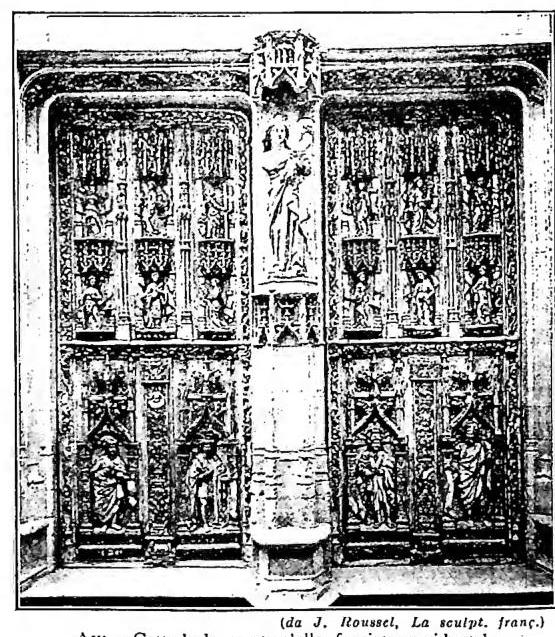
(from J. Roussel, La sculpt. franc.)
The boundaries of the ecclesiastical province were adjusted several times: in 1790, by the Constituent Assembly; in 1822, with the creation of the metropolis of Avignon, and finally in 1866, with that of Algiers. Today, more extensive than it was before the Revolution, it includes the suffragan dioceses of Ajaccio, Digne, Fréjus, Gap, and Nice. The bull Paternae caritatis of Oct. 6, 1822, attributed to the see of A. the two districts of A. and Arles, with the titles of Arles and Embrun, which had already been suppressed by the Napoleonic Concordat. As a diocese, A. encompasses the territory of the department of Bouches-du-Rhône except for the district of Marseille, with a population of 239,500 Catholics out of 263,400 inhabitants, 201 priests, 3 archdeaconries, 23 deaneries, and 130 parishes. The diocese is under the patronage of St. Mitre (Mitrius, or Mitrius).
A. has given to the Church 11 cardinals among its archbishops and 7 among the canons of the metropolitan chapter. Worthy of mention among the archbishops are: Card. Guillaume Fillastre (1420-22); Gilbert Génébrard (1591-96); Card. Girolamo Grimaldi (1648-85); Raymond de Cucé de Boisgélin (1771-1801). Jean de Saint-Chamond (1551-66) adhered to the Calvinist Reformation and placed himself at the head of a Huguenot regiment after resigning from the episcopate.
Within the diocese, numerous religious institutes existed, which were subsequently destroyed by the French Revolution, among them the Carthusian monastery of Sainte-Marthe. The medieval foundations of the Hospitaler Order of St. John developed there, particularly at their inception.
In 1612 Hurault de l'Hôpital, archbishop of A., convened a council to censure a Treatise on Ecclesiastical and Civil Power, in which the author, Edmondo Richer, advocated the liberties of the Gallican Church. More important was the council or synod of 1672. Girolamo Grimaldi, cardinal archbishop, published its statutes which deal with the duties of pastors and the administration of the Sacraments, and recommend the observance of the Roman Ritual to parish priests. In the appendix is the list of reserved cases and penitential canons as well as the admonitions of s. Carlo Borromeo for confessors.
of Jerusalem and count of Provence (letter of Dec. 31, 1413), the University was greatly favored by his son René I of Anjou (ordinance of Nov. 7, 1460). The archbishop was its chancellor. From the very beginning it had the faculties of theology, canon and civil law, and from 1462 also that of medicine.
As an expression of the Provençal soul and culture, the University was reconfirmed in the 17th century by the king of France. Suppressed by the Revolution (1793), in 1808 Napoleon transformed it into an Academy of the Imperial University of France. Today it constitutes a single university with that of Marseille (Université d'Aix-Mar-
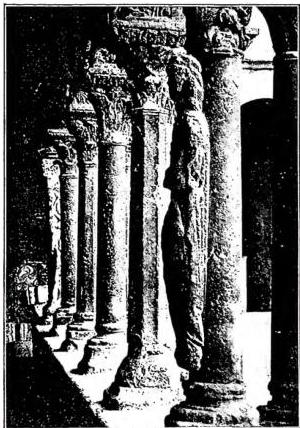
(de K. Porter, Roman, sculpt.)
A large part of its medieval documents were burned in 1536 during the invasion of Charles V. The ancient statutes, drawn up in the years 1420-40, were published for the first time by Bonifacio Blancas (Almae Aquarum Sextiarum Universitatis vetera et nova Statuta, Constitutiones et Consuetudines, Aix 1667) and again, together with the other surviving documents, by Marcello Fournier (Les Statuts et Privilèges des Universités Françaises depuis leur fondation jusqu'en 1789, III, Paris 1892, pp. 1-32).
Igino Cecchetti
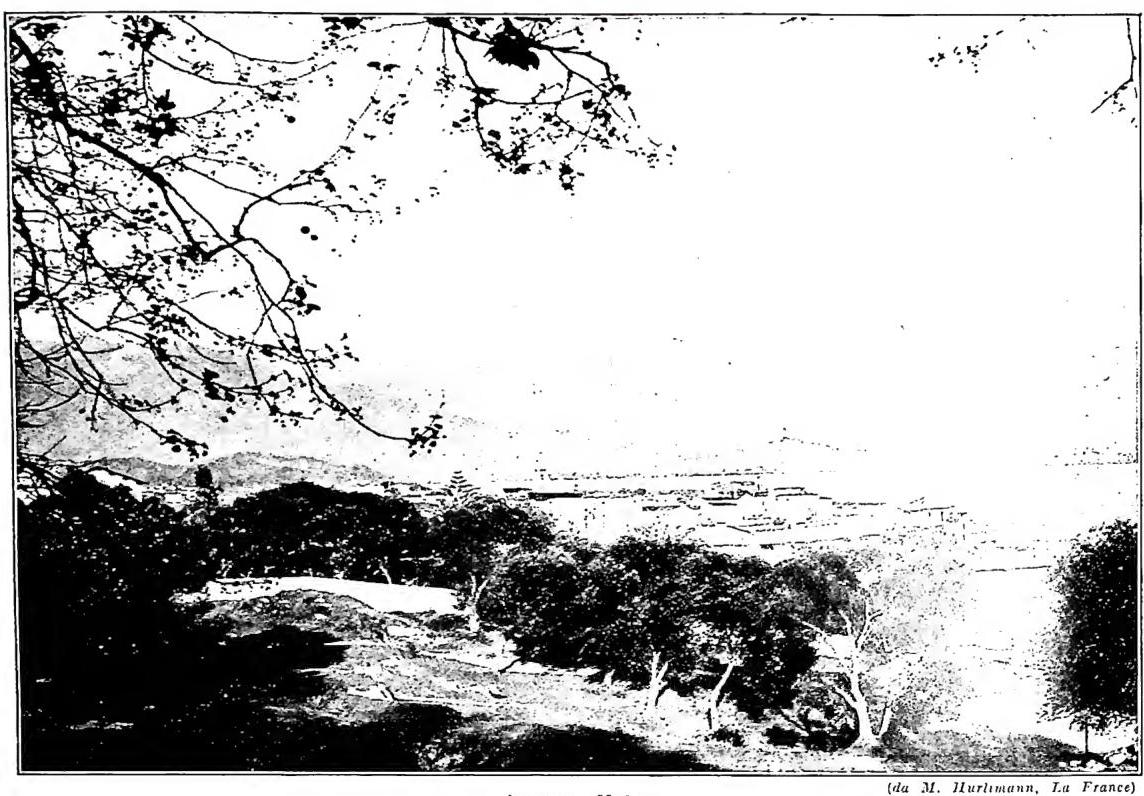
(from M. Hartmann, La France)