
BRATISLAVA (PRESSBURG, POZSONY). — Capital of Slovakia, on the Danube, at the foot of the Carpathians.
It was a Roman encampment; then, in the 9th century, a castle of Great Moravia, and subsequently part of Hungary. In 1095, the first mention is found of the provostship of B., with almost episcopal jurisdiction over part of the archdiocese of Esztergom.
B. flourished especially in the 16th–18th centuries. From 1536 to 1791, the kings of Hungary were crowned there. The castle on the Danube was an imperial residence until 1780; at that time Joseph
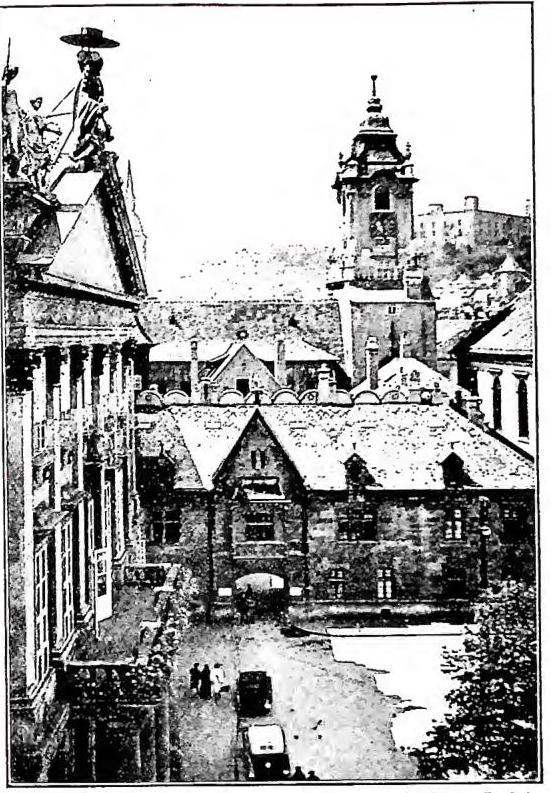
The principal monuments are: the royal castle (in ruins), the collegiate church of St Martin (1350-1452), where the archbishops of Strigonia crowned the kings of Hungary; there is the tomb of St John the Almsgiver (v.); the Franciscan church (1297), the former Gothic church of the Poor Clares (15th century), the church of the Most Holy Trinity (1717-1725), with a perspective dome by A. Galli Bibbiena (1736), and the former palace of the primate of Hungary (1781, now the Municipal Palace).
In 1948 there were: 132,000 Catholics; 25,000 Protestants, 8,000 Jews, 8,000 adherents of other religions; 25 Catholic churches and 11 parishes. Although it is the capital, it has no residential bishop. Until 1922 it belonged to Strigonia; it now depends on Tirnava. The ancient provostship has a Chapter of 12 canons, one of whom is auxiliary bishop of Tirnava. Since 1936 it has had the major seminary and the faculty of theology, a central office of Slovak Catholic Action (UKK—now suppressed), a university college, “Svoradov,” for 400 students, a stronghold of Slovak Catholicism (now confiscated), the central “Caritas” institute, etc. The mother house of the Daughters of the Most Holy Saviour is located there, together with 11 male and 20 female religious houses.
In the vicinity of the city stand the ruins of Devin Castle, one of the probable sites of the centre of Great Moravia and of the burial of St Methodius (v. CIRILLO (COSTANTINO) E METODIO, SANTI). Nearby is the Marian shrine of Marianka, with the former monastery of the Pauline monks (1377), now belonging to the Consolers of the Sacred Heart. It is a destination for pilgrimages.