
BENEDETTO XIII, POPE. – Pierfrancesco Orsini, born in Gravina on 2 February 1649 to Ferdinando, duke of Gravina, and Giovanna Frangipane. As a young man he renounced his birthright in order to enter the Dominican convent in Venice, where he made his solemn profession on 13 February 1668 under the name Vincenzo Maria. He devoted himself to sacred studies with great success, and at only 23 years of age Clement X created him cardinal of S. Sisto (22 February 1672). In 1675 he was given the archiepiscopal see of Manfredonia. Innocent XI transferred him to Cesena (1680) and then to Benevento (1686), where the cardinal worked to restore the diocese to flourishing condition. His election as pope followed on 29 May 1724, after the papal see had been vacant for almost three months following the death of Innocent XIII (7 March). He accepted because the master general of his Order imposed it upon him in obedience.
During his pontificate, B., while conscientiously attending to the duties of his high office, did not neglect to perform those liturgical functions and administer those Sacraments that are ordinarily carried out by ecclesiastics of a much lower rank. In 1725 he celebrated the jubilee and held a provincial synod in eight sessions for the bishops of Italy, at the Lateran. He then confirmed Clement XI’s bull Unigenitus against the Jansenists and proscribed the writings disseminated against that bull. The archbishop of Paris, Cardinal de Noailles, finally adhered to the bull in a letter of 1728, retracting what he had written against it, and following his example other bishops from the group of appellants submitted. In 1729 the Sorbonne, and in 1730 the Senate of Paris, accepted the bull Unige-
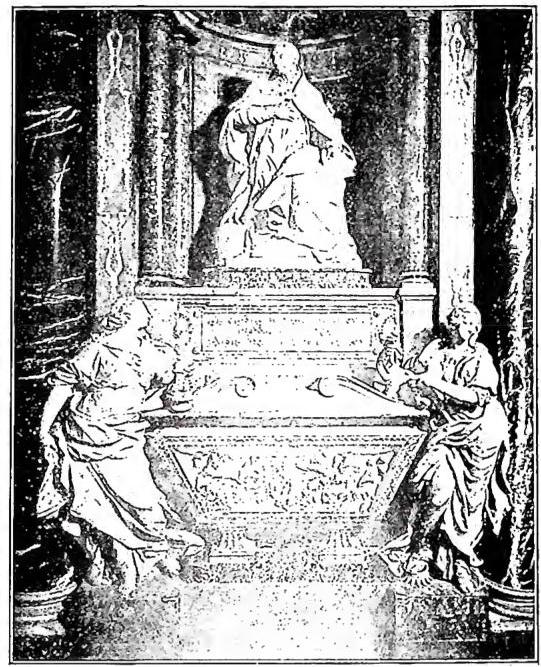
In the question, debated by theologians and canonists, concerning the validity of priestly ordinations performed in the Anglican Church, B. intervened by condemning Le Courayer’s Défense de la Dissertation, which sought to demonstrate the validity of those ordinations. Numerous canonizations took place in the years 1726–29, among them those of Giovanni Nepomuceno, Luigi Gonzaga, Stanislao Kostka, and Giovanni della Croce. With the bull Creditae nobis coelitus (9 May 1725), B. ordered the bishops to establish seminaries and for this purpose created a commission called Congregatio seminariorum. In 1727 he approved the establishment of the university at Camerino, where a center of learning had long flourished. He visited his former diocese of Benevento twice, and in 1727 stayed at Montecassino, where he consecrated (18 May) the church whose construction had been begun in 1640. He made a total of 29 promotions to the cardinalate, without the slightest trace of favoritism. The Romans, however, did not forgive him for the blind and unlimited confidence he placed, in matters of state, in Cardinal Coscia, nor for the excessive favor he showed the people of Benevento, whom he had brought with him from Benevento. His theological erudition is demonstrated by three volumes published in Ravenna in 1728. He died a holy death on 21 February 1730.
(Int. Enc. Catt.)