
GRAVINA, DIOCESI DI. - City and diocese in the province of Bari; it owes its name to the steep ravines that open on the slopes of the Murge towards the Ionian Sea.
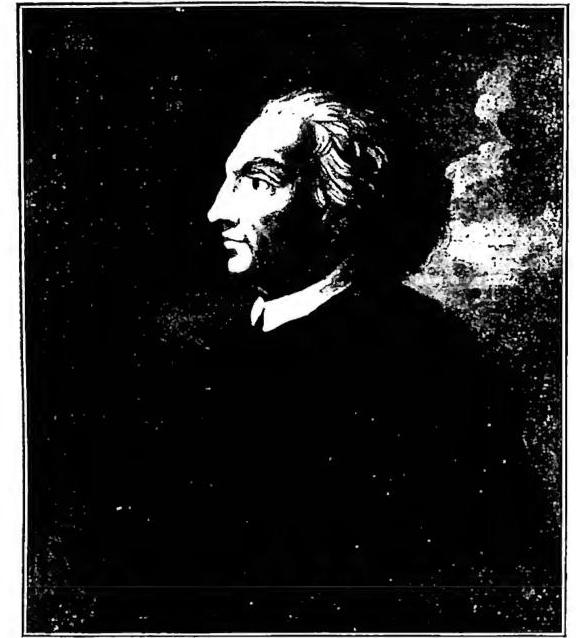
GRAVINA, GIAN VINCENZO - Ritratto - Roma, Biblioteca Angelica.
HISTORY. - A "Petrus episcopus Gavensis" participated in the consecration of Pope Hadrian II (867); therefore, if—as seems correct—he is assigned to G., he would be the first bishop of the city. He was succeeded by Leo, who intervened as apostolic delegate at the Diet of Ponthion, convened by Charles the Bald (876), and delivered a speech there. In 968 the Emperor Nicephorus Phocas, by imposing the Greek rite, granted the new metropolitan of Otranto the faculty to elect the bishops of the region and assigned to him five other suffragan cities, including G. The Greek rite remained in the Byzantine stronghold until the end of the 10th century, then slowly disappeared, and the diocese passed from Otranto to Matera (1052). Among the bishops are noted: Robert, who attended the Lateran Council of Alexander III (1179), and Giulio Sacchetti, a Florentine (1623), later cardinal. In 1818, Pius VII united the two sees of G. and Irsina. It is today immediately subject to the Holy See. The diocese has an area of 660 sq. km. with 36,000 inhabitants, and has 10 parishes, 33 diocesan priests and 4 regular priests.
MONUMENTS. - The Cathedral was founded in 1092 by the Norman Humphrey, but of the medieval construction only a rose window and the incomplete facade remain. The present church, dedicated to the Most Holy Mary of the Assumption, dates from the 15th century; noteworthy are the wooden choir (1579) and a sacristy cupboard (1561). Characteristic are the caves that dot the slopes of a rugged ravine, the principal ones being: the crypt of S. Michele, a five-aisled rock-cut church with quadrilateral pillars; the cripta Tota; and the crypt of the Redentore or of S. Vito Vecchio, containing a large Christ enthroned with four angels (approx. 14th cent.). Also notable are the Romanic cloister of S. Sebastiano with cruciform pillars, the church of S. Francesco, a Renaissance work, and the church of S. Sofia.