
LANCIANO, ARCIDIOCESI di - City and archdiocese in the province of Chieti. It has an area of 26,216 sq. km., with a population of 192,344 inhabitants, of whom 190,925 are Catholics; it has 37 parishes with 121 diocesan priests and 100 regular priests, one seminary, 16 male and 33 female religious communities (1949).
It is not possible, as certain ancient historians would have it, to assign the diocese of L. (Anxanum) to the seventh century. In any event, historical sources are entirely lacking before the tenth century, when in 973 there is mention of the foundation of the Benedictine abbey of S. Giovanni in Venere (Cottineau, II, col. 2720). In 1515 L. was placed under the episcopate of Chieti; but in that same year, on 27 June, Leo X
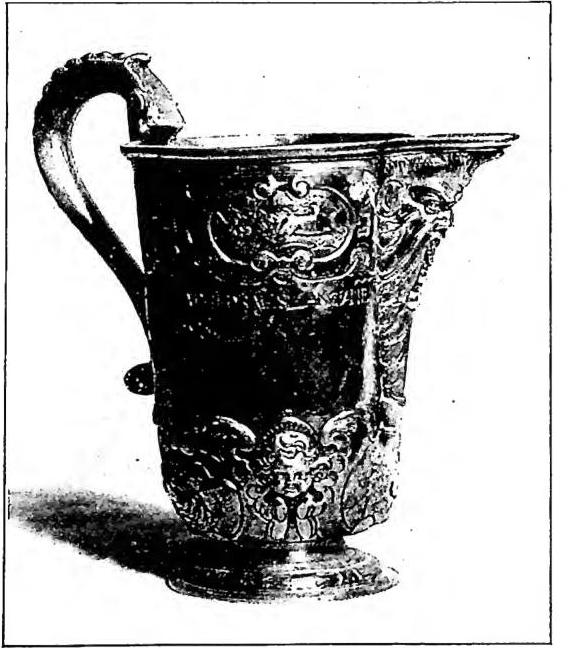
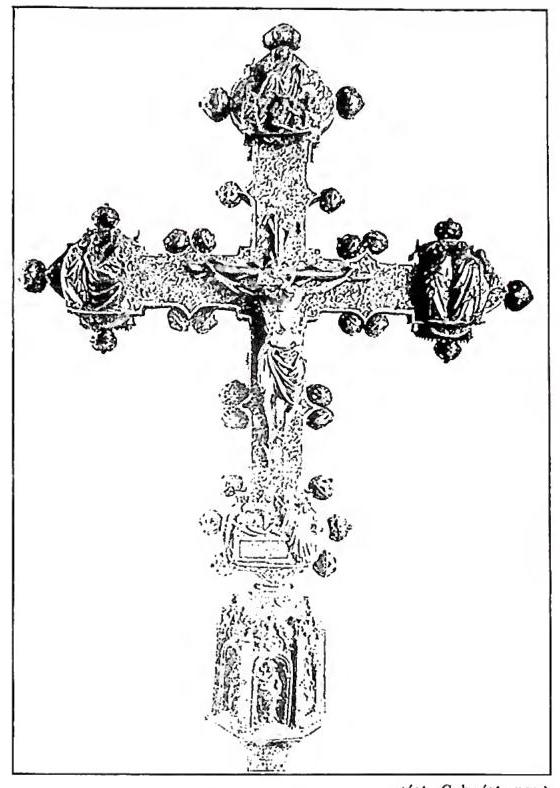
LANCIANO, ARCIDIOCESI di - Silver cross. Work of Nicola da Guardiagrele (1422) - Lanciano, church of S. Maria Maggiore.
(fot. Gab. fot. nec.)
The Cathedral is dedicated to Maria S.ma Assunta in cielo. Since 1834 the archbishop of L. has been appointed perpetual administrator of Ortona, united to L. since 24 November 1945.
Monuments. - Gothic architecture has left a broad imprint on the churches of L. The Cathedral, begun in 1389, preserves almost nothing of the ancient structure beneath the neoclassical forms it acquired during the restorations of 1785–88; its façade is unfinished, its bell tower Baroque, and its interior neoclassical, with a single nave. The church of S. Maria Maggiore (1227), on the other hand, is more intact despite the alterations of the fourteenth and sixteenth centuries. The finest part is the façade, with its two portals surmounted by rose windows, the left one of which is particularly valuable (the work of F. Perrini, dating from 1317), on account of the deeply relief-carved archivolt within a triangular pediment and the sculptures of excellent workmanship. Two of the three interior naves retain traces of the ancient structure, divided by sturdy pillars. The church preserves a silver cross chased and enameled by Nicola da Guardiagrele in 1422. Other Romanesque-Gothic features are preserved by the churches of S. Francesco and S. Lucia (the portals), S. Nicola di Bari (fifteenth century and a late Romanesque bell tower), and those of S. Biagio (twelfth century), with its rough Romanesque forms and crenellated bell tower, and S. Agostino, which, in addition to portals and a rose window in Gothic forms of Apulian character, houses three exceptionally precious fifteenth-century reliquaries. Finally, near L., there is the very ancient abbey of S. Giovanni in Venere, established together with the celebrated and extremely rich Benedictine monastery (now destroyed) in 973; its abbots enjoyed the favor of the popes and emperors before the fatal decline began in the fourteenth century. Today the church, in its Romanesque form, lives on only through its memories.