
CARMELITANI. - Religious order that takes its name from Mount Carmel, in Palestine, where in the 12th century the existence of a core of ascetics is historically attested, Vercelli (v.), Latin patriarch of Jerusalem, in
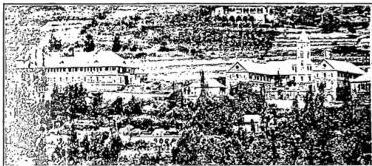
I. C. OF THE ANCIENT OBSERVANCE. - The rule was approved by Honorius III in 1226, and, with some mitigations especially concerning abstinence from meat, by Innocent IV in 1248. Further mitigations were granted by Pius II, Eugene IV, and Sixtus IV.
A pious tradition traces the origin of the Order to the prophet Elijah, whose mission was continued by his disciple Elisha and the "sons of the prophets" until the advent of Christianity, which they are said to have embraced, becoming also cooperators in the evangelical preaching and cultivating on Carmel the most select forms of asceticism along with the cult of the Virgin Mother, for whom they allegedly built a temple near the fountain of Elijah. They lived a hermit life in various groupings or "laurae," and suffered severely from the Persian invasion in the 7th century and the subsequent Muslim conquest. Their institute survived on Carmel due to the Muslims' veneration for the prophet Elijah, and during the time of the Crusades it gained momentum through the influx of Western pilgrims and knights. This Carmelite tradition was strongly contested in the 17th century by the Bollandist Fr. Papebroch (Acta SS. Aprilis, II, Antwerp 1668, pp. 764-99). It should be noted, however, that subsequent studies have helped to accredit it at least in its broad outlines, enriching the polemical literature of the 17th century, in which the Jesuit Fr. Raynaud was also a defender of the Carmelites. There are even those who have attempted a full vindication of the tradition itself (Fr. Fiorenzo del Bambin Gesù: Il monte Carmelo, Cremona 1930). The most recent criticism (B. Zimmermann, G. Wessels, B. Xiberis) has studied the problem by adopting a realistic criterion regarding the indisputable Elian consciousness of the Order, namely that of a moral fatherhood of the prophet, insofar as the religious, living on the mountain that was the theater of his lofty spirituality, shaped their lives after his example.
Following the approval of Honorius III in 1226, the Order spread along the Mediterranean and into the interior of Syria; but it did not have a tranquil existence due to frequent
conflicts between Christians and Muslims, who, after their victory, attacked Carmel and killed the religious. Palestine was then definitively abandoned; indeed, as early as the beginning of the 13th century we find the Carmelites in various European countries. In 1240 the first General Chapter of the West was held at Aylesford, resulting in the election of Alan the Breton as prior. In 1245 he was succeeded by St. Simon Stock (v.), to whom is owed the foundation of convents in the major university centers: Cambridge, Oxford, Bologna, Paris. Contemplative life was enriched by the initiatives of the active one; but this displeased those who saw the hermit spirit decaying in urban foundations. This attitude would persist for a few more centuries, giving rise to various reforms, such as the Mantuan (15th cent.), the Touraine (17th cent.), that of Santa Maria della Scala (18th cent.), and other minor ones: so many hotbeds of sanctity, upon which the reform of St. Teresa of Jesus (v.) firmly asserted itself, aided by St. Cross (v.) and established in 1593 as an autonomous Order (v. below: C. Scalzi).
In their studies, the Carmelites found the great schools already established, whose most prominent representatives they followed: Henry of Ghent at Oxford, Godfrey of Fontaines at Paris. Achieving great fame were Gerard of Bologna (1317), Sibert de Beka (1332), Guido Terterna (1342), John Baconthorp (1346), Michael of Bologna (1416). Celebrated controversists were John Cunningham and Thomas Netter (Waldensis) against the Wycliffites; Everard Billich, Andreas Stoss, Paul Helias, Lawrence Laureto against the Protestants. In the 17th century Paolo Foscarini defended the orthodoxy of Galileo; in the 18th century Elia Astorino, apologist and scholar, stood out; in the 19th century Agostino Molin, Fr. Perricone, Fr. Mazzetti. Illustrious saints were Angelo of Licata (13th cent.), Albert of Sicily (14th cent.), Andrew Corsini (14th cent.), Bl. Agostino Mazzinghi (15th cent.), Bl. John Soreth (15th cent.), St. Mary Magdalene de' Pazzi. The large number of religious who died in the odor of sanctity, among whom Michael of St. Augustine, John of St. Samson, Angelo de Paolis, Girolamo Terzo, Andrea Statella, testify to the mystical fervor of the Order, which suffered severe damage during the time of the Protestant Reformation. The religious provinces of Bohemia, Saxony, Dacia, Ireland, and Scotland were devastated; in England, under Henry VIII, 50 convents were suppressed and 1,500 religious tortured, dispersed, or killed; there were very many martyrs to Calvinist fury in France and to the Red terror in Spain in 1936. On the other
hand, Italy was enriched during that period by 40 convents. The priors general Andeth and De Rossi participated in the works of the Council of Trent along with a good number of talented theologians. Presently (1949) the Order counts 2,734 religious. Reorganization has successfully resumed over the past fifty years, with very encouraging results. The nuns, or Second Order, instituted under Nicholas V, soon experienced a great increase and today number about a thousand. The Third Order was instituted under St. Simon Stock, and has many affiliates.
It has also assumed a regular form with female institutes of active life: 2 in Spain, 3 in Italy, 2 in North America. A characteristic devotion is that of the scapular, which is said to have been given to St. Simon Stock by the Virgin as a sign of her special protection for those who would wear II. The feast of Mount Carmel is celebrated everywhere with popular festivities in a beneficent climate of joy, like that of the "Madonna de noantri" in Rome (Trastevere) and that of Naples with the phantasmagoric "fire" of the classic bell tower. In the liturgy, the Carmelites follow the rite of the Holy Sepulchre, and their most ancient ceremonial is the Ordinal of Sibert de Beka.
The first convent was opened at Duruelo in 1568, a second at Pastrana (1569). From them the reform spread in a short time throughout Spain, so that at the death of s. Teresa (1582) there were 17 monasteries of reformed nuns and 15 convents of friars (called Fratres primitivae observantiae, and later Fratres Discalceati), all placed under the jurisdiction of the general of the Carmelite Order, but forming (since 1580) a province of their own. As the number of convents increased, in 1593 they obtained complete autonomy with the right to elect their own general.
Some of these religious having later moved to Italy, and founded the first convents in Genoa (1584) and Rome (1597), they were by apostolic authority, on Nov. 13, 1600, separated from the Spanish branch and constituted into their own Congregation, called the Congregation of Italy, or of S. Elia, with a general and proper constitutions. Meanwhile
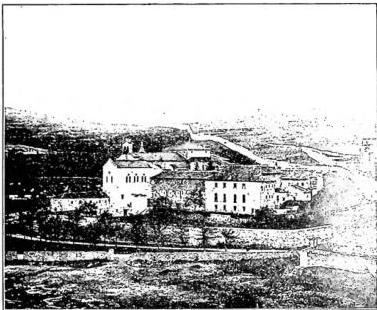
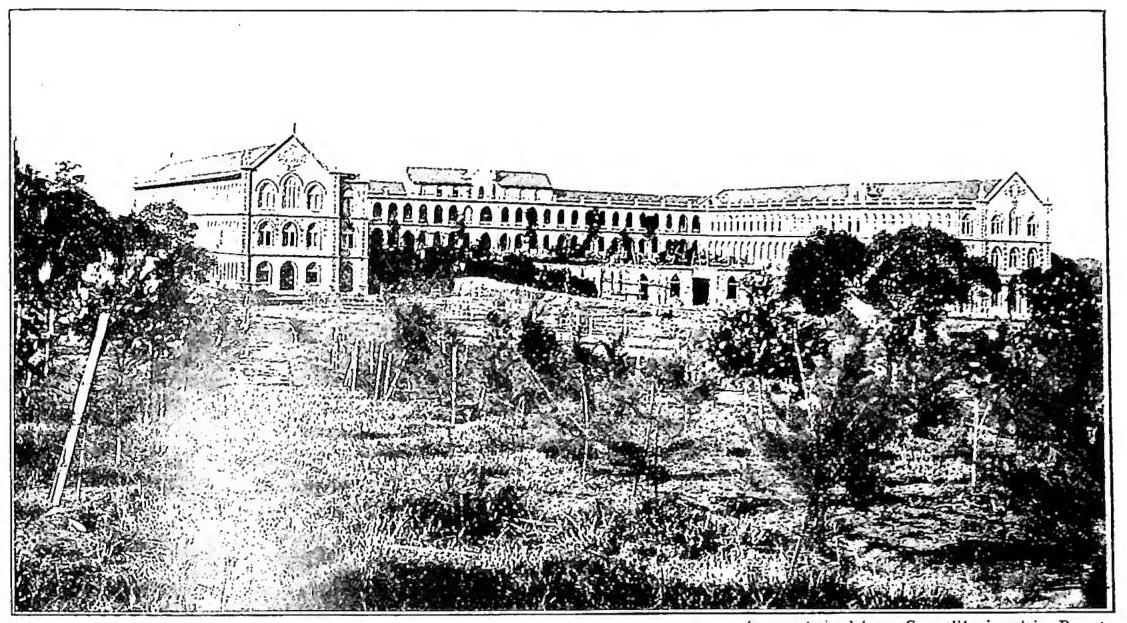
Almost from the beginning, the Italian Congregation had missionaries in Persia (since 1608), in India: in the Great Mogul and Sinde (1619) and in Malabar (1663), in Mesopotamia (1623), in Syria (1627), in England (1614), in Holland (1648), in the Morea (1685), and in China (1720).
During the great storm that dispersed all religious Orders at the time of the French Revolution and the Napoleonic wars, first all the convents of the Italian Congregation were suppressed, and then, in 1835, those of the Spanish Congregation as well. The latter revived, and in 1875 it was united with the restored Italian Congregation, so that since that time there has existed only a single Order of Discalced C., which currently counts 23 provinces and 4 quasi-provinces with 295 friaries and ca. 3,000 religious; 640 convents of nuns with 13,000 sisters. The Discalced C. currently have missions in Syria, Iraq, the East Indies, and South America: over 100 priests, about fifty lay brothers, and a large number of Discalced Carmelite tertiaries work there.
The Order of Discalced C. observes the same rule of St. Albert, but without the mitigations introduced by Pope Eugene IV (1432), with its own constitutions: those of the Congregation of Spain were drawn up in 1593, those of the Congregation of Italy in 1599. The current ones, common to the entire Order, are those of Italy, approved by the Holy See on Jan. 10, 1928. The spirit of the Order is predominantly contemplative; nonetheless, the Discalced C. also dedicate themselves to the works of the sacred ministry. Their rite is that of the Roman Church.
The sanctity of the reformed Carmel, both of the male and female branches, is manifested in its saints and blesseds, such as: St. Teresa of Jesus (v.), St. Cross (v.), St. Teresa Margaret Sacred Heart of Jesus (v.), St. Teresa of the Child Jesus (v.), and BB. martyrs Denis of the Cross (v.), Bl. Anna of St. Bartholomew (v.), BB. 16 Compiègne (v.), Bl. Mary of the Incarnation, Bl. Mary of the Angels (v.), and numerous others whose cause for beatification is under discussion or who died in the odor of sanctity.
The Discalced C. have also made a strong contribution to the sciences with works of high value. In philosophy, the authors of the famous Cursus Complutensis emerge above all, that is, of the philosophical college of Alcalá de Henares, which is followed by an even grander one, the Cursus Theologicus Salmanticensis in 12 folio vols., whose authors, Discalced C. of the theological college of Salamanca, are the most faithful commentators on St. Thomas Aquinas. Besides this celebrated course, the fathers of the college of Salamanca also published a Cursus Theologiae Moralis, esteemed by experts. Among the philosophers and theologians of the reformed Carmel, the following are worthy of special mention: Alexius of St. Aquilinus, Eisentraut, scripture scholar (1732-85); Anthony of the Mother of God, theologian (d. 1641); Anthony of the Holy Spirit, Carraca, theologian and bishop (1618-74); Blaise of the Conception, Riguet, philosopher (1603-94); Cassian of St. Elijah, Pallavicini, theologian (1629-1714); Dominic of the Most Holy Trinity, Tardy, theologian (1616-1687); Frederick of Jesus, Schellhorn, theologian (1721-88); Philip of the Most Holy Trinity, Julien, philosopher, theologian, and mystic (1603-71); Gabriel of St. Vincent, Beonio, theologian (1609-71); John of the Annunciation, Llanes-Campomanes, theologian and philosopher (1633-1701); Hilary of St. Anastasius, Vochet, polemicist (1589-1656), and the other famous polemicist Liberius of Jesus (1646-1719); Honoratus of St. Mary, Vauzelle, scripture scholar and critic (1651-1729); Paul of the Conception, Ximénez Navarro, theologian (1666-1734); Thaddeus of St. Adam, Dereser, scripture scholar (1757-1827). Furthermore, among the missionaries of the Order there are several who occupy a non-negligible place among orientalists with their grammars and dictionaries of various oriental languages, such as Fr. Clement of Jesus, Peano (1731-82); Celestine of St. Lidvina, van Gool (1597-1676); Geminianus of St. Octavia (1702-63); Stephen of SS. Peter and Paul, Ruffi (1692-1767), as well as the famous Fr. Paulinus of St. Bartholomew, Weszdin (1748-1806), who published the first Sanskrit grammar in Europe and many other works of this kind. But more than in all this, the Discalced C. excelled in mystical theology, in which they can cite the most celebrated writers of all times: St. Teresa of Jesus and St. John of the Cross, whose immortal works are not only true jewels of Spanish national literature, but indeed the principal source of mystical doctrine. Following these two mystics are Ven. John of Jesus Mary (1564-1615), Thomas of Jesus, Sánchez Davila (1564-1627), Philip of the Most Holy Trinity (1603-71), the two Josephs of the Holy Spirit, namely the Portuguese (1609-74) and the Spanish (1667-1736), the latter author of the great Cursus theologiae mysticae, and many others.
Ambrogio di Santa Teresa