
AMORE. – Inclination to take pleasure in the good that has been chosen as suitable.
SUMMARY:
I. Concept
II. The problem of a. and its difficulties. –III. Subjectivism and pantheism
IV. Heresies: pseudo-naturalism and Pelagian naturalism
V. s. Bernardo and Riccardo di San Vittore. – VI. The doctrine of s. Tommaso.I. CONCEPT. - We distinguish sensory love and love of the will. The first, common to man and beast, proceeds from the sensory appetite or sensibility, and aims at the sensible good. The second proceeds from our spiritual will, enlightened by the intellect (rational appetite): it could be called spiritual love, were it not often disordered, as happens when it irrationally aims at sensible goods, preferring them to spiritual ones.
Sensory love is the movement of the sensory appetite, first among the passions; thus the beast is moved toward food, which it needs; from this follow desire, joy, hope, boldness, or else hatred of what is contrary, aversion, sadness, despair, fear, and anger. Cf. s. Tommaso, Sum. Theol. 1ª 2ªe, qq. 22-28.
In our will we must distinguish love of concupiscence or love of desire, by which we desire a good, from love of benevolence, by which we wish another person well. Love of concupiscence is not necessarily disordered; we are permitted to desire the bread necessary for our sustenance, subordinating it to ourselves; and we may also desire God, the supreme good, subordinating ourselves to him: Christian hope, which makes us desire to possess God eternally, although inferior to charity, is in no way disordered. Love of benevolence deserves the name of friendship (v.), when it is reciprocated and manifested by
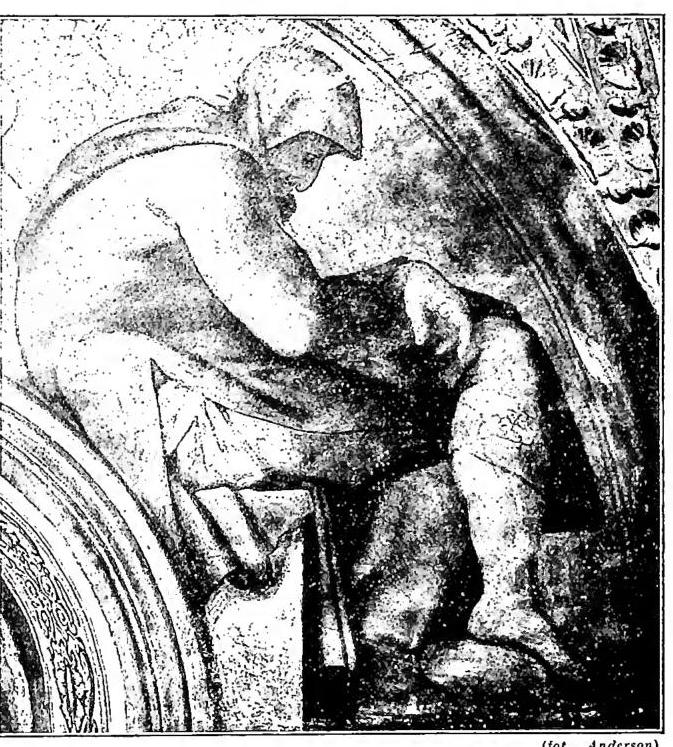
In one of his finest dialogues (Convito, 211 c), Plato says that we must rise from the love of sensible beauty to that of supreme beauty, by means of the following scale: from a single beautiful body to two, from two to all the others, from beautiful bodies to beautiful actions, to beautiful principles, and from these then to the beautiful sciences, until, from one science to another, we arrive at the science par excellence, which is the science of beauty in itself; this we shall contemplate as it is in itself, that is, subsisting eternally.
These concepts, explained by Plato and Aristotle (Eth. ad Nic., IX, 9), provide a glimpse of a major problem, namely that of disinterested love and its relationship with our primordial inclination. The study of the problem of love and of the principal solutions proposed by philosophers and theologians will help us to understand the Christian doctrine of charity (v.) that is, of disinterested love of God and of one’s neighbour.
II. THE PROBLEM OF A. AND ITS DIFFICULTIES. — This problem is formulated by St. Thomas (Sum. Theol., 2ª-2ªe, q. 26, a. 3, 2ª obiectio) in the following objection concerning our a. toward God: “Everything that is loved by us is loved as our own good; now that which is the reason for loving is loved more than the object of this love, just as the principles by which we know conclusions are known better than the latter. Thus man loves himself more than any other good loved by him, and therefore cannot come to love God more than himself.” The same difficulty is presented in another form: “Nature always returns upon itself” (1a, q. 60, a. 5, 3a obiectio). The problem of a. therefore arises as follows: is truly disinterested a. possible, and, if it is possible, what relation does it bear to a. for ourselves?
This problem is analogous to that of knowledge. After asking how the knower can reach, beyond his own impressions, realities distinct from himself (adquidi aliud a se), that which is true in itself and universally, independently of us, we seek to know how we can love what is good in itself independently of us, and how we can love others with an a. that is not subordinated to the desire for our own good. Is pure a. for others, and first of all for God, possible, and, if it is, what relation does it bear to our desire for personal happiness? The problem was thus well formulated by the Jesuit P. Rousselot, Pour l'histoire du problème de l'amour, p. 1.
III. SUBJECTIVISM AND PANTHEISM
Two diametrically opposed philosophical solutions were given to the problem defined above, both extreme: the subjectivist solution and that of pantheistic realism. Subjectivism, which denies or calls into doubt the objective value of our intelligence and therefore also of its object, that is, of the extra-mental being or of reality, likewise fails to recognize the rights of the object of the will, namely the good, and in particular the right of the supreme Good to be loved more than anything else. In antiquity, the Sophists and the skeptics represented this tendency, which is characteristic of modern subjectivists.As is obvious, it leads to utilitarianism, such as that of Stuart Mill, or at least to a certain love of human dignity, which claims to have no special obligations toward God, as though he were not the Creator of every good and the supreme Good. Kant, although maintaining that morality presupposes absolute disinterestedness and has nothing to do with the desire for happiness, which he wrongly reduces to what, together with Rousseau, he calls “sensibility,” does not rise to the idea of love of God for God’s sake, because he does not admit that man has special duties toward God. This is the worship of the human person. While formulating the principle of the autonomy of the will, Kant maintains that man must prescribe for himself the law he obeys. With subjectivism, man remains enclosed within himself and cannot go beyond respect for his own personal dignity, which aspires to prolongation in the future life.
The radically opposed and equally erroneous solution is that of absolute realism, which confuses the being of things, or the universal, with the being of God, and the universal good with the divine good, and thus leads to pantheism: everything is absorbed into God and identified with God; the proper existence of created things is denied.
Such was, in antiquity, the doctrine of Parmenides, and, in modern times, the pantheistic ontologism of Spinoza, which entails the denial of personal beatitude and is content with impersonal immortality, entirely different from that of which the Christian faith speaks. For Spinoza, intellectual love of oneself and love of God are one and the same thing; indeed, this love would be identified with the uncreated love that God has for himself. God is to be loved in us with a necessary love that excludes free will, and therefore also sin and merit (cf. Ethica, V, prop. 36). In this pantheism, reasonable love of oneself proves to be an inferior form of love of God, while love of God is a superior form of love of oneself.
In Hegelian pantheism, on the other hand, which does not absorb things into God but rather absorbs God into universal evolution, and maintains that God is coming to be in the world and in us, love of oneself, when fruitful, is likewise identified with God who is becoming; the accomplished fact is thus identified with right, and success with morality, which is always evolving.
IV. HERESIES: PSEUDONATURALISM AND PELAGIAN NATURALISM
Catholic theologians did not go so far as to accept the two solutions mentioned above, although the nominalists of the fourteenth century came quite close to subjectivist principles (cf. Denz-U., n. 553 ff.), Eckart (v.) seems to have come almost to the limits of pantheism (ibid., n. 526 ff.). But, from the theological point of view, there are two opposite errors to be avoided.If we admit that the primordial tendency of every created nature is love of its own good, this tendency will always taint our love of God with egoism; it will in fact not be sufficiently pure, nor could it become so except through the destruction, in some manner, by grace, of our nature, and through the demand for the sacrifice of our personal happiness. This theory appears in a certain affective subjectivism asserted by Fénelon (Denz-U., nn. 1328-36). In that case grace, which would, so to speak, destroy nature, would be a very harsh remedy for its deficiencies, as Baio and the Jansenists maintained (Denz-U., n. 1038). Thus one arrives at “pseudosupernaturalism.”
If, on the other hand, we admit that our nature impels us to love God in himself more than ourselves, grace does not appear absolutely indispensable in order to attain this, and one thus inclines toward Pelagian naturalism, which recalls the pantheistic confusion of our nature with that of God. Grace would then be necessary only to fulfill more easily the precepts imposed by love of God above all things and more than ourselves, an assertion that is precisely that of the Pelagians (Denz-U., nn. 105, 178 ff.).
What, then, is the primordial inclination essential to our natural will? Would it be love of our personal beatitude, or natural love of God, or at least love of truth and justice, loved in themselves more than ourselves and more than the particular perfection they bestow? The true solution to this problem, examined by the great medieval theologians and later by Bossuet and Fénelon, would contain, if we were able to formulate it adequately, the entire theology and metaphysics of love.
The solution given, in mystical form and with often metaphorical language, by St. Bernardo and Riccardo di S. Vittore is presented here, followed by an examination of that of St. Tommaso. In truth, they do not differ substantially, since the former is rather a sketch, while the latter is a definitive treatment, owing to the precise terms with which the Angelic Doctor replaces the metaphors.
V. S. BERNARDO E DI RICCARDO DI S. VITTORE. — These two great mystics, in their commentaries on the Song of Songs, the Psalms, and the Epistles of s. Paul, have described ardent love, its disinterestedness, its violence, and its holy follies, affirming that it is sufficient in itself, even without the personal joy of possessing the beloved object. Both insist especially on pointing out that the only perfect love, truly worthy of this name, is the love of friendship, by which one person loves another not for his own sake, but for the other's. Thus love of oneself becomes perfect only when one loves oneself for God, leaving oneself, so to speak, in order to go toward God.
Love of one's neighbor, and above all love of God, is such as to draw us out of ourselves; as it intensifies, it becomes violent and demands, with holy madness, the elimination of every love of self, while satisfying us more than all other things in the world, since it unites us to God. This love «wounds» the one who loves and «makes him die to himself», causing him at the same time to live for others and urging him to «go out of himself» and give himself generously. It requires interior immolation, the martyrdom of the heart, known by all the saints, as well as mystical death, of which the Gospel speaks in the parable of the grain about to germinate. Love is so strong that it brings about this blessed death by destroying everything opposed to it: « Fortis est ut mors dilectio » (s. Bernardo, De diligendo Deo, cap. 15: PL 182, 998; In Cantica Cantic., sermo LXXXIII, 4-5: PL 183, 1183; VIII, 8: ibid. 814; LXXIX: ibid. 1163).
Riccardo di S. Vittore develops this idea in his famous opuscle De quattuor gradibus violentus caritatis (PL 196, 1196 ff., 1213-15: «At the first degree of love the soul cannot resist its own desire; at the second degree it thinks of it without respite; at the third it no longer takes pleasure in anything else; at the fourth and supreme degree its desire can no longer be satisfied. In other words, at the first degree love is invincible, at the second it is torturing, at the third exclusive, at the fourth insatiable... These four degrees of love differ from one another according as the love is directed toward God or toward human affections... As regards spiritual desires, the stronger the love, the better it is. In carnal desires it becomes worse as it increases...; love then turns into hatred, because nothing can satisfy mutual passion. Hence hatred becomes implacable in proportion as love had seemed ardent... On the contrary, with regard to our feelings toward God, the fourth degree is the most praiseworthy».
According to s. Bernardo and Riccardo, ardent love draws us out of ourselves, not without violence, commits holy follies, and satisfies us more than all things in the world because it unites us to God. Neither of them asks us to sacrifice future beatitude; on the contrary, both affirm that the love which unites us to God aspires to an ever more intimate union with him.
This concept of love, however, entails a difficulty. It emphasizes the generosity and purity of the love of the great servants of God, but does not sufficiently clarify the relation between this disinterested love and love of ourselves, which seems to be an indestructible inclination of our nature. The second part of the problem of love, intimately connected with the first, therefore remains unresolved; a more penetrating study of the problem and of the primary notions it entails is necessary.
VI. DOCTRINE OF S. THOMAS. — S. Thomas, who knew the theory of s. Bernard and Richard perfectly, admits that the love of God, when intense, draws us out of ourselves, not without violence, that it performs holy follies, and that it unites us to God in this life more than any other act. He asks, however, how this union, so restful, is to be reconciled with the violence of love, if this is substantial in love for some and never accidental and transitory. In other words: how would charity procure peace and even joy, if there were no conformity, that is, harmony between it and our deepest natural inclinations and aspirations? All the more so since we must love ourselves supernaturally and desire eternal life through charity. And finally, is not our legitimate natural love of ourselves, in the primordial inclination of our nature, already subordinated to the natural love of God, creator and conserver of our being? This extremely important part of the problem, examined neither by s. Bernard nor by Richard, was explored in depth by s. Thomas (Sum. Theol., 1ᵃ, q. 60, a. 5, and 2ᵃ-2ᵃᶜ, q. 26, a. 3; q. 19, a. 6).
The Angelic Doctor establishes, without any affinity with pantheism, that every created nature, above all when endowed with intelligence and will, is naturally inclined to love God, its author, more than itself, just as in an organism any part naturally loves the whole more than itself, so that, for example, the hand spontaneously sacrifices itself in order to protect the head. Were it otherwise, our primordial natural inclination would be perverse, which is impossible, since it comes from God. S. Thomas likewise illustrates the immense distance between this natural love of God, author of nature, and the supernatural love of God, considered in his intimate life, as author of grace (1ᵃ, q. 12, a. 4, 5; q. 62, a. 2; 1ᵃ-2ᵃᶜ, q. 5, a. 5; q. 62, a. 1; q. 109). In this way he rises above both Pelagian or semi-Pelagian naturalism and « pseudosuprnaturalism ».
This is the principle of a doctrine of love founded not only on the distinction between persons who love one another, and on the necessity of overcoming egoism, but also on our very nature, which has God as its author. Therefore s. Thomas does not disregard our natural inclinations in the problem of the order of charity; on the contrary, he demonstrates that this supernatural virtue perfects them by raising them to a higher order. It is therefore love (v.) must sacrifice the desire for our personal beatitude, because this desire, as it exists in the essence of the primordial inclination of our nature, is not disordered, but is initially subordinated to the love of God. This natural desire must be purified of everything that contaminates it, beginning with original sin, and then sublimated, but never destroyed. The sacrifice of our beatitude would, moreover, be contrary even to the nature of charity, which unites us with God and desires to persevere in this union for God himself.
The principle, therefore, on which the solution to the problem of love is based is the following: by our nature we are inclined to love God more than ourselves, the creator and conserver of our being. This inclination is weakened by original sin and by personal sins, but it subsists as our nature.
It follows that, while man rightly loves the higher part of himself, at the same time he loves his Creator even more; hence, if he ceased to desire his own perfection, he would thereby distance himself from God. Whereas material goods, which cannot belong simultaneously to several persons, divide them, spiritual goods, on the other hand, which can belong simultaneously to all, are an element of union; therefore men must unite in the love of truth, of justice, and of God.
The solution of s. Thomas is therefore the following: disinterested love is possible, indeed profoundly natural, since our nature leads us to love God more than ourselves. It is necessary, however, to admit the impossibility of a love that would make us leave ourselves completely and that would not be compatible with the primordial inclination of our nature toward the good, that is, toward our own good, subordinated to the supreme Good, loved in itself more than all other goods.
Our nature leads us to love God, not by subordinating him to ourselves, but rather by subordinating ourselves to him. One cannot rightly love oneself without loving God still more, with a pure and disinterested love. On the other hand, one cannot love God without loving oneself in him (2ᵃ-2ᵃᶜ, q. 19, a. 6). Grace and infused charity perfect and elevate this natural inclination of the will, but do not destroy it, just as grafting does not destroy the vitality of the tree upon which it is performed (v. CARITÀ).
François de Sales, Lione 1941. - E. Gilson and H. D. Simonin rightly judge that there is less difference than Fr. Rousselot asserted between the concept of love proposed by s. Bernard and that of s. Thomas, which has remained classical in theology. Reginaldo Garrigou-Lagrange