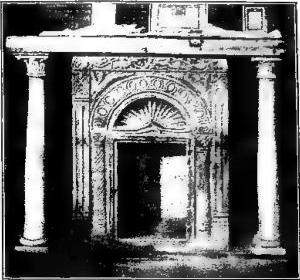
FÉNELON, FRANÇOIS de SALIGNAC de la MOTHE. — Writer, born of a noble family on 6 August 1651 in the château of Fénelon (Périgord), died on 7 January 1715 at Cambrai. He began his studies at the University of Cahors, completing them at the Sorbonne and in the Seminary of S. Sulpice. Ordained a priest in 1674 or 1675, he remained for several years at S. Sulpice, exercising the ministry in that parish. In 1678 he became superior of an educational institution for Protestant girls converted to Catholicism; after the revocation of the Edict of Nantes, he was among the most fervent collaborators in the “missions” aimed at converting Protestants. In both positions he displayed a tact and a gentle understanding that were the direct methodological legacy of s. Francesco di Sales. Preceptor to the Duke of Burgundy, F., a proud scion of an aristocratic tradition, ultimately found himself ill at ease in the monarchic environment (the opposition of Louis XIV was by no means the least among the causes of the condemnation of his “quietism”). In 1693 he delivered his address upon admission to the Académie française. In 1695 he was appointed archbishop of Cambrai.
He is among the greatest religious writers of seventeenth-century France, on account of his restless investigation of the human soul, his subtle and refined longing for the “pure love” of God, and his exquisite and highly refined amiability. His first literary work, Dialogues sur l’éloquence (1679, published posthumously), already delineates his character as a friend of truth understood as an intimate conviction of mind and heart. The first short work of great importance in the history of Catholic pedagogy, which gave him particular renown, was the Traité de l’éducation des filles (1687), in which an educational method founded on kindness and serenity is outlined: one must not instill in young and childish minds “vaines craintes des fantômes et des esprits”, but instead always seek to outline “une idée agréable du bien et une idée affreuse du mal”. Nature is not to be trampled upon but helped. Authority can perfectly well coexist with a wise freedom.
F. occupies an important place in the history of seventeenth-century political thought on account of Les aventures de Télémaque (composed around 1693–94 but published without his knowledge in 1699, a somewhat prolix novel sustained, however, by an enchanting and magical style), of the Examen de conscience sur les devoirs de la royauté, and of other minor writings. In them F. shows himself to be both anti-contractualist and anti-absolutist (demands arising not only from his concept of Christian “libertas”, but also from the anti-monarchical spirit of the noble class to which he belonged). Against kings who think only of making themselves feared, kings who are “les fléaux du genre humain”, F. outlines the profile of the ideal king, committed to natural goodness and reason (it should be remembered that in the Télémaque he is dealing with a fictitious mythological world); the king who succeeds in having justice exercised in favor of the poor against the rich. Happy, F. exclaims, is the people led by a wise king, but even happier is the king who finds happiness in his own virtue: “il tient les hommes par un lien cent fois plus fort que celui de la crainte: c’est celui de l’amour”; he is not merely obeyed, but loved in obedience: “il règne dans les cœurs”. On the international plane, F. advocates the utmost respect for the community of foreign nations: a particular right of succession or donation, he says, must yield to the natural law of the security of nations; everything that destroys the balance cannot be just, even if it is founded upon the written laws of a particular country, precisely because the written laws of one people cannot prevail over the natural law of the freedom and common security impressed upon the hearts of all other peoples.
F. attained a prominent position in the turbulent theological Europe of his time when he entered the fray to defend against Bossuet Guyon (v.). The struggle between Bossuet and F. was harsh (and Bossuet was certainly not rich in charity toward his adversary. For the various phases of this theological battle, V. QUIETISMO); the definitive word came from Rome: in the brief Cum alias of 12 March 1699, Innocent XII condemned F.’s Explication des maximes des saints (Paris 1697). The papal brief identified in F.’s work various errors, phrases that sounded objectionable, and phrases verging on heresy: man can love God with a love of pure charity, without any admixture of self-interest (with neither fear of punishments nor desire for rewards having any part in this love); man can love God, but not for the merit, nor for the perfection, nor for the joy he experiences in loving Him. In the state of holy indifference, man no longer desires salvation as his own salvation, as eternal liberation, as the reward for his merits, or as the greatest of his interests; rather, he desires salvation with full willingness as the glory and good pleasure of God, as something that God wills and that He wills us to desire for Him. This pur amour alone constitutes the whole of the interior life and then becomes the sole principle of all deliberate and meritorious acts. F.’s quietism does not, however, reach the extremes of a Molinos: for F., in contemplation the soul is in complete indifference toward its own salvation, that is, without the virtue of hope; but with a subtle distinction: in its self-immersion the soul indeed loses all hope for its own destiny, but it does not lose, in its higher part—that is, in its direct and intimate acts—perfect hope (which is the disinterested desire for the divine promises). Moreover, for F., when man in the unitive stage loses every motive of fear and hope, he loses neither filial fear nor the hope of the children of God. In certain respects F. is decisively opposed to Molinos: he is in fact opposed to suppressing virtuous acts within oneself; in quietude, he further maintains, only self-interest is forgotten, whereas opposition to evil must always remain present; nor should there be any contempt for the active life. F. submitted to the condemnation, a condemnation determined not only by certain errors upheld by F. but also by various imprecisions of theological language (haste had in fact proved a poor counselor: Bossuet was preparing for publication, against Guyon’s mysticism, his Instruction sur les états d’oraison; F. anticipated him and succeeded in publishing his Explication on 1 February 1697, six weeks before Bossuet’s work appeared).
Among the minor works, though no less rich in pathos and inward light, is the Traité de l'existence et des attributs de Dieu (begun in his youth and completed in 1718); F. follows, in his proof of the existence of God, a method that might be termed ontological: ideas independent of bodies reveal the nature of the soul, which receives those that are embodied; whence comes the «incorporelle» idea of bodies themselves? It is necessary that what is thought in itself should be thought in a sort of «étant de nature corporelle»; but how can beings that have no natural relation whatsoever to my thinking being be known? It is undoubtedly necessary that a being superior to these two different natures, and containing them both within its infinity, should have joined them in my soul, and should have given it the idea of a nature wholly different from that which thinks within me. Other writings by F., always rich in a solid intellectual freedom and in a gentle yet at the same time strongly marked complexity, are the Refutation du système de Malébranche (a youthful work published only in 1820, against absolute optimism, which denied divine freedom), the Traité du ministère des pasteurs (also written in his youth, insisting on the point that Protestants do not possess an unbroken apostolic tradition), the pamphlet on the Gnosticism of Clement of Alexandria (P. Dudon, Le guastique de Clément d'Alessandre, Opuscule inédit de F., Paris 1930; in which the existence, in the ancient Church, of the esoteric doctrine of pure love is maintained), the various pastoral instructions (from 1694 to 1714: they attack, with frank persuasion, the doctrines of Jansenism, a movement that F. decisively opposed, employing in practice means that were not always entirely fair. A theological aspect on which F. insists in his theoretical polemic is that of the identity between the Jansenist efficacious grace in itself and Calvinist necessitating grace), the Lettres sur l'autorité de l'Église, Lettres sur la religion, Dialogues des morts, as well as the Lettre sur les occupations de l'Académie (1714), a lucid manifesto of a free literary taste, one rich in clarity, order, and simplicity, rather than in ornaments that enervate the truth. An orator endowed with «douce insinuation», he left among his most moving works the Sermon pour la fête de l'Épiphanie (6 January 1685; splendid for its mystical inspiration: «l'homme s'agite, mais Dieu le mène») and the Discours prononcé au sacre de l'électeur de Cologne (1 May 1707).
F.’s influence has been immense. First of all in the Catholic sphere, because of his pedagogy, his political thought, his opposition to rigorism, his opposition to Jansenism, and ultimately also because of his mystical doctrines, which, wherever they are not heterodox, have been received as a healthy reaction against the «pente excessive à raisonner», which (as F. declared to the Duke of Chevreuse) is «un obstacle à ce recueillement et à ce silence où Dieu se communique». Moreover, outside the Catholic sphere, his opposition to Jansenism was welcomed by the libertines, his opposition to religious formalism by the creators of the myth of natural religion, his opposition to absolutism by the forerunners of democratic thought, his pedagogy by all post-Enlightenment educational thought, and above all his quietism by the mythology of a religion without hells and paradises, which, through his disciple Ramsay, passed into philanthropic-Masonic humanitarianism (Ramsay’s Histoire de la vie et des ouvrages de M. F. de S. de la M. F., Amsterdam 1727, is fundamental). F.’s quietism also left an immense legacy to Romantic mysticism: indeed, it may be said that the history of Romantic mysticism runs parallel to, and almost always coincides with, the fortunes of F. and Madame Guyon. - Vedi tav. LXXV.