
MOLINOS, MIGUEL de. - Quietist, born at Muniesa (Spain) on June 29, 1628, died in Rome on
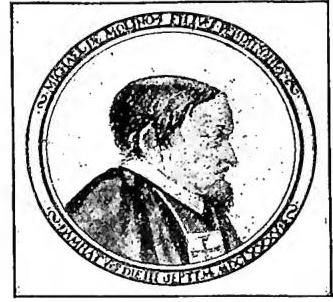
(from Piero Maciattelli, Studi senesi, Siena 1931, plate between pp. 282 and 283) MOLINOS, MIGUEL de - Portrait of M. M., watercolor drawing by Lodovico Sergardi (1687) - Siena, Palazzo Sergardi.
The condemned mystical theories of M. represent the most precise and conscious formulation of the Quietist movement (v. QUIETISMO): the nuances of his mysticism are extremely subtle, the expressions belong to the most exquisite and evanescent literary psychology: this explains the infatuation for M. that existed in Rome before his imprisonment, but whoever looks beneath a superficial reading finds a lucid and sharp theological substructure. M. maintained that wishing to act actively is an offense to God and that one must instead abandon oneself to Him and remain thenceforth like a dead body; that natural activity is the enemy of Grace and prevents true perfection; that without acting the soul is annihilated, thus returning to its principle which is God, and becoming deified in such a way that God and the soul are no longer two united beings but one alone; that in contemplation every reflection is harmful even if directed toward one's own actions and one's own defects; that he who has given his free will to God must no longer care for his own perfection, nor for virtue, nor for his own holiness, nor for his own salvation, and must not worry about temptations; he must make no act of resistance to them other than a negative one, and if nature moves, it should be allowed to move because it is nature (sometimes carnal acts are committed directly by the demon without consent); that in acquired contemplation one can no longer commit sins.
The condemnation by the Holy Office also focused on the practical life of M.; it is not given to know to what extent and how much he was stained, with the justification of contemplation, by carnal offenses; contemporary testimonies accuse M. of various depravities. As for the importance of M. in the framework of the history of Italian Quietism, one must proceed with caution: the M. affair was certainly the most sensational, but it was neither the only nor the first one, because Quietism in Italy was already flourishing before the arrival of M.