
ORATORIA SACRA. - It is the oral presentation of Christian truths, made by those who have the authority, to call listeners to the faith or to the practice of the moral law.
I. OBJECT OF S[ACRED] O[RATORY]
It is indicated by Christ Himself: "Praedicate Evangelium..." (Mk. 16, 15): "Docentes eos servare omnia quaecumque man-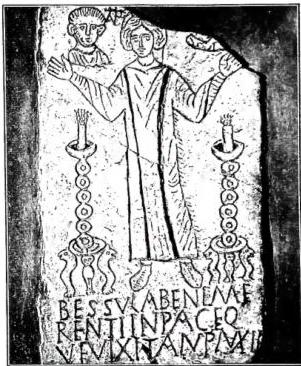
The propagation and preservation of the Gospel is entrusted essentially to the living, spoken word, rather than to the written word or anything else. Christ left nothing in writing; the Apostles considered preaching their particular task (cf. Act. 6, 2) as an indispensable means of apostolate: "Fides ex auditu" (Rom. 10, 14 seq.). What the Apostles and disciples wrote was only to supply for the living word. The ordinary matter of sacred oratory is the Creed and the Decalogue, the precepts of the Church and the Sacraments, virtues and vices, the duties proper to different classes of persons, the last things of man and other eternal truths (cf. Motu proprio Sacrorum antistitum of Leo XIII [sic, Leone XII in Italian], July 31, 1894). Accidental and as an external wrapping is the manner of presenting dogmas, of explaining them as far as possible through reasoning, of discerning their coordination, their adaptation to every age, and the increase in good that they bring to individuals and to the community. Today's oratory, in its essential content, is the very same as that of the early days of the Church; the truths of faith proclaimed in succession of time down to the present day are nothing other than an explicitation of what was already contained, but implicitly, in the earliest Creeds.
A source for oratory is Sacred Scripture, which contains par excellence the word of God, completed and authentically interpreted by divine-apostolic Tradition, and therefore to it are added the infallible decisions of the Holy See and of Ecumenical Councils, and those, although not infallible, of provincial councils and diocesan synods. A derived source is theological teaching, when it expounds not opinions
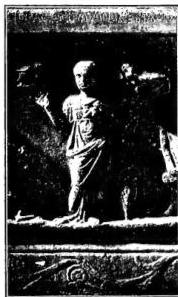
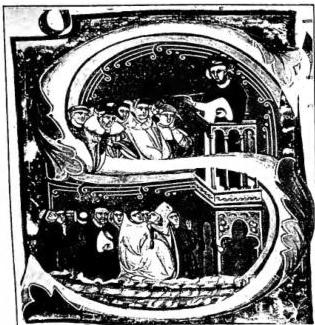
ORATORIA SACRA - Sermon of St. Thomas to an audience of laymen and ecclesiastics. Miniature from a choir book of the Bolognese school (early 14th century) - Milan, Hoepli collection.
against controversies and scholastic disputes, but rather what is unquestionable, universally certain, in short, dogmatic. It is the preacher's duty to present all this essential content of the faith in conformity with the demands of his times, thus comparing it with history and the sciences, clothing it in current eloquence, and adapting it to the contemporary mindset; sacred oratory will therefore have as secondary sources the sciences, history, and literature.
II. JURIDICAL FOUNDATIONS OF S[ACRED] O[RATORY], PREACHERS, AND LISTENERS
Christ, to whom "all power in heaven and on earth has been given" by virtue of the mission entrusted to Him by the Father, presented Himself to the world as a master of truth and entrusted the Apostles with the task of continuing His work, making them guarantors of the authenticity of His teaching: "He who hears you, hears me, and he who rejects you, rejects me; and he who rejects me, rejects him who sent me" (Luke 10:16). "Behold I am with you always, to the close of the age" (Matt. 28:18 ff.). The Apostles thus received from Christ the fullest power to preach, which they transmitted by divine right to their successors, popes and bishops, who are constituted as natural, authentic preachers, together forming the teaching Church; priests and deacons preach in their name. A priest, therefore, in order to preach, must receive a commission from his own Ordinary; outside his own diocese, from the local Ordinary; no one may arrogate this right to themselves of their own authority.There was no lack of rebels who, proclaiming themselves enlightened by a superior motion, presumed to spread doctrines in contrast with the teaching of the Church and were promptly condemned. The "pauperes de Lugduno" (Waldensians) arrogated to themselves the power to exercise the ministry of preaching without depending on the legitimate hierarchy, imitated in this in Italy by those numerous heretics who looked to Segalelli, Fra Dolcino (v.), Fraticelli (v.), etc. Wycliffe and Hus claimed that priests of good life and sufficient instruction possessed the right to preach by virtue of their priestly ordination, even against the will of the bishop and despite excommunication—a claim condemned by Martin V in 1418 (Denz-U, 643-44). Protestants admitted an equal right also for the laity, thus linking themselves to the Waldensians; and experience has shown to what confusion and excesses this path can lead.
Current legislation (CIC, tit. XX, cann. 1327-51) reiterates the principle that the office of preaching Catholic doctrine belongs principally to the Roman Pontiff for the universal Church, and to the bishops for their dioceses (can. 1327 § 1). Bishops have the duty of preaching the Gospel of themselves, unless they are hindered by a legitimate cause: furthermore, in addition to parish priests, they must also be assisted by other persons suited to fruitfully discharge this office of preaching (can. 1327 § 2).
It is lawful to exercise preaching only for those who have received an express commission from the legitimate superior, or have obtained an office to which the duty of preaching is annexed according to the sacred canons (can. 1328). For clerics of the secular clergy and for religious, this faculty is granted by the local Ordinary within the scope of his territory (can. 1337). For religious, the license of their own superior is additionally required (can. 1339 § 2).
As regards preaching to religious, to novices, to persons who for reasons of service, education, hospitality, or ill health live day and night in religious houses, if it is a question of an exempt clerical religious institute, the faculty to preach is granted in accordance with the constitutions by the competent superior, who may also call upon members of the secular clergy or of other religious institutes, provided they are approved by their Ordinary or superior (can. 1338 § 1); if it is a question of non-exempt religious, or of a lay religious institute, even if exempt, the faculty to preach is granted by the local Ordinary, to which must be added, in the case of nuns subject to regulars, the license of the regular superior; in the case of a lay institute, the assent of the superior (can. 1338 §§ 2-3). From this it appears that the local Ordinary is in himself the supreme moderator of preaching within his own territory. To avoid any exaggeration, however, the CIC recommends that the local Ordinary not deny the faculty to preach without grave reason to religious presented by their own superior, nor revoke it once granted, and especially not to withdraw it en bloc from all the religious of a house (can. 1339 § 1).
Preachers are then required to possess those intellectual and moral gifts that render their word effective; the judgment concerning such suitability belongs immediately or mediately, in every case, to the local Ordinary. Regarding intellectual gifts, suitability must be verified by an examination, which may be imposed even after the faculty has been granted for the first time, if doubts arise (can. 1340). If an extra-diocesan priest is invited to preach, the license of the local Ordinary of the place where the preaching takes place is required, and the local superiors must request it as the case may be (can. 1341). The faculty to preach may be granted only to priests, deacons, and other clerics in particular cases; not to laymen. In recent times, from Pius IX to Pius XI, there has been no pope who, either directly or through the S[acred] Consistorial Congregation, has not given detailed and precise provisions regarding preaching. The same solicitude was felt by many saints, who from the Middle Ages to the present day founded religious orders and congregations with the precise purpose of providing the Church with excellent preachers.
To the preacher, whoever he may be, canon 1347 prescribes to say "what the faithful must believe and do in order to be saved"; it also recommends avoiding profane and abstruse subjects exceeding the common capacity of the listeners, and exercising the evangelical ministry not with the persuasive words of human culture, nor in a profane and flattering display of empty and pretentious eloquence, but in the manifestation of the Spirit and of power; not to preach themselves, but Christ crucified. The S[acred] Consistorial Congregation, in the decree Regolamento circa la sacra predicazione of June 28, 1917, art. 20 prescribes: "The subjects of sermons must be essentially sacred. If a preacher wishes to treat others... which are nevertheless always fitting for the House of God, the license of the Ordinary is required. For all preachers, however, it is absolutely and entirely forbidden to treat of politics in church."
No human authority has the right to impede preaching itself, as St. Peter and St. John proclaimed before the Sanhedrin: "We cannot but speak of what we have seen and heard" (Acts 4:20); St. Paul asserts that "the word of God is not fettered" (II Tim. 2:9) and felt within himself the urgent obligation to preach: "Woe to me if I do not preach the gospel!" [Necessitas mihi incumbit] (I Cor. 9:16). There is an obligation on the part of all men to listen frequently to preachers and to put their teachings into practice, since this is a condition for eternal life (can. 1348).
III. ENDS TO BE ACHIEVED AND VARIOUS FORMS OF S. O. — From the various classes of persons to whom preaching is addressed and from the various circumstances in which preaching takes place, various forms or species of o. have arisen. Thus, bishops give their homilies on major feasts; they may give them in any church within their own territory, but they are ordinarily delivered in the cathedral. While the bishop is preaching, or attending the sermon, he may forbid preaching to take place simultaneously in other places, with the exception of large cities (can. 1343).
Thus, parish priests give the explanation of the Sunday and festal Gospel, which is also called a homily. This is a personal obligation for the parish priest: omission of the homily may be permitted only on major feasts (can. 1344). It is desirable that this explanation of the Gospel also be given at other Masses celebrated in public: the Ordinary can command it (can. 1346).
In liturgical seasons, notably during Lent and Advent, the Church desires (can. 1346) that preaching be more frequent, even daily, in order to give the people a more complete, exact, and organic vision of the truth. Thus Lenten and Advent courses came into being, some of which are justly famous. The lectures given by the canon theologian (can. 400) shall have as their subject the explanation of Sacred Scripture or, according to the bishop's desire, other dogmatic, moral, or apologetic topics. In preparation for annual or periodic occurrences, e.g., the pastoral visitation, triduums, novenas, and octaves were instituted. Particular devotions have dedicated entire months to a given cult with preaching: the month of May to Our Lady, the month of June to the Sacred Heart, the month of March to St. Joseph, and in some places the month of November for the faithful departed. In many places, slightly modifying the Clementine dispositions, the triduum of the Forty Hours was instituted with corresponding preaching. The clergy and religious must, at fixed intervals or in particular circumstances (cann. 1367 n. 4; 1001; 126; 541; 571 § 3; 595 § 1, n. 1; 465 § 3; 420 § 1, n. 7, § 2; 2313 § 1, n. 5), spiritual exercises (v.), which are mostly preached, and from this an entire genre of specialized o. has arisen. Following this example, closed retreats are also held for laypersons of both sexes, ordinarily segregated according to professions, so that the preaching may have a more precise purpose and more abundant fruits. The CIC (can. 1349) has sanctioned as obligatory, at least every ten years for each parish, an extraordinary course of preaching; these are the Missions (v. MISSIONI INTERNE), whose institution dates back to St. Vincent de Paul. Thus preaching is in a continuous effort of evolution and adaptation to the ever-new demands of the various forms of social life. The Church, ever a watchful guardian of the deposit of Revelation, monitors whether this deposit is presented accurately to the faithful; it has sanctioned at times very severe penalties (can. 1347 §§ 2-3) against heralds of the divine word who do not adhere to its prescriptions or who even spread errors and scandals.
In certain periods, and through magnificent exponents of the episcopate and the priesthood, Christian o., by its depth of thought, harmony of parts, elegance of language, and warmth of exposition, was brought to the splendor of eloquence, constituting a genre of its own in various literatures, namely s. o. Like any other, however, in this sense, it has had its parabolas and has known its periods of decline.
IV. HISTORICAL DEVELOPMENT
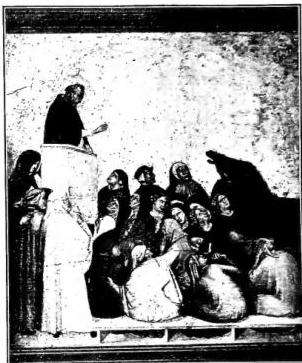
The first traces of sacred oratory properly so called can be found in the apologists (v. APOLOGETICA, LETTERATURA), but it had its most luminous manifestation in the 4th and 5th centuries when, not without the influence of pagan rhetorical schools, it reached its apogee. Already s. Atanasio (v.) in Egitto and s. Ilario di Poitiers (v.) in the West began to give illustrious examples of it; it soon achieved a broader development with s. BASILICA (v.), s. Gregorio di Nazianzo (v.), s. Gregorio Nisseno (v.) and culminated with s. IAVELLI, CRISOSTOMO (v.). In the West, oratory perhaps did not reach the formal splendor of the Greeks, although it was often equal and sometimes superior in content, with s. Ambrogio (v.) and particularly with s. Girolamo (v.) and s. Agostino (v.).The age that follows already marks a decline. There was no lack of great preachers in the East, however, from s. Cirillo d'Alessandria (v.) to s. Giovanni Damasceno and others. And in the West, s. MAGOG (v.) proved admirable for the solemnity of his eloquence and s. MAGOG (v.) for the practicality of his teaching, with a fine crown formed around them by s. Pier Crisologo, s. Massimo di Torino (v.), s. ARLES (v.), Ennodo di Pavia, and a few others. By the 6th century, sacred oratory can be said to disappear as oratory, and preaching itself rarely manifests in literature. Spagna yields s. Isidoro di Siviglia (v.) and Inghilterra s. BIEDA (v.); but thereafter, what is lacking is certainly not preachers, but almost entirely literary monuments in the realm of sacred oratory, until it rises again vigorously with Ugo di S. Vittore (d. in 1141)
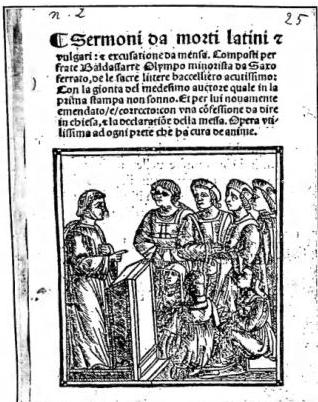
With the formation of new nationalities and the rise of new languages, what is justly called popular oratory emerges, prepared by the preaching of St. Dominic of Guzman and St. Francis of Assisi, and continued by their disciples. Of the former few fragments remain; of the latter a few "admonitions" contained in the Verba aurea S. P. Francisci are preserved. In the Franciscan school, besides St. Bonaventure of Bagnoregio, mystic and preacher, St. Anthony of Padua (v.) grew up, considered the first of the popular preachers: his Sermons, which have come down to us in Latin, must have served as preachable material for sermons in the vernacular. Also famous was Berthold of Regensburg (d. 1272), "the Bernardino of the 13th century," a popular preacher of Germany. For the Dominican school, mention must be made of St. Thomas Aquinas, who, like Bonaventure, was both theologian and preacher. In the 14th century, while there is no lack of preachers "puffed up with wind" lashed by Dante (Par., XX), there are also excellent ones: Bl. Giordano da Pisa (d. 1311) of whom about 200 sermons remain, collected by the usual "cloth shearers"; Agostino d'Ancona, successor of St. Bonaventure at the Council of Lyon, and St. Tolentino (v.), both Augustinians; the two Dominicans Domenico Cavalca and Jacopo Passavanti, of whom a Lenten collection called that of the year 1354 remains, later condensed into the Specchio di vera penitenza. Also noteworthy is the preaching of Bl. Giovanni Dominici (d. 1415), a Dominican, who composed two Lenten collections, a Trattato della s.ma Carità, and a Regola del governo di cura familiare. But perhaps the highest exponent of popular oratory was St. Bernardino of Siena ([v.] 1380-1446). Trained in his school were Bl. Alberto da Sartiano (d. 1450) and St. John of Capistrano (d. 1456), whose writings were lost; St. James of the Marches (d. 1479: Lenten collection still in manuscript); Michele Carcano (d. 1485: various Lenten collections) and Michele da Milano (d. 1480: Sermons in the vernacular). Also to be remembered are St. Lawrence Justinian, first patriarch of Venice (d. 1455: Sermons for the various solemnities of the year) and St. Antoninus, archbishop of Florence (v.). We reach the end of the 15th century with Friar Roberto da Lecce, whose Lenten collection was printed five times during his lifetime, with Bl. Bernardino of Feltre ([v.] d. 1494), and with Mariano da Genazzano, an Augustinian (d. 1498), orators greatly admired in their time. A rival of St. Vincent Ferrer (d. 1419) who preached throughout Europe during the Great Schism, SAVONAROLA, GIROLAMO (v.), a Dominican like him, who made Florence the field of his preaching.
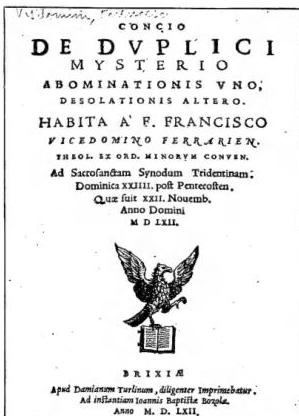
Thus we reach the 16th century, when perhaps the greatest fame in Italy TONCHINO (v.), a Capuchin, before he converted to Protestantism in 1542; but after him sacred oratory becomes affected, with rhetorical tendencies. However, there is no lack of excellent preachers such as Callisto di Piacenza, a regular canon; Franceschino Visdomini, a Franciscan from Ferrara (d. 1573), a substantial preacher at times very harsh with his audience; Gabriele Fiamma, a Venetian regular canon, a distinguished man of letters, superior to Visdomini himself in form; Cornelio Musso, of the Conventual Friars Minor of Piacenza (d. 1575), bishop of Bertinoro and Bitonto; Egidio da Viterbo, general of the Augustinians and later cardinal, much admired by his contemporaries. In the midst of the Catholic Reformation appears St. BORROMEO, EDOARDO (v.), author of 126 homilies in the vernacular, preserved to us in Latin, and of 17 sermons for nuns. He was a defender of the Franciscan preacher Alfonso Lupo, condemned for his prophetic threats which reflect the manner of Savonarola and of Francesco Girolamo Panigarola himself; the latter, a Franciscan, later bishop (1548-94), refined and relentless, proves formidable in intelligence and memory. Preserved from him are the Dichiarazioni sui Salmi, the Lamentazioni di Geremia, the Lezioni di Catechismo ai parroci, a Lenten collection, the Panegirici, and a Trattato sul modo di comporre una predica.
In the 16th century, sacred oratory in other countries also had excellent exponents. In France, the Dominican Fr. Divolé, G. Fresceau (d. 1575), Richard of Burgundy (d. 1574), J. Fourré of Mainvilliers (d. 1578), G. de Monluc, the Jesuit A. E. de Alleman (1530-91). In Spain and Portugal treatises also flourished: we may recall the Ars concionandi by A. Zorilla (1508-70), the Methodus concionandi by A. García Matamoros (1490-1572), and the famous Ars concionandi by Friar Diego of Estella. Among the great orators stand out the Franciscan Bl. Luis Sotelo of Seville, later a missionary in Japan; St. Thomas of Villanova, archbishop of Valencia (d. 1555), Dionisio Vasquez of Toledo; the Dominicans Pasquale De la Fuensanta (d. 1512), Baldassarre Sorio of Valencia (d. 1557), Alfonso de Cabrera, court preacher under Philip II and Philip III (d. 1598); the Franciscans A. Guevara (1475-1545) and A. Lopez (d. 1559). Also notable are the Jesuits G. Perpinan and Bl. Ignatius of Azevedo, killed by the Calvinist Souire with 39 other companions; the Franciscan Antonio of St. Mary, later a missionary in China; L. Bolanos, subsequently evangelizer of the Guarani savages; the Dominican Bartolomé de las Casas (1474-1566), apostle and defender of the Indians; Luis de León (1527-91), especially for his Nombre de Cristo; the Jesuits G. Lainez (d. 1562), later general of his Order, and A. Salmeron (d. 1585), preacher throughout Italy and provincial of Naples; Gracián y Morales (1601-68), author of the Criticón; Juan de Ávila, apostle of Andalusia (1500-1569), an orator with the soul of an apostle; Luis de Granada (1504-88), a Dominican, a most famous orator in his time, confessor of the Queen of Portugal, author of Il Libro della orazione e della meditazione, La guida dei peccatori; Pedro Malón de Chaide, an Augustinian (1530-89); St. John of the Cross ([v.] 1542-91), both mystic and orator with his principal works: La salita al monte Carmelo; Notte oscura dell'anima. In Germany operating
were B. Arnold of Usigen, an Augustinian, with his prophetic preaching (d. 1532); G. Faber, later bishop of Vienna, called "the mallet of the heretics"; the Dominican M. Zittardt of Aachen, also a writer (d. 1570); the Franciscan G. Wilt, preacher of the cathedral of Mainz (d. 1554); St. Peter Canisius, of Nijmegen, called by the heretics, playing on his name, "the dog of Austria" (d. 1597); Bernard of Luxembourg, author of the Sermones de Rosario (d. 1535). Of other nationalities are the preachers Matteo Bembo, a Jesuit of Poznań; C. De Snekis (d. 1531), a Dominican, who left 75 sermons on the Missus est and four on St. Joseph; A. Holstadt of Leuven (d. 1598).
In the 17th century, sacred oratory allowed itself to be dragged down by the rhetorical pursuit of an artificial and paradoxical novelty, in which genuine religious sentiment is poorly diluted. Even in the titles of the sermons the bombast and bizarrerie of the conception are revealed; those of Altogradi, A. Puccinelli, and F. A. Monforte may be recalled. A typical example of seventeenth-century oratory is the Jesuit L. Giuglaris (d. 1653); more known for his whims is the Capuchin Emanuele Orchi (d. 1649). But by now the reform of sacred oratory was imminent: its symptoms are perceived in the Capuchin G. da Nardi (d. 1631); in the Jesuits L. Fabrizi, T. Reina, G. Ro; later the Jesuits F. M. Spinola, D. Bartoli (d. 1685), and C. A. Cattaneo emerged.
Also in France, sacred oratory had fallen into delirium with the vulgarities and intemperance of the orators of the wars of religion and particularly of the League; St. Francis de Sales revived it at the beginning of the 17th century with his sacred preaching, so that it was able to offer the most luminous examples with Bossuet ([v.] 1627-1704), Bourdaloue ([v.] 1632-1704), Massillon (1663-1742) and Fénelon ([v.] 1651-1715). A second quadrumvirate in the 19th century was formed by Lacordaire ([v.] 1802-61), Félix ([v.] 1810-91), Bougaud ([v.] 1824-88), and Monsabré ([v.] 1835-1907). Around these, who are the masters of French oratory, the following deserve mention: Claude de Lingendes, a Jesuit, studied by Bourdaloue himself; St. Vincent de Paul (1576-1660), two volumes of whose Sermons are preserved; J. Lejeune (d. 1671), a priest of the Oratory; F. Bourgoing (d. 1641), praised by Bossuet; A. Godeau, member of the Académie Française; Claude Joly (d. 1678), known for his very brief discourses on the Gospel, the famous Prônes; Faure, bishop of Amiens; and Mascaron (d. 1703), accused by Louis XIV for his outspokenness. Lesser figures are L. Cellot (d. 1658), a panegyrist, and L. Chrislet of Besançon (d. 1658), known for his catechism in 16 lessons. Also to be remembered are O. Bienville (d. 1680) for his Paradiso Terrestre o Esercizi spirituali; Bl. Claude de la Colombière (d. 1682), spiritual director of Margaret Mary Alacoque. Of some value are also A. G. Limoges, the Dominican G. Fréderix of Brabant with six Lenten sermons, the Augustinian G. Cortade; the Belgian Van Hoorn of Ghent and Nicolas Stassart, both Augustinians; the Franciscan Ivo of Paris (d. 1678); Jacques Bridaine (d. 1676), who conducted 256 missions; Jean Billot (d. 1767); Charles Frey de Neville (d. 1774), a Jesuit, brilliant and lively, who fought hard against Voltaire; the abbot L. Poulle (d. 1784), member of the Academy, who preached like Fénelon from brief outlines; the abbot N. Thyrel de Boismont (d. 1786), N. S. Bergier (d. 1790), a good apologist who opposed Rousseau with Le déisme confondu par lui-même and Boulanger with the Apologie de la religion chrétienne; J.-B. De Beauvais (d. 1790), and the abbot Cambacérès (d. 1802). Worthy of consideration are the Jesuits L. A. Cuny (d. 1755), S. Parissault (d. 1753), C. G. Perrin (d. 1767), E. Griffet de Moulins, defender of the Jesuits (d. 1771); François de Ligny (d. 1788), well-received by the public for his learning and conviction in exposition; A. Lenfant of Lyon (d. 1792), preacher in Vienna by the will of Maria Theresa; F. Nonnotte (d. 1799), apologist and adversary of Voltaire. Also noteworthy are J.-J. Olier (d. 1657); Nicolas de Dijon (d. 1694), a Capuchin, considered one of the best preachers of the 17th century; P. Richard, known as the Avocat (d. 1719), preacher and theorist of preaching; V.
Contemporary French sacred oratory (1900-50) counts among its most illustrious names that of Mons. d'Hulst, successor to Monsabré on the pulpit of Notre-Dame, whose conferences, somewhat academic and too philosophical, are dictated more for scholars than for the people (6 vols. of Conférences sur la morale chrétienne sociale and various volumes of Exercices pour la Semaine Sainte); Mons. Gay (v.) bishop of Anhedon, called by d'Hulst himself an ascetic orator well tied, however, to the needs of the earth and of his time: E. Janvier, Dominican, preacher at Notre-Dame from 1903 to 1924 (Morale générale, in 8 vols., 1903-10; Morale spéciale, in 4 vols.,
1911-14; the annual volumes of Spiritual Exercises or Retreats): all his preaching revolves around the problems of God, society, and the order that constitutes II. C. Gibier, preacher in the church of Orléans between 1899 and 1911 and later bishop of Versailles, in his conferences on God, Jesus Christ, the Church, and society, demonstrates stringent logic and an interest in social problems. Conference speaker at Notre-Dame from 1924 to 1937 was the Jesuit E. Pinard de la Boullaye, whose Lenten sermons all focus on the figure of Jesus Christ, the Messiah, history, person, and heritage of Jesus. Also a Jesuit is the current preacher of Notre-Dame, Fr. Michele Riquet, who after the upheavals of the Second World War undertook the great commitment of the traditional French Conférences, framing them on the trilogy: truth, justice, charity, amidst no little assent and dissent; notable are his conferences on wealth and poverty. To this traditional French sacred oratory must be added the pastoral-social preaching done by the bishops, among whom an eminent place belongs to Card. Suhard, archbishop of Paris. Well known is the great echo awakened by his 1947 pastoral letter, Agonie de l'Église. It can indeed be affirmed that the pastoral letters themselves, read every year in all churches in preparation for Easter, mark the new orientation of sacred oratory.
While the reform of oratory was taking place in France, a similar movement began in Italy through the work of Fr. Segneri ([v.] 1624-94) and Fr. Casini ([v.] 1648-1719). During this time, under the impulse of the Society of Jesus, a new form of preaching was born according to the method of the Spiritual Exercises. Distinguishing themselves in this genre were: G. Agnelli (1621-1706) with his Parrocchiano istruttore, the Conzioni quaresimali and the Esercizi: F. Fontana (1673-1713) and especially Segneri the Younger (1673-1713), known as il Segnerino. Scriptural orators also appeared with their "scriptural lessons", such as Angelo Pancicchelli (d. 1600) and Francesco Donell (d. 1682).
In the 18th century, oratory, although not entirely free from certain 17th-century dregs, increasingly assumed the character of sacred dignity. Worthy of mention are: the Capuchin Bernardo M. Ciacco (d. 1744), of whom 33 Orazioni are preserved, not free from artifices but possessing a fervent imagination and tight dialectic, highly celebrated especially for his panegyrics: and, inferior to him, E. Mattioli of Bologna, Albani of Pesaro, Ponti of Ancona, Cagnoli, Vedova, Muti, Tutti, and Card. Orsini, dense with doctrine but devoid of oratorical impulse. Better known are the Neapolitan Jesuit Venalesti (d. 1741), rich in images and descriptions; S. Paoli of Lucca (d. 1751) of the Regular Clerics of the Mother of God, who preached at the court of Charles VI in Vienna and in his Advent and Lent discourses, entitled Discorsi sacro-politici, recalls Casini; E. Manfredi, a follower of Segneri's style; A. Bassani, almost perfect in form; Girolamo Tornielli (1693-1752), Jesuit, preacher, and Arcadian poet, endowed with a great imagination. The first half of the 18th century closes with St. Leonard of Port Maurice (1676-1751): recall should also be made of the 23 lessons of F. Incontri, archbishop of Florence. Furthermore, Bl. Antonio Baldinucci of Florence (d. 1717); G. A. Bordoni of Turin; F. Zucconi for his excellent scriptural lessons; P. Sarnelli, Umberto di Conconato, C. Calino, and Fr. De Nobili. Good are the homiletic explanations of P. L. Veggi of Piacenza (d. 1736), G. Musocco of Trento, and F. A. Boschis.
With the attacks of the Encyclopedists, Italian sacred oratory, like the French, became tinged, in many cases exaggeratedly, with apologetics and polemics in search of a point of fusion between religious and philosophical-scientific arguments. Maintaining their equilibrium are the Jesuits Q. Rossi (d. 1760), G. Granelli (d. 1770), E. Lucchesi (d. 1766), G. Trento (d. 1778), and I. Venini (d. 1778), esteemed an emulator, if not superior, of Segneri, and called the Massillon of Italy. Perhaps surpassing them is the Franciscan Pier Maria da Pederobba (d. 1785), called by Benedict XIV "the orator of orators." Also to be remembered are P. Paccioli (d. 1785) and G. B. Roberti (d. 1786), better known as writers, and St. Alphonsus Maria Liguori (1696-1787); furthermore, the Dominican polemicist A. Valsecchi (d. 1791), F. Frassen (d. 1792) of the Friars Minor Conventual, the popular and combative A. S. Vanini (d. 1795), the refined G. L. Pellegrini (d. 1799), and A. Turchi (d. 1803), Capuchin, bishop of Parma, apologist. Good expositors of Sacred Scripture were the Jesuit A. Nicolai (d. 1784), G. Lavino, and G. Marchetti; good catechists were Ildefonso da Bressanvido of the Friars Minor, considered the prince of catechists (d. 1777), and Agostino da Fusinato (d. 1803).
Sacred oratory in the 19th century was divided between classicism and romanticism. Following the example of the Frenchmen Ravignan, Frayssinet, and Lacordaire, Italian orators also engaged in polemics against rationalism, but they were often academic and, when they adhered to popular preaching, it lacked substance. Good orators, however, included the Piarist S. Canovai of Florence (d. 1811); the Carmelites V. Zanetti (d. 1812) and P. L. Grossi (d. 1812); the Franciscan P. Deani (d. 1824), a philosopher, writer, and effective orator; F. Donadoni (d. 1826), a dignified and robust orator; F. Nani of Loiano (d. 1828), known for his combative oratory; A. Cesari ([v.] d. 1828), an Oratorian priest who is considered a school leader for his Lezioni scritturistiche, but who, being a purist in language, lacks momentum and effect; he had an imitator in the Ligurian Dominican T. Buffa (d. 1837); the Veronese Conventual Franciscan F. Villardi (d. 1833), superior to Cesari himself in oratorical force; the Jesuit F. Finetti (d. 1842) from Voghera; P. Tonso, a Dominican; and the Abbott C. Defendi. The Abbott G. Barbieri (1771-1852) from Bassano del Grappa was a debated figure, an academic orator whom some considered a reformer of sacred eloquence and others a depraver of II.
The crisis of ideas in the second half of the 19th century could not fail to be reflected in sacred oratory as well, developing a whole series of apologetic, polemical, and social orators. The Sicilian Theatine G. Ventura (1792-1863) stands out for his special method, echoing the French conference style. He avoids mannerism and forensic oratorical behavior to adhere to the sacred genre, with frankness of language, good use of Sacred Scripture and the Holy Fathers, and a solid and profound exposition. Forced into exile, he went to France, where he preached from the pulpit of Notre-Dame. Notable are his discourses Sulla Ragione filosofica e ragione cattolica and those Sul Potere politico cristiano. He left Omelie and some funeral orations, such as the one for Daniel O'Connell. Along with Ventura, mention must be made of G. B. Giordano, T. Gaudenzi, Stocchi, and, above all, C. M. Curci (1809-81) for his Lezioni Scritturali. Belonging to the history of 19th-century sacred oratory are also Cardinals A. Capecelatro (d. 1912), an Oratorian, and G. Alimonda (d. 1891), E. Mauri (d. 1896), and A. Bausa (d. 1899), Dominicans; P. Schiaffino (d. 1889), an Olivetan Benedictine; Monsignor P. A. Del Corona (d. 1912), from Livorno, archbishop of Sardica; Monsignor E. Bindi (d. 1872), bishop of Pistoia and Prato; Monsignor G. Bonomelli (d. 1914), bishop of Cremona.
In contemporary oratory as well, the apologetic-social and pastoral tendencies predominate. Worthy of mention are the Jesuits A. Pasivich (d. 1913) and G. Zocchi (d. 1912), the Dominican V. PIETRO LOMBARDO, the Franciscans Agostino da Montefeltro (d. 1921) and Teodosio da Sandetole di Val di Sieve (d. 1929), the canon D. Conti (d. 1910), the Capuchin Roberto da Nove (d. 1939), the Piarist Giovanni Giovannozzi (d. 1928), the Barnabite Giovanni Semeria (d. 1921), an apologetic lecturer, and among the more recent, the Franciscans Monsignor V. Facchinetti (d. 1950), who initiated radio preaching in Italy; the Jesuit R. Lombardi; and the Augustinian A. Angelini, representatives of contemporary apologetic-social oratory.
A source of information for the history of modern spirituality and knowledge of the Church's directive norms are the Pastoral Letters that bishops address to the clergy and the faithful at the beginning of each Lent, such as those of Cardinals L. M. Parocchi, G. Celesia, Benedictine archbishop of Palermo, A. C. Ferrari (d. 1921), archbishop of Milan, P. Maffi (d. 1931), archbishop of Pisa, and A. Mistrangelo of Savona (d. 1930), of the Piarist Fathers, archbishop of Florence. Papal oratory has been extremely intense in recent times, addressing all theological, dogmatic, moral, and social problems, from Pius IX to Bl. Pius X, up to the current pontiff Pius XII, whose Discorsi e messaggi are gathered in 12 volumes published by the Società Editrice «Vita e pensiero» of Milan.
Orators of other nations in the 17th, 18th, and 19th centuries. — Among the Spanish and Portuguese: E. Naxera of Toledo and S. Aguilar; the Dominicans Salazar Cavallero, F. Herrera, and A. de Lorea; and the Augustinian Peter of St. Joseph, all of whom lived between 1630 and 1690. In the 18th century: in Spain, Ronzon of Tarragona (d. 1711); D. Lobato with his 5 volumes of Sermoni; G. Alberite, with 52 orations; and F. Bono (d. 1740). Peter Diaz (d. 1777), a priest of the Regular Congregation of St. Cajetan, published 4 volumes of Panegirici. Riesco le Grand, a Franciscan; G. Troncoso, preacher to His Majesty; G. Gonzales, with his 8 volumes of Sermoni.
The Portuguese include A. Vieira of Lisbon (d. 1697), a Jesuit considered one of that nation's greatest orators, and E. Reyz (d. 1699), another Jesuit; the Augustinian C. Almeida (d. 1679), an eminent preacher; E. Sylva (d. 1709), who composed the Sylva concionatoria; the Augustinian E. Figueiredo; and E. De Lima, author of Las Ideas Sacradas from 1720. Emanuel De Gouven was a highly acclaimed Augustinian.
Among the Germans: the Jesuits M. Faber, a Bavarian (d. 1653); G. Mentrius of Mainz (d. 1672); F. Kiselius of Fulda (d. 1674), preacher and publicist; M. Radau, author of the Orator Extemporaneus; U. Dirheimer; and F. Hartung, a Bohemian (d. 1682), a polemical preacher; G. Hayes, a missionary preacher and author of the question-and-answer version of Canisius's catechism. Also the Bohemian Dominican R. De Lamenta, who composed the Paradisius concionatorum; and the Augustinian E. Knorr (d. 1701), author of numerous panegyrics.
In Germany, the following Jesuits are known: C. Linek of Prague; the Rhenish C. Nagel; and the Bohemian V. Scheffer (d. 1717). Very well known is also G. Averhausen from Kempen (d. 1734), author of Fiori di esempi o catechismo storico; B. Bassar of Locopol (Cartolia; d. 1738), called the Chrysostom of his country. Augustinians were Abraham a Sancta Clara (d. 1709), court preacher under Emperor Leopold I in Vienna; I. Ertl, B. Kogrin, D. Schouacher, the Bavarian F. Dorfner (d. 1719), and G. Hieber of Dunckelspil (Sweden), called the "Cicero redivivus" (d. 1731). Highly eloquent was also G. Angerer of Vienna. The Jesuits include G. Grill, who also preached in Hungarian; M. Krammer, a preacher in Prague; F. Schmitz of Cologne (d. 1781); L. Fischer of Vienna (d. 1787), preacher, rhetorician, and mathematician; L. Mertz of Doresdorf in Swabia (d. 1792), preacher for 21 years in the cathedral of Augsburg. A. Mager of Vienna, an Augustinian (d. 1751), published 99 discourses on the feasts of the year. The Polish Jesuits include C. Erzozowski of Lithuania (d. 1756); and G. Borner of Giczin, a Polish-speaking missionary for 32 years. The Germans include A. Augerer of Sigendorf (Austria; d. 1802), a Jesuit author of Conciones matutinae; G. M. Dailer, professor at the University of Dillingen and later bishop of Regensburg. G. E. Veith, a converted Jew and glory of the pulpit of St. Stephen; his works include Omelie and Prediche, published in Vienna in 1885. Also known are the Benedictine Beda Weber and Cardinal Melchior von Diepenbrock, bishop of Breslau (d. 1850). Conference missionaries include the Jesuits Hosslacher, De Lamezan, Schmude, Carme, and Ambroise; and the Redemptorists Pemiza and Zobel. Monsignor G. E. Ketteler, bishop of Mainz, is very notable for the dissemination and application of the principles of Catholic sociology. A preacher and professor at the University of Bonn was F. S. Dieringer; A. Kerschbaumer, author of a Mese di Maggio printed in Vienna in 1864; G. E. Schmid, a catechist from Salzburg. Among contemporaries worthy of note are Cardinal Innitzer of Vienna and Faulhaber for their pastorals. Monsignor Doders, the Franciscan D. Ortseifer, preacher of the cathedral of Cologne; the Capuchin D. Habers Brunner; and the Jesuit Waldmann.
Among the English, notable figures include Scaribrik of Lancashire (d. 1709), who was the preacher of James II; James Adams (d. 1802), orator of St. Patrick's in London; Fr. Goudolphy, a publicist with 5 volumes of Sermons (d. 1831); the Oratorian F. W. Faber, more a writer and ascetic than an orator. Also very well known is the sacred eloquence of Card. N. Wiseman and J. H. Newman, who are the most illustrious representatives of Anglo-Saxon sacred eloquence. - Vedi tav. X.