NICOLA DA TOLENTINO, SANTO

NICOLA da Tolentino, santo. - N. a Castel S. Angelo (ora S. Angelo in Pantano) nel 1245, m. il 10 sett. 1305, a Tolentino, ove visse per oltre trent'anni.

NICHOLAS OF TOLentino, Saint. — N. was born in Castel S. Angelo (now S. Angelo in Pantano) in 1245, and died on 10 September 1305 in Tolentino, where he lived for more than thirty years.

Probably in his youth he was a canon of the church of S. Salvatore in Castel S. Angelo, and in mature age he joined the Hermits of St Augustine, moved by the preaching of a religious of that Order. A cousin, abbot of a wealthier monastery, tried in vain to dissuade him from the life he had embraced, in which he particularly excelled for his charity, apostolic zeal and the gift of miracles, which were so numerous after his death that the process of canonisation was almost immediately begun under John XXII, of which process the *Rubricae, examinationes, recollectiones* remain.

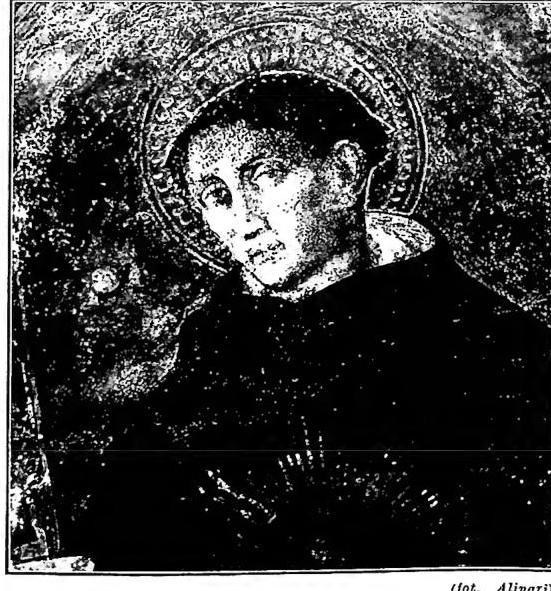
The grave events that agitated that pontificate interrupted the cause, which was resumed only under Eugenius IV, who canonised him in 1447. A notable monument is the basilica erected in his honour in the 14th century, with the portal by Nanni di Bartolo, and a cycle of frescoes by the Rimini school in the saint’s chapel. Feast day: 10 September. — See pl. CXIX.

BIBL.: the earliest *Life* was written by Peter of Monte Rubione in 1326; it, together with others, is found in *Acta SS. Septembris*, III, Paris 1868, pp. 636-743; F. Giorgi, *Vita del taumaturgo s. N. da T.*, Tolentino 1887; *BHL 6230-32*; N. Concetti, *S. N. da T.*, ibid. 1932; *Martyr. Romanum*, p. 389. Alberto Ghinato.

NICHOLAS OF TRANI, also called NICHOLAS THE PILGRIM, Saint. — N. was born in Greece near Styra, and died in Trani on 2 June 1094.

According to legend, he showed prodigious signs even in childhood, and after a vision he took to habitually pronouncing the invocation “Kyrie eleison” aloud; regarded therefore as mad, he was driven from home and later delivered to the monks of the monastery of S. Luca, suffering many trials. After spending some years in solitude, he crossed the sea miraculously, came to Apulia where he passed through Hydruntum (Otranto), Taranto, and finally Trani. He died there a few days after his arrival. Because of the many miracles

Article illustration
NICHOLAS OF TOLentino, Saint — Fresco of the Fabriano school (15th century) — Tolentino, basilica of S. Nicola.