
ANTONIO of PADUA, saint. – Franciscan, renowned preacher, Doctor of the Church; called of Padua because he died there.
1. SOURCES FOR HIS LIFE
Besides the works of A., the following are to be noted: 1) Legenda prima or Assidua, written in Italy by an as yet unidentified Franciscan friar in 1232 or 1233; although incomplete, it is not without value and served as the source for all subsequent accounts. It underwent various additions in the manuscripts of Padua, Lucerne, Paris, and Ancona. The best edition remains that of L. de Kerval, Sancti Antonii de Padua vitae duae, Paris 1904. 2) Legenda secunda or Anonyma (ed. Acta SS. Iunii, II, Antwerp 1742, pp. 705-18); attributed to Fr. Giuliano of Speyer, it was written around 1233-35. 3) Dialogus de gestis ss. Fratrum Minorum (ed. F. Delorme, Quaracchi 1943); of uncertain authorship, it dates to about 1245. 4) Legenda Raymundina (ed. A. M. Iosa, Bologna 1883); written in 1293 in Padua by Fr. Pietro Raimondi of S. Romano in Toulouse. The last three legends depend on the Assidua and add little or nothing new. 5) Legenda fiorentina (most recent ed. in Studi francescani, 4 [1932], pp. 490-96); by an unknown author of the second half of the 13th century. 6) Legenda Rigaldina (ed. F. M. D’Araules [Delorme], Bordeaux-Brive 1899, Italian trans. by T. [Mengoni] da Soci, Quaracchi 1902); written by Fr. Giovanni Rigaldi between 1293 and 1317. It is the most important after the Assidua, as it partly fills the gaps in the latter regarding A.’s apostolate in France. 7) Legenda Benignitas (ed. Kerval, op. cit.); dating to the early 14th century, only fragments survive. The legends Assidua, Benignitas, and Rigaldina are also published by F. Concini, Leggende di s. A. d. P., Padua 1930; 2nd ed. under the title, Le fonti della biografia antoniana, ibid. 1931; the Assidua and Benignitas by R. Cessi, Leggende Antoniane, Milan 1936. 8) Liber Miraculorum (ed. Analecta franciscana, 3 [1897], pp. 121-58); written around 1350, it provides the first chronology of A.’s life.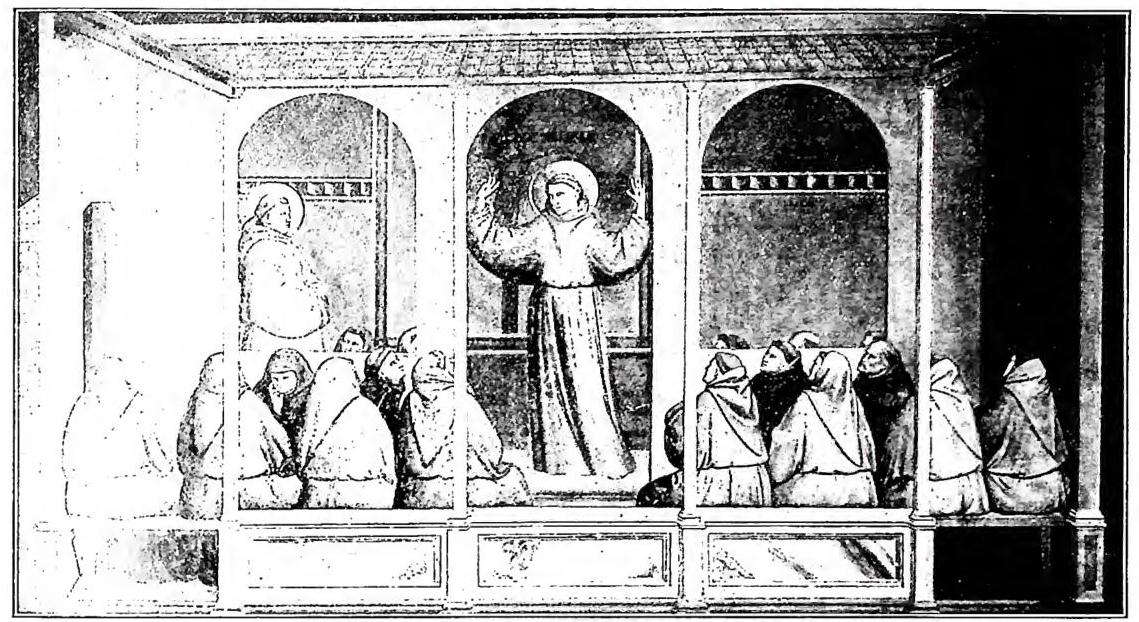
2. LIFE
He was born around 1195 in Lisbon, of a family of minor nobility, and was given the name ANTONIO DI PADOVA - St. Francis appears to St. Anthony in the Chapter of Arles. Fresco by Giotto. Florence, Church of S. Croce.
(photo Alinari)
Going to southern France around 1225, he preached, according to the testimony of Fr. John Rigaldi, in various cities, including Bourges, Limoges, Saint-Julien, Brive, and Arles; he was custos of Limoges; and he taught at Montpellier, Toulouse, and Puy-en-Velay. Returning to Italy after Easter 1227, at the General Chapter of that year he was elected provincial minister of Upper Italy, as attested also by Fr. Luke of Padua. At this time he visited the friars, preached, and wrote his Sermones dominicales. Perhaps around Easter 1228, sent to Rome to handle affairs of the Order at the Roman Curia, he preached before the cardinals and Pope Gregory IX, who called him “the Ark of the Testament and the casket of Holy Scripture.” At the General Chapter of 1230 he was relieved of his office as minister and was able to devote himself more freely to the ministry of the word and to composing the Sermones de Sanctis, as he had been requested by the Cardinal of Ostia, Roland de’ Conti, later Alexander IV. The year 1231 marks the apex of Anthony’s apostolic triumphs, which now took on a distinctly social character. He preached with great fruit during Lent and, after having striven—though in vain—for the liberation of the Count of S. Bonifacio and other Guelph leaders held by Ezzelino da Romano, he set about evangelizing the countryside until the harvest. He then retired to Camposampiero, 19 km from Padua, to the home of his friend Tiso, where, struck down by an attack of dropsy, he ordered that he be taken to Padua. As he was making his way toward the city, his condition worsened along the way, and he was forced to stop at Arcella near Padua, where, having received the sacraments, he died on 13 June 1231. He was canonized by Gregory IX at Spoleto on 30 May 1232, barely eleven months after his death.
3. CULT
The miracles worked during his lifetime, but especially those after his death, earned Anthony the title ANTONIO OF PADUA – St. A. preaching. Painting by Berto di Giovanni (16th cent.) – Perugia, Pinacoteca.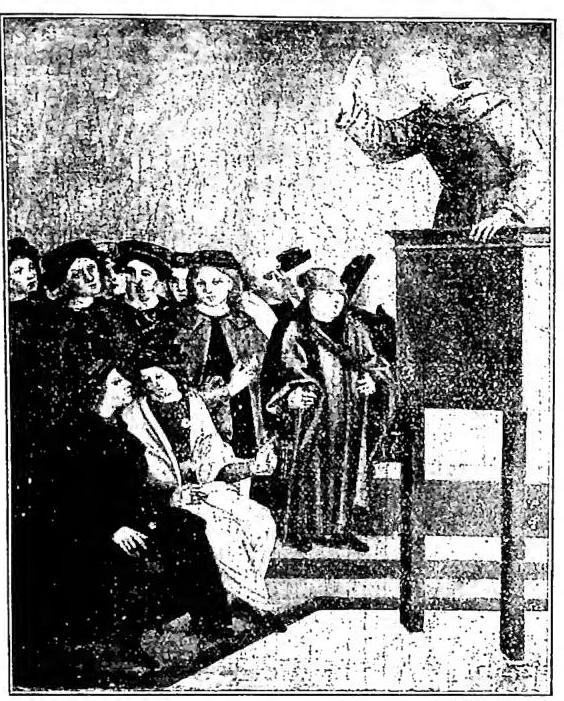
Padua erected a monumental temple to A., whose construction lasted almost two centuries and became a true marvel of art, worked on by generations of artists.
In 1263, in the presence of St Bonaventure, A.’s relics were translated there. (Cf. B. Gonzati, La Basilica di S. Antonio da Padova descritta ed illustrata, 2 vols., Padua 1852).
4. ST. A. DOCTOR OF THE CHURCH. – 1. His writings. The only works certainly authentic are the Sermones per annum dominicales and the Sermones in festivitatibus Sanctorum per anni circulum, of which only the Legenda Antiqua speaks. A modern edition of these began with A. M. Locatelli in 1895 and was continued by G. Munaron, G. Perin, M. Scremin and completed around 1913 (S. Antonii Patavini… Sermones dominicales et in solemnitatibus, 4to, pp. XXIV–926), guaranteed by thirteen manuscripts of the 13th and 14th centuries that explicitly attribute these sermons to A. Although this edition provides a sufficient basis for reconstructing the Saint’s genuine thought, it has many defects.
At the present stage of research, the other works attributed to A. can be classified as follows. At least doubtful are the Sermones in Psalmos edited by A. Azzoguidi in Bologna in 1757 and attributed by French manuscript tradition to Cardinal John of Abbeville. Definitely spurious are the Sermones quadragesimales, the Sermones de Sanctis, the Concordantiae morales sacrorum biblorum, the Expositio mystica in S. Scripturam, the Incendium amoris and the Sacrum commercium s. Francisci cum domina pauperitate.
4. His doctrine
A.’s theological formation was sound, his teaching and preaching fruitful, and his doctrine eminent, especially in his interpretation and commentary on Sacred Scripture, the depth of his theological thought and his sacred oratory.Given his essentially biblical formation, A. held the word of God in the highest esteem and made extensive use of it, interpreting it according to the four senses: literal, allegorical, moral and anagogical; while acknowledging the fundamental value of the literal and historical sense, he preferred the allegorical and moral because he considered them more useful for the good of souls in his essentially practical preaching. The source of his exegesis and his rich biblical interpretations were the Church Fathers, whom he frequently cited and not infrequently used without explicit citation. The effect can be gauged from the epithets by which he was hailed: “Ark of the Covenant” and “repository of Sacred Scripture.”
A. was above all a great orator, yet one cannot deny him the attributes of theologian, master and scholastic doctor, albeit relative to the scholasticism of the early 13th century. He is a theologian and a doctor, but with a character all his own—a theologian of oratorical theology. Even Pius XII, in his brief Exulta, Lusitania felix, calls him an outstanding theologian in elucidating the truths of the faith. A.’s theology is Augustinian, and in this he expounds the doctrine of grace with great precision. Franciscan are his positions and theological attitudes regarding those particular Christological and Mariological doctrines that would later, when duly developed, form the cornerstones of the Franciscan school. His apologetics and his victories over heresy earned him the title “hammer of heretics.”
Yet more than speculative, A. is practical. Faithful to the recommendations of the Franciscan Rule, he preached to the people the struggle against vice and the practice of virtue; his preferred themes were the precepts of Christian morality. In this he proved an unsurpassed analyst of the capital vices both in themselves and as they appear in different social classes. He especially combated pride, lust and avarice. In pointing the way to salvation he maintained a just mean between laxity and exaggerated rigorism. His moral teaching focused on fundamental principles rather than on particular ones; it was almost never juridical or canonical; as a moral theologian he was more acceptable than casuist. Of particular importance in our Doctor is his treatment of the Sacrament of Penance.
A. also reveals himself as an ascetic and profound mystic, and with sure hand and personal experience he traces the path of Christian perfection. He inculcated the necessity of penance, but especially recommended faith, humility, poverty, chastity, love of God and of the Church, compassion for the poor, and insisted on the spirit of prayer. He grounded the contemplative life especially in the latter and proclaimed its superiority over the active life, though he held that perfection lay in a harmony between the two. His writings reveal a tender devotion to the humility of Christ, considered as King of glory yet humbled for our sake; he often speaks also of the Eucharist and especially recommends devotion to the Passion of the Saviour and, in particular, to Mary.
A. is a noteworthy mystical author. Practical and effective, he generally follows Western mysticism, whose exponents include St Augustine, St Gregory and St Bernard. He was not at all influenced by pseudo-Dionysius, but did draw in some respects on Richard of St Victor. His mysticism displays a personal note and is not lacking in originality. He treated almost all the essential questions of mysticism in an excellent manner. Indeed, besides passive contemplation he admitted a true active contemplation. The primary object of passive contemplation is God, the secondary object the Church and especially the Humanity of Christ. Contemplation pertains to intellect and will, but A. gives primacy to the latter. Passive contemplation is a permanent state yet a passing grace. The principal effect of contemplation is the love of God.
Precedendo s. Giovanni della Croce, descrive perfettamente i tre segni della notte mistica dei sensi. A. ritiene pure che tutti i fedeli siano chiamati alla contemplazione infusa in genere ed eccita i medesimi ad aspirarvi.
A. è infine un grande maestro di oratoria sacra. I suoi sermoni sono una spiegazione dei Vangeli domenicali concordati con le storie del Vecchio Testamento, l'Introito e l'Epistola delle Messe domenicali, secondo lo schema del sermone solenne in uso nel secolo XIII, perché servisse ai predicatori ed in modo speciale ai frati Minori come preparazione prossima e specialmente remota alla predicazione. La sua predicazione è apologetica con gli eretici, morate e sociale con tutti i fedeli. Dopo la Bibbia e i Santi Padri egli ricorre alla natura ed è originale nell'applicazione delle sue cognizioni di scienze naturali; abbondano i bozzetti vivi, tratti dalla vita reale; il suo linguaggio è vivo, immaginoso, spesso scultorico e spiega, in parte, i trionfi della sua predicazione.
di P., in Studi franc., 6 (1934), pp. 80-89, 195-224; S. A. Dottore della Chiesa (Atti delle settimane antoniane tenute a Roma e a Padova nel 1946), Roma 1948: le sedici conferenze di questa raccolta hanno quasi tutte grande importanza: ne indichiamo tre fra le più notevoli: C. Balié, S. A. Dottore evangelico, pp. 5-30; id., Gli scritti di s. A., pp. 297-330; G. Abate, S. A. Maestro di sacra Teologia, pp. 265-94. Riccardo Pratesi
5. S. A. NEL FOLKLORE E NELLA POESIA POPOLARE. - Il culto popolare del santo si manifesta più che altro nella vivissima e diffusa credenza sul suo straordinario potere miracoloso e nel pellegrinaggio, con particolari segni di devozione, alla sua chiesa di Padova. Per uno scambio dovuto all'identità del nome, gli vengono trasferite alcune espressioni del culto popolare dedicate originariamente a s. Antonio abate. Diffusissima in tutta Italia specie per mezzo di foglietti a stampa, una canzoncina in quartine di ottonari dal titolo Storia di s. A. di P., come in sei ore si partì in spirito da Padova mentre predicava, andò a Lisbona dove liberò suo padre che era innocente, condannato a morte e risuscitò un morto, ecc. Il Pitrè ne dimostrò l'originaria composizione siciliana e la suppose come traduzione di varianti spagnole e portoghesi. Si conoscono pure alcuni poemetti in ottave che narrano i miracoli del santo, ma di scarsa popolarità e di minimo valore letterario.
6. ICONOGRAFIA
Rappresentato sempre nell'abito francescano reca come attributi principali un libro (fin dai primi tempi), una fiamma (per la prima volta in un affresco di Agnolo Gaddi del 1394) talvolta sostituita con un cuore (dalla metà del sec. XV), il giglio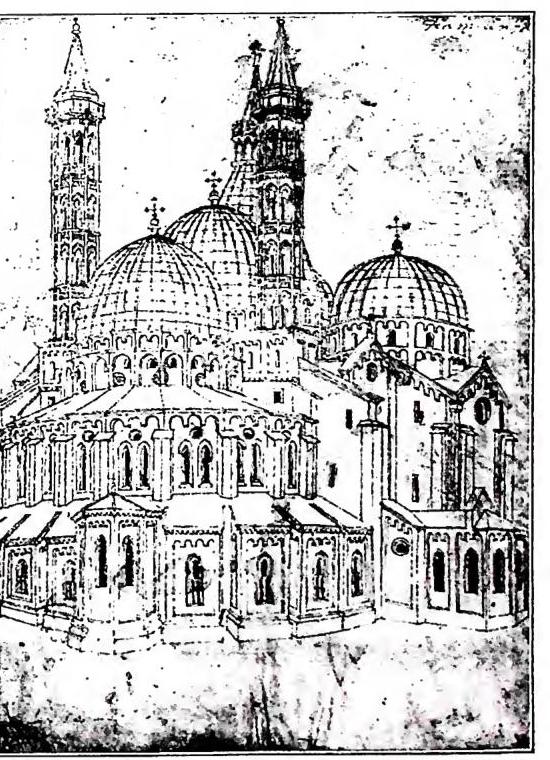
7. THE BREAD OF ST ANTHONY - Alms offered in honor of the Saint to obtain his protection and distributed to the poor mainly in the form of bread. Considered generally, the practice dates back to the earliest period of his cult and originated from a miracle performed in favor of a 20-month-old child named Tommasino, who had drowned in a tub. The mother promised the Saint that if he restored her son to life, she would give as much grain in alms for the poor as the child weighed (Delorme-J. Rigault, pp. 150-152). The custom of such offerings then spread widely, to the point that a special benedictio ad pondus pueri was included in the liturgy, with which parents would invoke the protection of St. Anthony upon their children, offering to the poor, in his honor, as much grain as the child weighed. However, the practice as it exists today—namely, the distribution of money converted into bread as thanksgiving for favors received—did not begin until the 19th century. We see it arise in 1887 in Messina at the orphanages of Canon Annibale M. di Francia following a grace obtained for the family of Mrs. Susanna Consiglio. Moreover, independently, on 12 March 1890, it arose in Toulon through the efforts of Miss Luisa Bouffier, in gratitude for a prayer answered; when Don Antonio Locatelli of Padua learned of it, he recommended and spread it in his Bollettino dell'Associazione Universale Antoniana, and as early as 1886 he converted the proceeds of the Tipografia e Libreria Antoniana into bread to be distributed every Saturday to the poor. Today it can be said that the Bread of St. Anthony flourishes in every church. — See Pl. CXXIII.