
CATHOLIC MISSIONS. — Before ascending into heaven, the Lord said to his disciples: «Pax vobis. Sicut misit me Pater et ego mitto vos» (Io. 20, 21; 17, 18), sending them to teach and baptize all nations. Thus, from the words of Jesus arose the name and concept of m., whence missionaries, and apostles from the corresponding Greek verb. M., therefore, derives from the Latin verb mittere, that is, to send. Considered in its common sense, it signifies the act of sending someone to carry out a task.
Until the 17th century, however, in ancient documents missionary activity, as well as the missionary, was designated in various ways. Around the middle of the 16th century, the word m. began to be used in a sense increasingly close to its technical meaning, which it assumed at the beginning of the 17th century.
I. THEOLOGICAL AND JURIDICAL CONCEPT.
Theologically, m. is linked to the words of Sacred Scripture, in which the Son is called sent by the Father and the Holy Spirit by the Father and the Son (Io. 6, 57; 14, 16; 16, 7; Gal. 4, 4).
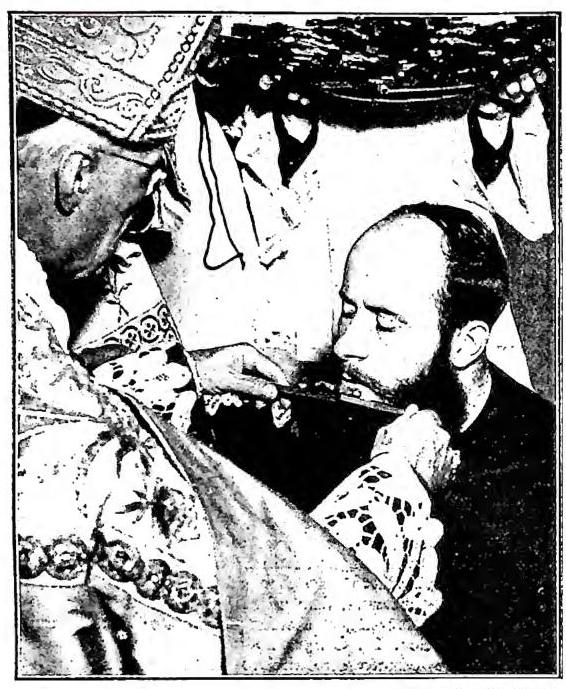
(photo Publifoto)
CATHOLIC MISSIONS — Presentation of the Crucifix to missionaries departing for abroad (Pont. Ist. Miss. Est., Monza, 12 Sept. 1648).
ordinary through the instrumentality of his Church, which is the continuation of his Incarnation. Christ, in fact, could have bestowed upon the entire human race by himself the divine fruits of the Redemption, but he willed to do so through a visible Church in which all human beings would be gathered together to cooperate with him in the salvation of those very same human beings. Christ and his Church thus come to constitute that supersensible, hidden, and mysterious entity which lives and survives in souls and which St Paul Christ (v.). The term very effectively synthesizes the two aspects of the Church, presented as an organism with its two elements, visible and spiritual: body and soul. Its mission, therefore, requires that it be present throughout the world in its two aspects, interior and exterior, through that intimate striving of the humanity assumed by the Word to unite itself with all human beings and incorporate them as living members of its new mystical organism. Thus it becomes the ordinary and official means of salvation; and the more compact and universal the visibility of the Church as an external organism, the more radiant and glorious is the manifestation of Christ, that is, the external glory of the Lord. Consequently, the doctrine of the Mystical Body upholds the necessity of the apostolate both with regard to individuals and with regard to peoples, because, by reason of its social character, it requires individuals—including insofar as they form social groupings—to become part of the Mystical Body of Christ, which over the course of the centuries continues to develop not only through the spiritual perfection of the faithful but also through the acquisition of new members. At the end of the ages its development will be complete, and the missionary work will have ended, thereby contributing to the final triumph of Christ, as described in the Apocalypse. The mission, therefore, of the Church is to give life to, develop, and perfect the Mystical Body of Christ among all peoples, preaching the Gospel to them.
According to the juridical concept, the mission of the Church must also be considered under the contingent aspect of the activity explicitly undertaken by it in order to accomplish this mission. History shows that such activity, while always remaining the same in its theological elements, has assumed different forms and characteristics. Especially from the twelfth century onward, the apostolic activity of the Church in some regions has been directed rather toward preserving and perfecting the life of faith and charity among Christians, and in other regions toward disseminating and spreading it among those who are unaware of II. In the first case, there is a perfection of the Mystical Body, that is, an internal development thereof; in the other case, by contrast, the Mystical Body develops externally through the acquisition of new members and new peoples. Thus there are internal missions and external or foreign missions (can. 252 § 3). The two do not differ from the dogmatic point of view, but their methodological characteristics and the juridical prescriptions governing them give rise to a very important distinction for the purpose of studying their development. This juridical distinction, however, is not intended to contradict the dogmatic element of the mission, but only to delimit its field, determine the rules of methodology and organization, and establish the two specific differences between them.
II. FOREIGN MISSIONS.
I. NOTIONS
They are that part of the ecclesiastical ministry directed toward planting and establishing the Church among non-Catholics. In this definition, now defended by almost all missiologists, all the requisite elements are found. Indeed, it follows from it that the missions are a specific activity of the Church, whose object is the baptized or unbaptized non-Catholics to be converted to the true faith, with the aim of permanently founding the Church among them. Discussions among authors have brought to light the various stages of the great work of planting the Church in territories newly conquered. The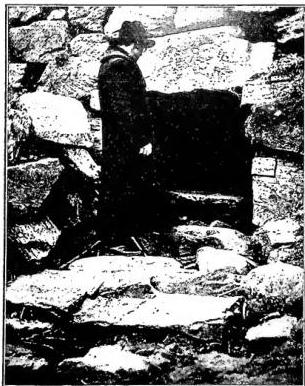
MISSIONI CATTOLICHE – Northern gate of the city of Ghishu (near Pyong-Yang), through which Fr. Giusto de Bretonnières (later martyred in 1866) entered Korea in 1865, today called the “Holy Gate.”
Schmidlin maintains that the missions are ordered solely to the conversion of non-Christians; Lange holds that the purpose of the missions is not the salvation of souls, which is possible even outside the Church, but the catholicity of the latter; Grentrup, grounding his position on juridical elements, thinks that the missions are ordered to expand the kingdom of Christ; Charles defends the theory of the planting of the Church; for Glorieux, the purpose of the missions is the fullness of life of that same Church; and for De Lubac, the missions are necessary for the collective, not individual, salvation of men; Hugueny responds to Glorieux by asserting that the missions are a matter of life and death for infidels; for van der Mensbrugghe, the missions are ordered to subordinate all men to Christ.
Durand’s opinion is closer to that now more widely accepted by missiologists, because he maintains that, just as the Church is a normal but not indispensable means of salvation for souls, so too the missions are a normal but not necessary means of salvation for infidels. Capéran says the same, holding that the missions are ordered to bring to infidels the ordinary means of Grace, with which the visible Church has been enriched.
Of the elements presented above, some precede and others follow the planting of the Church, and therefore they do not exclude one another; the pontifical documents highlight now one and now another, often in response to particular needs. The expression “planting of the Church” is already found in some of the Holy Fathers and recalls the Gospel parables, in which the Lord compares the preaching of the good news to agriculture, considered now as the work of sowing and transplanting shoots and trees, now as the cultivation of the vineyard, which stretches its branches from one sea to the other; or else he compares it to any other work concerning the earth that can be related to the nascent Church.
The distinction between foreign missions and internal missions also entails a territorial division, because according to can. 252 foreign missions are found in territories dependent upon the S. Congr. de Propaganda Fide. This principle has an exclusive value, because the other canons dealing with the dicasteries of the Roman Curia do not speak of foreign missions; therefore, can. 1350 § 2 must be understood in relation to can. 252. Until the motu proprio of 25 March 1938, the territories dependent upon the S. Congr. Orientale could not be included (Sylloge, S. Congr. de Propaganda Fide, Roma 1939, n. 206 ter), nor could those under the jurisdiction of the S. Congr. Concistoriale. The present status of some territory does not justify an extension of the territory of the foreign missions, because it also has repercussions in the sphere of competence of the S. Congr. de Propaganda Fide itself.
II. CENTRAL AND PERIPHERAL ORGANIZATION
The task of spreading Christianity in the Far East during the 13th and 14th centuries, entrusted to the initiative of the two great mendicant Orders, was subsequently directed toward the dissidents of the nearer East and then toward the heretics of central and northern Europe, without any special departments being established for this purpose. It was with the great overseas discoveries that the missionary question became more acute, and in this regard the popes granted the crowns of Portugal and Spain extensive privileges which(courtesy of the Missionari detta Consoluto fathers)
MISSIONI CATTOLICHE - Agriculture course given by the Lay Missionaries of the Consolata - Madibira (apostolic vicariate of Iringa).
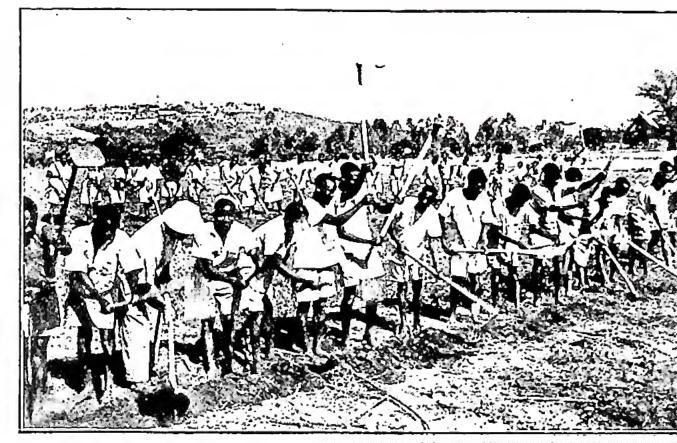
To avoid the patronages, Propaganda established the institution of apostolic vicars and delegates, following the example of those already existing in the Netherlands, England, and Scotland. It developed through the creation of apostolic vicariates in Canada (1653), China (1659), Indochina (1669), and Siam (1678), and gradually extended to almost all the missions. The apostolic vicars, ordinarily invested with episcopal character, depended directly on Rome, from which they received their faculties. Thus, in the overseas territories, alongside the jurisdictional dualism of bishops and religious—which relatively soon disappeared—there arose the jurisdictional dualism of Rome and the patronages, with repercussions in the mission lands between residential bishops and apostolic vicars: a dualism that gradually weakened, until it almost disappeared in our own day, as the colonial power of the two Catholic kings in the East declined to the advantage of the Protestant nations of England and Holland and of Catholic France.
To make the central organization more effective, Propaganda established within itself several particular Congregations: in 1633, the Congregation of Faculties, which

The economic problem constituted from the beginning one of Propaganda’s chief concerns, because it opened the way to a greater emancipation of the missions from the colonial powers. Proceeds from cardinal’s rings (500 scudi), inheritances, private offerings, extraordinary grants from pontiffs and princes constituted the first funds. From its beginnings, Propaganda granted annual allocations to Ordinaries and provided the missions with extraordinary subsidies. Agents and correspondents, especially in maritime ports, were entrusted with delivering these funds, subsidizing missionaries in transit, and facilitating their travel arrangements. After its patrimony was dispersed by the Revolution, Pius VII assigned Propaganda part of the revenues of the Apostolic Camera. From the end of the eighteenth century until 1908 there existed a stable “Prefecture of the Economy,” whose cardinal prefect presided over the economic congresses. From 1908, the pro-secretary of the Economy presided over the administrative office and took part in the economic congresses, which included two cardinals and were presided over by the cardinal prefect.
Until 1666, the cardinals belonging to the Congregation, each of whom had been assigned a territorial sphere to deal with, met coram Sanctissimo twice a month; from that year onward, the meetings were held at the house of the prefect or of the senior cardinal, and the secretary periodically went to report to the pope. For approximately two centuries, the cardinal prefect was not endowed with special powers of his own, being merely the executor of the plenary body. Subsequently, the prefect was granted a list of personal faculties, “ad quinquennium,” and finally “durante munere.” Under Leo XIII there was a further extension of the powers of the S. Congregation.
Without substantial internal changes, the organization of the Congregation has been maintained until our own days. It should only be noted that the Congregation has been able to perfect its methods of apostolate, among which must be mentioned the ever wider development of the indigenous clergy, especially the increase in apostolic delegations and consequently the impetus given to periodic episcopal conferences; and the coordination of the apostolate in the existing missions through the work of the individual delegations. Its competence was greatly altered following the constitution of Pius X Sapienti consilio of 1908, and numerous territories were removed from its original jurisdiction.
Legislative power and supreme direction and treatment of affairs belong to the plenary Congregation of the cardinals making up the S. Congregation. Its deliberative power is subject to the pope’s approval, and the decisions of the plenary Congregation must be reported to him; their execution is normally carried out through the cardinal prefect. In the exercise of his duties, the latter is assisted by the secretary, the undersecretary, and the pro-secretary of the Economy, all freely appointed by the pope, as well as by several study assistants with precisely defined duties. The S. Congregation is assisted by a body of consultors with specialized competence, chosen from both clergy. Within it, following the suppression of the previously existing particular congregations, there currently functions only a commission for the revision of the Constitutions of missionary religious institutes, national synods, the regulations of the regional seminaries dependent upon it, and the “Statuta pro missionibus.” The secretary has special duties: he attends the plenary sessions without the right to vote and subsequently reports on them to the pope; he participates in the weekly congresses together with the undersecretary and the minutantes, as well as in the economic congress. The legal representation of the S. Congregation and the general direction of the Collegio Urbano di Propaganda Fide belong to the secretary. A general historical archive preserves Propaganda’s documents from 1622 onward.


(courtesy of the Grey Sisters of Montirol)
MISSIONI CATTOLICHE — Dental operation performed by a nurse nun (Grey Nuns) — Fort Smith in Mackenzie (Canada).
(courtesy of Mons. A. P. Frutaci)
MISSIONI CATTOLICHE - Assisted Black children. Orphanage of the Parish of S. Teresa (Missionary Sisters of the Holy Spirit). Port-de France (Martinique).
dioceses, dioceses and apostolic vicariates, are entrusted to the indigenous clergy. Ten apostolic delegations depend on Propaganda: Southern Africa (1922), headquartered in Pretoria; British West and East Africa (1930), headquartered in Mombasa; French Africa (1948), headquartered in Dakar; Albania (1920), headquartered in Tirana; Australia and New Zealand (1914), headquartered in Sydney; Belgian Congo (1930), headquartered in Léopoldville; Japan (1919), headquartered in Tokyo; Indochina (1925), headquartered in Hué; Korea (1949), headquartered in Seoul. There are also the three internunciatures: China (1947), headquartered in Nanking; India (1948), headquartered in Delhi; Indonesia (1950), headquartered in Djakarta. Moreover, the missions subject to the Congregation depend on the nunciatures of Yugoslavia and of certain republics of South America. Certain territories in Africa (Angola and Mozambique, Portuguese Guinea) and in Asia (Goa and Damao, Timor, Macao) depend on the S. Congregation for Extraordinary Ecclesiastical Affairs. According to the agreement of 7 May 1950 between the Holy See and Portugal, the dioceses of Cochin and S. Thomas of Mylapur passed under Propaganda. The S. Congregation of the S. Office retains its specific competence over mission territories. The S. Congregation of the Consistory has dealings with the missions only when a territory must pass from one jurisdiction to another. Even in mission lands, universities depend on the S. Congregation of Seminaries and Universities.
III. ARTE SACRA NELLE M
Ancient Christian art (v.) had gradually taken shape by modeling itself on the manifold expressions of a highly developed civilization and according to practical criteria proper to the individual evangelized regions. Developing thereafter in new forms through the succeeding ages, it succeeded in forming almost a spiritual patrimony of the Church, from which it seemed impossible to depart. When, in the 13th century, through the missionary journeys of the Franciscans and Dominicans, attempts were made to enter into contact with the mysterious civilizations of India and the Far East, it was not possible at that time to initiate an artistic movement in their relations; the contacts were too brief.With the era of the great discoveries, the missionaries became involved in the exploits of the Spanish and Portuguese conquistadores. Little account was taken of indigenous art, even where it existed, and the canons of metropolitan art were imported into the colonies and consequently also into the missions. This was a natural affirmation of the imperialism of the colonizing nations. Portugal built castles, residences, and churches in Ethiopia, India, and Brazil according to the models of Portuguese art. Spain transported its own Baroque to Latin America, where, influenced by indigenous art, it created the super-Baroque, which was called mission style.
From this undertaking the missionary movement also underwent considerable expansion in the Far East. But the problem of missionary art was not raised. Following the example of Portuguese and Spanish colonization in America, Western styles were imported into India and the Far East.
A school of painting founded by the Jesuits and directed by Fr. H. Nicolao flourished in Japan, but it was inspired by Italian models. In China, under Jesuit inspiration, the Gospel compositions published in Europe by Fr. Natale were rendered in Chinese forms. There were several other attempts at Chinese Christian composition (the Madonna in the British Museum and that in the Chicago Museum, etc.). The painter G. Castiglione (v. 1688–1766), a Jesuit, under the emperor Cheng Lung transformed his European style in accordance with the Chinese character. In the interior of China there were also some examples of adaptation to the local style. But all this represented sporadic and exceptional elements. The churches of the principal missionary centers often reproduced Western models with little taste.
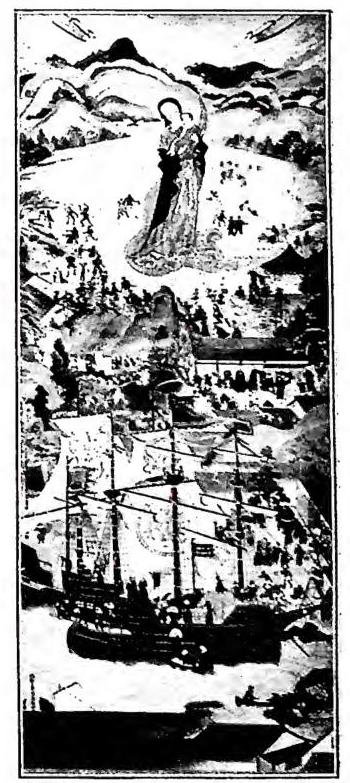

(photo Fides) CATHOLIC MISSIONS - Chased silver chalice from the seventeenth century. Beijing.
But these rare examples did not lead to further developments. In the countries of the missions, the importation of Western art prevailed, since this was regarded as Christian art in opposition to the local pagan art. In 1923, when the foreign missions were by then mature enough to be transformed into indigenous churches, the apostolic delegate thought that in a country possessing the dignity of a great and ancient art, Christian art too ought to be associated with the new missionary directions, that is, become Chinese; and in a letter to two mission superiors he raised the problem of missionary art ex professo, observing: a) that Western art in China represented an error of style; b) that the foreign character of the art contributed to maintaining the prejudice according to which the Catholic religion was regarded as a foreign religion; c) that the great tradition of Christian art taught the adoption of the styles of different periods and different places; d) that Chinese art offered various and beautiful possibilities of adaptation.
It was, however, necessary to reinforce theory with practice. Therefore, in 1925, the delegate brought the Benedictine artist d. Adalberto Gresnigt to China. He entered into the spirit of Chinese art, drew up the plans for, and directed the construction of the fine Catholic University of Beijing, the regional seminaries of Hong Kong and Kaifeng, and the church of the Disciples of the Lord at Suahnwafu, and undertook other minor works. A Chinese painter, Cheng Suan-Tu, of the finest artistic sensibility, composed sacred subjects in a pure Chinese style, which achieved great success because of their freshness and spiritual grace. The painter was baptized and took the name of Luca. Appointed professor of art at the Catholic University of Beijing, he gathered around him a family of Christian painters in whom the purity of the primitives shone forth. Chinese art offered the sacred subject a form full of delicate spirituality, while the sacred subject offered Chinese artists a new, elevated, luminous theme, such as to create a genuine renewal of Chinese art. The following painters should be remembered: Pu-Chin, Chang-San-Tse, Wang-Su-Ta, Lu-Hung-Niuen, Lo-Hong-Nie, Koang-Chao-Ko.
The movement for the Christian rebirth of Chinese art inspired and encouraged a fine flowering of Christian art in Japan, Indochina, India, and Indonesia. In Japan the following painters distinguished themselves: Luca Hasegava, Shunkyo, Okayama, Keiji Kondo, Furuya, Takaiho Toda, Yoshimatsu, madama Nakamura, Shimibu, Sadaka, Teresa Kimiko Koseki. In Indochina the painter Celso Le-Vandé made his mark; in India, the painter Da Fonseca and the woman painter Trindade; in Indonesia, the sculptor Iko. The S. Congregation de Propaganda Fide approved this artistic reform of missionary art in several letters. In Africa too, and especially in the Belgian Congo, the new direction achieved splendid successes.
In 1939 Pio XI had announced an exhibition in the Vatican of the art of the mission countries. This initiative, interrupted by the war, was resumed by Pio XII, who for the Holy Year of 1950 wished that, among the other exhibitions, one devoted to the Christian art of the missions should be organized. This corresponds to the principles proclaimed by the Holy Father in his first encyclical. Summi Pontificatus on missionary adaptation.
For the history of the missions,
V. PROPAGAZIONE DEL CRISTIANESIMO
Vedi tavv. LXXII-LXXV.BIBLI: C. Costantini, L'arte cristiana nelle m., Rome 1940; P. Dindinger e G. Rommerskirchen, Bibliografia missionaria, 7 (1940), pp. 85-133. These two works contain the most complete bibliography on art in the missions. Celso Costantini
III. INTERNAL MISSIONS.
Internal missions take place within the boundaries of the dioceses of the already established Church and are regulated by the Ordinaries. From the time of s. Vincenzo de' Paoli, and subsequently through the work of s. Alfonso Maria de' Liguori, they have been organized, under the name of sacred missions (can. 1349 § 1) or parish missions, both to preserve faith and good morals among the faithful and to convert any non-Catholics who may still be present there (can. 1350 § 1).
The Church imposes upon pastors of souls the obligation of catechetical instruction in preparation for the Sacraments of Penance, Confirmation, and the Eucharist (cann. 1329–36), of homiletic and Lenten preaching, and especially of explaining Christian doctrine (cann. 1337–48). Finally, she admonishes the Ordinaries to ensure that at least every ten years all parish priests, including religious, arrange missions for the flock entrusted to their care (can. 1349).
These missions, which must not be confused with ordinary Lenten preaching, although they are often explicitly conducted in the form of missions or spiritual exercises for the people, are ordinarily held outside the Lenten season by religious specialized in this type of preaching, such as, for example, the Passionists and Redemptorists, or by priests who are oblates or members of missionary associations, such as, for example, the Oblates of Rho (Milan), the Missionaries of S. Massimo of Turin, or the so-called Imperial Missionaries of Rome.
These internal missions, suitably prepared through frequent reminders in Sunday preaching, through publicity in parish bulletins or sacred notices, and conducted with spiritual fervor and various aids, almost always succeed in healthily stirring consciences and bringing about genuine conversions and reforms of conduct.
In recent times, immoral and atheistic propaganda, making use of every possible means—press, cinema, radio, advertising, rallies, lectures, and so forth—and exploiting the general economic hardship created by two world conflicts, has alienated a large part of the working and agricultural population from the Church and from Christian practice, casting it into the arms of atheistic and materialistic communism, which denies God, the immortality of the soul, the future life, and human dignity and freedom. In recent times, more intensified Protestant propaganda has been added to the atheistic propaganda and continues to infiltrate the Catholic masses.
Consequently, since participation in the word of God in the usual traditional forms had become impossible, other forms of preaching had to be devised in order to seek out the masses who were abandoning the church in the places where they ordinarily gathered, whether for work or for recreation. Hence various forms of preaching that have taken on the character of a genuine mission, and others that, under the guise of social action or of social and moral assistance, are aimed at preserving faith and morals.
Thus various works of moral assistance for particular groups arose: ONARMO, Apostolate of the Sea, Assistance for the Rice-Weeders, and so forth; chaplains in industrial establishments: the Opera di S. Paolo, Pro Deo, and so forth; congregations of lay religious living in the world, and other similar female congregations whose purpose was to assist workers and the poor, and so forth. This entire movement and this whole flowering of Catholic works has as its principal aim the moral and religious assistance of those to whom they are directed, in order to bring the word of God and the light of the Gospel to those who have lost the way to the Church and lead them back to the true faith and the practice of Christian life. Nor should the temporary peregrinaciones Mariae be forgotten, for they are a genuine mission capable of stirring the consciences of those who are asleep or lost.