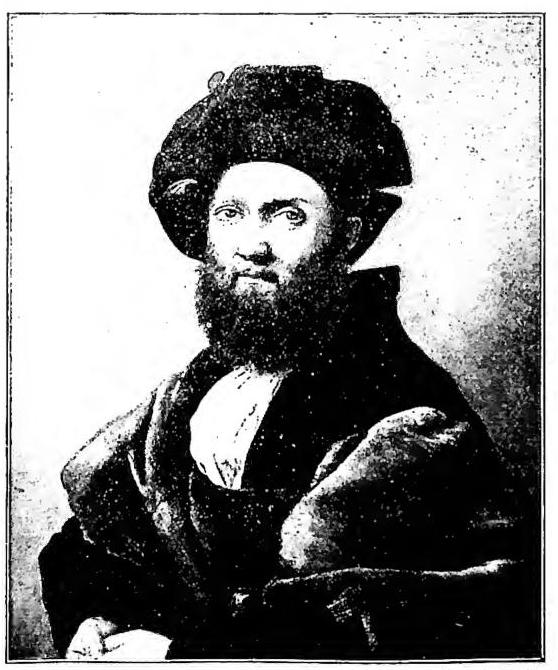
CASTIGLIONE, GIUSEPPE

Image from page 607
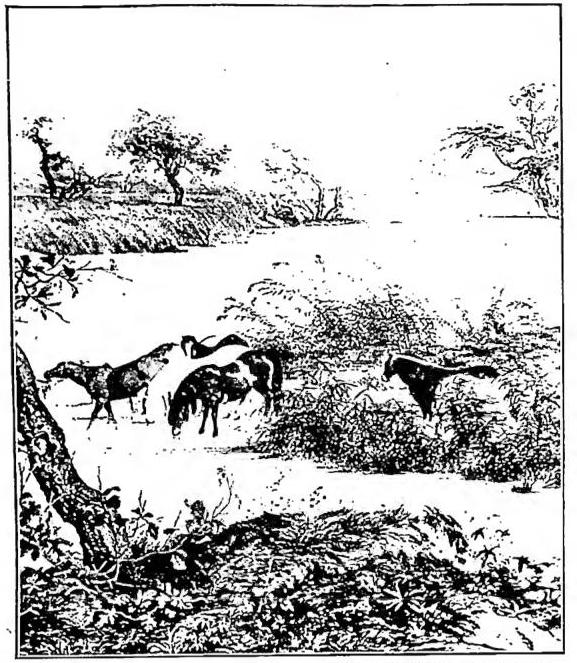
Image from page 607

CASTIGLIONE, Giuseppe. — Born in Milan on 19 July 1688; placed under the tutelage of a celebrated artist of his time, he soon displayed such an inclination toward painting that he inspired the highest hopes in this field. However, drawn to the religious life, on 16 January 1707 he entered the novitiate of the Society of Jesus in Genoa, admitted in the humble rank of a temporal coadjutor. In that year or the next, he executed at least nine paintings, still extant in Genoa, measuring 3 × 1.50 meters, on religious subjects, for the house or church of the novitiate. Before the end of the two-year period, doubtless in response to a request from the missionaries in China who had asked for an artist capable of working at the imperial court in Beijing, he set sail from Portugal. There, however, after completing his novitiate and making his first vows, he was sent to Coimbra in the most famous College of Jesus, where he was retained for several years to decorate its domestic chapel. Even the Queen of Portugal became aware of his artistic talents, for at the beginning of 1714 she wished him to paint the portraits of her two sons.

Finally, urged by the Superior General of the Order, Michelangelo Tamburini, who gave explicit orders to send him to China where he had long been awaited, the superiors in Portugal had to allow him to depart in 1714. Arriving in Macau on 10 July 1715, he reached Beijing on 22 December of the same year.

From then until his death, which occurred on 16 July 1766 — a span of more than half a century — under the Chinese name of Lang Shih-ning 郎世寧, he lived at court as painter and architect to three emperors: the great K’ang Hsi (d. 1722), his son Yung Cheng (d. 1735), and his grandson Ch’ien Lung (d. 1795). Overcoming the modesty of the humble brother, who had often declined such honor, Ch’ien Lung around 1748 succeeded in having him named a mandarin of the third class, a purely honorary title with no obligations as a magistrate. Buried in the Catholic cemetery of Zhalan 柵欄, a kilometer outside Beijing, his tomb was desecrated along with all others by the so-called Boxers in 1900.

To satisfy not only the tastes but also the whims of these Chinese monarchs, our painter more than once had to sacrifice the rules of art as he had learned them in Italy and adopt others that did not entirely please him. Accustomed to treating historical subjects or making portraits, he now had to resign himself to painting in oil on glass, for example on mirrors, or in watercolor on silk subjects such as trees, flowers, and especially animals — fish, birds, dogs, eagles, and falcons. His paintings of horses are justly celebrated. In one of these, measuring 8 × 1 meters, he managed to depict one hundred horses in the most varied positions. The "flying gallop" was first represented by him in 1728, that is, 66 years before European artists began to use it in the West (1794). The only surviving portrait of a woman by him is that of the famous "Fragrant Princess" 香妃 (so called because tradition held that a natural fragrance emanated from her person), a Muslim and former concubine of Izzat Khan, governor of Yarkand, taken prisoner in 1759 and brought to Ch’ien Lung, who immediately fell in love with her. Castiglione, summoned to paint her portrait in oils, depicted her in warrior’s attire, with helmet, armor, and sword. He also made about ten portraits of Ch’ien Lung. Four of his paintings were displayed at the International Exhibition of Chinese Art in London in the years 1935–36.

Article illustration

When in 1747 Ch’ien Lung decided to build within his old summer palace near Beijing a complex of buildings in European style, or at least Sino-European, Castiglione, who enjoyed his esteem, was commissioned to design them in collaboration with the Jesuit Father Michele Benoist. Thus Castiglione, known as a painter, by imperial order became an architect as well, though less renowned in that capacity. While Louis XIV in 1670 had desired a "Trianon de porcelaine" in Chinese style at Versailles, Ch’ien Lung wished to have his own "Versailles" in Italian style. It was a complex of pavilions, gardens, gates, canals, fountains, ponds, waterfalls, flowerbeds, labyrinths, etc., bearing the name "Western Palace" 西洋樓. Extensive use was made of marble and polychrome majolica in yellow, green, turquoise, and blue. A dazzling glitter emanated from the resplendent roofs. The walls of the enclosure even featured Pompeian red. The façades of the buildings included columns, pillars, balustrades, life-size lions on Western pedestals, and other architectural elements of marble or stone similar to Florence’s "serena." Contrary to Chinese style, the buildings had several floors. Columns and pillars were adorned with Ionic capitals and cornices. The staircases and terraces sometimes resembled those of the Palazzo Farnese in Caprarola; at other times the steps and doors were of bronze. For the windows, first-quality glass from Venice or France was used profusely. Baroque and Italian Renaissance art reappeared in certain architectural and decorative forms. There were even pavilions intended for concerts of various music — Chinese, Muslim, Tibetan, or Mongol. Even the furnishings of these buildings were European. A pity that this splendid example of Italian architecture in China, unique of its kind, costing Castiglione twelve years of work, was completely lost in the fire and destruction of the old summer palace, for which the Franco-British troops were responsible in 1860.

Ch’ien Lung, though a fierce persecutor of Christians, was lavish in showing Castiglione signs of his esteem and goodwill, freely bestowing gifts on him, visiting his studio in the imperial palace almost daily, and conversing familiarly with him. Castiglione, who never forgot that he was a missionary even at court, was able on several occasions to use this relationship with the emperor to moderate persecutions and intercede for his confreres and coreligionists. Castiglione is the only European painter — a supreme honor — mentioned (ch. 63) in the great History of Painting 香京畫傳, in 72 chapters, composed in Chinese around 1800 by P’eng Jün-ts’an 彭春璧 and printed more than fifty years later.

Bibl.: E. Coulier, Bibliotheca Sinica. Suppl., Paris 1924; L. Pfister, Notices biographiques et bibliographiques sur les Jésuites de l'ancienne mission de Chine, II, Shanghai-Tusewei 1934, pp. 635-39. For more recent studies cf. G. Rommerskirchen, Bibliographia missionaria, Rome 1937, p. 122 (cf. index); 1938-41, p. 6; G. R. Lochr, G.C., ibid. 1940, with good bibliography, pp. 119-23, and the list of Castiglione’s paintings, pp. 111-17.