
CONGREGATION OF THE MOST HOLY REDEEMER. — It was founded at Scala near Amalfi by St. Alfonso M. LIGURIA (v.), on 9 November 1732, for preaching missions to the people. It was called the Congregation of the Priests of the Most Holy Saviour, who at first were under the direction of Mons. Tommaso Falcoia, bishop of Castellammare. In 1743 they chose St. Alfonso as rector major for life, and for the first time took the three religious vows, together with those...
CONGR. DEL S.MO REDENTORE - CONGR. DI GESÙ E MARIA
of perseverance in the C., of renunciation of ecclesiastical dignities, and of preaching among the infidels. On 25 February 1749 there were already four houses, when Benedict XIV approved the Rule and the institute under the name of C. del S.mo R.
The expansion of the C. was obstructed by the regalism of Naples, which prohibited every new foundation, tolerated no possession of property in common, and recognized the missionaries only in the capacity of secular priests under the authority of the local Ordinary (royal dispatch of 9 November 1752). As a precaution against this abuse of authority, several houses were opened in the Papal States between 1755 and 1777; nevertheless, the anticlerical political sectarianism of Naples provoked a very grave crisis. In 1780 Ferdinand IV permitted the legal existence, denied for forty years, provided that a regulation approved by the government was accepted. S. Alfonso consented, thinking that this was merely a formality, in order to adapt himself to the laws of the country. This regulation invalidated the essential parts of the
Rule approved by Benedict XIV, and Rome was informed of II. On 23 September 1780, a decree of the Holy See excluded the houses in the Kingdom of Naples from the institute, while those in the Papal territory were placed under the authority of a superior general, who from 1783 resided in Rome. S. Alfonso died in 1787 before this division was abolished. In 1790 the fathers in the Neapolitan territory obtained authorization to resume the Rule of Benedict XIV. Pius VI permitted the convocation of a General Chapter to establish union, and in 1793 the entire C. was placed under the authority of the superior general residing at Pagani. S. Clement M. Hofbauer, propagator of the institute outside Italy, arrived in Warsaw in 1787 and, as vicar general, over the course of fifteen years established a series of foundations in Courland, Poland, Germany, and Switzerland, but they did not achieve stability. In 1820 he opened a house in Vienna. Under the general vicariate of Fr. Passerat, who succeeded Hofbauer in 1820, the C. spread to France (1820), Poland (1825), Portugal (1826), Belgium and the United States (1832), Bulgaria and the Duchy of Modena (1835), Holland (1836), and Bavaria (1841). In 1848 it had 21 houses and 350 religious beyond the Alps. On 2 June 1841 Gregory XVI divided it into 6 provinces, and in 1853 Pius IX established the residence of the superior general in Rome, opened in 1853; from that moment the transalpine general vicariate ceased to exist. Because of the opposition of the government of Naples, the houses existing there were constituted as an autonomous C.; but in 1869 they returned under the authority of the superior general of Rome. From then on, expansion was rapid. From 644 in 1867, the number of religious rose to 2,147 in 1884, 4,317 in 1916, and 7,425 in 1948, with 24 provinces, 21 vice-provinces, and 453 houses.
In its internal life the C. is inspired by the imitation of the virtues and examples of Christ. The exercises of piety are numerous: three meditations a day, the divine office in common when circumstances permit, half an hour of thanksgiving after Mass, spiritual reading, two examinations, the visit
to the Most Blessed Sacrament and to the Blessed Virgin, and the Rosary, which is obligatory even on the most strenuous days of the missions. Marian devotion is one of the characteristics of this interior life. In addition to the founder and ss. Clement Hofbauer and Gerard Majella, the Redemptorists number no few confrères whose causes of beatification are in progress.
The specific apostolate of the C. is the mission, a series of sermons lasting 10 or 15 consecutive days, aimed especially at preparing the faithful for the sacrament of Confession. When circumstances permit, after several months the missionaries return for a few days to the places they have evangelized, in order to ascertain the fruits of their apostolate. These returns are an apostolic innovation that contributed greatly, in 1749, to the pontifical approval of the institute. The Archconfraternity of the Holy Family, established in every church of the C., has existed for 65 years and numbers 1,400 associations and 500,000 members. Devotion to Our Lady of Per-
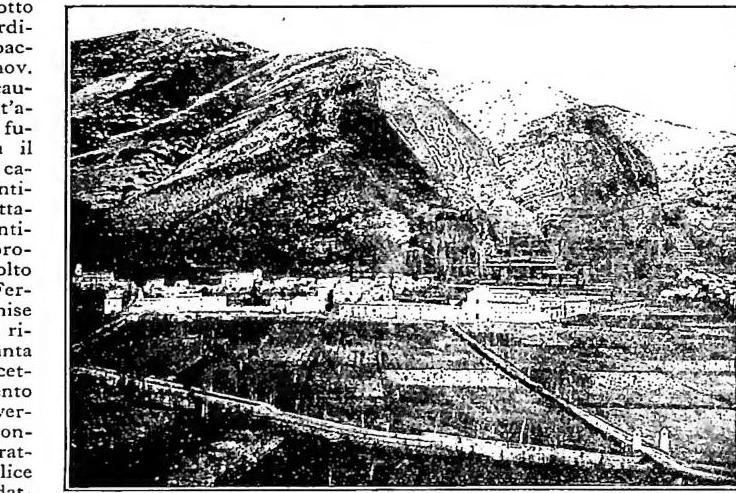
CONGREGAZIONE DEL S.MO REDENTORE - Church of the Most Holy Trinity and college founded and built by s. Alfonso (1735) according to his designs. It is now the oldest house of the C. - Ciorani (municipality of S. Severino Rota, province of Salerno).
petuo Soccorso, venerated in the church of S. Alfonso on Via Merulana in Rome, is widespread everywhere, especially in the United States, and attracts an immense concourse of the faithful.
The apostolate of the Foreign Missions, begun in 1858 in the Danish Antilles, subsequently spread, after 1870, to 54 countries. In 1948 the C. had 24 missions dependent on the Congregation of Propaganda Fide: 7 in Asia, 4 in Africa, 10 in America, 2 in Oceania, and 1 in Europe. It also engages in apostolate among Catholics of the Eastern rite.
The literary activity of the Redemptorists developed considerably after the superior general established himself in Rome. The authors, from the origins to 1939, number 1323, and most of their publications are works of ascetical popularization, as required by the purpose of the C. There are also numerous publications of a scholarly nature, especially works of theology, exegesis, and apologetics. The cardinal Dechamps, archbishop of Malines (1867–83), and Cardinal Van Rossum, prefect of Propaganda Fide (1918–32), belonged to the C. The C. is governed by a superior general, or major rector, residing in Rome, elected for life by the General Chapter, which also elects the six consultors general and the procurator general. One or more vice-provinces, bringing together the religious of the missions, are ordinarily attached to the provinces. The superiors of the provinces and vice-provinces, the superiors of the communities, and their consultors are elected for a three-year term by the superior general.