
ASIA. - One of the five largest continents of the Earth.
CONTENTS:
I. Geography
II. Ethnography and religions
III. A. in the Bible. - IV. Christianity in A.I. GEOGRAPHY.
A. is the largest of the continents (over 44 million km²; nearly half of the Earth's landmass, more than four times the size of Europe), or rather, perhaps, the major part (52.6%) of the ancient continent, to which it is connected both to Africa (the Isthmus of Suez was cut by a canal only in 1869, and the Red Sea can be easily crossed) and even more so to Europe, which is often considered a peninsula of it (hence, the term Eurasian continent is sometimes used). The two are joined by a vast land area extending from the Barents Sea to the Black Sea.
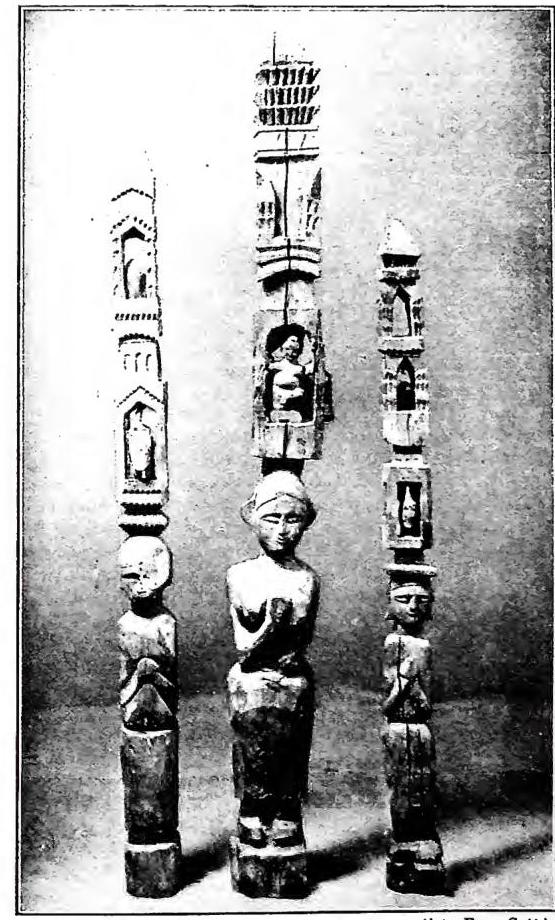
ASIA - Funerary columns carved in wood. Burma. Rome, Pontifical Missionary Ethnological Museum of the Lateran.
the Pacific separates, the two landmasses of the Old and New Worlds approach one another first through a broad insular chain of uncertain affiliation (the Aleutians), then across a narrow sea arm (the Bering Strait, 92 km.), which, frozen in winter, allows easy passage from A. to America and vice versa. In this way, A. enjoys the privilege of being in more or less intimate contact with all parts of the world, among which it occupies a central position.
Bounded by Cape Chelyuskin to the north (77° 42' N.), Cape Buru to the south (1° 16' N.), Cape Baba to the west (26° 5' E. Greenwich), and Cape Dezhnev to the east (169° 44' W. Greenwich), the continental mass lies entirely within the Northern Hemisphere.
A. is the part of the world that extends furthest in longitude: over 164° (just under half the globe’s circumference). Taking the islands into account, while the longitudinal extremes shift only slightly, the Australasian archipelago extends the continent’s southern limit beyond the Equator: 10° 54' S. (Roti Island, southwest of Timor).
A. has a rather massive shape, with a core that can roughly be likened to a quadrilateral of about 6,000 km per side, and alone (33.5 million km²) is larger than any other part of the world.
Its vastness and continentality are well expressed by the fact that the average distance from the sea is more than double that of Europe (770 km compared to 340), nearly one-third of its area is separated from the coasts by over 1,000 km of intervening land, and there are interior points as far as 2,400 km from the sea. Nevertheless, its outline is relatively indented. The core and its articulations stand in a ratio of approximately 3 to 1 (in surface area), and the latter are represented mainly by peninsulas. Of these, the three southern ones (Arabia, India, and Indochina) are among the largest in the world (several times larger than those of the Mediterranean), while the islands, among which there are likewise sizable ones (Borneo, Sumatra, Honshu, Celebes, Java, Luzon), together with the former, form on the continent’s eastern side such a rich and striking garland of festoons as found nowhere else in the world. Characteristic is the development assumed by the peripheral seas between these festoons and the continental mass, from the Bering Strait to the Australasian Mediterranean (which, with its 7.5 million km², is the largest of the Earth’s mediterranean seas): around some of these seas, areas of intense economic activity have developed, among the most densely populated on the globe.
In terms of relief, A. also differs from the other two continents with which it forms the Old World. More than the far greater proportions of its mountain systems, plateaus, basins, valleys, depressions, glaciers, etc., and even the much greater absolute height of its highest peaks (Central A. exceeds 8,000 m in several places and reaches 8,882 m in Mount Everest, Himalayas), what best conveys the conditions of its morphology is the predominance of highlands over lowlands. The former, which include the world’s highest plateaus and all (except one) of the Earth’s peaks over 7,000 m, alone cover two-thirds of the continent’s surface, whose average elevation (960 m), nearly triple that of Europe, is unmatched elsewhere in the world, apart from Antarctica, which is still imperfectly known. The contrast between a median orographic zone, representing the continuation of the Alpine arc, and the lowlands (Northern A.) or platforms (Western and Southern A.) that border it to the north and south is immediately striking. On one side, multiple series of long, reinforced barriers extend from the Mediterranean eastward (Pontic Mountains, Taurus, Zagros, Hindu Kush) into the heart of A., where they seem to converge (Pamirs) before branching in different directions: eastward toward Tibet (Himalayas, Transhimalayas, Kunlun, Altyn-Tagh) and then, bending south, toward Indochina and Indonesia; further east toward China (Qinling Mountains); north toward Mongolia and Siberia (Tian Shan, Yablonoi, Stanovoy). On the other side, more or less extensive plateaus remain enclosed or bordered by these ramparts (Anatolia, Armenia, Iran, Tibet, Eastern Turkestan, Dzungaria, Mongolia, etc.) on one or more of their sides.
The continuity of the orography does not always correspond to genetic or structural continuity: in contrast to the great belt of Tertiary foldings to which, for example, the Caucasus and the Himalayas belong, the reliefs dating back to the Hercynian folding, such as the ranges crossing Tibet and bordering Central A. to the north, assume individuality. Similarly, the origin and appearance of the plateaus may vary. Some of these correspond to tablelands (of the complex to which Africa and Australia belong): the Deccan and Arabia, both welded to the continent by extensive alluvial zones (respectively the Indo-Gangetic and Mesopotamian lowlands); others mostly result from ancient folded zones leveled by long erosion, as is the case, for example, with the central section (between the Yenisei and Lena) of Siberia, quite different from a true plain. A distinct position is occupied, in many respects, by the eastern side of the continent, in whose relief and morphology volcanism plays a significant role, present with numerous active apparatuses from Kamchatka to the Sunda Islands.
Overall, the arrangement of the relief is such that, in general, the peripheral zones correspond to the most easily accessible sectors, while the interior regions are crossed by grand mountain complexes that hinder penetration. The axes of these complexes, sometimes converging, sometimes diverging, enclose zones of varying size, which become segregated from the beneficial oceanic influence. A. is thus the continent with the highest percentage of areas without drainage to the sea. At the same time, a regional compartmentalization arises, with which the persistence of forms of practical activity (ways of life, tribal and state organization, spiritual, linguistic, religious, and customary practices) may perhaps be linked, all equally original and conservative.
The characteristics of the hydrography correspond to those of the relief, its most peculiar feature being first of all the great extent of internal basins. No less than 15 million km² (roughly one-third of the continent) are covered by zones whose waters do not reach the ocean, and indeed 10 million of these (equal to the area of all Europe) entirely lack surface hydrography (areic zones), due to insufficient precipitation. Apart from Arabia and Iran, these regions concern Central A., from the Caspian to Manchuria and from Tibet to Turkestan; regions in which, in addition to a large number of closed salt lakes (Caspian, Aral, Balkhash, Lop Nor; Tibetan lakes), there are also numerous absolute depressions (Turfan, 130 m; Caspian Sea surface, 26 m; the deepest, however, is the Dead Sea in Palestine, 394 m). Excluding the Aralo-Caspian region, the largest internal basin is that of the Tarim (1.1 million km²), whose course (1,300 km), like those of the Amur, Syr Darya, and all rivers of arid zones, progressively diminishes toward the mouth, also due to the intense withdrawal of water for irrigation.
The expansion, in the very heart of the continent, of this immense area without drainage to the sea and the arrangement of the relief explain why A., despite its vast size, has the greatest number of large rivers (7 with over 4,000 km; 2 with over 3,000 and 6 with over 4,000 km in length), though not the world’s longest river.
The Siberian rivers, among which some are considerable (with the Ob and Yenisei, each 5,200 km long, yielding only to the Nile, Mississippi, and Amazon), flow through plains with abundant and constant waters, but navigation—interrupted for many months (7 on the Lena upstream of Vitim) due to ice—is sporadic (internal communications). Moreover, as freezing advances downstream and thawing upstream, they transform the riverside zones into swamps for varying periods. The mouth of the Amur (4,500 km; 2.1 million km² basin) is also ice-bound for about six months; and the Huang He (4,100 km; 1 million km²) has an excessively irregular regime, whose powerful alluviation has caused frequent breaches and course changes (nine times in historical times, the last in 1852, when the mouth shifted from the Yellow Sea to the Gulf of Pe-chi-li) and resulted in incalculable devastation. Conversely, the greatest of the Chinese rivers, the Yangtze (5,200 km; 1.8 million km²), rich in waters and navigable in every season by vessels for over half its course, represents the most important artery of all eastern A.; with its numerous tributaries, it is certainly the most frequented basin in the world. The Indochinese rivers (Irrawaddy, Menam, Salween, Mekong) also enjoy abundant flow, but with marked irregularity in both regimes (floods) and, even more, in their bed profiles (rapids and cataracts). A stark contrast exists between the two major Indian rivers, the Indus and the Ganges-Brahmaputra: the former (3,200 km; 1 million km²), poor in waters, scarcely navigable, and flowing through sparsely populated territories; the latter, privileged for its abundant and regular discharge, better navigability, and use for irrigation (in one of the continent’s most vibrant regions) to an extent perhaps unmatched by any other river in the world (3,000 km; 1.7 million km²). Far lesser, though still notable, is the importance of the "twin" rivers Euphrates and Tigris, whose wise utilization made possible, in antiquity, the flourishing of Mesopotamian civilizations.
Of the many lakes with which A. is rich, most belong to internal basins, not excluding the Caspian Sea, which, due to its size (440,000 km²) and characteristics (a remnant of a much larger sea), stands apart. The Aral (64,500 km²) and Lake Baikal (33,000 km²) are among the most considerable; the latter, also the deepest on Earth (1,521 m), is simultaneously the greatest known cryptodepression, with its bed descending to 1,045 m below sea level.
The climatic characteristics of A. and their great variety are essentially determined by: the continent’s considerable latitudinal extent (from the pole to the equator); the pronounced continentality of its mass; the disposition and energy of its relief; and finally, the monsoon system. These are periodic winds caused by the regular seasonal contrast (mawsim, in Arabic "season") between the differing heating and cooling of the compact inland continental mass and the adjacent Indian Ocean. Thus, during the boreal winter semester, they blow cool and dry from land to sea (northeast monsoon), and during the summer semester in the opposite direction (southwest monsoon), bringing, in the latter case, the benefit of rain to an immense area (from the coasts of Arabia to Japan). In southern and southeastern monsoonal A., where temperatures are generally rather high with modest thermal ranges, the year is divided into two seasons, the dry and the rainy, separated by two brief transition periods (usually in April and October), during which frequent and terrible storms (typhoons of the Chinese seas) occur. On the southern slopes of the Himalayas, up to 12 m of annual rainfall are recorded (the maximum registered on Earth). Rainfall is also abundant, and year-round, in Indonesia, where temperatures remain constantly high throughout the year (oceanic equatorial climate). Toward the west, from India and the Caspian to the Aegean, the Mediterranean climate dominates, with mild winters, hot and dry summers, and scarce winter rains, which become increasingly scant on the inland plateaus, cut off from marine influence (Anatolia, Arabia, Iran). Toward the northwest, these arid zones gradually give way to the climates of central A., which extend over a good third of the continent: more than thermal contrasts between long, harsh winters and short, hot summers, their defining feature is general aridity, even where altitude increases (Tibet). Boreal A., from the Urals to the Amur, has even longer and harsher winters (at Oimekon, in the Indigirka basin, the winter average is -48°C; this is the so-called "pole of cold"), and brief summers with equally scarce precipitation, though in southern Siberia climatic conditions moderate, and rainfall increases sufficiently to permit cultivation.
The roughly north-to-south zonal distribution of climates corresponds to that of spontaneous vegetation. The peri-Arctic boreal region, with perpetually frozen soil, falls within the domain of the tundra, bleak in winter, vividly blooming and green with mosses and lichens during the sunny summer. South of the polar circle stretches the immense coniferous forest (taiga), covering almost all of Siberia in a belt varying from 1,000 to 2,300 km wide (and thus the largest in the world): a refuge for inexhaustible wildlife (fur-bearing animals, wolves, brown bears). At the expense of the forest, Russian colonization has developed livestock breeding and cold-zone European crops in the more suitable southern regions. With gradual transition, the taiga gives way to the south first to steppe and then to desert, forming an almost continuous zone stretching from the Red Sea to the Sea of Japan, encompassing Arabia, Anatolia, Persia, Turan, and central A. as far as the extreme Gobi; an enormous arid belt, whose natural vocation is nomadic pastoralism (sheep and camels; central A. appears to be the place of origin of the camel, and anterior A. of the dromedary), but which has partly (through irrigation or oases) been reclaimed for cultivation (cereals, cotton: Tarim, Russian Turkestan). The remaining A. comprises barely 1/3 of the continent’s area but about 9/10 of its population; it includes, along with the savannas of monsoonal countries and the evergreen scrublands of subtropical regions—which, both in the west (anterior A.) and the east (southern China, southwestern Japan), have by now been transformed by cultivation—fairly extensive tracts of equatorial forest, still covering the inland parts of the Malay islands and various regions of the continent itself (Malacca, Indochina). In these regions, the fauna is as exuberant as the flora (large felines, elephants, rhinoceroses, monkeys, reptiles, etc.; great abundance and variety of birds in the subtropical regions of A.), naturally diminishing as one moves from the equatorial and monsoonal zones to the peripheral subtropics.
Overall, of A.’s area, just over 1/5 is occupied by steppes, pastures, and meadows; less than 1/4 by scrub and forests; approximately 1/5 or slightly more by arable land; the rest is unproductive (20%).
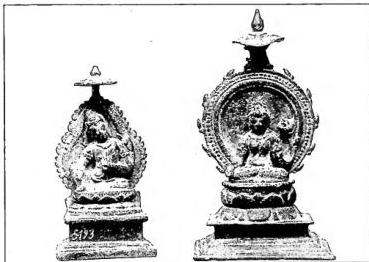
Asia - Statuette of Avalokiteśvara, Java. Rome, Pontifical Missionary Ethnological Museum of the Lateran.
Asia is considered the cradle of humanity; and from Asia, in historical times, several waves of peoples set forth: Ugro-Finns, Tartars, Turks, Huns, etc., toward Europe; Arabs toward Africa; Jews in every direction. All three major racial groups generally recognized today (White, Yellow, Black) are represented here, but approximately two-thirds of its population belong to the Yellow or Mongoloid group (so much so that this continent is often called, by antonomasia, the Yellow Continent). Among these, the two eastern branches of Sino-Tibetans and Koreans-Japanese are numerically predominant, while the western branch (Turks, Turcomans, Tartars, Kirghiz), as well as the central (Mongols in the strict sense and Manchus) and northern branches (or Paleoasiatics: Samoyeds, Tungus, Yakuts, Kamchadals), though spread over much larger areas, are more sparsely distributed. These latter groups live mostly as nomads and sometimes in primitive conditions.
The Europid group penetrates Asia from the west in two long intrusions: an ancient one to the south, from the Mediterranean to the Bay of Bengal, consisting of Armenians, Iranians, and Indians; and a more recent one to the north, stretching like a slender strip from the Urals to the Pacific (Slavs). These branches are spatially connected, in a certain way, by the original, mixed nucleus of the Caucasians. It can be estimated that Whites in Asia number roughly 320-350 million. As for the Malays, who populate most of the Australasian islands and are sometimes considered a mixed race (a cross between Mongoloids and Negrids), they probably number no fewer than 70 million. Another area of ethnic mixture is represented by the southern part of the vast region where Asia and Europe merge; a third, even more evident, is India, where, alongside remnants of primitive populations (Veddas of Ceylon), a fairly substantial branch (200 million) of Negrids or Indomelanids (eastern regions) is represented—these, too, of still uncertain classification. Racially ambiguous groups are found, moreover, almost everywhere in Asia: in northern Japan (Ainu), in the Philippines (Negritos), in the Andaman Islands (Mincopi), etc.
Asia was the cradle of all the most widespread religions: Judaism, Christianity, and Islam arose on the edge of the Arabian desert; Brahmanism and Buddhism in India; Confucianism and Taoism in China; Shintoism in Japan. It is no surprise, then, that Asia presents an equally varied and complex religious landscape. Confucians (370 million), Hindus (280 million), and Buddhists (270 million) alone account for four-fifths of the continent's population, with the first prevailing in Southeast Asia from Annam to Korea and in China proper, the second in India, and the last from Burma to Indochina. Islam dominates Southwest Asia, with significant communities in India and Indonesia: its adherents, according to the most reliable sources, range from 200 to 280 million. No fewer than 50 million are likely adherents of the primitive religions still preserved among the peoples of the Far North, as well as in the interior of India, Indochina, and the larger islands. A distinct group, considerable in number (18-20 million), is formed by the Shintoists of Japan, while a relatively small (perhaps one million) and rather dispersed group consists of Jews, though most are settled in Anterior Asia.
As for Christians, they represent perhaps no more than 1/25 of Asia's population (50 million souls); Catholics account for barely 1/60 (20 million; mainly in the Philippines and Anterior Asia). The majority of the continent's Christians (25 million) are Orthodox (Asia Minor, Siberia); Protestants are scattered almost everywhere and, like Catholics, have established numerous missions in southern and southeastern Asia. It is hardly necessary to note that all these statistical data should be taken with many reservations, given the varying and often limited reliability of the sources from which they derive.
In the global economy, Asia occupies a position disproportionate to its size, potential, and population.
As regards mineral production, Asia dominates the international market only in tin (over 90% of the world total, British Malaya, China, Indochina), and its share is modest in petroleum (less than a quarter of the world total; mainly in the Caucasus, Arabia, and Iraq). As for coal, even considering Soviet production (most of which still comes from European regions), the amount extracted in Asia probably does not reach a quarter of the world total. Asia's contribution is modest, or even negligible, for all other highly sought-after products in international trade (noteworthy is only 40% for tungsten; lead yields 1/10, antimony 1/4 or 1/5).
Asia - Polychrome wooden Madonna and Child. Cua-tung, Annam - Rome, Pontifical Missionary Ethnological Museum of the Lateran.
The true wealth of the continent lies in agricultural products, which is unsurprising when one recalls that Asia has given us the greatest number of cultivated species (if not wheat, certainly rice, tea, cotton, mulberry, olive, sugarcane, etc.) and fruit trees (cherry, peach, apricot, plum, banana, orange, etc.), as well as the vine. Asia produces 95% of the world's rice, the staple food of monsoon countries; one-third of barley (U.S.S.R. and China); one-quarter of wheat (U.S.S.R., China, and India); likewise, one-quarter of sugarcane (India) and hemp (U.S.S.R. and China); more than one-quarter of cotton (India and China); over half of tobacco (China and India); nearly all tea (98%; India, China, Japan, Ceylon), rubber (97%; British Malaya, Indonesia), and soy (80%; China, Manchuria); and all jute (India), etc.

BIBL.:
A. Geikie, The Ancient Volcanoes of Great Britain, London 1897; A. Supan, Die Bevölkerung der Erde, Gotha 1904; E. de Martonne, Traité de géographie physique, Paris 1909; L. de La Vallée Poussin, Dynasties et histoire de l'Inde, Paris 1911; H. F. Macmillan, Tropical Planting and Gardening, London 1914; A. J. Toynbee, Nationality and the War, London 1915; P. Vidal de La Blache, Principes de géographie humaine, Paris 1922; L. Febvre, La Terre et l'évolution humaine, Paris 1922; E. Huntington, The Character of Races, New York 1924; R. Biasutti, Le razze e i popoli della terra, Torino 1941; G. Taylor, Environment, Race and Migration, Chicago 1937; E. Reclus, L'Homme et la Terre, Paris 1905-1908; The Statesman's Year-Book, London (annuale); Annuaire statistique de la Société des Nations, Genève (annuale).
G. TUCCIMEI.
Livestock farming of cattle is considerable in India (which has more than any other country in the world) and in China; with over 200 million head, Asia accounts for approximately 30% of the global livestock. Goats (50% of the world total) and sheep (12%) are widely distributed, especially in India, China, and Anterior Asia; pigs (the continent, including the U.S.S.R., possesses just under 2/5 of the world total) are primarily found in China (which holds the absolute primacy with over 1/5 of the total). Among draft and pack animals, apart from the extreme northern regions (reindeer and dogs), oxen and buffaloes (with 62 million head, the latter represent 98% of the world livestock) prevail in monsoon Asia, where elephants are also employed for the same purpose; horses (30 million head; 1/3 of the world total: U.S.S.R., China, and India), donkeys (16 million head; over 1/3; China, India, U.S.S.R.), and mules (26%; especially in China and Manchuria) in the central territories north of the desert belt and in Eastern Asia; camels (1/4 of the world total: China, U.S.S.R., India) in the arid regions of the center, except Tibet, where the yak is employed (but only for transport). Among animal products, silk should be mentioned, whose farming is highly developed throughout Eastern Asia; Asia certainly produces more than 4/5 of the world's raw silk. While the continent's contribution in terms of meat, wool, and milk is modest, the output of maritime fishing is substantial (perhaps 2/5 of the world total), having long been one of the preferred occupations of the populations of Japan (the leading state in this regard), China, and Malaysia.
While craftsmanship has ancient traditions in Asia (China, Japan, India) and still produces objects of artistic value and wide renown, the development of modern large-scale industry has been late and recent everywhere. Only Japan, China, and Central Siberia can be ranked among industrialized countries, although, with the exception of the former, these transformations are partial and their productions are intended to cover, at least in part, domestic consumption. In international trade, indeed, Asian participation remains modest: between 1/7 and 1/6 of the total value before the recent world war. This trade was and remains essentially based on the exchange of raw materials for manufactured goods, of which the only significant continental suppliers are Japan and the U.S.S.R.
The broad political fragmentation of Asia, its physical structure, and its economic development explain why, while trade has largely retained traditional systems, international commerce is concentrated in Southern and Eastern Asia. The most frequented sea routes connect these regions to Europe through the Red Sea (Suez Canal); nevertheless, the importance of the Pacific is growing as a consequence of the Second World War. The most active ports (excluding the U.S.S.R.) are all south of the 40th parallel (Smyrna, Beirut, Aden, Bombay, Madras, Colombo, Calcutta, Rangoon, Singapore, Batavia, Manila, Hong Kong, Canton, Shanghai, Nagasaki, Kobe, and Yokohama). As for internal communications, railways were introduced in Asia relatively late, and their development has been slow. With approximately 170,000 km of lines, Asia ranks last among the continents in relation to its population (1.4 km of railway per 10,000 inhabitants), and the four sectors containing the majority of these lines (Indian, Japanese, Russian, Chinese) neither connect nor complement each other. Nevertheless, it is now possible to travel by train from Europe to the Persian Gulf, Turkestan (Turksib), Korea, and China (Trans-Siberian) with regular services, supplemented for almost all other regions of the continent by equally rapid and convenient motor services; and even more swiftly by aircraft that now link all major Asian centers to those of the Old and New Worlds. While distances have thus been overcome or shortened everywhere, it nevertheless remains—

Asia, whose peoples have constituted, since the most remote antiquity, large and well-ordered political organisms—and in these have repeatedly included parts of Europe itself—had, on the eve of the First World War, more than half of its territory subject to European states. These maintained flourishing exploitation colonies for some time, in which a narrow aristocracy of rulers dominated enormous masses of indigenous populations, whose traditional and often original ways of life Western civilization has not always been able to permeate or alter. Nevertheless, the last century, with its economic evolution and great politico-social conflicts, has everywhere first fostered a closer collaboration between the local element and the dominators, and then a broader and more effective autonomy and independence for the dominated.
Taking into account recent changes in the political situation of territories subject to British authority or influence (India, Burma, Ceylon, Transjordan), nearly nine-tenths of the area and over nine-tenths of the Asian population are now under independent rule, excluding Russian Asia, which alone absorbs slightly less than two-fifths of the surface but barely one-thirtieth, or a little more, of the continent's population (and, moreover, the recognized national autonomy finds a reflection, albeit external, in the federative structure of the Soviet state). If one also includes Palestine, the Dutch East Indies, and the Indochinese Federation among the independent states—for which, in any case, one can no longer speak of colonial forms—the proportions reduce European dominion in Asia to just 2.4% of the territory and 1.4% of the population, that is, in essence, to residual fragments, the most important of which are the British ones (Ceylon and the Malayan Union above all).
It must nevertheless be noted that the de facto situation often differs from the de jure one, not only in recently independent territories but also in those long considered as such (Afghanistan, Arabia, China, Iran, Iraq, Mongolia, Nepal, Thailand), whose internal politics are closely tied to the events of the existing or latent conflict among the principal extra-Asian powers (including, first and foremost, the U.S.S.R.). Only with this reservation can the following statistical overview of the continent be presented.
| Territories | Area (sq km) | Population |
|---|---|---|
| Afghanistan | 650,000 | 12,000,000 |
| Arabia | 2,800,000 | 9,000,000 |
| Burma | 604,721 | 16,824,000 |
| China | 9,240,000 | 463,200,000 |
| Korea | 220,788 | 27,200,000 |
| Philippines | 296,285 | 19,511,000 |
| Japan | 382,253 | 78,025,000 |
| Iran | 1,643,558 | 15,000,000 |
| Iraq | 452,500 | 4,611,000 |
| Outer Mongolia | 1,612,000 | 900,000 |
| Nepal | 140,000 | 7,000,000 |
| Lebanon | 10,170 | 1,146,793 |
| Syria | 171,104 | 2,901,316 |
| Thailand | 513,447 | 17,359,000 |
| Transjordan | 89,975 | 340,000 |
| Turkey [Asiatic] | 743,500 | 17,600,000 |
| Independent Asia | 19,570,301 | 692,618,109 |
| U.S.S.R. [Asiatic part] | 17,030,000 | 43,200,000 |
| Hindustan | 4,095,686 | 400,000,000 |
| Pakistan | ||
| Cyprus | 9,282 | 462,000 |
| Bhutan | 46,600 | 250,000 |
| Aden, Perim and dependencies | 15,200 | 150,000 |
| Ceylon | 65,905 | 6,880,000 |
| Singapore | 730 | 950,000 |
| Malayan Federation | 131,193 | 4,780,000 |
| British Borneo | 190,567 | 860,000 |
| Hong Kong and Kowloon | 980 | 1,750,000 |
| Palestine | 26,158 | 1,912,000 |
| British Asia | 4,582,401 | 417,994,000 |
| Indian Settlements | 513 | 346,150 |
| Indochinese Federation | 740,400 | 23,850,000 |
| French Asia | 740,913 | 24,196,150 |
| Goa, Damão and Diu | 3,983 | 625,000 |
| Macao | 16 | 375,000 |
| Timor and Cambing | 18,990 | 500,000 |
| Portuguese Asia | 22,989 | 1,500,000 |
| Dutch Asia | 1,488,000 | 71,534,000 |
| Greek islands of Asia | 7,050 | 460,000 |
| Sinai [Egypt] | 61,000 | 30,000 |
| Inland seas | 505,746 | — |
| TOTAL | 44,008,423 | 1,251,532,259 |
II. ETHNOGRAPHY AND RELIGIONS
1. From an anthropological standpoint, the following racial groups can be identified on the Asian continent: a) the Pygmies, of very small stature, pushed to the southernmost limits (Malacca, Andaman Islands, Philippines); b) the Pygmoid groups, of small stature, differentiated by various evident mixtures; they are represented in the north by the Eskimos, Lapps, Ainu, etc., and in the south by the Vedda, Dravida, etc.; c) the Indo-Afghanic peoples, of large build; d) the Turco-Tartaric peoples, of medium stature, occupying the western part of Central Asia; e) the Mongols, with their characteristic prominent cheekbones.
2. Linguistically, the following groups are to be noted: a) the Paleo-Pygmy group (Negritos, Andamanese); b) the Paleo-Asiatic group (Ainu, Yukaghirs); c) the Dravidian group; d) the Tibeto-Chinese group; e) the Austro-Asiatic group; f) the Indo-European group; g) the Uralo-Altaic group; h) the Semitic-Hamitic group.
3. Ethnologically, an increasing specialization can be observed: a) the primordial culture of hunting and gathering is represented by the Pygmies; b) the arctic culture can be considered a particular phase of the preceding one; c) pastoral culture is richly present in the great northern steppes; d) the totemic-patriarchal culture is found among the western tribes; f) finally, there remain the great mixed cultures—Indian, Chinese, and Japanese.
All these cultures have, for a very long time, more or less rigidly crystallized; only recently, following the encounter with modern European civilization, have the great mixed cultures embarked on a new upward path.
For the great non-Christian religions of Asia, V. BRAHMANESIMO; BUDDHISMO; CONFUCIANESIMO; GIAINISMO; INDUSMO; ISLAMISMO; LAMAISMO; PARSISMO; SCINTOISMO; TAOISMO; VEDISMO.
III. ASIA IN THE BIBLE
It never designates the entire continent. In the books of the Maccabees, it refers to the kingdom of the Seleucids: the first to whom we find attributed the title of "king of Asia" is Antiochus III (223-187 B.C.: I Mach. 8, 6), and after him his successors also receive it (ibid. 11, 13; 12, 31; 13, 32; II Mach. 3, 3), although under Antiochus III the Seleucid kingdom retained, of Alexander the Great's Asian provinces, only Syria and Cilicia.
In the New Testament, A. (Acts 2:9; 4:9; 16:6; 19:10, 22, 26; 20:4, 16, 18; 21:27; 24:19; 27:2; Rom. 16:5; I Cor. 16:9; II Cor. 1:8; II Tim. 1:15; I Pt. 1:1; Apoc. 1-3) refers to the Roman province of A. (established in 129 B.C.), which occupied part of Asia Minor. In the 1st century A.D., it comprised Mysia, Lydia, Caria, and western Phrygia (Cibyra, Apamea, and Synnada), and from 27 B.C. onward, it was governed by the Senate through a proconsul residing in Ephesus. In Apoc. 1:4, 11, John addresses the "seven churches that are in A.," enumerating them as Ephesus, Smyrna, Pergamum, Thyatira, Sardis, Philadelphia, and Laodicea; however, he omits Colossae, Hierapolis, Magnesia, Tralles, Miletus, and others. In the New Testament, the term sometimes assumes a narrower meaning; for example, in the Acts of the Apostles, it often denotes only the Ephesian region.
From A. (proconsular province) derives the term Asiarch (Acts 19:31; cf. Bithyniarch, Galatarch elsewhere), a magistrate who, in the presence of the proconsul, presided over the annual provincial assembly of delegates from all cities (Koinon or Commune Asiae) in Ephesus, where the cult of Rome and the emperor was celebrated, and deliberations were made on behalf of the entire province. His office was distinct from that of the Archiereus, the high priest, though the two roles were sometimes held by the same individual.
IV. CHRISTIANITY IN A.
IV. CHRISTIANITY IN ASIA
ANCIENT PERIOD. - For the spread of Christianity on the Asian continent in the ancient period, V. ARABIA; ARMENIA; ASIA MINORE; CINA; INDIA; PERSIA.
MEDIEVAL AND MODERN ERA. -
1. From the 13th to the 15th century
In the 13th century, after the conquest by the Germanic tribes of the north, the Church seemed destined to remain confined within European borders, without the possibility of expanding toward the vast pagan world. To the south of Europe, Islamic states had erected an unbreakable dividing wall between the Mediterranean countries and Africa; and the Christian East, breaking the ties that bound it to Rome, had closed every path for the Church toward the populations of the Asian interior. Only a new event, or a complex of circumstances, could have changed that deadlocked situation.And the new event was the sudden invasion of the Mongols, which, while appearing to threaten the destruction of Christendom itself, in reality broke down that dividing wall, making it possible for the Christian West to reach the Far East. The Church could thus resume its expansionist program for the benefit of those new peoples, all the more fervently since, through the Mongol incursions, these peoples had revealed themselves to be numerous, powerful, and—according to rumors—also receptive to evangelical preaching. Events would demonstrate that this last assumption was not accurate (v. storia), but the notable phenomenon of the Church's contact with the Eastern world remains, all the more interesting in a time when Christendom was gripped by terror at the advance of those savage hordes, which, though twice avoided, could not be considered definitively averted. A contact between two worlds, achieved through the initiative of the papacy—not least the popes of the Avignon period—did not mature into the hoped-for Christian conquest of those peoples, nor their alliance against the more immediate Muslim danger, and did not succeed, at that time, in permanently integrating those nations into the general and living movement of Christendom; it did, however, establish stable relations between Europe and A., which came to know one another, with incalculable benefits for geographical and ethnographic science.
It cannot be denied, however, that the religious advantages of the apostolate were not entirely lacking. Christianity did not take root in the East, but missions were established, and all the roads of A. were dotted with small Christian beacons, destined in time to grow into firmly planted Christian communities, if not yet dominant, in that immense and then unexplored world.
The principal actors in this Christian advance into A. are the two new mendicant Orders of the Franciscans and the Dominicans. The century spanning from the mid-14th to the mid-15th century, from the journey CARAITI (v.) MARIGNOLLI, GIOVANNI (v.), marks the most significant stages and the creation of episco-
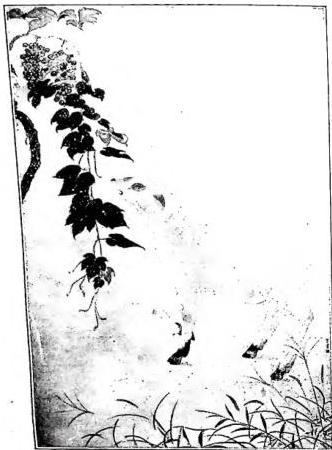
ASIA - Lamb and vine branch, symbol of Christianity. Japanese painting - Rome. Pontifical Missionary Ethnological Museum of the Lateran.
With the fall of the Genghisids, the advent of the Ming dynasty in China (1368), and the triumph of Islam at the Persian court, access to the Far East
was definitively closed, and moreover, the land routes through Persia, the Kipchak, and Turkestan had become almost impassable: the establishment of missionary footholds came to a halt. Here too, to resume the journey, a great providential event was needed, which soon materialized through the enterprise of a young and bold European power, Portugal.
2. From the 15th to the 18th century
The event was the discovery of the route to the Indies (1497-98) with the rounding of the Cape of Good Hope. Along that route, Portuguese navigators and missionaries launched themselves, who from that day for a century and a half would hold unchallenged the colonial and missionary monopoly of Asia. However one may judge it from a missionary-methodological standpoint—a judgment that would be out of place here (v. storia)—this is undoubtedly the first great apostolic period of broad horizon and great significance in the history of the apostolate: a period that realizes the Christian taking of possession of Asia and sees the emergence of the most eminent missionary personalities: St. Francesco Saverio (v.), Ricci (v.), de Nobili (v.). All the great Asian countries, which still today constitute that historic continent—India, China, Japan, the Philippines, Malaysia, Tibet—saw their land and sea routes, their coastal and inland cities traversed by the Catholic missionary, who studied their languages, their customs, adopted their usages, and infused, or at least attempted to infuse, into those civilizations so distant from ours the universal religion of Christ. Thus arose—fruit and hope together of this activity—on Asian soil, in the most strategic points, the first cells of Christian life that branched out and multiplied. The 16th century was the century of the creation of the great Asian dioceses, of which the very first—Funchal (1514) and Goa (1534)—encompassed, in addition to all of Asia, also Africa, with which the apostolate had come into contact. In 1558, Cochin and Malacca (which extended as far as Japan) were separated from Goa; in 1579, the dioceses of Macao and Manila were created, and in 1587 that of Funai, thus marking the official taking of possession of the five major Asian regions: India, Indochina, China, the Philippines, and Japan. From these four original centers, or even independently of them, the apostolic vicariates of Propaganda, not bound to the Portuguese patronage, would develop from the 17th century onward other minor centers, less extensive but more fruitful, which marked the further stages of the apostolate’s journey, in extension and depth, in the Eastern world.Depth, however, was relative, with varied, alternating, and always arduous vicissitudes. The 17th and 18th centuries, in fact, were the centuries of the harshest experiences for the Church regarding the ease or difficulty of truly conquering those Eastern civilizations, long won over to Hinduism and Buddhism. And thus came the rupture: the three great Far Eastern countries isolated themselves from the West, banning the messengers of Christianity. To make the enterprise even more difficult, in the 18th century—besides the disorienting question of the rites (v. RITO), which had opened in the 17th century—further complications of a religious-political nature arose: the suppression of the Society of Jesus, with the consequent depletion of missionary personnel; the controversy over the jurisdiction of apostolic vicars, opposed by supporters of Portuguese missionary policy; the struggle of Protestant powers against Catholic missions; and finally, the French Revolution, which severed the bridges between the two worlds.
3. From the 18th to the 20th century
With the Restoration of the 19th century, the Church, despite the continuing state of persecution in at least three of those countries, turned its gaze once more toward Indochina and the Far East, drawn by its zeal. The new task of Christianity in Asia, however, was extremely difficult, not only because of the prevailing prejudices in those countries following the events just mentioned, but because the question of penetration into those territories, hermetically closed to foreigners, was posed anew; moreover, it was no longer a matter of geographical impenetrability, but of political impenetrability, hardly surmountable. Indeed, the obstacle—which concerned not only the Church but also the civil states of Europe—was removed by force, but this very fact also cast upon the missions, as such, the antipathy and hatred naturally provoked by any imposition; thus, the resumption of missions took place in a climate of distrust, which increasingly tinged their religious, evangelizing, and charitable action with political overtones. Yet not all the balance was negative in this period; the missions, in fact, provided with personnel and means as never before, and officially tolerated, if not recognized, widely extended their zone of occupation in the interior of Asia, and, though they did not achieve success in environments religiously dominated by Hinduism and Buddhism, they gathered a fair harvest among many of the smaller populations, and, in any case, imposed themselves on the attention, and often on the administration, of the upper classes and indigenous governments. The widespread movement of renewal that the great organized religions of Asia have initiated since the end of the last century and continue in this one, both from a doctrinal and, above all, an ethical standpoint—tending to minimize the aspects contrasting with Christianity, whose terminology they sometimes adopt, and often copying its charitable activities—is an index of the undoubted influence, albeit indirect, that the missions have exerted and continue to exert on the Asian mentality.BIBL.:
For the medieval period: G. Golubovich, Biblioteca bio-bibliografica della Terra Santa e dell'Oriente francescano, Quaracchi 1906-27; A. C. Moule, Christians in China before the year 1550, London 1930; L. Oliger, in Archivum Franciscanum Historicum, 1913-14; P. Pelliot, Les Mongols et la Papauté, in Revue de l'Orient Chrétien, 1922-23. For the modern period: J. Brucker, Les jésuites en Chine, in Études, 1924; H. Bernard-Maître, S. François Xavier, Paris 1946; G. Gheddo, La Chiesa in Asia, Milano 1946; L. von Pastor, Storia dei Papi, Roma 1942, voll. VIII-XVI; J. Schmidlin, Katholische Missionsgeschichte, Steyl 1925. For the contemporary period: A. Mulders, Missiegeschiedenis, Nijmegen 1938; J. Schmidlin, Papstgeschichte der neuesten Zeit, München 1933-39; Annuario Pontificio, Città del Vaticano 1947; Acta Apostolicae Sedis, Città del Vaticano 1909 ss.
A. ROSSI
The formidable challenge of deeply penetrating the strongholds of those religions, which count millions upon millions of adherents, nevertheless remains; that is, the ancient problem of the moral conquest of Asia persists, whose aridity, having emerged in the preceding period, had provoked the well-known controversies. Today, however, the question presents itself under new and more promising conditions, as there is no longer any fear of the resurgence of old disputes or their dismissal through summary measures. The issue of studying the method or adaptation has imposed itself upon the missionary world, at both high and low levels, having been matured by the times and experiences. Some truly grand steps have been taken along the path of that longed-for conquest, such as the creation of an indigenous hierarchy (v. INDIGENO, CLERO, questione del) in China, Indochina, India, Japan, and Korea, and the abolition of the oath for Malabar and Chinese rites, as well as the permission for Chinese and Japanese civil ceremonies (v. CIANRESI, MALABARICI, CIAPPONESI). There is an impression that other notable innovations are under consideration, while the very latest events will impose—and, to a certain extent, facilitate—their adoption. For this reason, it seems possible to say that the premises for the Christian conquest of Asia are securely established. - See TAVV. XI-XIV.
Giovanni B. Tragella