The specific end of missions is to establish the Church in territories where it does not yet exist, providing it with the necessary means for its further development. Hence the necessity of forming an indigenous clergy capable of governing the local Church, that is, a sufficient number of priests born in the country and able to exercise their ministry there, even if they differ in language and race. The Sacred Congregation of Propaganda Fide has insisted on this necessity from the very beginning. Fundamental methodological reasons make it so that missionaries alone are insufficient for the work of converting and assisting the infidels, especially when the number of converts multiplies at a rate exceeding that of the missionaries. The indigenous people, moreover, have the right to cultivate their own field and, being more acceptable to their fellow citizens—whose language they speak—are also better suited for this task. In times of crisis, they are furthermore in a position to better ensure the life of the Church. The formation of the indigenous clergy has been one of the first concerns
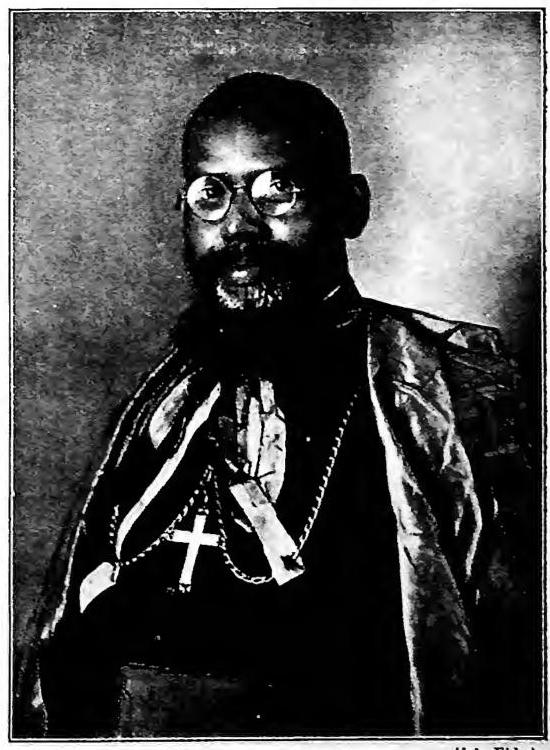
CLERO INDIGENO - H.E. Monsignor Tommaso Rocco Agniswami, S.I., Bishop of Kottar (India), consecrated in St. Peter’s by Pius XII (29 Oct. 1939).
From the time of the Apostles and subsequently of the missionaries who through the centuries have worked for the conversion of the unfaithful, the idea of an indigenous clergy has been present. Errors and deviations from the genuine thought of the Church, if they occurred, were mainly due to an inadequate evaluation of many elements and to the prejudices proper to the times. According to the theological concept of the Church, no prejudice of nationality or race can hinder the formation of an indigenous clergy.
Various causes have delayed in the past the formation of a more numerous indigenous clergy, among these the lack of an episcopate of adequate proportions in the mission lands. Up to the last century ecclesiastical circumscriptions comprised immense territories, and this made the authority of the Ordinary nominal and fictitious for all that part which lay outside the range of his actual activity. Often there was not even an episcopate, sometimes because of obstacles placed by colonial powers. To this were added the racial prejudices of European governments. In India the caste system and in China and Japan the difficulty of finding young men equally master of the local language and of sacred science made missionary work in those regions more arduous. The Sacred Congregation of Propaganda Fide, on the other hand, was not always able to provide adequately for the formation of the indigenous clergy because of the lack of impartial and timely information. Everything was rendered more difficult finally by the primitiveness of transportation and postal services, nor were there yet direct representatives such as the present-day Apostolic Delegates and Nuncios.
Modern progress has removed many of these causes: the territories are proportionate to the effective range of the Ordinaries, and the seminaries are sufficiently numerous. There remain, however, other difficulties which only the education of the peoples will gradually eliminate. Constancy and perseverance in the vocation, with all the obligations inherent in it and especially that of celibacy, can sometimes meet with obstacles in the character of certain populations. In such cases the difficulty can be overcome only by a suitable moral and spiritual education. In countries with mixed populations, such as Africa, a particular obstacle is constituted by racial prejudice, but even this will be overcome by the principles of Christian brotherhood. The indigenous clergy must have the same moral and intellectual formation universally required of all clergy. It is subject, without exception, to the norms of canon law, so as to be rendered capable of all hierarchical offices.
As to the question whether the indigenous clergy should be religious or secular, pontifical documents prescribe the formation of both kinds. In dioceses of