
CLERGY, CLERICS. — By divine law, the members of the Church are divided into the two categories of clerics and laity. The former category comprises (whether by divine law or not, according to the degree they occupy) all those who have received the first tonsure, or at least one degree of Orders; the latter comprises all the rest (can. 107).
The word clergy (and therefore also cleric) derives from the Greek κλῆρος, which primarily means “lot,” and hence also a portion obtained by lot, a share of an inheritance. At the beginning of Christianity, this term indicated the entire Christian people, considered as the chosen people (I Pt. 5, 3); but as early as the third century the word was used to indicate those devoted to the service of worship (cf. Tertullian, De monogam., 12; Origen, Hom. in Ieremiam, 11, 3). The reason for this usage is explained as follows by St. Jerome (Ep. ad Nepotianum): “Clerics are so called because they are the Lord’s portion, or because the Lord constitutes their portion”; St. Augustine, on the other hand, justifies the use of the term by the fact that the Apostle Matthias was chosen by lot (In Ps. 47, 19): St. Jerome’s explanation prevailed in the following centuries and was also accepted in the Decree of Gratian (chapters 5, 7, C. XII, q. 1).
The following are clerics and form part of the clergy: those who have merely received the tonsure, doorkeepers, readers, exorcists, acolytes, subdeacons, deacons, priests or presbyters, and bishops: those belonging to the first five categories are called minor clerics, the others major clerics (v. ORDINE).
For the question whether deaconesses form part of the clergy, see DIACONESSE.
Membership in the category of clerics determines modifications in capacity, rights, and duties. Leaving aside here the capacities deriving from the power of Orders, it should be recalled that only clerics have the capacity to receive the power of jurisdiction and to be appointed to an ecclesiastical office (can. 118). Indeed, for most offices, including all those whose holder has the care of souls, the status of priest (priest or bishop) is required. Conversely, major clerics are incapable of contracting marriage under the canon law of the Latin Church and also in certain Eastern rites (cann. 132 § 2 and 1072; and V. ORDINE, IMPEDIMENTO dell').
Among the prerogatives proper to clerics, particular interest attaches to those commonly known as the “privileges of clerics,” which consist in a complex of favors intended to safeguard the dignity of the ecclesiastical state and the free exercise of the powers of the Church.
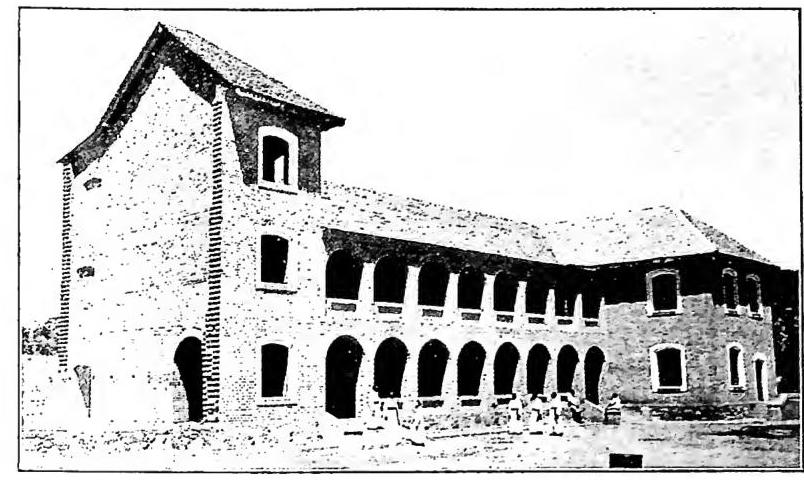
(courtesy of Fr. G. Bariassine I.M.C.)
INDIGENOUS CLERGY — Seminary of Tosamaganga in the Apostolic Vicariate of Iringa — Tanganica.
daily recitation of the canonical hours (v. UFFICIO DIVINO), an obligation imposed only on major clerics and on those who possess a benefice (cann. 135, 1475 § 2); d) frequent confession and other practices of piety (can. 125); e) undertaking spiritual exercises at least every three years (can. 126); f) respect and obedience toward one’s Ordinary (cann. 127, 128, 2331); g) continuation of sacred studies (cann. 129-131, 976, 2376-77; and V. CONFERENZE); h) common life, insofar as possible (can. 134, and V. VITA CANONICA); i) wearing ecclesiastical dress and, according to local customs, the tonsure (cann. 136 §§ 1 and 3, and 2379; and V. ABITO ECCLESIASTICO; TONSURA).
Some negative duties should also be recalled: not wearing rings except by privilege (cann. 136 § 2, 325, 811 § 2, 1378); not acting as a guarantor without the permission of the Ordinary (can. 137); abstaining from everything that may be unbecoming for one who belongs to the clergy (cann. 138 and 140, and V. ARTI INDECOROSE), or that is too foreign to ecclesiastical life (can. 139); not voluntarily enlisting unless in order first to free oneself, with the consent of the Ordinary, from compulsory military service (can. 141); not engaging in commerce or speculation (cann. 142 and 2380); not leaving the diocese without the authorization of the Ordinary (cann. 143-44, 542 n. 2).
An obligation, and at the same time the source of an intense bond of hierarchical subordination from which a series of obligations in turn derives, is incardination.
The power of Order is never lost for any reason, even when its exercise is forbidden and therefore illicit (v. CARATTERE SACRAMENTALE; ORDINE). On the other hand, the juridical status of the cleric, as well as the other juridical effects of Order, may change for various reasons, among which should be recalled, as the one that produces the greatest modification, reduction to the lay state: through it, in fact, the cleric is placed in a juridical condition identical or nearly identical to that of the layperson (v. RIDUZIONE ALLO STATO LAICALE).
For the juridical status of clerics in Italian legislation, V. PRIVILEGI DEI CHIERICI.