ARMENIA

ARMENIA. – A historical region of Western Asia, situated between the Pontic-Transcaspian depression to the north (the valley of the Kura) and the Mesopotamian depression to the south (upper Tigris), with indefinite boundaries (which have varied greatly over time) both to the west and to the east, where it connects respectively with the Anatolian plateau (the basin of the Kara-su) and the Iranian plateau (the middle Atrase).

Summary:

I. Geographical notes

II. Historical notes

III. The Armenian Church

IV. The Armenian rite

V. Canon law

VI. Literature

VII. Music

VIII. Archaeology

IX. Sacred art.

I. – Geographical notes.

The region is traversed by high mountains (Mount Sipan, 4,176 m.), among which volcanic formations are frequent (Mount Ararat, 5,156 m.), rising from a plateau that is itself elevated (1,800–2,000 m.), and deeply carved by the many watercourses that originate there and diverge in various directions (Kura, Araxes, Ciòròk, Euphrates, Tigris). There are numerous lakes, the largest of which are those of Van and Urmia, saline, and that of Gökcia, fresh water. The climate, distinctly continental, is harsh, with severe and long winters (nine months at Van), hot summers (most intense in the southwest), brief intermediate seasons, and generally scant precipitation (though snow lingers for long periods on the highest slopes). The population, generally rather sparse (average density does not reach 20 inhabitants per sq. km.), is concentrated especially in the bottoms of intermontane basins, i.e., in the lower slopes that are climatically more favored. Given the natural vocation of the land (steppe), livestock raising prevails over agriculture, which is essentially limited to cereals (wheat in some areas up to 2,000 m.), mulberry, vines, and fruit trees (apple, apricot); the surplus of these modest local needs is confined to wool, hides, silks, and fruit. Industrial activity does not assume modern forms, perpetuating instead a modest traditional craftsmanship. There are, however, mineral resources of some significance (iron, copper, manganese, arsenic, silver, gold, sulfur, rock salt, etc.). The configuration of the terrain makes communications difficult; moreover, political borders divide the country into three isolated compartments: Turkish Armenia to the west, Persian (Iranian) Armenia to the southeast, and Russian (Soviet) Armenia to the northeast.

The last of these is the only one that may rightfully bear the name of Armenia, since it is constituted as a federated republic (ASSR) whose population is about 8% Armenian. The territory of the ASSR, however, extends somewhat beyond the Armenian plateau. In the other two zones, the Armenians, who at the end of the last century represented barely two-fifths of the inhabitants of the entire historical region (having been reduced in number by massacres, slaughter, and mass deportations that occurred repeatedly, even in the last two centuries), have been virtually eliminated and replaced by neighboring Turkish, Kurdish, or Tatar populations. The Armenians form a branch of the Indo-European stock; as herders or farmers, sedentary and peaceful, and in the overwhelming majority Christian, many have emigrated to various cities of the Levant, where they ply commerce and banking with skill.

The most important Armenian urban centers today are Yerevan (200,000 inhabitants) and Leninakan (formerly Alexandropol; 70,000 inhabitants) in the ASSR; a certain number of Armenians are also found in Erzurum (30,000 inhabitants; ancient Arx Romanorum) in Turkish Armenia; V. also ARMENIAN SOVIET REPUBLIC.

BIBL.: H. F. B. Lynch, *Armenia*, London 1901; C. F. Lehmann, *Haupt-Armenien einst und jetzt*, Berlin 1910; P. Rohrbach, *Armenien*, Stuttgart 1919. Giuseppe Caraci

II. – Historical notes.

Politically, Armenia has, from the earliest historical times, had two major divisions: Greater Armenia and Lesser Armenia, straddling the Euphrates to the east and west. Greater Armenia, that is, Armenia proper, was anciently composed of fifteen provinces, each subdivided into cantons governed by dynastic families under a feudal system that enjoyed relative independence under the high authority of an Armenian king. It experienced alternating fortunes of glorious independence under its own kings or of controlled dominion by the Persians, Arabs, and Parthians, and by the Byzantines. At the end of the 4th century it was divided between Persia and the Byzantine Empire, retaining a measure of national autonomy, at least in some provinces, until the 14th century; thereafter, first divided between Persia and Turkey, in the 18th century it underwent its final partition among Turkey, Russia, and Persia. At the Congress of Versailles, after the world war of 1914–19, it formed for a brief period a national republic with its capital at Yerevan.

In the 4th century, Greater Armenia had a territory equal to that of France, with 20 satrapies, 620 districts, 40,000 communes, and could field an army of 300,000 men.

From the remotest antiquity, Armenia has been the site of various agglomerations of peoples, being a central point where different migrations clashed. Ethnographically, it corresponds, in the vast majority of the nation, to the Aryan race in its Caucasian branch, with infiltrations of Turanian elements from the north and Leuco-Syrian and Phrygian elements from the west, as well as Semitic elements from Mesopotamia.

The same infiltration is evident in the structure of its language, which is Indo-European in its basis and forms the connecting link between the two great branches, western and eastern, of the Indo-Germanic family.

With the Arab invasion in 636 and the fall of the Persian Empire in 652, Armenia preserved a largely autonomous, if not independent, life until Ashot, of the illustrious Bagratid family, founded a new dynasty in 885. The period of the Bagratids was one of cultural splendor, of which the ruins of the marvelous churches of Ani still speak. It was in this period that a remarkable phenomenon began: the Armenians lost their territorial independence as a nation, yet on their native soil they formed seven small kingdoms and an eighth in Georgia, in addition to several minor principalities, honored, respected, or feared by their overlords, while outside their national territory, as individuals, they occupied positions of the first rank within the empire of Constantinople.

Lesser Armenia, for its part, consisted of that part of Asia Minor situated between the Euphrates and the Halys River.

Article illustration
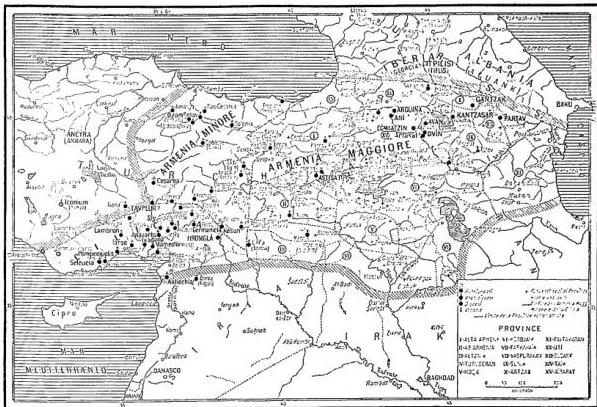
Armenia – Historical ecclesiastical map of Armenia and Cilicia.

From the 10th century until the end of the 14th, the name of Lesser Armenia was inherited by a new independent kingdom founded in Cilicia, which in turn was invaded first by the Egyptians and then by the Turks in the 15th century.

The centuries from the 15th to the 18th were for the Armenian nation centuries of dark fortune under the yoke and domination of the Mongols, Tatars, Persians, and Ottomans, until the reign of Peter the Great and Catherine of Russia, who took an interest in the deplorable conditions of the Armenian people and ultimately exploited them for the conquest of Upper Armenia by Russia. Well known are the treaties of Adrianople, of San Stefano, the Congress of Berlin, the Cyprus Convention, etc., the bloody events of Zeitun and Sussam, and the periodic partial or general massacres perpetrated in Armenia by the dominant Turkish government through and for the sake of the barbarous Kurdish order.

III. – THE ARMENIAN CHURCH.

EPOCH I: Evangelization of Armenia

Christianity penetrated into Armenia, well before the missionary work of St. Gregory the Illuminator, via Edessa, through the southern regions of Vaspurakan, Taron, and Sophene; and from Lesser Armenia, territory of the Roman Empire, through Caesarea, Melitene, and Pontus. And already we find it spread there at the beginning of the 2nd century. Tertullian, in *Adversus Iudaeos*, written around A.D. 200, lists among the Christian countries, along with Persia, Media, and Mesopotamia, also Armenia. This pre-Gregorian Christianity of Armenia must also have had its shepherds. The allusion by Eusebius (VI, 46) to a letter of Dionysius of Alexandria written around 249 to Meruzhan (Μεϋζάνης), bishop of Armenia, and to those κατά 'Αρμενίας, in which he would give instructions regarding the lapsed under Decius, seems rather to refer to Greater Armenia (according to Ališan, Golzer, Ormanian, etc.), rather than to Lesser Armenia, which at that time was part of the Roman Empire and territorially dependent on Caesarea in Cappadocia.

EPOCH II: St. Gregory the Illuminator. Christianity as the State Religion between the Years 295-300

The existence of pre-Gregorian Christianity does not obscure the merit of St. Gregory, universally recognized as the first apostle of Armenia, the sole author of the national conversion and of the ecclesiastical organization of the Armenian Church; hence called the Illuminator (v. GREGORIO L’ILLUMINATORE). His activity unfolded over about fifty years, precisely when the last persecution was raging in the Roman Empire, and bore fruit, thanks to the help of the most pious King Tiridates, in the destruction of paganism, the proclamation of Christianity as the state religion, the establishment of various churches with adequate economic endowment, and the hierarchical organization of the Church, with the catholicos at its head. Since the celibacy of the higher clergy was not yet a law among the Armenians, the successor of St. Gregory was chosen from among the members of his own family, the Parthers, beginning with his son St. Aristakes, who took part in the Council of Nicaea (325), followed by his brother St. Vartanes, who nearly lost his life due to the machinations of the surviving pagan priesthood. He in turn was succeeded by his son St. Husik, who fell victim to the vengeance of the Armenian King Tiran (347) because he had forbidden the king’s entry into the church due to his unworthy conduct.

After an interval of two catholicoi who did not belong to the Parther family, St. Nerses, a descendant of the same family, ascended the catholicate. To him is owed a radical reorganization of the Armenian Church, modeled after that of Caesarea in Cappadocia, at the Council of Aštišat (365), the first historically known council of the Armenian Church.

Christian marriage was regulated by affirming monogamy with the exclusion of concubinage, unions between relatives, and divorce; Christian funerals replaced the superstitious rites of mourning; canons were prescribed against criminals, against immorality, for the equitable use of civil power and taxation, etc.; numerous institutions of charity and education were founded: schools, orphanages, foundling hospitals, leper hospitals; monasticism was developed; episcopal sees and canonries were established so that the clergy might dwell apart from their families. In short, the Nersesian reform, aimed at instilling the principles of the faith and the rules of Christian morality into the hearts of the masses, is what has imprinted itself upon the entire subsequent religious history of the country.

His reforming work drew upon St. Nerses the hostility of King Aršak, forcing him to retire to his estate at Aštišat, while the king replaced him with a certain Ciunak. After the king’s death, St. Nerses returned to his see but was killed (373) by his successor Pap, who also appointed, without the intervention of Caesarea, a certain Husik from the family of the Albianos. Since he was opposed by the Armenian episcopate and the Synod of Caesarea, which placed the catholicate under interdict, his influence was limited and negative, lasting until 379, when St. Sahak of the Parther family, surnamed the Great, ascended the catholicate, under whom normal jurisdiction was restored.

Sahak, summoned by King Cosroe III of Armenia to occupy the Armenian see, was truly the genius of his time and country, which was then in dire political straits, for at the very time of his accession, negotiations between Theodosius the Great and Shapur II, begun in 374, had ended ten years later with the unjust partition of Armenia between Byzantium, which received the western or Greek part, and Ctesiphon, which received the eastern or Persian part, corresponding to two-thirds of the entire territory. From this partition stem many of the political and religious evils that subsequently afflicted Armenia.

The principal merit of Sahak was to have made the liturgy Armenian, which until then had been celebrated in Greek or Syriac, according to the region, thanks to the invention of the Armenian alphabet by St. MESMERISMO (v.); to have translated, with the help of learned Armenian monks, the Holy Scriptures and a vast patristic literature, thereby providing the Armenians, subject to foreign political and cultural influences, with the means to maintain national unity; and to have replaced the obligation of recourse to Caesarea for episcopal consecration and the investiture of the catholicos—a recourse that had become morally impossible for political reasons—with communion in faith alone with the see of Constantinople, which was already absorbing the prerogatives of the sees of Caesarea in Thrace and of Caesarea in Cappadocia.

Under his successors throughout the 5th century, no controversy arose either regarding the formula of Chalcedon or regarding Armenian autocephaly, which was now taking shape as a customary right.

EPOCH III: From the 6th Century to the Year 1065

In the year of the Council of Chalcedon (451), the Armenians were in arms defending their faith and religious freedom against the Mazdaism of the Persian rulers, a struggle that lasted until 484. During this time, they had no opportunity to inform themselves from authentic sources regarding the ecumenical council that had stirred up so many controversies in the East. Only in 506, after Emperor Anastasius I had victoriously concluded the campaign against Qawad, did he send the *Enoticon* to Catholicos Babken (490–514) by way of Severian messengers. When a council was convened at Dvin, the patriarchal see, in 506–507, the catholicos anathematized Nestorius and Nestorianism and accepted the *Enoticon*. Contemporary documents do not show that he also anathematized the Council of Chalcedon. Indeed, the two synodal letters bearing his name do not condemn the dyophysitism of Chalcedon but only the separation into two persons (prosopa) advocated by Nestorius.

The anti-Chalcedonian tendencies of the Armenian Church seem to have begun under Catholicos Movses II Elivardetzí (574–604), who refused to submit to the imposition of Emperor Maurice, who, having obtained from Khosrow Parvez almost all of eastern Armenia in exchange for services rendered—except for the two provinces of Vaspurakan and Sunik and the city of Dvin, the see of the catholicos—imposed upon the Armenian bishops, now his subjects, “the baked bread and hot water of the Greeks” in the liturgy. In opposition to the resisting catholicos, he appointed a new catholicos in the person of Hovhannes (John) III (592–610), who the previous year had accepted the Chalcedonian formula at the First Synod of Karin.

Thus the year 591–92 would mark the beginning of the official formation of an anti-Chalcedonian (rather than Monophysite) Armenian faction at Dvin under Movses II, even though it stood opposed to the great mass of the Armenian episcopate and people. This schism was consummated in 608–609 by Abraham I, who in an encyclical letter first set forth the orthodox creed and, while accepting the first three ecumenical councils, forbade Armenians to share in sacred or civil intercourse with the Iberians, the Greeks, and all who accepted the decisions of Chalcedon; and in practice he confused the duophysitism of the Chalcedonian formula with the Nestorian separation into two persons. From this date begins the fluctuating attitude of the Armenian Church toward the duophysitic Chalcedonian formula, even though it admitted in substance the orthodox content of that formula. This ebb and flow with regard to the Fourth Ecumenical Council and its advanced christological formula lasted until the eleventh century, when, with the transfer of the patriarchal see to Cilicia and the establishment of contacts with Rome, information about the Council of Chalcedon became more precise and authentic explanations of the formula clarified its meaning.

Article illustration

The katholikoi who succeeded one another down to the middle of the eleventh century were now favorable, now opposed to the Council of Chalcedon—opposition often determined by political antagonism between Armenians and Greeks. It is not the place here to examine the conduct of individuals, but summarizing the four and a half centuries of history from the schism of Abraham I (608) to the enthronement (1065) of Gregory II Vkayaser, the first katholikos of Cilicia, of 33 patriarchs 6 were anti-Chalcedonian, 5 of these moreover were persecutors of Catholics, but 15 proved tolerant and 7 were convinced promoters of union with Rome.

Epoch IV: The Cilician Period — From Gregory II Vkayaser to Gregory Mussabeghiantz (1065–1441). From the tenth century onward the Armenian people, hard pressed by Asiatic hordes, began to migrate into the interior of the Byzantine Empire, ceding to it the most exposed feudal holdings and receiving in exchange territories situated farther inland. The center of this immigration was Cilicia, where, however, the Armenians did not allow themselves to be absorbed by the Greeks but clung tenaciously to their own principles, until in the twelfth century they formed the independent Armenian kingdom of Cilicia. Naturally the Church followed this migratory movement, and the katholikos see was transferred from Dvin; after various moves it was definitively established at Sis, capital of the kingdom of Cilicia, in 1294. From this see also depended the Armenians of eastern Armenia who remained under the political dominion of the Seljuk Turks.

This epoch in Armenian church history is characterized by the following: after political emancipation from Byzantium came religious emancipation and an orientation toward Rome, facilitated also by trade through the Mediterranean; there was a greater breadth of outlook in theological matters; as for disciplinary reforms, these were carried out with prudence so as not to offend the less educated mentality of eastern Armenia and thus avoid transforming their diffidence into formal schism.

Frequent and close were the relations of the katholikoi of this period with the Roman Pontiffs. Gregory II (v.) went to Rome in 1074 to pay homage to Gregory VII; Gregory III (v.) was in touch with Popes Honorius II, Innocent II, and Eugenius III; Gregory IV corresponded with Lucius III and Clement III; Gregory VI did homage to Innocent III and received the pallium from him; James I was invited by Pope Gregory X to the Council of Lyons; and so on down to Catholicos Constantine V, who took part in the Council of Florence (1439). At this council, even after the sessions had ended, the Pope held a public session on 22 November 1439 for the union of the Armenians, who accepted not only the dogmatic points signed by the Greeks but also the new disciplinary proposals.

These Catholic Armenians, representing the preponderant mass of the people in the eleventh to fifteenth centuries, and the official Church under the katholikos, found themselves always between two extremist currents: the eastern Armenians, too attached to Armenian ritual and disciplinary traditions, and the Uniate party represented and directed by the Fratres Unitores, the Armenian branch of the Fratres Peregrinantes of the Dominicans, founded about 1330 by John Kermetzi, hegumen of the monastery of Kerna, with the help of the Dominican Blessed Bartholomew of Bologna. The Armenian writer Mechitar Aparanetz (a moderate Uniate) attests in a writing of 1410 the reality of this situation.

Epoch V: From the Establishment of the Patriarchal See of Ečmiadzin to the Final Schism (1441–1700). The fall of the Armenian kingdom of Cilicia on 16 April 1375 at the hands of the Mamelukes of Egypt brought with it the decline of the katholikos see of Sis and at the same time favored the movement of the eastern Armenians, who desired to bring the see back to its ancient seat at Vałaršapat (Ečmiadzin). The five Armenian sees, three katholikossal and two patriarchal, continued more or less uninterruptedly their communion both with the Roman See and with the Catholic current, greatly assisted by the new Latin missions of the Jesuits, established at Aleppo in 1626, at Ispahan in 1653, and at Erzerum in 1685–91; of the Capuchins (Aleppo 1627, Ispahan 1644), who joined those of the Fratres Unitores and the Carmelites.

The relations and communion with Rome of the see of Ečmiadzin date historically from the middle of the sixteenth century, before the pontificate of Gregory XIII. Stephen V of Salmast (1548–50) presented to Paul III his own submission and that of his episcopate; Michael of Sebaste (1546–68) sent an embassy to Pius IV; Gregory XII of Ečmiadzin made his profession of faith to Leonard, Bishop of Sidon, sent to him by Gregory XIII, who issued the bull Romana Ecclesia (13 October 1584), extolling Armenian fidelity, and decreed the establishment in Rome of an Armenian College; Melchisedech (1593–1627) sent his profession of faith to Paul V; Moses III Sunetzi (1630–33) did likewise to Urban VIII; and James IV of Julfa (1656–80) to Alexander VII; Nahapet of Edessa (1691–1704) received from Innocent XII as a gift a fine throne, a grateful acknowledgment of the profession of faith sent to him; Alexander I of Julfa (v. 1707–15) in a letter to Clement XI professed his adherence to the primacy while lamenting the conduct of the Latin missionaries; the last two professions of faith of the katholikoi of Ečmiadzin are those of Azvazadur of Hamadan to Innocent XIII in 1717 and of Karapet Unetzi (1726–30) to Benedict XIII; with Lazarus II of Giahuk (1737–51) and Simon of Erivan (1763–80) begins the series of patriarchs of Ečmiadzin who were intolerant and opposed to Rome.

Epoch VI: The Final Schism. The Armenian-Catholic Patriarchate of Cilicia (eighteenth to twentieth centuries). — One might have hoped that the slow but fruitful work carried on by the advocates of the Catholic current, made up of so many prelates and vartapet (among whom stood out toward the close of the seventeenth and eighteenth centuries the two figures of Abraham Ardizvian, future katholikos of Cilicia, and Mechitar of Sebaste, founder of the Mechitarist monks), by the alumni of the Urban College (among whom were notable Kaciatur vart. Arakelian and Melchiorre Tasbas, archbishop of Mardin), and by the Latin missionaries, would have ended in the definitive triumph of Catholic truth; but a new factor intervened to frustrate all this work: the persecutions stirred up by the patriarchs of Constantinople.

The fanatical Ephrem, in 1701, deposed Melchisedech Sufi, Patriarch of Constantinople, as a supporter of Catholics, and ascended the throne for the third time, beginning on 15 July 1701 the persecutions against the so-called "Frankish" Catholics. He was succeeded by other no less zealous persecutors: Avetik, backed by the Turkish friend Feyzullah Effendi; John of Smyrna (1707–1708), under whose rule the priest Ter-Komitas Kheomurgean suffered martyrdom on 5 November 1707, later beatified by Pius XI in 1929; Sahak Abucetzi (1707, 1708, 1714); John Ganzaketzi (1714–15); John Bahlestzi or Kolot (1715–41). Many Catholics sealed their faith with exile or death in prison, among whom the figure of Msgr. Melchiorre Tasbas stands out (cf. Elia Ibn al-Qsir, *Une page de l'hist. de l'Eglise, de Mardin*, translated from Arabic by Scheil O. P., in *Revue de L'Orient Chrétien*, 1 (1896), pp. 43–87), as well as Bishop Azvazadur, who died in prison.

Article illustration

As long as Catholics were not persecuted, the Armenian churches were attended indiscriminately, especially where Latin churches were lacking—such was the condition in nearly all the provinces of the Ottoman Empire. The ongoing union of Echmiadzin with Rome made this situation explicable. Once the persecutions began, the first responses were issued by the Supreme Tribunal of the Holy Office regarding sacramental communion in the cases of Turkey: on 9 September 1704 to the Capuchin Fathers of Constantinople; on 15 March 1706 to the priest Melchiorre Tasbas; on 22 February 1707 to some Armenian merchants; on 21 June 1708 to a certain Mghrici of Aleppo, all still private responses; and on 28 November 1709 to the missionaries of Isfahan. While in Persia Catholics were permitted to erect their own churches, the Ottoman constitution, which recognized only one Armenian *millet* and placed it exclusively under the jurisdiction of the Patriarchs of Constantinople, made it impossible for Armenian Catholics to separate into their own places of worship. This circumstance, combined with a certain hope that the storm of persecution might calm, led many Catholic missionaries to interpret the Holy Office’s response of 1709 to the *VI Dubium* of the Isfahan missionaries as not yet applicable to the cases in Turkey. However, as the heretical fanaticism of the persecutors grew, the Holy See had to insist on the obligation not to communicate in sacris, since tolerance had become unjustifiable (General Instruction of 1723 from the Holy Office, and *Cum saepe ac diu* of 1729), leaving only three necessary acts: Baptism, Matrimony, and burial, by virtue of the personal status of the patriarchs, to which even Armenian Catholics remained civilly subject.

It followed, as a natural consequence, that the nuclei of Armenian Catholics throughout the Ottoman Empire either had to remain without worship, attend Latin missionary churches where they existed, celebrate in private homes in secret, or submit to the persecuting patriarch. The lack of organization among Catholics in their own rite, due to the tyranny of the patriarchs, and the necessity of attending Latin churches and being assisted by foreigners meant that, from the beginning of the 18th century, Armenian Catholicism became synonymous with "Francization" or "Swadization" in ritual, disciplinary, and social terms. Only in this way was a considerable mass of Catholic faithful, deprived of their own shepherds in the provinces, drawn away from the Catholic fold.

The hoped-for remedy through the creation of the Patriarchate of Cilicia was neither significant nor timely. This explains the overwhelming minority of followers remaining under Catholic leadership at the beginning of the 18th century.

Kolot (1715–41), in the Synod of the Patriarchate of Constantinople in 1727, where Karapet was elected Catholicos of Echmiadzin, lifted the anathemas against St. Leo and the Council of Chalcedon in an attempt to attract Catholics to his churches. His culture, friendship, and gratitude toward the French ambassador de Villeneuve earned him a certain religious freedom for Catholics, with whom he concluded an agreement of friendship; he even presented to Msgr. Bona, the patriarchal vicar, his profession of faith. He would have traveled to Rome as well had death not overtaken him in 1741. His successor, James Nalean (1741–49; 1752–64), who was also indulgent toward Catholics toward the end of his patriarchate, would have been willing and committed to granting religious freedom as Kolot had.

The separatist efforts of the Catholics achieved partial success when, in Aleppo on 26 March 1740, Abraham Peter I Ardzivian (v.) was elected to succeed Luke Albakem, who had died in 1737, in his see of Sis, and was confirmed by Benedict XIV on 26 November 1741, receiving the pallium in Rome on 8 December of the same year.

Having left Rome in July 1743, he was unable to establish himself in Cilicia, as Michael had been elected by the dissident faction, nor in Constantinople, where, as Patriarch of Cilicia in the strict sense, he would have remained outside his territory. Since, moreover, Patriarch Nalean had closed the door to him, he settled in Lebanon at the monastery of Kreim of the Antonine monks.

Ardzivian died on 1 October 1749, and seven other Catholicoi succeeded him in the Lebanese residence, the first three chosen from among the Antonine monks of Kreim: James Peter II (1749–53), Michael Peter III (1753–80), Basil Peter IV (1780–88), Gregory Peter V (1788–1812), Gregory Peter VI (1812–41), James Peter VII (1841–43), Gregory Peter VIII (1843–66), called the "Eastern Star."

Article illustration

Apart from the normal administrative duties and the establishment of a few new sees—rising from four to ten—nothing noteworthy is recorded, except for the development of the Antonine and Bzommar Congregations. The convocation of the Synod of Bzommar in 1875 (Mansi, XL) was the first attempt of its kind, though incomplete and not meriting approval (see the notice of the consultor G. De Ferrari, loc. cit., cols. 803–914).

The success of the Catholics through the creation of the Patriarchal See of Cilicia was therefore precarious: a) it remained limited until 1866 to only the territories of Cilicia, part of Asia Minor, Syria, Mesopotamia, and Egypt, while the most populous provinces of Greater Armenia and Anatolia continued to depend on the Latin patriarchal vicar of Constantinople, who from 1758 onward began to govern it through an Armenian bishop appointed by Propaganda from among three candidates presented by the clergy and faithful (Merrassian Atansio from 1758, then Messerlan Antonio (1757), and again from 1866 onward, Sofalían Sahak vartapet in 1784); b) the Catholicoi of Cilicia residing in Bzommar lacked civil prerogatives and thus remained subject to the persecutions of the Patriarchs of Constantinople throughout the Ottoman Empire until 1830, when Armenian Catholics were emancipated from the patriarchal jurisdiction of Kum-Kapu.

Meanwhile, in the second half of the 18th century, the Patriarchs of Constantinople sought some compromise with the Armenian Catholics.

Thus, Zachariah II (1773–81, 1782–99) attempted to win over Armenian Catholics to his Church by promising freedom, provided they would participate in worship and receive communion on the four principal feasts. The Marquis Serpos, with his polemical-critical dissertation of 1783, sought to find a path to reconciliation. The Holy See, however, reiterated under penalty of deprivation of absolution its prescriptions *de non communicando* in the divine offices and sacraments of the dissenters, always excluding the three cases of Matrimony, Baptism, and funerals.

During the second patriarchate of Hovhannes XI, Armenian Patriarch of Constantinople (1802–13), in the years 1800–1805, at the initiative of well-disposed laypeople from both sides, a Treaty of Union was drawn up containing five articles of Catholic faith: the Primacy, the formula of the conception of the two natures in one person, the Filioque, the immaculate permanence of the elect after death, and Purgatory. The initiative, welcomed with enthusiasm by both Armenian and European figures, was thwarted by the lack of harmony within the Armenian Catholic clergy of Constantinople.

Paolo Grigorean (1815–23), in the years 1816–20, resumed the attempt at some compromise in a mixed congress of Catholic and dissident representatives under his presidency. Monsignor Messerlan refused to take part; he was exiled in 1820 and died in exile. The congress, which included some Catholic ecclesiastics with good intentions but contrary to the instructions of the Holy See, failed. The influential Catholic Armenian Duzian (Duz-Oglu) family, powerful at the Sublime Porte, was suppressed for treason by the dissident Artin Pezganian effendi, accused of squandering imperial treasures.

Meanwhile, with the outbreak of the Russo-Turkish War on the Caucasus frontier, the Armenians of the border region showed sympathy for Tsar Nicholas I as a liberator. Nerses, the dissident archbishop of Tiflis, crossed over to the Russian side with 10,000 fighters under General Paskevich. In the Treaty of Turkmanchai, Nicholas I annexed Echmiadzin (1828) to the Russian Empire; thus the supreme See of the Armenian katholikos passed under Russian rule, which in 1836, with the constitution Polejennie, modeled it on the Russian Orthodox Church, and from that date onward that See followed the fortunes of Russian politics.

During this Russo-Turkish War of 1827, in order to obtain from the Sultan the emancipation of the Armenian Catholic community from the jurisdiction of the Armenian Patriarch Tenkerian, head of the influential Catholic families of Constantinople, Tenkerian cited among other reasons the sympathy of the dissident Armenians for the Tsar. Karapet, Patriarch of Kum-Kapu, learning of this accusation and aided by Paolo Grigorean, former patriarch, retaliated by giving the Sultan every assurance of the loyalty of the Armenians attending the national (i.e., dissident) churches and disclaimed any responsibility for those attending Latin churches and regarded as foreigners. The result was the terrible persecution that lasted from 3 October 1827 to February 1828, in which 10,000 Catholic Armenians of Constantinople were exiled into the interior of Anatolia in the depths of winter; nor were other cities of Anatolia and Asia Minor spared. This was the last of the persecutions, lasting some 130 years, of Armenian Catholics at the hands of the patriarchs of Kum-Kapu.

Sultan Mahmud, defeated by the Russians and forced to seek the mediation of France and Austria, was compelled, at the recommendation of Leo XII, to accept the emancipation of the Catholic Armenians of Turkey from the civil jurisdiction of the Armenian Patriarch of Kum-Kapu. This was achieved by inserting Article 12 into the Treaty of Adrianople on 14 September 1829, which was ratified by the Sultan on 6 January 1830. Pius VIII then established the Armenian-Catholic primatial see of Constantinople on 6 July 1830 (*Quod iamdiu*), assigning to it all the territory previously subject to the Latin patriarchal vicar of Constantinople.

Nurigian Antonio was appointed the first primate (1830–1838); he was succeeded by Antonio Marusei (1838–46) and Antonio Hassan (1846), who had been coadjutor with the right of succession since 1842.

From 1830 onward, the Armenian Catholic community thus had two ecclesiastical jurisdictions: the patriarchal see of Cilicia (1741) and the primatial see of Constantinople (1830); yet only the primate possessed, in the eyes of the Ottoman state, the civil attributes of the Armenian-Catholic *millet*. The Patriarch of Cilicia required the services of the primatial see to conduct civil affairs before the Sublime Porte. In this respect, the primatial see of Constantinople took precedence over the katholikossate of Cilicia.

Nurigian (and not even his immediate successor) was able to unite both powers in his hands, since as an Austrian subject he was not admitted by the Ottoman Empire; Giacomo vartapet Ciukuran (Valle) was called to perform this function under the title of *patrik*. Thus a harmful dualism was inaugurated; after his death others succeeded him, and only for a brief period were the two powers united in the primate Hassan (1845–48), who later recovered them as patriarch in 1861. Among the Greeks, the Ecumenical Patriarch governed with a synod; among the Armenians, the dissident patriarch governed with a mixed national assembly. The Catholics could not but follow this example, especially since the civil authority often disapproved of candidates and changed them frequently. Often the *patrik*, as head of the nation, with his council—which administered the property of a mixed character—stood over against the primate, who was exclusively a spiritual leader. Clashes, however much they were avoided, became inevitable. The permanent fusion of the two jurisdictions, which would have been the best solution, proved impossible since the two powers emanated from different sources: the Holy See and the Ottoman state. Moreover, there remained the separation of two sees and two Armenian-Catholic ecclesiastical jurisdictions, between which rivalry and animosity persisted. It was therefore necessary to merge the two sees into one.

This occurred after the death of the Patriarch of Cilicia Gregory Peter VIII (9 January 1866), when the primate Hassan was elected at the Synod of 14 September 1866 held at Bzommar under the presidency of Monsignor Valerga, Apostolic Delegate to Syria and Latin Patriarch of Jerusalem. The bull *Reversurus* regulated the terms of this union; on 15 July 1867, Antonio Hassan, primate *in partibus*, and in August the imperial *berat*, were appointed. Hassan, who had been primate since 1850 and had established six new residential Armenian-Catholic episcopal sees (Angora, Artvin, Bursa, Erzurum, Isfahan, Trebizond), together with those of the patriarchate of Cilicia, brought the total to seventeen sees. All seemed to favor a period of peace in which Catholicism might flourish among the Armenians after the century of persecutions. This, however, did not come to pass. Many were the causes, among which the following appear most significant: the Armenian Catholic community, separated from the mass of the nation, which was largely schismatic, had adopted an unfortunate policy of Latinization, introduced from the time of the formation of the Order of the

The gulf separating the Latinizers from the conservatives was never sufficiently bridged; indeed, the factions became entrenched, and the urgent rapprochement needed to resist and oppose the machinations of the dissident patriarchs of Constantinople was never achieved. The forces of the Catholics neutralized one another in their clashes, both among themselves and against their common adversary. Over the centuries, ritual and disciplinary controversies—relics of an unhappy past, exacerbated by the ignorance of the age—grew more acute. The values of Armenia’s ritual, disciplinary, and literary tradition from antiquity were undervalued or entirely dismissed, and were often openly despised by Catholic missionaries themselves, who were trained in general Western theological and canonical disciplines but little or nothing in those of particular or national interest. Even the publications of learned theologians, philologists, and historians—works intended to dispel ignorance and clarify problems—were frequently denounced as heretical; works that today would be a credit to any literature. Notable examples include the heated controversies surrounding the works of Giovanni Oznetz, the *Storia* of P. M. Cianciani, the *Vite dei Santi* (12 vols.) of G. B. Aucher, and the *Commentario all’Innario Armeno* and *Epistole Paoline* of G. Avedichian, all published in the first quarter of the 19th century.

Such treatment only drove the dissident Armenians—deeply attached to their traditions, though unable to articulate their reasons—to persecution, and provoked a reaction from the healthy conservative current that respected tradition, as wisely and consistently recommended by the instructions and practices of the Holy See and justified by the principles of sound Catholic apostolate, lest unnecessary divisions be created or the abyss of separation between Catholics and dissidents be widened. Thus, it was natural that the preaching of the luminous Catholic faith should be obscured by dissident adversaries and discredited in the eyes of the common people with epithets such as "Francization," "Latinization," and "denationalization." Pius VIII, with prophetic foresight, perceived the disastrous consequences of such conflicts from the very eruption of the primatial See, and paternally exhorted the clergy and faithful to concord and charity: cf. *Quod tamdiu* of 30 July 1830 (Mansi, XL, 754 sqq.); and *Benedictus Deus* of the Cardinal Prefect of Propaganda addressed to the clergy and people of the Armenian Catholic Church in Constantinople (10 July 1830): «Verendum esset, ne opus hoc dexterae Dei protegenti auxilio tam feliciter inchoatum auctumque brevi concideret atque dilaberetur: molestiae enim illae, quae vobis antea inferebantur extrinsecus, domesticae fieri possent atque intestinae, sensimque nationem vestram ad exitium deducere, iuxta illud Apostoli ad Galatas: *Si invicem mordetis et comeditis, videte ne ab invicem consummimini*...». The same exhortations were issued by Gregory XVI in 1832 in *Inter gravissimas*.

To these controversies were added, in the second half of the 19th century, even more thorny disputes over the so-called national rights of the lower clergy and laity to participate in the presentation of candidates for dioceses and the patriarchate—rights that had been undermined by the *licet* and entirely revoked by the bull *Reversurus*. This bull, in fact, extended to the entire Armenian Catholic Patriarchate of Cilicia the restrictions previously applied only to the primatial see, namely the presentation of three candidates from which the Holy See would make its choice, and this in perpetuity. After the deposition of Patriarch Hassan, Hagop Bathiarean, Bishop of Diyar-Bekir, was appointed anti-patriarch, succeeded later by Kupelean. Msgr. A. Franchi was sent by the Holy See to negotiate diplomatically with Ali Pasha, but failed. The struggle between the Hassunists and anti-Hassunists raged fiercely: churches in the capital and in the provinces were contested and seized one by one. Leo XIII mitigated the provisions of *Reversurus*, recognizing the right of the synod of bishops to elect, subject to verification of canonical regularity. Kupelean obtained the grace of making his retraction in the presence of the Pope himself and was absolved with solemnity, in the presence of the cardinals of Rome, on 18 April 1879. Patriarch Hassan was created a cardinal in 1880 and died in 1884, after obtaining from the munificent Pope the establishment in Rome of the Pontifical Armenian College (1883). Azarian was appointed to succeed Hassan as patriarch on 24 January 1881, and soon saw the end of the conflagration that had devastated a great good for nearly thirty years.

In the 18th century, persecutions, and in the 19th, internal controversies—largely stemming from the failure to reconcile Armenian institutions, both ritual and disciplinary, with the sound principles of Catholicism—frustrated not only the well-founded hopes of the 17th century for a return of the masses to Catholic unity but also hindered the rhythm of conversions.

The Armenian Catholic Church condemned itself to grow only through internal births, remaining always a minority within the nation.

Eighteen years of wise governance by Azarian (1881–1899) yielded notable results for the propagation of Catholicism. He was unjustly accused of having conceded, in the patriarchal regulations, a role to the laity in the election of patriarchs that was condemned by *Reversurus*. However, these regulations served for the election of his successors, Paul Peter XI Emmanuelian (1899–1904) and Paul Peter XII Sabaghian (1904–1909), without protest from Rome. The fire rekindled during the first three years of the patriarchate of Paul Peter XIII Terzian (1910). In Turkey, the new Ottoman Constitution had been proclaimed. Terzian refused to sign a new regulation that the laity had already presented to his predecessor Sabaghian, which sought to introduce popular voting even in the election of diocesan bishops. Upon coming to Rome, he convened the episcopate in a national synod (1911); Pius X reserved for himself the appointment to vacant sees. The agitators, this time exclusively laymen, regrouped and, with the support of the Sublime Porte, declared Terzian deposed in his civil capacity as head of the nation (1912). The scandal did not end until the sword of the Turkish massacres of 1915–1918, in which five bishops were martyred, three others died in exile; of the 16 dioceses, only three remained; of some 250 priests, about 126 were massacred along with a multitude of nuns.
Article illustration

The Armenian Episcopal Conference held in Rome in 1928, through the munificence of Pius XI, transferred the patriarchal see from Constantinople to Beirut (Lebanon), where today Cardinal Gregorio Pietro XV Agagianian resides, toward whom all hopes are directed for a spiritual resurrection of the Armenian nation.

BIBL.: P. M. Ciamcian, Storia armena, 3 voll. (in arm.), Venezia 1786; P. C. Galanus, Conciliatio Ecclesiae armenae cum romana, 3 voll., Roma 1651-90; G. Serpos, Compendio storico..., 3 voll., Venezia 1786; S. Weber, Die katholische Kirche in A., Friburgo 1903; F. Tournebize, Histoire politique et religieuse de l’A., Parigi 1900; P. L. Alishan, Sirak (in arm.), Venezia 1881; id., Airavat, in-4, (in arm.), Venezia 1890; id., Sissonon, O l’Arménio-Cilicie, in-4, Venezia 1890; id., Sissakan (in arm.), Venezia 1893; id., L’aurora del cristianesimo armeno (in arm.), Venezia 1901; A. Balgy, Historia doctrinae catholicae inter Armenos unionisque eorum in Cono. Florentino, Vienna 1878; S. Azarian, Ecclesiae Armeniae traditio de R. Pontificis Primatu, Roma 1870; P. G. Galemkarian, Le vite di due patriarchi e dieci vescovi armeni (in arm.), Vienna 1915; J. Morgan, Hist. du peuple arménien, Parigi 1909; Aršak Ter-Mikelian, Die armenische Kirche in ihren Beziehungen zur byzantinischen vom IV. bis zum XIII. Jahrhundert, Lipsia 1920.

IV. – THE ARMENIAN RITE

1921. Origin

The origin of the Armenian rite is connected with the spread of the Gospel in Armenia, which occurred around the year 300, through the work of St Gregory the Illuminator (v.), who had been educated in Caesarea in Cappadocia, and other followers. These brought to Armenia the rite of Caesarea, which in turn derived from that of Antioch, from which the first missionaries of the same Church had set out. There was then a great affinity between the Antiochene and Jerusalem rites, both of which were held in high esteem by the Armenians.

1922. Language

Along with the Cappadocian rite, the Greek language was also adopted for divine worship, due to the lack of an Armenian alphabet. Persia, an antagonist of Byzantium, during the brief period of its invasion of Armenia (368-369), attempted to replace Greek with the language of the Syrians, its faithful subjects, and maintained its preservation even after the division of Armenia in 387. The inefficacy of that incomprehensible tongue for the spiritual benefit of the people prompted St Mesrop (St Maštoc), the Doctor, to create the Armenian script, which he brought into being in 404, basing it on the Greek alphabet. With the help of the patriarch Isaac and his disciples, well-versed in Greek and Syriac letters, he immediately translated the Holy Scriptures and the liturgical books. After the Council of Chalcedon (v.), the official Armenian Church (591) separated itself, turning towards the Syrians, its instigators of the Monophysite schism, and began to be influenced by them also in its rite. Indeed, it was in the 6th century that the following changes occurred: the suppression of water in the chalice of the Mass, the return to the ancient union of Christmas with Epiphany, and the addition of the words “qui crucifixus es pro nobis” in the Trisagion, which was accepted and preserved even among the Jacobites and dissident Armenians.

1923. Office

In the 5th century, when the Armenian rite in the proper sense began, public prayer (in Armenian Pašton, office) consisted of six hours: three, recorded by historians of the time, recited by the Leontian priests in prison among the Persians—the Nocturn, which took place at midnight; Matins, which began at cockcrow; and Vespers, said in the evening. There were also the prayers of the Third, Sixth and Ninth Hours, which the Mandacuni enriched with his Advents and Lenten Prayers. Stephen, bishop of Iunius, in the 8th century, added two other offices to the aforementioned ones: one at Sunrise (Prime) and another at Rest (Compline), which followed Vespers. But these two, originally peculiar to that diocese, had already become common by the 10th century, so that they could be commented on by Khosrov, bishop of Anzevasi.

In the 14th-century copies of the breviary, we find another hour, which followed that of Rest and was called the Hour of Peace. It was recited privately, before going to bed, and only later did it become public. In certain circles all nine offices were recited every weekday, as in Sunia, while other testimonies from the 7th to the 14th centuries speak of only seven being recited. The Nocturn was reserved for feast days, and that of Sunrise for weekdays, alternating in turn with that of the Hour of Peace. This was the system followed by the entire nation. In certain circles and periods two of these were entirely suppressed, as affirmed by Moses of Erzincan in the 13th century and others.

The obligatory offices were first recited privately, then publicly in church, according to testimonies from the 8th century onwards.

In the 5th century the breviary (Alatonac or Alatamatic) was composed of the 150 psalms and the prophetic blessings, for which reason it is defined in the canons of St Isaac as “Office of Psalmody.” This patriarch divided the psalms into eight “canons” or groups, each followed by a blessing, a “warning” and a “double prayer.” The office consisted entirely of biblical readings and doctrinal explanations. The Mandacuni added his warnings, as we have said above, and it gradually became enriched, also with hymns subsequently composed, which formed a separate volume called Soracan (Hymnal); while the office for the entire year, with the ceremonies and readings of the Mass, formed the Canocic (Calendar).

1924. Ritual (Maštoc)

The ritual was composed, after the abandonment of the Syriac one, in the 5th century, as evidenced by its affinity with the Greek ritual, due to the bonds of sympathy that then linked the Armenians to Hellenism. The first true structure of this book is not known to us; but we do know for certain that it soon began to develop. In the oldest surviving copy from the 11th century, preserved in San Lazzaro in Venice, the first chapter is on the Order of the Foundation (and Consecration) of the Church, by John Mandacuni, Catholicos of the Armenians (years 478-90).

In the 9th century, the ritual underwent another reform, or rather, all the previously separate blessings were gathered into a single volume to facilitate their use. This work is attributed by later authors to Maštihoc, superior of the monastery of Sevan, whose name would have been appended to the books, while his disciple Stephen, in the surviving memoir, states that he himself carried out this work: "I made," he says, "this little book in 893" (cod. no. 1571 of San Lazzaro). Since this memoir is found only in the ritual books, it concerns the same work, which he does not hesitate to attribute to his master in the biography included in the same document. However, it is far from being a "little book," since it contains 45 chapters: it is the sole and precious representative of the ancient, though not primitive, state of the ritual, and was published in English by Conybeare (Oxford 1905).

Article illustration

With the approach of the Western Church to the East and to Armenian Cilicia during the time of the Crusades, the Armenian rite came under the influence of the Roman rite. Catholicos Gregory IV, in 1185, requested the Roman ritual from Pope Lucius III, which he had translated into Armenian. In Vatican codex Bb 100 (13th century), there are two orders of Baptism: the Armenian and the Latin, as well as the order of Confirmation, which is administered by the bishop; both were practiced at will, as confirmed by the Council of Sis in 1342. The Latin element is more abundant in the exemplar written at Sis in the 14th century. The council also refers to other Latinizing innovations. This confusion of rites could not endure even in Cilicia, because the Greater Armenia never accepted it, and it was suppressed in subsequent ritual books. Instead, the minor orders, unknown in the Armenian Church, were spontaneously accepted and preserved by the entire nation; they were first mentioned by Zaccaria Dsordsozetzi in the first quarter of the 14th century and by the Council of 1342, and were included in the aforementioned codex of 1345, along with the anointing of bishops and priests and the handing over of vessels, also recalled by the same council and still practiced today; likewise, the order for the coronation of kings, used in Cilicia.

The Catholics, then, at Rome’s suggestion, accepted the infusion of water into the wine of the chalice, the separation of Christmas and its related feasts, and Extreme Unction, which had been abandoned since the 10th century and had already been attempted to be restored in Cilicia; as well as the modification of the Trisagion and the blessing of the oil of the sick, performed by the bishop instead of the priest. In addition to these, many other points of the Latin rite were adopted by the Catholic clergy in their ritual, which was published by Hassunian (1880) and which differs from that approved by the Sacred Congregation of Propaganda Fide in 1840 and edited by the Mechitarists of Venice based on ancient texts (1831).

With the Cappadocian rite, Armenia naturally adopted the Mass liturgy (Patarag), which was said to be of St. James, formed in Antioch on the basis of that preserved in the Apostolic Constitutions in Greek, and which spread to Syria, Jerusalem, Cappadocia, and other parts of Asia Minor (cf. L. Duchesne, *Origines du culte chrétien*, Paris 1925, pp. 65-69). St. Basil adapted this liturgy in his diocese, giving it his own name; it was known as such by various ancient writers and accepted by De Meester, at least in its primitive form.
What is of interest here is the fact that this Mass was immediately received by the Armenian Church as well, as evidenced by a passage attributed to a famous Armenian by Faustus, who wrote toward the end of the 4th century, and highlighted by P. Gathircian (*SS. Liturgie degli Armeni*, pp. 97-132). The Armenian translation of this liturgy, executed in the 5th century, is still preserved in manuscripts alongside another medieval version. It was followed by the current one, which has been known in Armenia since the 10th century under the name of Athanasius. Gathircian found traces of this Mass in Armenian literature between the 5th and 8th centuries. A passage common to this and a "warning" by Mandacuni is sufficient for him to conclude that the same patriarch was responsible for this liturgy (op. cit., pp. 323-28). He may have been a reviser of it, which in its essential parts corresponds to that still in use today in the Greek-Byzantine rite under the name of Chrysostom. Its origin is thus clear, and F. Cabrol reasonably linked it with the Byzantine (in *Dictionnaire d'archéologie chrétienne et de liturgie*, IX, col. 817). It is still the same liturgy, first shorter and later expanded in the Greek text and in Armenian, which was commented on by Khosrov around 950 (*Comment. Misae*, Venice 1869) and by Nerses Lambronatsi, archbishop of Tarsus, in 1177 (*Comment. Misae*, Venice 1846), the latter of whom also "embellished" the missal.

After this, additions were made: the beginning of the breviary and the Armenian version of the Roman missal, probably translated along with the ritual, the vesting prayers, the Confiteor in its three parts, which appear for the first time in 13th-century manuscripts, and the final Gospel (cf. Hatzuni, *Messale armeno*, pp. 14, 15, 25). Alongside this, other liturgies existed in Armenia, and Khosrov saw them without being able to explain all of them; this means that they were also used on certain days. This is also indicated by Ukhtanes, toward the end of the same 10th century, recalling his encounter with Anania on the banks of the Akhuran River, where "they said the Mass of the Donor of Power (thus begins the Mass), which they call of Athanasius" (p. 12). It is precisely this distinction that proves that other Masses were in use, of which ten are counted in later manuscripts, in addition to the usual one. Three of them, namely the two translations of the Basilian and the Chrysostomian, contain passages from the ordinary missal, and are then cited by the Councils of 1307 and 1316 (Gathircan, op. cit., p. 352); and an indicator, whose oldest copy dates to 1287 (cod. 1411 of San Lazzaro), also marks the days of celebration for those of Athanasius (the common one), Chrysostom, and Basil (2nd translation), although the Lambronian declares that at his time they did not have the Chrysostomian reform. It is possible that this was translated and admitted after his time.

One of the characteristics of the Armenian liturgy is, in addition to the absence of water in the chalice, the use of unleavened bread, whose antiquity is confirmed by all Armenian writers, beginning with Moses II, who, in a letter to Emperor Maurice (591), declared that he would not go to him "so as not to eat bread baked in an oven, or drink hot water," which were elements of the Greek Mass. In the ancient Armenian liturgical collections, we also find that of the Pre-Sanctified, in accordance with the Greek text, while the Cilician codex no. 1411 of San Lazzaro has modified it with various omissions and the addition of some passages from the ordinary Armenian missal, intercalating it into the evening office. It was to be celebrated "on Wednesdays and Fridays of Lent." It seems to have been arbitrarily practiced in Cilicia, while Greater Armenia did not accept this "semi-fasting" or "Pre-Sanctified Mass," according to Gregory of Tatev (1397).

The sung Mass—indeed the only form at first—was reserved, in addition to feast days, for Saturday and Sunday, as decreed by the Council of Duin in 645 (can. 6). Later, however, the simple Mass also appeared in Armenia, deriving from the application of the divine Sacrifice to private individuals during “quarantines,” which is mentioned in the canons of the Council of Paruav in 768 (can. 18) and necessitated daily private celebrations. This manner was widespread in the Middle Ages throughout the country, as confirmed by countless inscriptions remaining in ancient churches and by the Lambronese, who also describes its simplest form, with only a single celebrant (Comment. Missae, p. 438), or with the assistance of a minister. This system continued until the 17th century and was thereafter preserved only among Catholics.
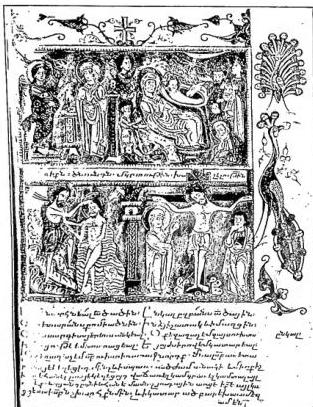
During Lent, when the liturgy was suspended except on Saturday and Sunday, a “Rite of the Prayer of Refection at the Non-Lenten Hour” was used throughout Armenia, known as the dry Mass, i.e., without the offertory. At that time, it did not yet have its own fixed form but consisted of the reading of one of the Masses in use, such as that of St. Athanasius. Later, it developed its own formulary, described in the “Instructions” taken in the 12th century from the Theleni monastery (cod. n. 1372 of St. Lazarus). It was a summary of the ordinary Mass, as seen in the breviary of Princess Mariun (14th century) at St. Lazarus (cod. n. 521), and in Vatican codex V 3 (13th century), which concludes thus: “the priest blesses the bread and distributes it, and they are dismissed,” as in the common liturgy.

Article illustration

In practice, the missal currently in use among Catholics is twofold: one printed in Rome in 1677, with some arbitrary doctrinal corrections by the Armenian priest Barsch; and another published by Patriarch Hassunian in 1879 for the read Mass, somewhat Latinized. All others are now obsolete.

BIBL.: G. De Serpos, Compendio storico, III (del rito contemporaneo armeno), Venezia 1787; H. Denzinger, Ritus orientalium, 2 voll., Würzburg 1863-64; P. G. Gathircan, Sribazan Pataragamatoich Haiodz, (SS. Liturgie degli Armeni), Vienna 1897; Fr. Tournebize, Histoire politique et religieuse de l'Arménie, Paris 1900, pp. 552-653; L. Petit, s. V. in DTHC, I, coll. 1954-68; F. C. Conybeare e A. J. Maclean, Rituale Armenorum and the East Syrian Epiphany rites, Oxford 1905; V. Hatzuni, Hai Desse 1911 tarojo asgain sinodosi gordosdo meg. (Il rito armeno negli atti del Sinodo nazionale del 1911), Venezia 1919; R. Janin, Les Eglises orientales et les Rites Orientaux, Paris 1922; V. Hatzuni, Patmuthün hin haj Tarazin (Storia degli antichi usi armeni), Venezia 1924; J. Muyldermans, Le costume liturgique armenien (tratto dal lavoro precedente), Louvain 1926; J. M. Hanssens, Institutiones liturgicae de ritibus orientalibus. De Missa ritum orientalium, 2 voll., Roma 1930-32; V. Hatzuni, Pataragamatoiz (Messale), con descrizione del rito autentico della Messa, Venezia 1936; C. Gatti e C. Korolevskij, I riti e le Chiese Orientali, Genova-Sampierdarena 1942. V. I. D. DIRITTO CANONICO.

Until the 5th century, the canonical repertoire of the Armenian Church, like that of the other Eastern Churches, consisted of the decisions of ecumenical councils, the pseudo-apostolic collections, and a few national synods.

The canons of Nicaea (325) were introduced through St. Aristakes, who had participated in them. For the canons of local councils, we lack contemporary allusions in historical sources; however, it is not improbable that the canons of one or another local council were introduced, to which the Armenians had access through the exarchate of Caesarea.

Worthy of note is the canonical letter composed of responses to the nine questions posed by the Armenians, presumably written around the year 333 by Macarius I of Jerusalem to St. Vertanes the Catholicos (or, according to some, around 564 by Macarius II to Vertanes, bishop of Sunia).

There were also the canonical decisions of the First National Legislative Synod of Aššist (354-55), which adopted the so-called Apostolic Canons, i.e., the Doctrina Apostolorum composed of 34-35 articles; then the canons of Ephesus (dogmatic) officially introduced into Armenia through the translators under Catholicos St. Sahak at the national synod of Aššist around 435; the disciplinary canons of the national council of Šahapivan (447), and presumably also the so-called Canons of St. Sahak the Great, Soperk Haykankh, Venezia 1853, 2nd series, pp. 71-134 (Armenian), as well as the so-called Second Apostolic Canons, which would be the Canones Apostolorum consisting of 85 articles, published by Funk, and finally the Canons of St. Thaddeus the Apostle.

At the beginning of the 8th century, it appears that the first work of systematization or coordination was undertaken in the form of an official canonical collection, the Kanonaghirkh, by Catholicos John of Odzun, known as the Philosopher (717-28), who gathered the canons then in use or introduced into the Armenian Church, preserved in the patriarchal curia. The merit of this work seems to have been the arrangement of these norms in chronological order, reconstructing for each series the preface indicating the rationale, date, and index to facilitate use. Since the original collection of Oznetzi or a contemporary manuscript is lacking, it is not easy to determine precisely which canonical groups it comprised. We can only conjecture, through historical testimonies and citations by contemporary writers, that this collection should have contained, in addition to the series of canons cited above, other new groups introduced into the Armenian Church after the 5th century up to his time. It certainly included the series of canons from the Councils of Ancyra (314), Neocaesarea (314-25), Antioch (341), Laodicea (343-81); perhaps also the so-called canons of St. Athanasius and those of national synods convened in the city of the patriarchal see at Duin, namely the 39 canons of Nerses II of Aššarak, the 12 canons of Duin of 645 under Nerses III, and those of 719 under John Oznetzi; and perhaps other series of canons of the Holy Fathers that cannot be precisely identified.

This collection of Oznetzi was further enriched up to the 10th or even 11th century with the addition of other canonical groups from Armenian synods and perhaps also from Holy Fathers.

Judging from the oldest surviving codex of this canonical collection (the Jolfa codex, Persia, written in 1098, now preserved in the monastery of the Most Holy Savior), by the end of the 11th century the Armenian canonical collection, the Kanonaghirkh, contained, in addition to the aforementioned groups of canons, the 114 so-called Second Nicaean canons (actually an eclectic juxtaposition of Nicene and local canons); the 50 canons of St. Basil of the first series, called the first, and of the second series, called the second; the 21 canons of Sardica (343-44), the 23 canons of Gangra, the 24 canons of the national synod of Partaw (771), the so-called canons of St. Gregory the Illuminator, and many others attributed to John Mandakuni, Abraham bishop of the Mamikoneans, and the national synod of Karin (Erzerum); and under the names of Holy Fathers and ecclesiastical writers, such as the 27 canons attributed to the Successors of the Apostles, in addition to those under the name of the Apostle Philip, Clement of Rome, St. Nectarius, St. Hippolytus, St. Epiphanius, St. Ephrem, St. Gregory the Theologian, St. Cyril, St. Dionysius of Alexandria, St. John of Jerusalem, Pseudo-Dionysius the Areopagite, etc., containing one or two lesser canons of minor importance.

From the 11th century onward, this official collection underwent no further development, so that the decisions of subsequent national synods from the 12th to the 17th centuries remained outside the collection. Almost all Kanonaghirkh codices from the 11th to 17th centuries maintain the same content.

All this canonical series was compiled in

Article illustration
Amenia - Monastery of Sanahin (c. 11th century).

Nomocanon by the glossator Mechitar Goš (d. 1213) in the *Datastanaghirkh* (Book of Judgments or of Judicial Sentences), in which the author, following his own systematic order, cites the text of the canon or of a *vóuos* and provides a commentary. The work was written between 1184 and 1213. This Nomocanon Collection dominated throughout the Middle Ages as a manual of ecclesiastical-civil law, both in Greater Armenia and in Cilicia, where it prevailed rather in the form of the redaction of the Code of Sampat Connetable, and also in the Armenian colonies of Poland, where a Latin version was ratified by Sigismund I in 1519, and in Tartary, where a Tatar version was made for the Armenian colonies of Astrakhan and Crimea. Indeed, it exerted notable influence on the Georgian Code in the redaction of Vahtang VI (18th century), in whose third part it is incorporated, and indirectly also on the general Code of Tsar Nicholas I in 1835, when it was decided that the Russian Senate would use the aforementioned Code of Vahtang VI.
The Canonical Collection of the *Kanonaghirkh*, like the Nomocanon *Datastanaghirkh* of Mechitar Goš, having been closed at the end of the 12th century, the disciplinary acts of the subsequent Armenian synods or the patriarchal encyclicals from the 13th to the 14th centuries remained outside the aforementioned collections. Among these acts, worthy of mention are the Patriarchal Encyclical of St. Nersès Glajese (1166–73), of Constantine I Katholikós (1220–67), the Acts of the Armenian Synods of Sis from the years 1204, 1246, 1307 (the last under Gregory VII of Anzarba), the Synod of Adana of 1316, which confirmed the Acts of the previous synod (1307), the Synod of Sis of 1342; as well as the Constitutions of the Monastery of Zak from 1270 and the Synod of Jerusalem from 1651. The Synods of Sis in 1307 and of Adana in 1316, being synods of Latinizing tendency, were not accepted by the Eastern *vartapet*. It was the era in which the influence of Latin discipline had begun through frequent correspondence and embassies between the Roman Pontiffs and the patriarchs, kings, and princes of Armenian Cilicia during the centuries of the Crusades. This influence, though contested, grew in direct proportion to the penetration of Western missionaries—first the Franciscans and Dominicans, and later, after the 16th century, other orders (Jesuits, Theatines, Carmelites, Capuchins, etc.), and finally the Armenian alumni of the Urban College and the Armenian College of Lviv.

At the beginning of the 18th century, as a consequence of the official and definitive Armenian schism, Armenian canonical discipline bifurcated: Catholic Armenian discipline and non-Catholic and dissident discipline. The latter consists predominantly of the ancient traditional Collection of *Kanonaghirkh*, the canons of Armenian synods outside the collections, the *Datastanaghirkh* book of Mechitar Goš, and the synodal and extra-synodal decisions of the patriarchs of Echmiadzin. The encyclical and private letters of the Katholikoi of Echmiadzin—Simeon of Yerevan (1763–80), Lukas Karnetsi (1780–90), Hovsep Aruthian (1800–1801), and Daniel I (1801–1808)—are collected in *Alaneantz sac. Kiut*, *Archivio della Storia Armena* (in Armenian), vols. III, IV, IX, Tiflis 1893–99.

The Armenian-Catholic discipline, on the other hand, even after the partial restoration (1741) of a new Armenian-Catholic hierarchy in the see of the patriarchate of Cilicia (since most of the Armenian-Catholic ecclesiastical territory remained under the Latin patriarchal vicariate of Constantinople until 1830), did not produce any noteworthy canonical works throughout the 18th century until the mid-19th century. The scattered and isolated nuclei of Armenian Catholics throughout the Ottoman Empire were governed, apart from the most well-known canonical institutes through tradition, according to the clear and organic principles of Western discipline, better known both to the hierarchy under which they directly fell (the Latin Patriarchal Vicariate of Constantinople, the Patriarchate of Cilicia, the Sacred Congregation of Propaganda) and to the missionaries themselves, whether European or Armenian alumni of the Urban College. The new hierarchy, moreover, being primarily concerned with orthodoxy and dogmatic integrity and with sustaining Catholic missions amid persecutions, and due to the lack of knowledge of ancient traditions, generally harbored a certain distrust toward those same traditions. On Mount Lebanon, synods were convened exclusively for electoral purposes; for discipline, recourse was had to custom, albeit vaguely understood, and more to Western canon law. Under Mons. Nurgian and Mons. Marusci, the first two Armenian-Catholic primates of Constantinople, measures of a rather liturgical character were taken.

In 1848, during the apostolic visitation of Mons. Innocenzo Ferrieri, some resolutions were adopted (Archives of Propaganda, Acts of 1849–50, text of the 33 *Dubbì*, ff. 92–93; Rescripts, ff. 81–91); and in 1851, the episcopal conference of the primate Hassan was held (ibid., Acts of 1853, part III, *Ponenza Stato della Nazione Armena*). In the same year (16–18 Oct.), the Armenian Synod of Bzommar was convened on Mount Lebanon under the presidency of Michael-Peter VIII Katholikós (Mansi, XL, col. 890 ff.), whose acts, however, upon examination in Rome, were not approved, whether due to incompleteness or perhaps rather because of the lack of unity among the synodal fathers. In 1867, there was the episcopal conference of Rome (Mansi, XL, 953–1018). The Armenian Synod of Constantinople of July–October 1869, convened by the decree of 4 April of Patriarch Hassan, following suggestions from Pius IX in the letters *Commissum humilitati* and *Libentissime certe* of 1869, to restore Armenian-Catholic discipline, was prepared with serious study by a commission composed of competent theologians and canonists such as Vartapet Azarian, Malachia Ormian, and eminent figures from the secular and regular Armenian-Catholic clergy, who, alongside discipline, also drew upon ancient sources and traditions of Armenian canon law. When the synod was about to conclude, unfortunately the sessions were abruptly suspended as the fathers departed for the First Vatican Council. It must be acknowledged: this was the first Armenian-Catholic synod conducted with broad vision, in grand style, by truly competent individuals who formed the three preparatory commissions (theological, canonical, liturgical). The acts were never promulgated; they exist only in the few lithographed copies that served the synodal fathers. It is a precious document for understanding the mindset and perspectives of the prelates of an era marked by heated disciplinary controversies and the challenge of reconciling Eastern disciplinary institutes and privileges with Western ones, in order to infuse the former with the dynamism and vitality of the latter.

The Synod of Calcedonia (1890), convoked by Patriarch AZARIAN, was nothing more than the perfection of the acts of the 1869 Synod of Constantinople. AZARIAN Vartapet, who had been the guiding spirit of the Synod of Constantinople and one of its principal promoters, at Calcedonia did no more than promulgate, after certain revisions and additions, under his own patriarchal authority, the very acts of the 1869 Synod, pending papal approval, which unfortunately was never obtained. The acts, comprising a total of 928 canons, were published in 1910 under the editorship of SIRONIAN Alessio Vartapet. It is noteworthy that this was the most organic, best elaborated, and best representative synod of Armenian disciplinary institutions, adapted to the needs of modern times. To anyone who studies, even cursorily, the acts of these last two Catholic synods of Constantinople and Calcedonia, the great service rendered by the numerous historical, theological, liturgical, and canonical publications made from the late 18th century through the 19th by the two Mekhitarist communities of Venice and Vienna immediately becomes apparent—works such as those by CIAMCIAN, G. B. AUCHER, AVE-DE-CHIAN, GATHIRCIAN, and others, which created the first current of trust and respect toward the ancient sources of Armenian tradition.

The National Synod of Rome of 1911, convoked by Patriarch TERZIAN with the assistance of a body of illustrious Latin theologians and canonists who, in the preparatory commission, represented the predominant part compared to the Armenian consultants, is the synod currently in force and use within the Armenian Patriarchate of Cilicia, having been approved in common form by the Sacred Congregation for the Propagation of the Faith. From the standpoint of the expression of Armenian canon law, it has very limited value, both due to the extensive adoption of Western principles and institutions and to the predominance of the dogmatic and hortatory sections, in which the disposititive part is almost lost.

It must further be noted that, given the almost rudimentary knowledge of Armenian canonical tradition, none of these Catholic Armenian conferences or synods of the 19th–20th centuries represents the ancient disciplinary tradition in its entirety, not even the Synod of Calcedonia, despite its having achieved the best expression of the effort to restore traditional Armenian canonical discipline. The Synod itself confesses this in canons 117, 118, and 216 (Armenian ed.).
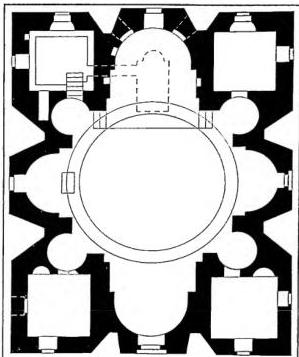
Bibl.: Sources: M. TANKEAN, Il diritto ecclesiastico degli armeni (in Armenian), 2 vols., Sui 1923; A. GHELCIGAN, Codice degli armeni, Tiflis 1913; V. BASTAMANTZI, Libro dei processi armeni di Melchitar Goš, Valaršapat 1880; A. MAI, Scriptorum veterum nova collectio, (Ecclesiae armenae canones selecti), X, pp. 269–315, Rome 1838; G. CAPPELLETTI, Encyclica s. Narsetis Glajensis, Venice 1890, pp. 12–173; L. ALISHAN, Sopork Haykakank, 2nd series, Venice 1853; H. GHEDIGHIAN, Cod. Can. Or., Fonti, 2nd series, fasc. XXI, Canones apostolici, Venice 1941; G. B. AUCHER, B. Iohannis Onisensis sermones duo, Venice 1833; G. AMADUNI, Cod. Can. Or., Fonti, fasc. VII, Disciplina armena, Vatican City 1932; G. KARST, Sempadscher Kodex, Strasbourg 1915; id., Le code de Vatank V. Corpus Iuris Ibero-Caucasici, Strasbourg 1934; M. BROSSET, Deux historiens Arméniens Kirakos de Gantzak, St. Petersburg 1876 (for the Acts of the Armenian Synods of Sis of 1204 and 1246); C. GALANUS, Conciliationes ecclesiae armenae cum romana, 2 tom. in 3 vols., Rome 1650–61 (for the acts of the Synods of Sis of 1307 and of Adana of 1316); MANSI, XXV, cols. 1185–1270 (for the acts of the Synod of Sis of 1342).

For the modern canon law of the dissident churches of Egimazian, cf. Airarat (Armenian review of Egimazian), 1882, p. 83; for the resolutions of the Synod under George IV regarding the duties of rural deans, see the same review 1887, pp. 47, 93, 140, 288, etc.; and in subsequent years see the titles Archiv. del Beat. Patriarca and Cronaca del Sinodo. This review is rich in information regarding dissident canon law.

Studies: F. BISCHOFF, Das alte Recht der Armenier, Lemberg, Vienna 1862; A. BALAY, Historia Dogmatis Catholici apud Armenos, Vienna 1878; A. PIPAS, L’Autorità legislativa degli armeni della città di Elisabetta, in Traumata, in Prazmaveh 1891, pp. 104, 172, 373; 1893, pp. 335, etc.; A. MÉGHAVORIAN, Étude ethnogr.-juridique sur la famille et le mariage arméniens, Geneva 1895; G. DAŠCAN, Doctrina Apostolorum (in Armenian), Vienna 1896; V. HATZUNI, Cod. can. or., Fonti, fasc. VIII, Vatican City 1932, pp. 141–66; G. AMADUNI, Cod. can. or., Fonti, 2nd series, fasc. XII, Monachismo, Venice 1940; V. HATZUNI, L’autore della lettera a Vertanes a Macario I e non a Macario II, in Prazmaveh (Armenian review), 1893, fasc. I–II.
Finally, much useful information regarding Armenian canon law is found in studies of civil Armenian law, such as: M. BROSSET, Notice sur le Code Géorgien, manuscrit de la bibliothèque, in Nouveau Journal Asiatique, 3 (1829), pp. 177–201; id., Détails sur le droit public arménien, extraits du code géorgien du roi Vakhtang, in Nouveau Journal Asiatique, 9 (1832), pp. 21–30; A. VON HAXTHAUSEN, Transkaukasien, 2 vols. in 1, Leipzig 1856 (contains much interesting information on comparative Armenian and Georgian law, etc.); M. BROSSET, Rapport sur un manuscrit arménien de Mechitar Goš, in Bull. de l’Acad. impér. des sciences de Saint-Pétersbourg, cl. hist.-phil., 6 (1849), pp. 38–82; J. KOHLER, Das Recht der Armenier, in Zeitschrift für vergleichende Rechtswissenschaft, 7 (1887), pp. 385–436; M. GHAZARIAN, Armenien unter der arabischen Herrschaft bis zur Entstehung des Agrartidenreiches, Marburg 1903, p. 87; H. THOPDSCHIAN, Politische und Kirchengeschichte Armeniens unter Aschot I und Simbad I, Berlin 1905, pp. 96–215; V. APTOWITZER, Beiträge zur moral-scheu Rezeption im armenischen Recht, in Sitzungsberichte der K. Akad. der Wissenschaften, Phil.-Hist. Kl., 167 (Vienna 1907), p. 42; K. SAMUELEAN, Il Dastanaghirh di Mechiar Goš e il diritto civile armeno (in Armenian), ibid. 1911, pp. 1–344 (vol. 73 of the Bibl. Naz. dei pp. Mechiaristi di Vienna); K. J. BASMAJIAN, Le droit arménien depuis l’origine jusqu’à nos jours, Macon 1911; G. AMADUNI, L’influsso del diritto romano-giustinianeo sul diritto armeno, in Acta Congressus Iuridici Internationalis, II, Rome 1935, pp. 225–58; B. TALATINIAN, De contractu matrimoniali iuxta Armenos, Jerusalem 1947; Azgarkhan Handis (Tiflis), Armenian ethnographic review, directed by Lalayantz in the first decade of the 20th century; M. EMINIAN, Raccolta etnografica (in Armenian), 8 vols., Moscow–Valaršapat 1901–1904 (publications in Oriental languages of the Lazarian Academy). Garabed Amaduni

VI. — LITERATURE

Armenian literature unfolds through four periods: 1) the ancient or classical, which constitutes its true golden age and is rich in historical, theological, paraenetic, poetic, canonical, and moral works (5th–14th centuries); 2) the period of minstrels and troubadours (14th–18th centuries); 3) the restoration under the abbot MEKHITAR (q.v.); 4) the modern and contemporary.

We merely mention the archaic period, of which only fragments of popular songs (the so-called Gokten songs) remain, dedicated to the deeds of kings and heroes.

### The Golden Age and the Academy of Saintly Translators

Proper Armenian literature begins in the 5th century, when the Armenians, who until then had written in Greek and Syriac, acquired their own alphabet through the holy monk and doctor Mesrop (q.v.). Saint Mesrop, together with the patriarch Saint Sahak, established an academy whose members, after studying in foreign centers of learning such as Byzantium, Athens, and Edessa, returned home and enriched it with numerous translations, beginning with the Bible and patristic works, and also provided it with its own liturgy, breviary, and ritual. This vast work of translation, besides constituting a source of pride and a treasure for Armenia, has made and continues to make a contribution to scholarship in general, since it has preserved works of great importance whose originals have been lost, such as, for example, Eusebius’s *Chronicon*, Philo’s exegetical works, the Homilies of Severian of Gabala, and Saint Ephrem the Syrian’s *Expositio Evangelii concordantis*, among others.

Among the centers of this cultural production were the great monastery of Echmiadzin, the so-called School of Shugha, the monastery of Narek, and many others from the 5th to the 11th centuries, which were located in historical Armenia. After the 11th century, however, centers of cultural production developed in Cilicia, only to decline themselves about two centuries later due to the arrival of barbarian dominations. At the end of this period of decline, mention must be made of the school of the so-called *Fratres Unitores*, Dominican friars who, though animated by great zeal and followed by many Armenians, unfortunately corrupted the Armenian language, altered liturgical books, and Latinized national tradition, thus provoking a harmful reaction to the cause of union. This reaction found its stronghold in the monastery of Tatev.

During this first glorious period of Armenian literature, the following occupy an honored place in history: Agathangelus, who wrote in Greek a *History of Armenia* (4th century); Faustus of Byzantium, his continuator, who narrated the period from 340 to 387; Lazarus of Parpi, who continued Faustus from 387 to the early years of the 5th century; Koriun the Wonderful, also of the 5th century, author of a *Life of Saint Mesrop* that is at once a history of the cultural movement and of the band of saintly translators; Elishe, called the Xenophon of the Armenians, who narrated the holy war waged in 451 by the Armenians against the Mazdean Persians; Moses of Khoren, the most learned of Armenian historians (5th century according to tradition, 8th according to some critics), who in his *Universal History* drew copiously on sources and thus provided a wealth of information. His work extends from the creation of the world to the year 400 A.D. In the 7th century, the *History of Emperor Heraclius*, dictated by Sebeos, bishop of the Bagratids, is noteworthy; in the 8th century, the *History of the Arab Conquest of Persia*, by Lewond, which extends from Muhammad to the year 788; the *History of the Albanians of the Caucasus*, written by Moses of Kalankatuk, which extends from the origins of this people, which had religious and civil relations with the Armenians, to 685. In the 9th century, besides Shapuh Bagratuni, mention must be made of Thomas Artsruni, who narrated the *History of the Principality of the Artsrunis*; in the 10th century, Asoghik of Taron wrote the *History of the Armenian Monasteries*, flourishing in the 9th and 10th centuries, and the *History of Ukhtanes*, containing the events of the Armenian kings and patriarchs and the schism between Armenians and Georgians; in the 11th century, Aristakes Lastivertsi, called the Germanus of the Armenians because he narrated the tragic history of his country from 989 to 1071. At the beginning of the 12th century, Matthew of Edessa composed the *History of the Foundation of Edessa*, Samuel of Ani a *Chronicle* ending in 1179, and Saint Nerses the Graceful, patriarch, a *History of Armenia* in verse, continued by Vahram of Edessa to 1280. In the 13th century, Vartan the Great wrote a *Universal History* ending in 1267; his companion Kirakos of Ganja narrated the *History of Armenia* from its conversion to the faith (300) to the end of the 13th century; in the 14th century, the Armenian prince Hayton, who became a Premonstratensian canon in Cyprus (1305), wrote in French, dedicating it to Pope Clement V, a *History of the Tartars*.

In the field of theology and philosophy, the most distinguished work is that of Eznik of Kolb (5th century), entitled *Refutation of the Heresies*; in the 7th century, the poet Vartan wrote a treatise against the iconoclasts, the monk Theodore Kertogh wrote a work defending the mystery of the Incarnation against the Pelagian heresy, and David the Invincible refuted the Manicheans. In the 8th century, the patriarch John IV, called the Philosopher, of Ojun, wrote a *Treatise on the Incarnation and the Two Natures in Christ* against the Phantasiasts and another against the Paulicians; in the 10th century, Anania of Narek refuted the Tondrakians, heirs of the Paulicians.

The great doctor Saint Nerses IV the Graceful wrote a letter to the Byzantine emperor Manuel Comnenus on the union of the Armenian Church with the Greek, and another to Prince Alexios on the faith and rites of the Armenian Church. The patriarchs Gregory IV, called Egha (12th century), and Constantine I (13th century) also wrote letters of dogmatic content.

Equally abundant is the parenetic literature (homilies, panegyrics, orations) in every century of classical Armenian literary history.

Article illustration

Among the commentaries on Holy Scripture, the following are noteworthy, among many others: Elishe (6th century) on Genesis, Joshua, and Judges; Stephen, archbishop of Shugha, on Job, Daniel, and Ezekiel; Saint Gregory of Narek (10th century) on the Song of Songs; Vartan the Great (13th century) on the Pentateuch, the Psalms, the Song of Songs, and Daniel.

The most precious jewels of classical Armenian literature are found in the liturgical books, breviary, and hymnal. This poetry (in Armenian *Sarakans*), partly in verse and largely in prose, is pervaded by a profound sense of adoration before the mysteries of the heavenly faith, especially during the great liturgical feasts: Christmas, Epiphany, the Exaltation of the Holy Cross, Holy Week, Easter, the feasts of the Virgin Mary, of the martyrs, and especially of the Armenian virgin Saint Hripsime and her companions. Among the authors of this hymnographic literature are the patriarch Komitas, John IV the Philosopher, Stephen of Shugha, and above all the patriarch Nerses IV the Graceful, whose poetry combines inimitably grace with profound theological thought. Among his many hymns, that of the *Triumphal Awakening* is particularly noteworthy.

Certain works of mystical elevation, generally written in elegiac meter, may also be considered part of this hymnographic section. Notable are the 93 by Saint Gregory of Narek, various ones by Saint Nerses the Graceful, especially that entitled *Hius Uxti* (“Jesus the Son”), a compendium of the divine books in 800 verses. Among the canonical and disciplinary works, special mention must be made of those by the patriarch John IV the Philosopher (8th century), the collection of the 23 canons of the patriarch Sion (7th century), and above all the *Corpus Juris* of Mechitar Gosh (11th century), a work that served as the basis for all later Armenian civil and ecclesiastical legislation.

---

### The Period of Minstrels and Troubadours

With the decline of classical Armenian literature, brought about by the invasions of the Eastern barbarians, there arose a popular literature poor in language but rich in spirit and grace, with religious oral themes such as the sacred songs of Constantine of Erzincan (13th century), the *Book of Adam* or *Paradise Lost* of Arakel of Shugha (14th century), and now moral themes: songs of sorrow, of the vanity of earthly things, such as those of Frik (15th century), etc. Love songs are attributed to M. Nagaš, to Gregory of Tulguran, and especially to Kuciak.

A troubadour of great fame is Sayat-Nova, to whom we owe splendid moral and amorous songs.

### 3. Restoration of Literature
This occurred around 1700 through the efforts of Mechitar and the Mechitarists. In general terms, it can be said that this was a literary revival fostered by an academy founded by Mechitar (modeled after those of the Golden Century), which provided the Armenian nation with a general history in the monumental work of Giamchian; theology, patristics, and hagiography were likewise produced by the great scholars Giamchian, Avedikian, and Aucherian, who, together with Siurmelian, compiled the Dictionary of the Academy, a true treasure of the Armenian language. Meanwhile, Asgherian, Tomagian, Bagratuni, and Hurmuz restored to the nation its "golden language," while Ingigian and Ališan illuminated the religious and profane antiquities of the nation.

### 4. Contemporary Literature
This is the offspring of the Neoclassical literature of the Mechitarists. Bagratuni first, then Ališan, the greatest of modern poets, revived lyrical poetry, to which Besicktashian gave elegance and harmony, invoking alongside his Mechitarist mentors the moral reform of the nation before its political reform. Turian, Terzian, Narvey, Sibil, Mezarentz, Varoujan, and Tekelian elevated lyric poetry to very high forms, while Dussap, Zerentz, Arpianian, Zohrab, and Zartarian cultivated the novel.

This branch, which we may call the Western branch of contemporary Armenian literature, developed in Venice, Vienna, and Constantinople, employing an elegant style and possessing an international character due to its spiritual ties with the West. The Eastern branch, however, in Tiflis and Erivan in the Caucasus—where the race remains tightly knit on its native soil—preserves more faithfully the national character and manifests social and popular tendencies in a robust and vigorous literary form. Abovian, with his patriotic novel of love and sorrow *The Wounds of Armenia*, launched the cry for national revival; he was followed by Raffi, Ahanonian, Scirvanzadé, Papazian, Nardos, and Sundukian in drama, and Sciant in tragedy. Lyrical works were composed by Nalbandian, Patkanian, Havhannessian, Tumanian, Jaskanian, Derian, and many others who, in Erivan, sang with nostalgia the sacred memories of their homeland.

**

Bibl.:** For ancient literature: S. Somal, *Quadro della storia letteraria di A.*, Venice 1820; Fr. N. Fink, *Geschichte der Arm. Literatur*, Leipzig 1907; K. Zarbhanian, *Storia della Lett. arm. antica*, 4th ed., Venice 1932; id., *Storia della Lett. arm. nuova*, ibid. 1905; U. Faldati, s.V. in *Enc. Ital.*, IV, pp. 431-435; C. Kibarian, *Storia della lett. arm. antica e moderna*, Venice 1943. For the period of the cantors and troubadours: A. Tchobanian, *Poèmes arméniens anciens et modernes*, Paris 1902; id., *Les Trouvères arméniens*, ibid. 1906; id., *Rovaria d'Arménie*, 3 vols., ibid. 1918, 1923, 1929; F. Macler, *Chants, légendes, époches populaires d'A.*, ibid. 1933. For modern literature: A. Navarian, *Anthologie des poètes arméniens*, ibid. 1928; M. Spiritini, *Poeti del Mondo*, Milan 1939.

---

### VII. MUSIC

In Armenia, musical song developed around the 5th century after the nation’s conversion to Christianity. From that time onward, a rich poetic-musical heritage began to take shape, later collected in a volume called the *Saracan* (a necklace of gems, a hymnal, a songbook). The ecclesiastical modes were definitively established in the 8th century and are divided into two categories: four authentic and four plagal, to which, according to ancient tradition, two *steghi* (i.e., melismatic chants with special technique reserved for soloists) are also added. Each of the eight Armenian tones is based on specific melodic types handed down by ancient tradition. Moreover, each is assigned one or two species of *Dartzavadz* (a more solemn melodic structure, except for the final cadence common to the mode, of the archaic principal type). The tonic, upon which the entire structure is founded, ordinarily plays a primary role, especially in solo melodies, akin to the Greek *ison*.

The sacred melody of the *Saracan* can be divided into three distinct genres: simple, festive, and solemn, corresponding to the *heirmologic*, *sticheratic*, and *papadic* genres of Byzantine chant. Musical notation can be distinguished in three periods:

**I. Semi-graphic.** Armenian hymnographers employed ancient neumes introduced by Kaciatur Vartapet of Tarōn (12th century). Derived from Byzantine neumes, they acquired combinations that render their exact reading difficult today. It is through these neumatic signs that the *Saracan* codices, as well as various other types of sacred chants (denominated *Gantz*, *Tagh*, *Meghedi*, etc.), transmit ancient Armenian sacred music.

**II. Modern Neumatic.** The ancient semi-graphic musical system was succeeded by the modern system around 1815 through the work of Papà Hambartzum Limončean (1768–1839), who adopted only a series of neumatic signs from the ancient notation. His merit lies in the selection of these neumatic signs, which he named using Arabic terms. His followers later indicated them first with Armenian names, then abbreviated and distinguished them by the first syllables of these names. In later times, these musical notes were also denoted in the same manner as European ones. Meanwhile, in addition to theoretical books for schools, hymns from the *Saracan*, Mass chants, and other melodies were also written in modern notation. Particular mention must be made of the monumental work of the *Saracan* from Eǧmiadzin, published in two volumes, largely the work of Nicola Thaščian under the patronage of George V, the Catholicos of the Armenians. Of no lesser importance is the transcription of the majority of the melodies contained in the *Saracan* (5 vols., Istanbul 1934), a posthumous work traditionally regarded as more valuable, by the musicologist and musician Elia Tentesian.

Article illustration

**III. European Notation.** Although the reform system of Papà Hambartzum contributed significantly to the preservation of national artistic theory, it proved insufficient, and it became necessary to adopt the European notation system. New masters, trained in European conservatories, presented original compositions and transcriptions of folk and liturgical songs, concert music, and various other musical productions. This movement originated around the mid-19th century. In recent times, some Armenian musicians from Constantinople conceived the idea of publishing under the title *Tonakarg* (canon of feasts) the hymns of the annual festive solemnities of the *Saracan* in five volumes, in modern Armenian musical notation, compared with European notation. To date, only the first volume has been published.

The ancient cultural centers are: the convent of Tatev (9th century), the monasteries of Hałpat, Sanahin, Narek, and the famous Arkhakaghin, among many others in Cilicia, where the neumatic system and musical art reached their zenith. At this time, we encounter in all centers the term *Manrummunk*, the science of neumatic documents and melismatic compositions, and sometimes the collections of these documents themselves.

The principal exponents of Armenian music are: the two blood relatives Stepanos of Sunia and his sister Sahakduxt (8th cent.), Samuel of Kamrğatzor (10th cent.), Teodor ALAXOSIK (11th cent.), and the celebrated illuminator St Nersēs the Graceful (12th cent.). After the many political vicissitudes of Armenia, which devastated and ruined its glorious monasteries, today only two centres remain faithful to the ancient tradition: the Mekhitarist monastery of St Lazarus in Venice and the convent of Ečmiadzin, patriarchal seat of the dissident Armenians, the latter until the outbreak of the European war of 1914–18. The most celebrated exponents of Armenian sacred music are: the abbot Mechitar of Sebaste, founder of the homonymous congregation, author of numerous odes inspired and dedicated to the Madonna in sweet melodies, who also wrote some proper parts for various feasts adaptable to the divine office; Fr Minas Bažiškean (1777–1851), learned Mekhitarist musicologist and principal collaborator of Papā Hambardzum in the reform of Armenian notation; Mgr Ignazio Ghiurekian (1833–1921), arch-abbot general of St Lazarus, distinguished for his paleographic musical studies and publications: Hymnal and Canonical Hours, with Armenian neumatic notation. In the second half of the 19th cent. homophony, until then dominant, began to be replaced by polyphony, especially through the work of Cristoforo Ghara-Murza (1854–1902), author of an Armenian Mass in several voices; Makar Ekmalian (1852–1902) wrote a Mass in three and four voices (Vienna 1896) diffused in almost all the churches; Komitas Vardapet (1869–1935), the most celebrated among Armenian musicians hitherto existing, who among his musicological studies and numerous Armenian folk songs is the author of a fine Mass for male voices (Paris 1933). Leontius Dayan

VIII. — ARCHAEOLOGY

In 1918 Strzygowski held that certain architectural types of ecclesiastical buildings, especially those of central plan, were of Armenian creation; it is nevertheless undeniable that Armenian constructions are inspired by the best-known and typical models of the various Mediterranean countries, not excluding North Africa, often with a characteristic interpretation and always with very thick masonry; a great factor of imitation is constituted by the reproduction of many sanctuaries of Palestine, especially those relating to the Theophanies, under the impulse of St Gregory the Illuminator, who built Christian churches on the sites of destroyed pagan temples and substituted Christian feasts for the pagan ones.

The architectural forms encountered in sacred buildings in Armenia may be summarised in the following types: quadrilateral type with dome and four niches; analogous type, but with dome supported by four pillars; dome type with six apses; rectangular single-nave type with inscribed apse; three-nave type with external pillars and apse; triconch with single nave; tri-absidal triconch with three naves and dome supported by four pillars; rectangular three-nave type with single inscribed apse and central dome supported by four pillars.

Perhaps the most noteworthy architectural work is that of the church of Zvartnots (literally ‘the growing powers of the Angels’), dedicated to the Angels, founded by Nersēs III (641–61) on the road where, according to tradition, King Tiridates would have gone to meet Gregory the Illuminator.

Older is the cathedral of Ečmiadzin founded by Vahan Mamikonean c. 484; in its primitive form it consisted of a large square, internally a cross-shaped hall with an internal apse for each arm and rectangular compartments at the corners. The dome rose in stone or wood; it was equipped with a sepulchral crypt (J. Strzygowski, Die Baukunst der Armenier, fig. 381).

Near Vagharshapat the sanctuary of St Hripsimē, erected in the year 618 by the catholicos Komitas on the site of the primitive basilica erected by Sahak the Great before the middle of the 5th cent.; a type reproduced also at Bagaran. At Kutais the small mausoleum contained in the basilica of the Holy Sepulchre at Jerusalem was faithfully reproduced. At Ani the church of St Gregory founded by Abughamrē. At Ereruk a large basilica with chapels that do not communicate with the side naves.

BIBL.: J. Strzygowski, Die Baukunst der Armenier u. Europa. 2 vols., Vienna, 1918; id., Ursprung der christl. Kirchenkunst, Vienna 1920; C. M. Kaufmann, Handbuch der christl. Archäologie, Paderborn 1922, pp. 218–19, figs. 92, 92a; P. Peeters, S. Grégoire l'illuminateur dans le calendrier lapidaire de Naples, in Anal. Boll., 40 (1942), pp. 91–1925. Enrico Josi

IX. — SACRED ART

The geographical position and political conditions favoured in Armenia a vast artistic activity fully characterised by its original features. Architecture in particular attained a coherence of purpose and form which, in a period of greater splendour, could escape and even oppose the Byzantine conception, to which sculpture and painting remained in some measure subject.

In the 7th cent. the flourishing of domed buildings begins; the Anatolian influence is not extraneous to this, yet the complex system of transmitting thrusts through arches and semi-vaults to the perimeter walls recalls late-Roman building technique and the evolution of the cross-shaped plan in similar Byzantine ways. The dome on squinches and with a drum pierced by windows is first set on perimeter walls arranged according to a circular, square or polygonal plan, often with four-conch corner chambers for transition. The principal monuments of this type are the church of St Hripsimē at Vagharshapat (618), Mastara (650), Artik (7th cent.), Mzket (7th cent.), etc. At the same time the supports are isolated from the perimeter wall, forming a central square: the oldest example is that of the church of Bagaran (624). The dome is also inserted into the basilica, creating a transept as high as the nave, in which chapels open, as at Thališ (7th cent.). Its application in inscribed-cross basilicas, with or without additional bays, gives rise to the most complex and typical buildings of Armenian architecture, such as the churches of Odzun, Mren, and St Gayane at Ečmiadzin, most of which belong to the 8th cent. In these the domes are constantly hidden externally by a conical or pyramidal roof, and the masonry masses are differentiated into clear, precise blocks that reveal externally the logical concatenation of the internal spaces.

In the third golden period of Armenian architecture, which runs from the 9th to the 12th cent., alongside central-plan buildings with corner chambers, as at Alt’amar (10th cent.), there are the most varied forms of domed constructions with free supports within a circular perimeter (S. Salvatore at Ani, S. Sergius of Xckonk, church of Bana, 11th cent.), square (S. Gregory of Sanahin, 11th cent.), polygonal with apses and radial spaces (S. Apostles at Kars, Agarak, Sarinz, 11th cent.) or simple polygonal (S. Gregory of Ani, 11th cent.). Among the domed basilicas particular mention should be made of the cathedral of Ani of the 10th cent. The works of this last period, besides a greater complexity of effects and constructive solutions, are distinguished by blind arcading on columns, which encircles the drum of the domes or the facing of the naves, and by frames with broken lines or others that surround the upper part of the tall, narrow windows. Certain motifs recurring in Armenian architecture could pass through commercial and cultural exchanges into the Romanesque West, and especially into the Pisan environment, but they did not have the formative function that some have wished to see in them.

With Western architecture, Armenian architecture shares some affinity in the rigorous logic of its masses and the articulation of its spaces, in contrast to Byzantine architecture, which dilates spaces themselves into a rarefaction of boundaries resolved in contemplative stillness; it never ceases to be Eastern, as it always lacks an inner dynamism.

Besides churches, notable are certain complexes of sacred character with convents, bell towers, tombs, and gatehouses, often enclosed by walls—true urban entities not rationally organized as in the West, such as the convents of Sanahin and Svartnotz.

Armenian sculpture, subservient to architecture, developed with flat relief and a frontality derived from Syrian models, featuring fantastic animals or scenes from the Old and New Testaments, as seen in the church of Althamar (10th century) or in S. Gregorio of Amagh (12th century). Entirely subject to provincial Byzantine canons is the painting in the modest and late pictorial cycles of the Savior and S. Gregorio at Ani, which already reach the 12th century. The earliest Armenian miniature, however, descends from Syrian forms and, after the year 1000, achieves a distinct identity grounded in the fanciful richness of the orant, not without some decorative motifs of Muslim origin.

In more recent production, the Armenian school lapsed into an empty repetition of themes and formulas that, having lost their raison d'être, hold little interest. *V. Tavv. CXXXV–CXXXVI.*

**

BIBL.:** H. F. Lynch, *A.*, London 1901; F. Macler, *La Miniature Armenienne*, Paris 1913; J. Strzygowski, *Baukunst der Armenier*, already cited; F. Macler, *Monumente d'art arménien*, Paris 1927. Guglielmo Matthiae