Machine translation of the 1948–1954 Italian original. The original text is authoritative.
ANCIRA. — City of Galatia in Asia Minor, now Angora (Turkish Ankara), capital of present-day Turkey.
It must have received the Christian faith very early; but it appears in history only toward the end of the 2nd century, at the time of the struggle against monasticism. Among its monuments, the famous temple of Augustus should be remembered (on whose walls the emperor’s testament was found inscribed), converted into a church around the 6th century. The basilica of S. Clement, built of brick and with a dome, very similar to S. Sofia, dates from the same period; only ruins of it remain. Some martyrs were venerated there, especially the two brothers Platone and Antioco.
BIBL.: J. Straygowski, Kleinasien, ein Neuland der Kunstgeschichte, Leipzig 1903, p. 45; V. Schultze, Kleinasien, Gütersloh 1926, pp. 392–392. Antonio Ferrua
A., DIOCESE OF THE ARMENIANS. — Although A. is one of the oldest Armenian dioceses in Asia Minor, a genuine Armenian Catholic community appears there only around 1600, reaching a considerable degree of development in the following century through the work of the Armenian missionaries, students of the Urban College of Propaganda Fide and, above all, of the disciples of Abbot Mechitar (v.). It suffered many persecutions at the hands of the Turkish government, instigated by the schismatic Armenians. Following the extremely severe persecution unleashed in 1827–28, it merited the brief of Pius IX of 6 July 1830, which established the new archiepiscopal see of Constantinople, and the Catholic community of A. was removed from the jurisdiction of the non-united archbishop. Finally, on 30 April 1850, Pius IX erected A. as an episcopal see, together with the other four Armenian sees of Artuin, Erzerum, Brussa, and Trebizond.
BIBL.: G. Kalemkariani, Biografia dell'arcivescovo Serbis Serafian e dei cattolici armeni del suo tempo (1720-70), (in Armenian) Vienna 1908; A. Alexandrian, Storia breve delle sedi arcivescovili e vescovili del patriarcato armeno di Cilicia, (in Armenian and in French translation) Beirut 1908, pp. 65–67. Serafino Akelian
I CONCILI DI A. - Tre concili - anzi, un concilio e due « conciliaboli » - furono celebrati in A. nel sec. IV.
Il Concilio adunatosi tra la Pasqua e la Pentecoste del 314 fu molto importante ed assunse quasi il carattere di concilio plenario delle Chiese dell'Asia Minore e della Siria; emanò 25 canoni disciplinari, riguardanti principalmente il trattamento verso i « lapsi » dell'ultima persecuzione (cf. Mansi, II, pp. 513-40). Tutti furono inseriti nel diritto canonico della Chiesa bizantina dal Concilio Trullano (691), ed ebbero così la fortuna d'essere commentati dai grandi canonisti del sec. XII (PG 137, 1123-96).
Nel 358, per iniziativa di Giorgio di Laodicea - uno dei principali partigiani del semiarianesimo - si riunì in A. un nuovo sinodo, sotto la presidenza di Basilio di A. per reagire al secondo Concilio di Sirmio tenuto nel 357, dove avevano trionfato gli ariani intransigenti, detti anomei. A conclusione dei lavori, venne redatta una lunga lettera, nella quale è fissata la dottrina dei semiariani, detti anche « omoiusiani ».
Nell'inverno del 375 fu riunito in A. un altro conciliabolo, in cui fu deliberata la deposizione di Hypsis, vescovo cattolico di Parnassas, e fu accolta un'accusa calunniosa contro s. Gregorio di Nissa, del quale si ordinò l'arresto (ma il santo riuscì a fuggire dalle mani dei soldati).
BIBL.: I canoni del Concilio si trovano in tutte le collezioni conciliari ed anche in quelle canoniche. Il testo greco ci è dato da I. B. Pitra, Iuris ecclesiastici Graecorum historia et monumenta, I, Roma 1864, pp. 441-50. Dopo di lui l'ha definitivamente stabilito R. B. Rackhan, The text of the canons of Ancyra, in Studia biblica et ecclesiastica, III, Oxford 1891, pp. 139-216. L'ed. del Rackhan è riprodotta da F. Lanchert, Die Kanones der wichtigsten altkirchlichen Concilien nebst den apostolischen Kanones, Friburgo e Lipsia 1896, pp. 29-34 (in appendice, pp. 193-94, varianti da molte edizioni anteriori). Cf. J. G. Herbst, Die Synoden von Ancyra und Neuaesarea, in Theologische Quartalschrift, 3 (1821), pp. 399-447; Hefele-Leclercq, I, pp. 298-326 (testo, traduzione e commento); F. X. Funk, Der 12. Kanon der Synode von Ancyra, in Theologische Quartalschrift, 61 (1879), pp. 275-81.
La lettera del Sinodo del 358 ci è conservato per intero da s. Epifanio, Haeres, 73, 2-11, e in parte da s. Ilario, De Synodis, 12-25, 88-91, il quale ne dà un'interpretazione ortodossa. Cf. pure: Hefele-Leclercq, I, pp. 903-908; G. Rasneur, L'ho-
(fot. Aisneri)
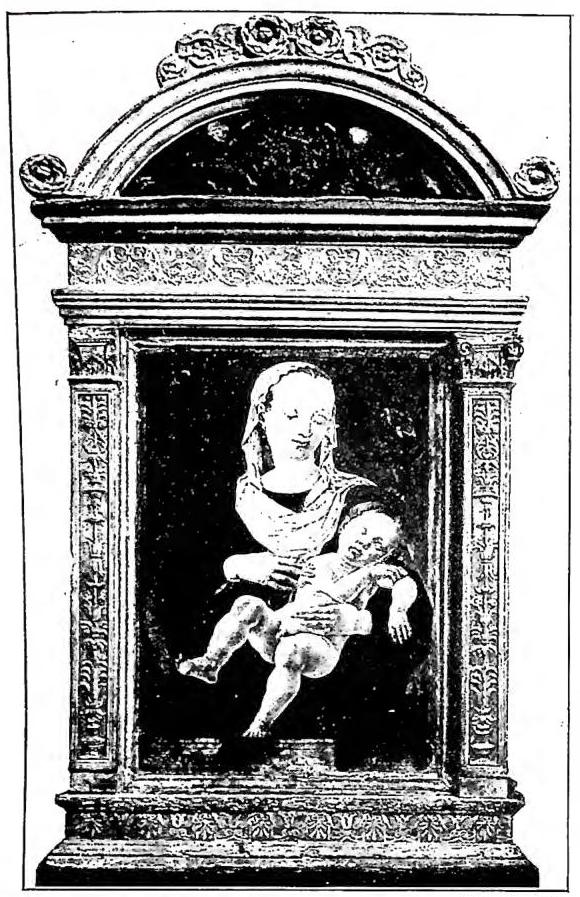
ANCONA - Madonna and Child, by C. Tura (15th century).
Venice, Pinacoteca dell'Accademia.
The synod of 375 is known to us only through the letters 225, 237-40, and 244 of St. Basil. Hefele does not mention it at all. See what Tillemont says about it, IX, Paris 1703, pp. 247-49.
BIBL.:
In addition to the works already cited, V. Hefele-Leclercq, I, pp. 903-908; G. Rasneur, L’homoiousianisme dans ses rapports avec l’orthodoxie, in Revue d’histoire ecclésiastique, 4 (1903), p. 201.
Martino Jugie
Cite this article
“ANCIRA.” Enciclopedia Cattolica, vol. I (1948), p. 719. Azione Romana digital edition, https://azioneromana.com/article/ancira.