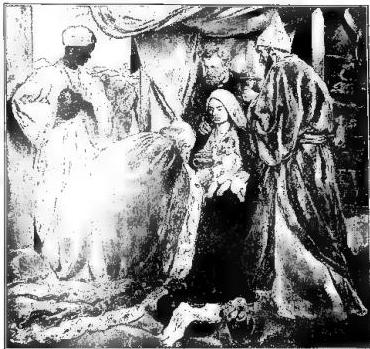
EPIPHANY. - The Greeks called epiphany the manifestation of a god in person or in a dream or in a miracle, or his return after an absence.
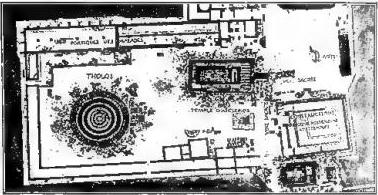
secondly, e.g., in the battle at Lake Regillus, a duplicated epiphany at the Sagra river. An epiphany of Apollo was attributed in 279 B.C. to the retreat of the Celts from Delphi without having plundered the temple.
Luisa Banni
EPIPHANY. - Feast commemorating the manifestations of Jesus Christ.
I. LITURGY
The Eastern origin of the feast is indicated by the Greek word: Ἐπιφάνεια. The first notice of its celebration is given by Clement of Alexandria (d. c. 215) and concerns the practice of Gnostic heretics who thought that the divinity had united itself to humanity in Jesus Christ only at the moment of His Baptism in the Jordan. Perhaps this feast of the manifestation of the divinity was also observed in Catholic Churches, but as a minor solemnity. Origen does not mention it, although he had occasion to list Christian feasts when writing against Celsus, while in 304 at Heraclea it was considered a dies sanctus. In any case, in the East the same mystery commemorated in the West on Christmas Day was solemnized, and indeed both feasts soon came to be celebrated everywhere as a kind of exchange: the East celebrated Christmas and the West also Epiphany. Necessarily, however, in both Churches Epiphany became the preeminent theophanic day, linked therefore to the mystery of the Baptism of Jesus, during which the heavenly Father gave public testimony to the presence on earth of His Son. For this reason this day was added to Easter as a day for administering Baptism to catechumens.The first Western testimony to the feast is from the pagan Ammianus Marcellinus for Vienne in the Dauphiné. Uncertain is a testimony from the Council of Saragossa in 380. St Augustine and St Leo the Great left several sermons for this day. It seems, however, that Africa, Rome, Ravenna, and Milan, while recalling the Baptism of Jesus, perhaps because the custom of administering this sacrament on this day was not practiced there, soon gave prominence, and in a notable way, to the mystery of another theophany, that of the Magi, in which Christ manifested Himself as King and Lord of all nations. Monuments also support this thesis. Indeed, the first to speak of the other theophanies, that of the Baptism and that of the wedding at Cana, where Jesus performed His first miracle and showed Himself to be God, was St Ambrose, in the hymn he composed and used in the Milanese liturgy for this day; but these additions reached Rome only after St Gregory the Great and always remained on the margins of the feast. “It should rather be noted how the episode of the Baptism of Christ, which in the East prevailed in the liturgical formulas, wished to express a great religious idea, namely the mystical marriage of Christ with the Church, through which it acquires the spiritual fruitfulness of generating by water and the Holy Spirit the children of God. The idea of the sacred marriage led to the inclusion of the wedding at Cana in the object of the feast, and, finally, since the changing of water into wine was considered a type of the Eucharist, in Gaul the memory of another great miracle that was its symbol, the multiplication of the loaves, was added” (Righetti, op. cit. in bibl. II, p. 76).
II. OCTAVE OF EPIPHANY
It is a liturgical cycle of sacred functions, instituted by Bl. Vincent Pallotti in Rome in 1836, in which, through the splendor of the Latin and Eastern liturgies, with preaching in the principal languages of the world, and with the participation of the episcopate and foreign and national colleges, the unity and universality of the Catholic Church shine forth admirably. The octave is celebrated in various parts of the world.III. ARCHAEOLOGY
The Epiphany is the scene most frequently depicted from the Lord’s infancy in early Christian art. St Augustine explains the preference for this scene: the Magi “were the first among the Gentiles to know Christ the Lord,” and these “firstfruits of the Gentiles deserved to signify the salvation of all nations” (Serm. 203, 3).While the number of the Magi is usually three, some exceptions occur: in the frescoes of the Coemeterium ad duas lauras, in one of the mosaics of the triumphal arch of S. Maria Maggiore, and in the casket of SS. Celso e Nazario in Milan, the Magi are only two; in the catacomb of Domitilla there is an Epiphany with four Magi for reasons of symmetry. The Magi offer gold, frankincense, and myrrh (Mt. 2, 11). From the time of St Irenaeus this threefold offering is seen as attesting Him who was being worshipped: “the myrrh because He was to die and be buried for the mortal race; the gold because He is the King of an endless kingdom (Lk. 1, 33); the frankincense because God has manifested Himself in Judaea (Ps. 75, 2) and has shown Himself to those who did not seek Him” (Contra haer., 3, 9; PG 7, 870 sqq.). The same ideas are expressed by Prudentius (Apoth., 642 sqq.; PL 59, 975; id., Catham., 12, 19; ibid., 905). Gold is usually presented first in the form of a crown with a frontal gem (Wilpert, Sarcofagi, II, p. 284, pl. 204, 2 and 3; 222, 6 and 7; 224, 5); frankincense is mostly in globules or in a pyx (id., op. cit., pl. 96); myrrh is in ampullae (id., op. cit., pl. 223, 10) or in vessels, sometimes with the weight in pounds marked (id., op. cit., pl. 219, 1; 225, 1 and 2).
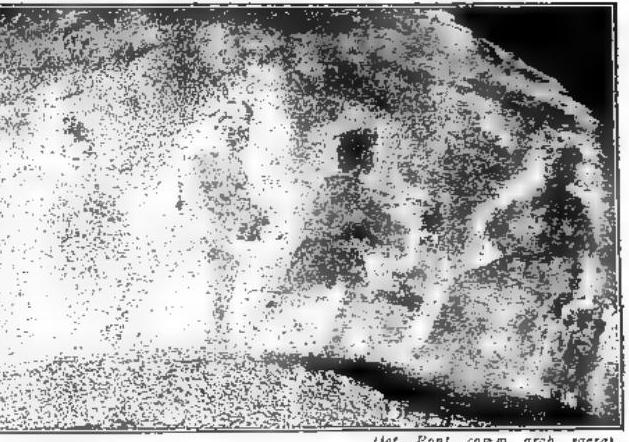
The earliest known representation of the Epiphany is the fresco in the so-called Greek Chapel in Priscilla, dating from about the middle of the second century (G. Wilpert, Fraccio panis,
[by courtesy of Rev. A. P. Fratus]
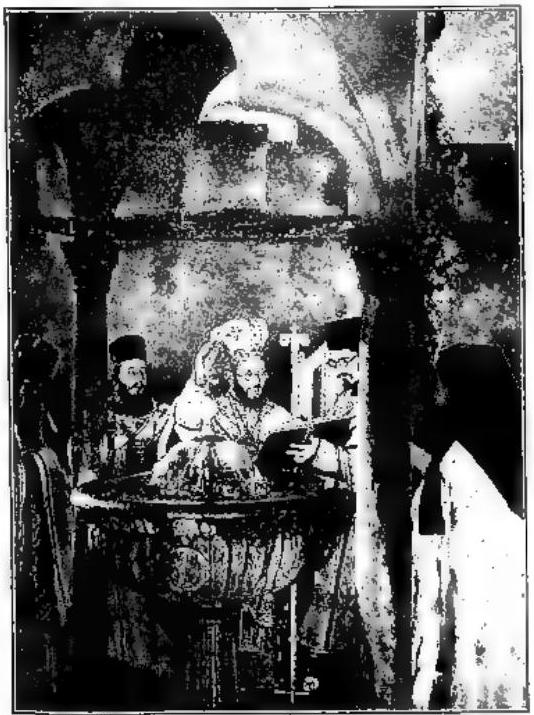
EPIPHANY — The blessing of water on the day of Epiphany. Grottaferrata, Abbey.
Pontifical Commission for Sacred Archaeology
EPIPHANY — The Magi in the act of offering their gifts. Fresco in the so-called Greek Chapel (2nd century) — Rome, Priscilla catacomb.
Paris 1896, pp. 24-25, pl. 7); the Madonna is seated with the Child on her lap; the three Magi approach reverently offering their gifts. This scene is then repeated in other paintings in the cemeteries ad duas lauras, Callisto, Domitilla, Maius, Marco and Marcelliano, Trasone (Wilpert, Pitture, pp. 176-83; E. Josi, Coemeterium maius, in Ric. di arch. crist., 10 [1933], pp. 12-16; A. Bosio, Roma sotterranea, Rome 1632, p. 279), a fresco later lost but brought to light again in 1948. At Teano the Epiphany was reproduced in mosaic on the tomb of a “Geminia Felicitas” of the year 370 (v. Spinazzola, Di un mosaico cristiano e di altre antichità nel territorio di Teano, in Notizie degli scavi, 1907, pp. 697-703). It was also scratched on the sepulchral slab of a Severa, now in the Lateran Museum (O. Marucchi, I monumenti del Museo cristiano pio lateranense, Milan 1910, pl. 57, 1). Christian sarcophagi offer more than sixty examples of the Epiphany (Wilpert, Sarcofagi, II, p. 283). In them camels sometimes appear behind the Magi.
In non-sepulchral art the scene is carved on a marble vase of the 4th century acquired by Fr Marchi for the Kircherian Museum, now in the National Museum at the Baths (R. Garrucci, Storia dell’arte cristiana, VI, Prato 1880, p. 33, pl. 427, 5-6). It also appears on gold-glass vessels (id., Vetri ornati di figure in oro, Rome 1864, pl. 4, nos. 7, 8, 9, 10). Characteristic is the Epiphany scene in the mosaics of the triumphal arch in S. Maria Maggiore (432-40). On a gem-studded throne sits the Lord in tunic and pallium, with nimbus and a cross on His head; behind the throne four winged angels and above the star. Two Magi with tiara approach with their gifts. The Epiphany is carved also on one of the panels of the wooden door of S. Sabina in Rome of the 5th century; to the same century belongs the ambo of Salonica, now in the Museum of Constantinople. The marble slabs found at Carthage (v.) in the basilica of Dumous-el-Karita, dated between the 5th and 6th centuries, likewise offer the Epiphany scene (Wilpert, Sarcofagi, III, pp. 53-55, fig. 279). It is found also in ivories, as in the caskets of S. Nazaro in Milan and of Brivio, now in the Louvre, and in some metal ampullae now in the treasury of Monza, in bronze medals now in the Sacred Museum of the Vatican Library (G. B. De Rossi, in Bull. arch. crist., 1ª serie, 7 [1869], p. 53, pl. 1, nos. 9-10).
Enrico Josi
IV. ART
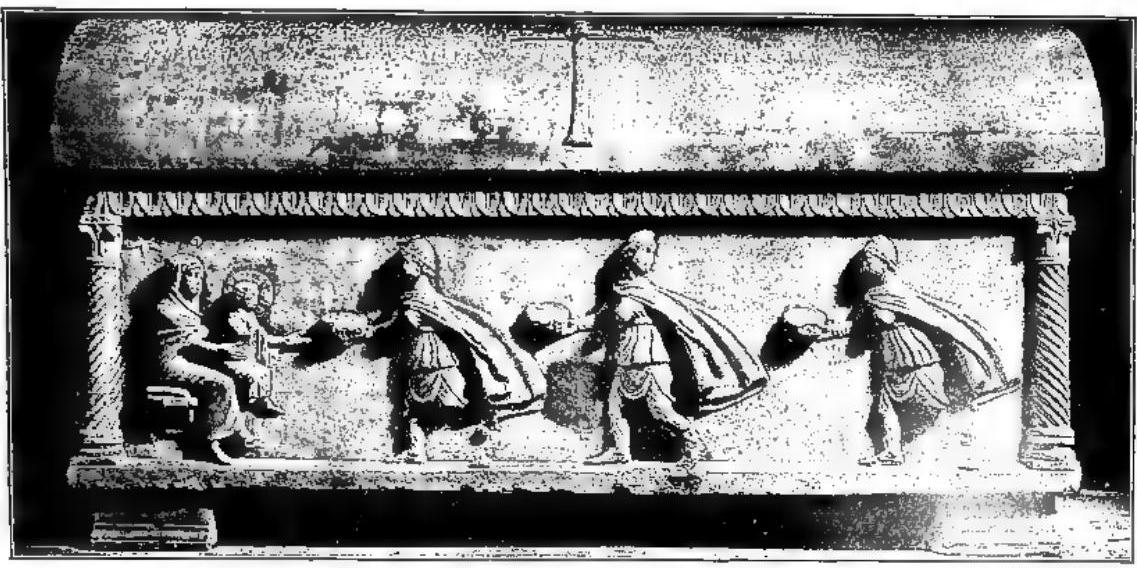
In the mosaics of S. Apollinare Nuovo in Ravenna, which date from the time of Emperor Justinian (527–565), beside the throne of the Virgin, who holds the Child in her arms and is approached by the three kings, there are two angels on either side. An angel is also present beside the Virgin in the scene depicting the Adoration of the Magi in the chair of Maximian, also in Ravenna.EPIPHANY — The Magi in the act of offering their gifts. Sarcophagus (6th century) — Ravenna, basilica of St. Vitalis.
(Internationale Ausstellungen)
Sometimes, even in representations of that period — as in an ivory pyxis in the Bargello in Florence, to be assigned to the 6th century — the scene becomes more complex and complete with the addition of the other scene of the adoration of the shepherds. In one of the historiated columns of the ciborium of St. Mark’s in Venice, also from the 6th century, the narrative is instead clear: after the arrival of the shepherds, the Magi are seen to appear, one observing a sphere, another unrolling a scroll, the third pointing to a star. In Eastern representations, sometimes the scene of the adoration is followed by that of the return of the Magi. The Magi are generally guided by an angel. This iconographic detail soon passes from the East to the art of the West, and we see it in the frescoes of the 8th century in S. Maria Antiqua and in the fragment of mosaic from the chapel of John VII (705–707) in old St. Peter’s, now in S. Maria in Cosmedin, where, beside the throne of the Virgin, besides the angel there is also Joseph. Around the year 1000, the crown replaces, on the heads of the Magi, the Eastern mitre, and the Virgin also increasingly assumes that attribute of royalty. With the revival of plastic skills in the Romanesque age, the scene of the adoration of the Magi assumes ever greater diffusion in sculpture. Thus in the portal of the baptistery of Parma, a work by Benedetto Antelami, and in a relief of the 12th century in the Archiepiscopal Palace of Fano and in another from the Pieve of Arezzo, where together with the Magi there is an angel with a censer, while in the architrave of S. Andrea in Pistoia, which dates to 1166, the Magi, who are first depicted traveling on horseback, are then seen standing and approaching the throne of the Virgin. In the pulpit of the church of Barga, the infant Jesus blesses the king closest to him, while the other two approach on horseback. Numerous are also the representations of the scene in the sculpture of Northern Europe; one may recall the compositions in the cathedrals of León, Chartres, Amiens, Paris, Reims, etc. In the 13th century, the scene sometimes acquires a new naturalistic sense, determined by the now free narrative faculties of painters and sculptors. Thus at Forlì, in the lunette above the door of S. Mercuriale, the encounter takes place inside the house of the Virgin; one of the kings, having removed his cloak and crown, has hung them on a peg, the second has already removed his crown in an act of respect, and the third is in the act of removing his. A recollection of the journey of the Magi also appears in the scene of the Adoration on the pulpit of Nicola Pisano in the baptistery of Pisa (1260), where in the crowded classical composition there are, besides the angel, the three horses, while in the pulpit of the cathedral of Siena (1266–68) the same Nicola, this time in collaboration with his assistants, accentuates the naturalistic elements of the scene and represents one of the kings in the act of bringing a little foot of the infant Jesus to his lips. His son Giovanni imitates him in the pulpit of S. Andrea in Pistoia. But perhaps the finest of these plastic representations of the 13th century was that which Arnolfo di Cambio had composed with full-round figures for the Nativity scene of S. Maria Maggiore in Rome, of which the figures of the kings and that of Jesus still exist. In the last decade of the 13th century, however, Pietro Cavallini in the mosaic of the band beneath the apse semidome of S. Maria in Trastevere still imagines the throne in the open countryside and the kings approaching it with gestures of homage as in the most ancient compositions of Christian art.
But soon, in Padua, Giotto in 1305 confers new austere monumentality to the scene by placing the Virgin on a mystical throne between Joseph and the angel, while one of the kings, kneeling, brings the feet of the infant Jesus to his lips and his two companions stand by; nearby are two camels and a groom. In the reliefs on the façade of the cathedral of Orvieto, a work by Lorenzo Maitani, the angels stretch a cloth behind the throne of the Virgin, which in the tabernacle of S. Michele in Florence, a work by Andrea Orcagna, becomes a seat adorned with twisted columns.
The act that one of the kings performs, generally the oldest, often bearded, that of kneeling beside the throne of the Virgin to kiss the feet of the infant Jesus, becomes ever more frequent in the 15th century, when the composition, after Masaccio had still evoked it with austere and majestic grandeur in the panel in Berlin, expands extraordinarily and almost shatters into numerous episodes, such as
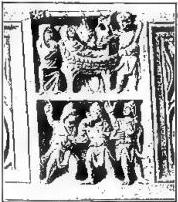
EPIPHANY — The Magi discussing the appearance of the star, which is situated high above the manger. Detail from a sarcophagus preserved in the Museum of Arles (4th century).
The long festive procession accompanying the Kings and witnessing their homage. Among these compositions we may recall that by Gentile da Fabriano in the Uffizi Gallery in Florence, another by Benozzo Gozzoli in the chapel of the Palazzo Medici Riccardi, and one by Sandro Botticelli also in the Uffizi, where in the king approaching the group of the Virgin with the Child one can recognize the likeness of Cosimo de’ Medici, and among those present at the scene the same Botticelli himself; and others by Antonio Vivarini, Mantegna, Giovanni Bellini, etc. Analogous characteristics are assumed by the composition also in sculpture, as in the relief by Mino del Reame which is in Rome in S. Maria Maggiore, and in northern art, as, for example, in the Adoration of the Magi painted by Roger van der Weyden, now in the Pinacoteca of Munich.
The painting and sculpture of the 16th century, and thus those of the Baroque era, continued frequently to represent the Epiphany in the aspect of the Adoration of the Magi, without fundamentally altering the character of the scene, though perhaps accentuating its festive tone, which, in a certain sense, finds its culminating expression in the Neapolitan presepi (q.v.) of the 18th century, which at times attain the value and importance of true works of art.
Moreover, it must be borne in mind that alongside the major manifestations of the figurative arts just mentioned, from the Middle Ages onward popular art has also left in this field testimonies of the highest interest.
V. FOLKLORE
In popular tradition Epiphany is one of the most important feasts: an indication of this is the fact that it is called by the people “Pasquetta” or “first Easter of the year.” It gives rise to numerous and varied customs and beliefs, so much so that, in order to understand its meaning and character, it is necessary to trace them back to the different religious conceptions and manifestations to which they are inspired and to which they are connected.With regard to one of the most important evocative aspects of Epiphany, namely that of the Baptism in the Jordan, there are customs such as the solemn blessing of rivers, which until recent times was performed in Egypt as well as in Eastern Europe. Thus, in some parts of Sicily it was customary (and in part still is) to immerse a crucifix three times in holy water, or to carry it in procession along the shore and then throw it into the sea, whose water (according to popular belief) at that moment miraculously became sweet. In Bulgaria sacred images kept in the home, as well as the cross and the ploughshare, were taken to the spring or river and washed; frail and sick people would plunge into the river to be healed. However, the complex of customs that evoke the journey of the Magi and the offering of gifts to the Child Jesus is predominant. In the Three Venetias, groups of young people go from house to house carrying a large revolving paper star, mounted on a wooden pole with a small light inside, and sing lauds to Jesus, Mary, and Joseph or even a “singaresca” that evokes the episode of the Magi. In Tuscany these performances are called befanate, and they are of two distinctly different types: the sacred befanate reconstruct the journey of the Three Kings from the East, and in them the Befana appears as a prophetess and seer; the profane befanate, on the other hand, develop themes similar to those of the bruscelli or mogliazzi, namely the contests between one or more pairs of suitors, who end up marrying. But a true and proper sacred representation with numerous characters takes place in the province of Taranto, in the farmstead called “La battaglia.” These, and others that could be recalled, are to be considered as living relics of the ancient sacred drama that, since the Middle Ages, also evoked the scene of the Magi’s visit to the Divine Infant.
However, many popular traditions of Epiphany can only be understood if one takes into account that Epiphany is considered the beginning of the year. Thus one can explain the gifts and presents, especially to children, in their well-known propitiatory meaning. The people have created a symbolic figure in the Befana (from Epiphany), imagining her as a kind old woman who passes through the houses at night leaving her gifts in the shoes and stockings of good children, and coal and other signs of her displeasure for the naughty ones. In many Italian cities, for example Florence, in the past, large puppets representing the Befana were made and paraded through the streets: this gave rise to various processions in the different districts, with frequent clashes and fights. The custom of giving gifts has given rise to special fairs, such as the one held in Rome in Piazza Navona (previously it took place in the small squares of S. Eustachio and dei Cappellari) and which culminates in a joyous uproar.
Always in relation to the distribution of gifts and presents, there is the custom (spread in Abruzzo, the Marches, Tuscany, and many other regions) of groups of young people who, on the evening of the vigil, go from house to house singing a song of quest (called la pasquella or befanata) and receiving offerings of eggs, sweets, nuts, hazelnuts, etc.
A New Year’s custom transferred to Epiphany is also that of drawing lots and making predictions for the future on this day. One of the most typical forms is the use of a focaccia or cake in which a bean is hidden and which is divided among the guests: the person to whom this falls by lot is named king of the bean and, in turn, he chooses the queen by throwing the bean into the glass of the woman he has chosen. This custom has a very wide area of diffusion with natural variations. In France, in ancient times, the custom was followed by the king in person, who went around accompanied by the grand baker and the grand cupbearer who carried sweets and wines for the august couple; however, the queen was a lady chosen by him for this feast. In the division of the focaccia containing the bean, a share is also made “for God” or the “share of the poor.”
EPIPHANY — The Adoration of the Magi, by Antonio Barzera (1947).
Rome, private collection.
There are many ways of taking omens on the day of the Epiphany. In Romagna the common people customarily station themselves at a crossroads to listen to the words of passersby and, from these, to construct a discourse whose meaning will foretell what is to happen during the year. In Sicily (at Iannello) it is believed that the wind blowing on the evening of 6 January, at the moment of the sacred rites, will prevail throughout the year. In Campania an olive leaf is thrown onto the fire: if it leaps away, life will be assured; if it burns crackling, death will come within the year. In Friuli bonfires are lit and, from the sparks and smoke, omens are drawn concerning the harvest. Burning discs, called “ciduli,” which are rolled downhill, are an integral part of these fires.
Still connected with the Epiphany, understood as the festival marking the beginning of the year, are the customs of betrothals, which in some places, such as the Val di Fiemme (Trentino), give rise to rites of a dramatic character (“maridazzi” for the feast of the “bandierà”). In Tuscany it was customary on this day to choose the “befani,” namely a young man and a girl who entered into a kind of betrothal, often followed by actual marriage. In Campania, merry groups on the evening of the vigil are wont to go beneath the windows of widows and name a possible new husband for them; this is called “maritare le vedove.” There are also remnants of ancient agrarian propitiatory rites, beginning with the custom of bonfires. In Switzerland and other countries of Central Europe noisy processions are made against two imaginary witches called Strudeli and Stratteli, who are thought to harm fruit crops. And in the songs that the groups of children repeat during their begging processions, there are frequent allusions and invocations for the successful outcome of the harvests.
Epiphany is regarded by the common folk as a day of wonders. It is said that at midnight the walls become of ricotta cheese, and that animals speak to one another, though to listen to their discourse is forbidden and whoever should break this rule would meet certain death. The traditional character of the feast of Epiphany has been fairly well preserved even to the present day, adapting itself to the tastes and exigencies of modern life.