
ORCAGNA, ANDREA di CIONE ARCAGNOLO, called l'. — Florentine painter, sculptor, and architect, d. in 1376. Mentioned among the Florentine painters in 1343, his name recurs in numerous documents up to 1368.
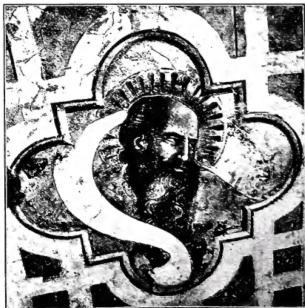
His greatest pictorial work is the «Pala Strozzi» in S. Maria Novella in Florence, signed and dated Anno Domini MCCCLVII Andreas Cionis de Florentia me pinxit, depicting Christ giving the keys to s. Pietro and the book to s. Domenico, flanked by other saints. Recently, on the occasion of the restoration work carried out in S. Maria Novella, the remains of the decoration of the vault of the major chapel were recovered, including strongly characterized noble figures of prophets. Other paintings attributed to him should rather be assigned to the Vardo brothers
A work of architecture and sculpture at once is the tabernacle of Orsanmichele, entirely composed of tracery, carvings, reliefs, and inlays, completed by O. in its principal structure in 1359, but finished only a few years later (1366) in the bronze balustrade with marble pillars and statues of angels. O. emerges as the dominant personality in all three arts that he practiced; and, if not precisely a reactionary, he was the one who, with the greatest clarity and vigor, reasserted in the mid-fourteenth century a Florentine art opposed to whatever, in the masters of the generation after Giotto, might have seemed a concession to exotic tastes. This is clear not only in the «Pala Strozzi», but above all in the sculptures decorating the tabernacle of Orsanmichele, where even the architectural lines of the round arch seemed to express a polemical position in opposition to the Sienese and Pisan Gothic tendencies that had invaded Florence around the middle of the century.