MEDICI, FAMIGLIA

MEDICI, FAMILY. — Enriched through commerce and banking, the Medici acquired, in the 15th century in Florence, political supremacy in the form of a disguised signoria. This was transformed, after 1530, into an absolute monarchy that governed Tuscany, with dynastic succession, for two centuries. The Medici provided the Roman Church with many bishops and cardinals, and three popes: Leo X, Clement VII, and Leo XI. Pius IV was also a Medici, of the Marignano branch; but the origins of this family, to which belongs the mother of St. Charles Borromeo, are obscure, and there are no positive elements to prove their descent from the same stock as that of the Florentine Medici.

The earliest Medici mentioned in documents is BONA-GIUNTA, a witness in an act of 1221. In public life, the Medici appear toward the end of the 14th century with ARDINO, prior in 1291 and Gonfalonier of Justice in 1296. In the same period, CO-STANTINO was bishop of Orvieto, and MATTEO of Chiusi. The Medici sided with the Neri and with Corso Donati. GIOVANNI was among those executed by the Duke of Athens. Meanwhile, the Medici bank expanded its business network, spreading its branches throughout Italy and abroad, and successfully weathering the crisis that overwhelmed industries and banks in the early decades of the 14th century. Although their social and economic standing placed them among the *popolo grasso*, the Medici sought to build a political clientele among the *popolo minuto*. SALVESTRO (1331-88) was among the organizers of the Ciompi revolt, while VIERI DI CAMBIO exercised a moderating influence in 1393.

No reliable genealogy exists for the Medici mentioned so far. It begins only with the branch known as Cafaggiolo (from the name of one of their properties in the Mugello), whose recognized progenitor is AVERARDO, called Bicci. His son, GIOVANNI DI BICCI (1360-1429), one of Italy’s richest bankers, won popular favor through his generosity. He built the church of San Lorenzo and the Hospital of the Innocents; he commissioned Donatello and Michelozzo to erect a tomb for John XXIII in the Baptistery. He had two sons: Cosimo and Lorenzo.

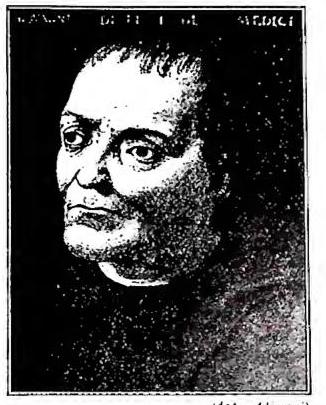
Cosimo, called the Elder (1389-1464), wrested political supremacy from the Albizzi and established a signoria, disguised by the formal survival of republican institutions. He did not neglect business, and at his death left the bank in excellent condition. Though of limited education, he supported writers and artists, promoted the Florentine Studium, and built villas, palaces, convents, and churches. Cosimo’s relatives included Donato, bishop of Pistoia, and FILIPPO, bishop of Arezzo and later of Pisa. From Contessina de’ Bardi, Cosimo had GIOVANNI, who predeceased him, and PIERO, called the Gouty, who inherited his father’s position but, due to his weak character and poor health, gravely endangered the family’s authority. A natural son of Cosimo, CARLO (d. 1492), held the prepositura of Prato. Piero and Lucrezia Tornabuoni, whose severe morals and deep piety were celebrated, had GIULIANO, who was killed in 1478, and LORENZO, called the Magnificent (v.). Giuliano left a son, GIULIO, VIZI (v.). During Lorenzo’s rule, the bank was liquidated, and efforts were made to preserve the family patrimony through land investments. Lorenzo had seven children by Clarice Orsini. Among the daughters, LUCREZIA, married to Iacopo Salviati, bore MARIA, who married Giovanni delle Bande Nere; MADDALENA had by Franceschetto Cybo, INNOCENT, a cardinal and minister to Alessandro and later to Cosimo I, and LORENZO, progenitor of the Cybo-Malaspina. Among the sons, GIOVANNI became a X (v.); GIULIANO, Duke of Nemours, shared the government of Florence with Giovanni after the 1512 restoration and left a natural son, IPPOLITO, who was made a cardinal; PIERO, who succeeded his father in the signoria, was exiled in 1494 and, after several attempts at recovery, died at the Battle of Garigliano (1503). Piero and Alfonsina Orsini had CLARICE, who married Filippo Strozzi, and LORENZO, to whom Leo X procured the Duchy of Urbino. Lorenzo had by Maddalena de la Tour d’Auvergne, CATERINA (v.), who married Henry of Valois and became Queen of France. ALESSANDRO, reputed to be Lorenzo’s natural son, was made Duke of Penna, received the government of Florence in 1530, married an illegitimate daughter of Charles V, and was assassinated in 1537 by his cousin Lorenzino. With Alessandro, the direct line of Cosimo the Elder died out.

The brother of Cosimo the Elder, LORENZO, who was treasurer of the Apostolic Chamber, had a son, PIERRANCESCO, from whom descended LORENZO and GIOVANNI. After the death of the Magnificent, they declared themselves opponents of Piero and were exiled; they returned in 1494, changed their coat of arms, and took the name *Popolani*. From Giovanni and Caterina Sforza was born GIOVANNI DELLE BANDE NERE (d. 1526), who had by Maria Salviati a son who became Cosimo I. Cosimo I (1519-74), after the assassination of Alessandro, seized power, gradually removed those Florentine magnates who sought to restore an oligarchic government, and with the support of Charles V established a regime of rigid absolutism. He eliminated all possible rivals by having Lorenzino killed, arranging the emigration of his brother, GIULIANO, to France (where he held ecclesiastical offices), and granting GIULIO, an illegitimate son of Alessandro, a high military rank.

Article illustration
(note: Alinari)

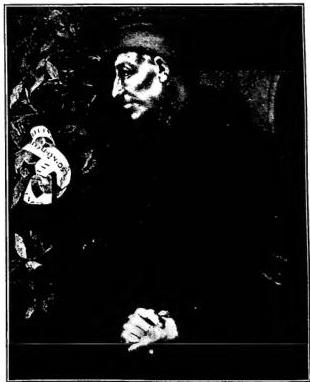
MEDICI, FAMILY — Portrait of Cosimo I de’ Medici — Pater Patriae — Painting by Pontormo after a medal — Florence, Uffizi Gallery.

Cosimo I unified the territory by conquering Siena, created a fleet that took part in the Battle of Lepanto, and founded the Order of Knights of St. Stephen, which for over a century valiantly resisted the Barbary corsairs in the Mediterranean. Though tied to Spain, Cosimo managed through his energy to preserve the maximum autonomy that Italy’s conditions allowed. In 1569, he received the grand ducal title from Pius V. TOLEMAIDE. Among the daughters, LUCREZIA married Alfonso II d’Este; ISABELLA, wife of Paolo Giordano Orsini, was murdered by her husband. Among the sons, GIOVANNI, a cardinal, and GARZIA died within a short time of each other in 1562, giving rise to an unfounded legend of family tragedies; FRANCESCO I (1541-87), who succeeded his father, lacked both his intelligence and energy. He married Joanna of Austria and, after her death, Bianca Cappello. Among the daughters of Francesco I, ELEONORA married Vincenzo Gonzaga, Duke of Mantua, MARIA (v.) married Henry IV of France.

Article illustration

Francesco I was succeeded by another son of Cosimo I, FERDINAND I (1551-1609). Having abandoned his cardinalate to marry Christina of Lorraine, he restored the prestige of the Grand Duchy. He was on friendly terms with Henry IV and played a notable role in his conversion. He built the port of Livorno, supported writers and scientists. Among the daughters of Ferdinand I, CATERINA married Ferdinand Gonzaga, CLAUDIA married Federico Ubaldo della Rovere and later Leopold of Austria. A son, CARLO, became a cardinal; the other son, COSIMO II (1590-1621), succeeded his father. Cosimo II devoted much care to the navy and the port of Livorno; he supported Galileo; but with him began the decline of the Grand Duchy. By Maria Maddalena of Austria, Cosimo II had GIOVANNI CARLO, who became a cardinal; MATTIAS, who took part in the Thirty Years’ War and the War of Castro; LEOPOLD, also a cardinal, who promoted scientific studies and founded the Accademia del Cimento; FERDINAND II (1610-70), who supported his brother Leopold’s activities and sought to revive the depressed economy by stimulating trade. The son of Ferdinand II and Vittoria della Rovere was COSIMO III (1642-1723).

In the final years of the reign of Cosimo III, as the wars of succession were preparing radical changes in the political map of Europe, the foreign Chancelleries, foreseeing the imminent extinction of the Medici house, began to regard the Grand Duchy as a bargaining chip in the diplomatic game. The eldest son whom Cosimo III had had by Margherita Luisa d’Orléans, FERDINANDO, died before his father. Cosimo’s brother, FRANCESCO MARIA, had renounced the purple to marry Eleonora Gonzaga, but the marriage remained childless. Thus the Grand Duchy passed to Cosimo’s other son, GIANGASTONE (1671–1737), a man of notable intellect but of indolent character and corrupt morals. Since Giangastone had no children, Cosimo had thought to secure the succession for his daughter ANNA MARIA LUISA, widow of Johann Wilhelm, Elector Palatine; but the powers, even before Giangastone’s death, destined the Grand Duchy to Charles of Bourbon, and then to Stephen of Lorraine. After the installation of the Lorraines, Anna Maria lived in Florence until 1743, respected by all but wielding no political authority. In 1737, in ceding the family estates to the Lorrainer, she stipulated that the Medici collections could never be removed from the city.

Other branches of the Medici trace their descent to a GIOVENCO (d. in the first half of the 14th century), said to have been brother of the father of Bicci. From one of these sprang OTTAVIANO (1482–1546), who married Francesca Salviati, niece of Leo X. Their son, ALESSANDRO, became archbishop of Florence and Pope Leo XI (1605); from the other son, Bernardino, who in 1567 acquired the fief of Ottaiano, descended the princes of Ottaiano and dukes of Sarno. To their line belonged that LUIGI M. who was minister to Ferdinand IV of Bourbon.

To another branch finally belonged FILIPPA (d. 1488); GUIDO, who was archbishop and castellan of Castel S. Angelo during the sack of Rome; GIULIANO, bishop of Pisa (d. 1636); RAFFAELE (d. 1628), who was admiral of the Knights of S. Stephen. This branch, known as the marquises of the Castellina—a title they already held in 1629—still exists and is regarded as the legitimate heir of the house. — See pl. XXXIV.

BIBL.: D. Moreni, Serie d’autori di opere risguardanti la celebre famiglia M., Florence 1826; P. Litta, M. in Famiglie celebri italiane, Milan n.d.; G. Spini, Cosimo I de’ M. e l’indipendenza del principato mediceo, Florence 1945; G. Pieraccini, La stirpe de’ M. di Cafaggio, new ed., ibid. 1948; R. De Roover, The Medici Bank, New York 1948. Roberto Palmarocchi

MEDICI, LORENZO de’, called the MAGNIFICENT. — Born in Florence on 10 Jan. 1449, died at Careggi (Florence) on 8 Apr. 1492. Still very young, he gave valuable assistance to his father Piero in thwarting the plots of his adversaries, and in 1466, in derogation of the age limits fixed by the Statutes, he was admitted to the Council of the Hundred. In 1469 he married Clarice Orsini. At the death of Piero in December of that year, Lorenzo and his brother Giuliano were recognized as the leading citizens; but Giuliano took no part whatever in public affairs.

The internal strife that had disturbed Piero’s government convinced Lorenzo of the need to reorganize the State and strengthen its institutions; yet the constitutional reforms were carried out with cautious slowness and long intervals: in 1470–71 and in 1480. Only in his later years did external affairs come almost entirely under the control of his personal Chancery; yet he never assumed formally absolute power.

At first Lorenzo was on cordial terms with Pope Sixtus IV, who entrusted him with the deposit of Church funds and openly supported Florence when, in 1472, it suppressed the rebellion of Volterra, reducing the city to full subjection. But friendship was shattered by the Pope’s expansionist designs, in which he was encouraged by his ambitious nephew Girolamo Riario, eager to carve out a lordship in central Italy. The first clash occurred in 1473, when the Pope, with the help of the Pazzi, rivals of the Medici, forestalled Florence in the purchase of Imola. The quarrel, growing ever more bitter, reached its tragic climax in the conspiracy of 1478. On 26 Apr., during Mass in S. Maria del Fiore, the two Medici were treacherously attacked: Giuliano was killed, but Lorenzo escaped. The atrocity of the deed provoked a furious popular reaction, and several leaders of the plot, among them Archbishop Salviati, were put to death. This was followed by Lorenzo’s excommunication, the interdict hurled against the city, and a general war. Ferdinand of Naples took up arms for the Pope, and military operations turned against Florence, whose allies, Milan and Venice, gave only scant aid. Lorenzo found himself in grave difficulties, not least because his enemies cleverly represented the war as being waged against him personally and not against the city. Hence in December 1479 he took the bold decision to go to the court of his most powerful enemy, Ferdinand of Aragon, in an attempt to reach an accommodation. At Naples he succeeded in convincing the King, and returned to Florence with peace concluded—a success for which “he returned to Florence greater than when he had left it” (Machiavelli).

In Lorenzo’s policy there now emerges what is called the policy of equilibrium, though two phases must be distinguished. During the War of Ferrara and until the Peace of Bagnolo (1484), Lorenzo pursued the same objective that had guided Cosimo the Elder: to maintain a balance of power among the Italian States, preventing through shrewd alliances any hegemonic ambitions from endangering the peace. But when in 1485 the Neapolitan barons, backed by the new Pope Innocent VIII, rebelled against the King, giving rise to a new general war, and Lorenzo, overcoming the reluctance of his fellow-citizens, induced Florence to side with Milan and Naples against the Holy See, this intervention took on a character quite different from that of 1482. Lorenzo knew that any Italian ruler, once he found himself on the losing side, would not hesitate to invoke foreign aid; he knew that the new France, unified under a powerful monarchy, constituted the gravest threat to the freedom of the peninsula, a threat from which the Italian States could hope to defend themselves only by uniting all their forces. Hence, while urging his allies to act with the utmost energy, he avoided formally declaring war on the Church, and throughout the conflict conducted and prolonged secret negotiations with the Pope, with a view to preparing a “true peace.” The correspondence of Lorenzo now reveals his immediate and long-range aims. Since a weak and divided Italy would be an easy prey for transalpine powers, it was necessary to consolidate the alliance between Florence, Milan, and Naples; yet this alliance was only to be the prelude to a general league, into which the Pope would enter once he had renounced his expansionist designs. Finally Venice too would have to adhere, so as not to estrange itself definitively from Italian political life.

Article illustration

L.'s actions met with full success, because, after the Peace of Rome (1486), his relations with the Pope became most cordial and their friendship remained unaltered until L.'s death. Innocent VII gave proof of this by arranging the marriage of his son Franceschetto to L.'s daughter Maddalena, and in 1488 offering the cardinal's purple to L., who refused it, later bestowing it upon the young Giovanni. Nevertheless, the permanent danger of renewed conflict persisted in the antagonism between Rome and Naples, which Milan and Venice fomented rather than calmed. For six years L. had to keep watch, so to speak, hour by hour, over the moves of the contenders, to spy on their intentions, and dissuade them from any act that might produce irreparable consequences. And for six years, by availing himself of the unchallenged moral predominance he now exercised in Italy, he succeeded in maintaining the peace. A few months before his death, in January 1492, the agreement was made public that settled the long-standing dispute between the Pope and the King of Naples. Thus L. had accomplished the mission he had set for himself, inducing Italian rulers to a more or less voluntary recognition of the common good.

No less original was the mark he left on our literature.

His poetic work consists of a collection of Rime; a Comento sopra alcuni de' suoi sonetti; two Selve d'amore; three short poems: l'Ambra, gli Amori di Venere e Marte, La caccia col falcone; two eclogues: il Corinto and l'Apollo e Pan; nine unfinished chapters: Simposio ovvero I beoni; ballad-songs and carnival songs; six philosophical chapters: l'Altercazione; spiritual poems and lauds; and a Rappresentazione de' ss. Giovanni e Paolo. The attribution of an idyll, La Nencia da Barberino, is disputed. Recently, authorship of a prose novella, the Novella di Giacoppo, has been attributed to him. His vast correspondence remains largely unpublished.

Unlike the humanists of his time, who mostly preferred to write in Latin, L. always wrote in the vernacular, and in his *Comento sopra alcuni de' suoi sonetti* he composed the finest apology, after Dante's, of the traditional virtues, the magnificent possibilities, and the national value of our language. After a brief period of Stilnovistic and Petrarchan imitation, L. was among the first to introduce a robust popular vein into literature. His realism is not mere reproduction of nature: he does not limit himself to observing it with a keen eye, but relives its spirit, interprets it, and translates it into universally human expressions.

As a man, L., though not immune to contradictions and faults, nevertheless showed in the seriousness of his family affections and in his lifestyle free from any ostentation that he remained faithful to the simple ways of his people and to the solid moral and religious education he had received from his mother, Lucrezia Tornabuoni. While he indulged in the licentious songs of the day, he gave vent to the deepest aspirations of his soul in religious verse, the very lack of stylistic refinement in which attests to their absolute sincerity, and in the *Rappresentazione de' ss. Giovanni e Paolo*, which may be considered his spiritual testament, he expressed a sadness inspired by the vanity of human pomp and pleasures. He faced death with Christian serenity and, before his passing, sought and obtained the blessing of Savonarola.

Article illustration

In L. are joined and fused the typical virtues of the Italian people: a repugnance for abstraction and a taste for the concrete and practical; cautious acceptance of the new insofar as it does not destroy the spiritual heritage inherited from their fathers; and fundamental moral health. In politics as in art, L.'s life represents a continual ascent from Florentine particularism to Italian unity. He is the first statesman to rise above the municipal conception of the Middle Ages and attain a broader vision of the common interests of the entire nation.

BIBL.: A. von Reumont, *L. de' M. il M.*, 2nd ed., Leipzig 1883; E. L. S. Horsburgh, *L. the M.*, London 1908; E. Rho, *L. il M.*, Bari 1926; R. Palmarocchi, *La politica italiana di L. de' M.*, Florence 1933; id., *L. de' M.*, Turin 1941. The most recent complete edition of his works is that edited by A. Simioni, Bari 1914. Recent studies are cited in E. Bizzarri, *Il Magnifico L.*, Milan 1950, and I. Marchetti, *Stato Civile e lineamenti della Nencia da Barberino*, in *Aevum*, 25 (1951), pp. 415 ff.; cf. also *Arch. stor. ital.*, 107 (1949), entire fasc. II, pp. 105–242. Roberto Palmarocchi