
Lviv (Lwów, Lemberg), Diocese of

LEOPOLI (Lwów, Lviv, LEMBERG), DIOCESE of. - See of three archbishops-metropolitans, of the Latins, of the Armenians, of the Ruthenians.
Article illustration
(photo Alina I)
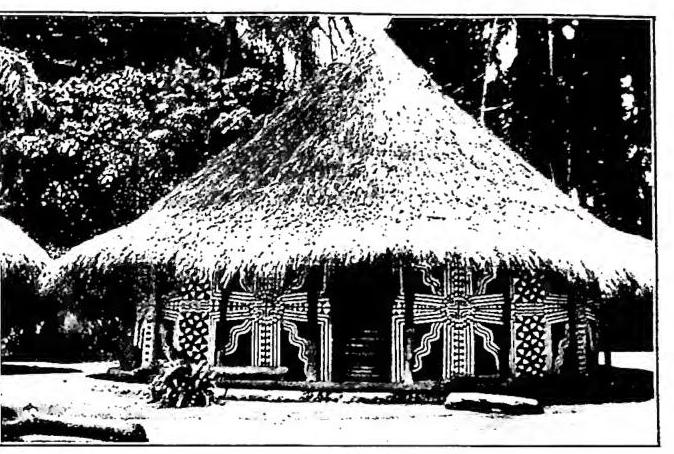
LEOPOLD II, Grand Duke of Tuscany - Bust in white marble, work of O. Giovannozzi (1846) - Florence, Uffizi.
I. L. OF THE LATINS. - The Latin archbishopric-metropolis, with its seat in Halicz, was founded by the bull Debitum pastoralis officii of Gregory XI on Feb. 13, 1375, with the suffragan dioceses of Przemyśl (Premislia), Łuck (Luceria), Chelm (Chelm), Kamieniec of Podolia (where the bishopric was founded in 1375 with the first bishop Wilhelm, d. 1375), Kijów (Kiev), where the first bishop was the aforementioned abbot of Opatow Gerard in 1234-41 (the diocese was suppressed in 1795 after the partition of Poland), and Ceret or Seret, founded in 1370 with the first bishop Andrzej, later bishop of Wilna.

Current suffragan dioceses are Przemyśl and Łuck. The first archbishop (of Halicz) was Maciej, d. 1377. In 1412-14 the episcopal see was transferred to Lwów. Area: 2,215 sq. km. (9/10 of the archdiocese are currently under Soviet occupation). The following statistics refer to 1939. Catholics: 81,000 (987,800). Parishes: 29 (416). Priests incardinated in the diocese: 57 (795). Regular priests: 4 (279). Religious women: 38. Major seminary. In 1939 there were 69 male religious houses, with 543 members; 292 female, with 2,470 members. Educational and instructional institutions: 6 male, with 630 pupils; 16 female, with 1,835 pupils. Charitable, assistance, and healthcare institutions: 138, with 1,532 inmates. Diocesan priests who perished during the Soviet and German occupation: 81, slaughtered or dead in prison or in concentration camps.

Eminent archbishops: bl. Jakób Strepa, d. 1411, buried in the Cathedral, cult confirmed on Sept. 11, 1790; Mikołaj Traba (1358-1422), later first primate of Poland; Jan Rzeszowski, first archbishop of Lwów, d. 1436; Grzegorz z Sanoka, writer, d. 1477; Jean Długosz (1415-80), historian; Wilczek h. Poraj, d. 1540; Jan Dymitr Solikowski, d. 1603; Mikołaj
Article illustration
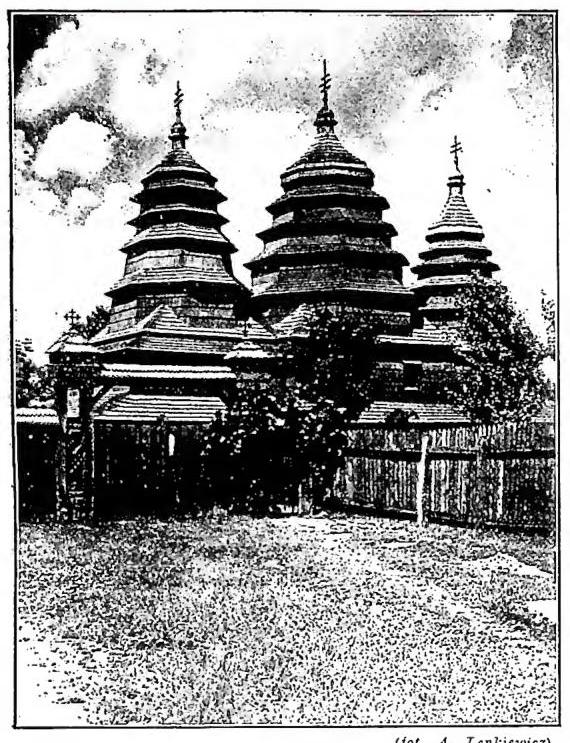
LEOPOLI, DIOCESI di - Wooden church - Na Zmęzieniu.
Ignacy Wyżycki, d. 1757; Wacław Hieronim Sierakowski (1699-1780); Łukasz Baraniecki, d. 1858; Józef Twardowski (1864-1944), expelled by the Soviets.

Notable churches: the Cathedral Basilica, Gothic, from 1350-1479, with the miraculous image of the Madonna of Mercy; before this image in 1656 John Casimir, king of Poland, made a solemn vow choosing Mary as queen of the Kingdom of Poland; near the Cathedral, the Boim chapel from 1610, Renaissance style; Dominican church and convent from 1749-64, on the site of the old 13th-century one; in the church, a miraculous statuette of Mary; cloister and church of the Bernardine fathers from 1600-1609, which houses the relics of bl. Jan z Dukli (1411-84), cult confirmed on Jan. 21, 1733, patron of Poland and Lithuania, who in 1648 saved Lwów from the siege of the Cossacks and Tartars; church of the Jesuit fathers, from 1608; church of St. John the Baptist from the 13th-14th century.

The city of Lwów, antemurale totius christianitatis, semper fidelis, founded in the 13th century, was rebuilt by Casimir the Great, king of Poland, in 1340. There is an academy (university), founded by John Casimir, king of Poland, in 1661. The Ossolineum National Institute, founded in 1817, held over 600,000 volumes and 7,500 manuscripts; it possessed a museum, an art gallery, etc., largely devastated by the Soviets. In Halicz there is a 12th-century Ruthenian cathedral and a Franciscan fathers' church from 1596. In Tarnopol, a former Dominican church from 1623 and a Ruthenian parish church with the miraculous image of the Madonna.

BIBL.: M. Baliński-T. Lipiński, Starożytna Polska, II, Warsaw 1844, pp. 550-63, 733-35, 934-40; X. J. T. Józefowicz, Kronika Miasta Lwowa, Leopoli 1854, pp. 79-131, 215-23, 254-55; A. Theiner, Vetera monumenta Poloniae et Lithuaniae, 4 vols., Rome 1860, passim; M. Harasiewicz, Annales Ecclesiae Ruthenae, Leopoli 1862; J. Długosz, Opera omnia, II-V, Cracow 1863-87, passim; F. Pawłowski, Premisia sacra sive series et gesta episcoporum r. l. Premisiensium, ivi 1869, pp. 11-34, 73-76; A. Bielowski, Monumenta Poloniae historica, II, Leopoli 1872, pp. 550, 573, 629, 664-65; VI, ivi 1872, pp. 163-216; Akta Grodshie i Ziemskie z czasów Rzeczypospolitej Polskiej, II-VII, ivi 1873, passim; X. M. Baliński, Historia Kościoła Polskiego, I-III, Cracow 1873, passim; L. Finkel-S. Starzyński, Historia Uniceryteta Lwowskiego, Leopoli 1894, pp. 3-44; M. Gębarowicz-K. Tyszkowski, Zakład Narodowy imienia Ossolińskich we Lwowie, ivi 1926; M. Bobrzyński, Dzieje Polski w zarysie, I, Warsaw 1927, passim; M. Pirozyński, Statystyka Kościoła Katolickiego w Polsce, in Homo Dei, 1946, II, pp. 80-82; id., Seminaria duchovne w Polsce, ibid., 1948, I, p. 84; id., Ze statystyki Kościoła w Polsce, ibid., 1948, IV, pp. 464-67; id., Ze statystyki Kościoła w Polsce, ibid., 1948, V, pp. 578-79.
II. L. OF THE ARMENIANS. - In the 11th and 16th centuries, colonies of Armenian refugees settled in Poland and were recognized by the local government as an ethnic minority. Ever since 1365, when Archbishop Gregory effected union with Rome, the Armenian archbishops of L. were the deputies of the patriarchs of Etchmiadzin, and their jurisdiction also included the Armenians of Wallachia and Moldavia.

In 1625 the refugee Catholicos Melchisedek settled in L., and being a Catholic, he also had his newly elected bishops make the Catholic profession of faith. The non-Catholic Armenians disapproved of this action and unleashed a persecution.

In 1632 Mikołaj Torossowicz, ordained by the Catholicos Melchisedek, was appointed by Pope Urban VIII and recognized as archbishop of L. In 1652, after various negotiations, he succeeded in being recognized also by the Catholicos Philip; and thereby he was accepted as archbishop by the non-Catholic Armenians as well.

Eminent archbishops: Humanian Wartan (d. 1715); Samuel Cyryll Stefanowicz (d. 1858); Józef Teodorowicz, writer (d. 1938). In 1939 the archdiocese numbered: 8 parishes, 5,000 Catholics; 19 diocesan priests. Under Soviet occupation the Armenian Church was almost completely destroyed.
BIBL.: G. Jesianz, L'unione forzata degli Armeni di Polonia con la Chiesa romana (Armenian), St. Petersburg 1884; L. Alijan, Kamenitz. Annali degli Armeni di Polonia e di Romania (Armenian), Venice 1896; Gams, Series episcop. Eccl. catt., I, Regensburg 1873, p. 351; supplem. LXXXIII; S. Obertynski, Die Florentiner Union der polnischen Armenier, Rome 1934, appendix; G. Hofmann, Documenta Concilii Florentini de unione Armenorum, II, ibid. 1935, V. indice.
III. L. OF THE RUTHENIANS. - It was founded in 1539 by the Polish King Sigismund. In 1595, its incumbent was one of the most fierce opponents of the union with Rome, which he opposed even when it took place at Brest-Litowsk in 1596. Only in 1701 did the union of L. with the Holy See take place through the work of Bishop Józef Szumlański, who had already secretly united with Rome in 1680.

Article illustration
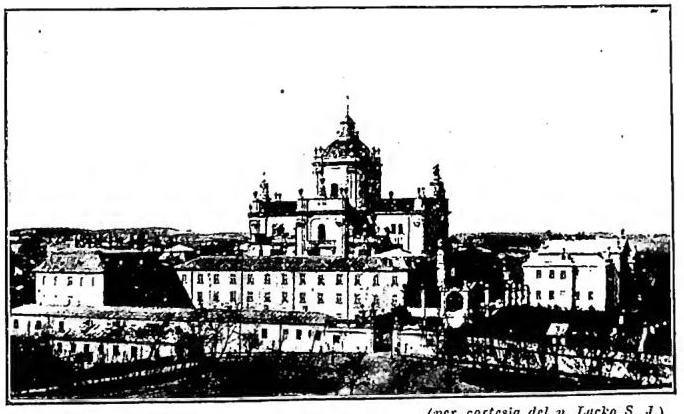
LEOPOLI, DIOCESI di - Cathedral of St. George (18th century) and City Hall.
Article illustration
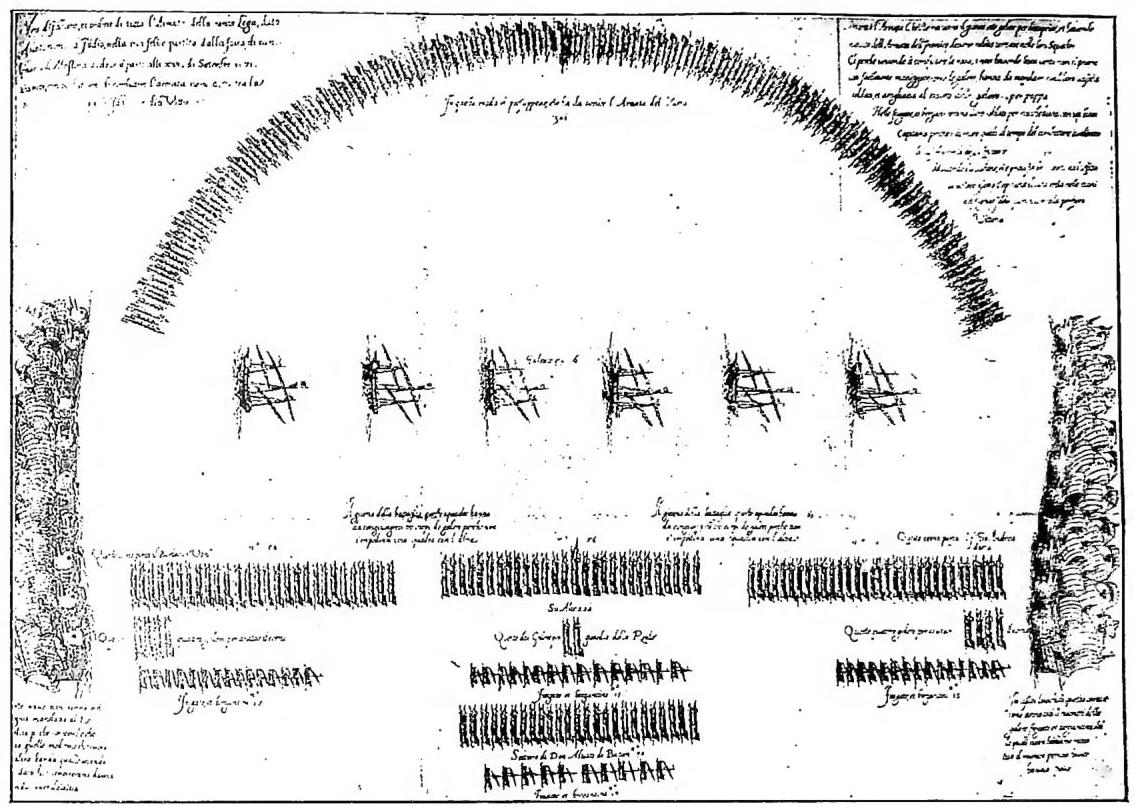
LEPANTO - Deployment plan of the Christian fleet for the battle of L. Pen drawing - Vatican Library, Borghese collection, 4th series, 228 f. 42.
(photo Enc. Catt.)
In the 17th century L. became almost a patrimony of the Szeptyckyj family, which produced three excellent bishops. After L. became Austrian territory upon the first partition of Poland (1773) and the entire metropolia of the Uniates disappeared, Pope Pius VII erected the new metropolia of L.-Halisch in 1807, with its seat in L. Its holder thus became the head of the entire cultural and religious life of the Ukrainians residing in Austria. Two of them were created cardinals, Michał Lewicki (d. 1858) and Sylwester Sembratowicz (d. 1898); Andreas Szeptyckyj (d. 1944) also acquired great fame. His successor Josyf Slipyj was sentenced in 1946 to 8 years of forced labor by the Soviets, who had become masters of the territory. At the same time, the communist authorities violently and brutally suppressed the union of the Catholics with the Holy See and installed a dissident bishop in the see under the obedience of the Moscow Patriarchate.

BIBL.: C. Gatti-C. Korolevskii, I riti e le Chiese orientali, I, Il rito bizantino e le Chiese bizantine. Genova 1942, V. indice; A. M. Ammann, Storia della Chiesa russa e dei paesi limitrofi. Torino 1948, V. indice. Alberto M. Ammann
Cite this article

“LEOPOLI (LWÓW, LVIV, LEMBERG), DIOCESI DI.” Enciclopedia Cattolica, vol. VII (1951), p. 715. Azione Romana digital edition, https://azioneromana.com/article/leopoli-lwow-lviv-lemberg-diocesi-di.